
Main Courses
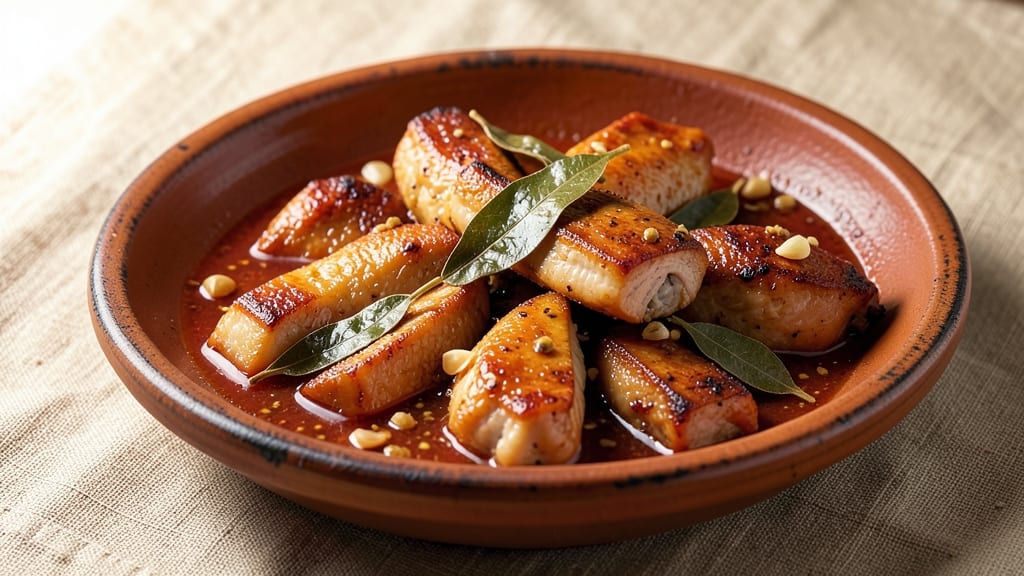
This one-pot Chicken and Pork Adobo panlasang Pinoy recipe delivers the bold, tangy-sweet flavors that make it the Philippines' most beloved dish. Born from my grandmother's handwritten notes, this recipe captures the essence of panlasang Pinoy—where simple ingredients transform into something extraordinary.
The magic lies in balancing soy sauce, vinegar, and bay leaves for that signature depth that turns ordinary meat into a flavor bomb.
What sets this recipe apart is its simplicity—just a few pantry staples and 30 minutes of active time, followed by hours of slow braising. The key technique? Layering the meat with aromatics and letting the sauce reduce naturally, creating a glossy, caramelized glaze that clings to every bite.
My grandmother always said, "Adobo tastes better the next day," and she was right—the flavors deepen as it sits, making it perfect for meal prep.
By the time you're done, you'll have tender, fall-apart meat swimming in a rich, slightly sticky sauce that's equally delicious over steamed rice, with atchara for tangy contrast, or even as a filling for garlic fried rice.
This isn't just a recipe; it's a taste of home, a dish that brings people together—whether you're feeding a family or serving it at gatherings. The best part? Every bite carries that unmistakable Filipino soul.
For those short on time, I've included adaptations for slow cookers and Instant Pots—because great food shouldn't require all day. The principles stay the same: tender meat, balanced sauce, and that unmistakable adobo magic. Let's make this dish that's as comforting as it is impressive.
Ingredients for chicken and pork adobo recipe panlasang pinoy
Six ingredients transform into this iconic Filipino one-pot dish—simple yet unforgettable.
| Ingredient | Amount | Notes |
|---|---|---|
| Boneless Chicken Thighs 🍗 | 1 ½ lb | Skin-on preferred for crispiness |
| Pork Shoulder 🥓 | 1 ½ lb | Cut into 1-inch cubes |
| Coconut Vinegar 💧 | 1 cup | Substitute white vinegar if unavailable |
| Soy Sauce 🍶 | ¾ cup | Use light soy sauce for authenticity |
| Bay Leaves 🌿 | 4 whole | Dried, standard size |
| Garlic Cloves 🧄 | 8 cloves | Minced or crushed |
| Onions 🧅 | 1 whole | Yellow or white, sliced |
| Black Peppercorns 🌶️ | 1 tsp | Coarsely ground |
| Sugar 🍚 | ½ cup | White granulated |
| Olive Oil 🫒 | 2 tbsp | For searing meat |
| Salt 🧂 | 1 tsp | Adjust to taste |
| Green Onions 🧅 | 4 whole | Sliced for garnish |
| Steamed White Rice 🍚 | 3 cups | For serving |
The meat is everything here. Chicken thighs stay juicier than breasts, and pork shoulder delivers that melt-in-your-mouth texture. Grab the skin-on thighs at Filipino markets or your local Asian grocery—they'll have the best quality. If you're using bone-in cuts, trim any excess fat to avoid greasy sauce. For the pork, 1-inch cubes ensure even cooking. My grandmother always swore by using a mix of both—chicken for brightness, pork for richness—and honestly, you can't go wrong with that combo. Look for freshly ground black peppercorns if you can find them; pre-ground loses its punch fast.
No coconut vinegar? White vinegar or cane vinegar works in a pinch—just add a splash of sugar to balance the sharpness. The soy sauce can be swapped for tamari if gluten-free, but traditional light soy gives that authentic umami kick. Bay leaves are non-negotiable—they're the secret to that deep, earthy flavor. If you're short on time, minced garlic from a jar is fine, but fresh makes all the difference. The sugar isn't just for sweetness; it helps caramelize the sauce for that glossy finish. Pro tip: Toast your garlic and onions in the olive oil until golden—this builds so much more flavor than just sautéing.
This dish tastes even better the next day, so double the batch if you can. Store leftovers in an airtight container in the fridge for up to 5 days, or freeze for 3 months. The sauce thickens as it cools, so add a splash of water when reheating. Serve over steamed jasmine rice—the grains should be long and separate, not sticky. For extra authenticity, pair with atchara (pickled papaya) on the side. The rice soaks up all that tangy-sweet sauce, making every bite perfect. And trust me, the first time you serve this, someone will ask for seconds.
Why You'll Love This Recipe
- One-Pot Magic: I swear by this recipe—just toss the chicken, pork, vinegar, and soy sauce into a single pot, then let it simmer. No chopping, no fuss, and honestly? The cleanup is just rinsing one pot. That’s my kind of cooking.
- Tangy-Savory Balance: Here’s what sold me—the coconut vinegar’s sharp bite cuts through the richness of the pork, while the soy sauce adds that deep umami punch. The bay leaves? They infuse the whole thing with this earthy warmth that makes it taste like a hug from Lola.
- Meal Prep MVP: Between us, this dish gets better the next day. I make a big batch on Sundays, and by Wednesday, it’s still the star of my lunchbox. The flavors meld perfectly, and reheating it? Just a splash of water and a quick simmer.
- Budget-Friendly Feast: Pork shoulder and chicken thighs are cheap cuts that turn into something ridiculously good. A single batch feeds my family of four for days, and I’m not joking—my husband actually asks for leftovers. That’s saying something.
Step-by-step instructions for chicken and pork adobo
This one-pot wonder delivers deep, tangy-sweet Filipino flavors with minimal cleanup.
Sear the Meat for Maximum Flavor
Heat the 2 tablespoons olive oil in a large Dutch oven or heavy pot over medium-high heat. Add the 1.5 pounds boneless chicken thighs and 1.5 pounds pork shoulder (cut into 1-inch cubes), spreading them in a single layer. Let them sear undisturbed for 4-5 minutes until golden brown on one side.
Flip the meat and continue cooking for another 3-4 minutes until deeply browned. This step builds a rich, caramelized crust that forms the base of our adobo. Don't rush this—proper searing means better flavor. Once browned, remove the meat and set it aside on a plate.
Build the Adobo Base with Aromatics
In the same pot, add the 1 whole onion (sliced) and 8 cloves garlic (minced). Cook for 2-3 minutes until the onions soften and turn translucent, releasing their sweet aroma. Add the 1 teaspoon coarsely ground black peppercorns and cook for another 30 seconds until fragrant.
Here's where the magic happens: Pour in the 1 cup coconut vinegar and 0.75 cup soy sauce. Bring to a gentle boil, then reduce heat to medium-low. Let it simmer for 5 minutes to allow the vinegar to mellow slightly and the flavors to meld. You'll notice the aroma deepen—this is your cue that the base is developing properly.
Combine and Simmer to Perfection
Return the seared meat to the pot along with the 4 whole bay leaves and 1 teaspoon salt. Stir gently to combine. Add the 0.5 cup sugar and bring the mixture to a boil. Once boiling, reduce heat to low and cover with a lid.
Simmer for 45-50 minutes until the meat is fork-tender and the sauce has thickened into a glossy, slightly sticky consistency. You'll know it's ready when the meat pulls apart easily and the sauce coats the back of a spoon. If the sauce reduces too quickly, add 2-3 tablespoons water to maintain balance.
Finish and Serve with Fresh Garnish
Remove the bay leaves and adjust seasoning if needed—add a splash more soy sauce for saltiness or a bit of vinegar for tang. The sauce should be perfectly balanced between sweet, salty, and tangy. Stir in the 4 whole green onions (sliced) just before serving.
Serve the adobo hot over 3 cups steamed white rice, spooning the meat and sauce generously over each serving. The rice will soak up the rich, flavorful sauce beautifully. This dish tastes even better the next day as the flavors deepen—so plan to make extra!
Pro Tips For Making Chicken And Pork Adobo Recipe Panlasang Pinoy
- Brown the Meat First: Skip the slow simmer until everything’s in the pot—sear the chicken thighs and pork shoulder in batches over medium-high heat until they release caramelized bits. This isn’t just for flavor; it’s the foundation of that rich, tangy adobo taste. I used to rush this, and the sauce always tasted thin. Two minutes per side, no crowding—let the meat breathe.
- Use Aged Coconut Vinegar: Fresh coconut vinegar is milder and less acidic, which means your adobo will taste underwhelming. If you can’t find the aged kind (usually labeled "sour" or "old"), simmer a splash of white vinegar with the coconut vinegar for 5 minutes first—just enough to kick up the tang. My grandmother’s adobo was always bold; this was her trick.
- Don’t Boil the Bay Leaves: Toss the whole bay leaves into the pot when you add the vinegar and soy sauce, but remove them before the sauce thickens. Boiling them turns the sauce bitter, and nobody wants that. I learned this after a batch tasted off—now I fish them out with tongs once the liquid starts reducing. Sounds fussy, but it works.
- Simmer Low and Long: After the initial deglaze, drop the heat to the lowest setting you can tolerate and let the adobo cook uncovered for at least 45 minutes. The sauce needs time to concentrate, not rush. I used to crank the heat, and the sauce would either burn or stay watery. Patience here makes the difference—trust me, the pork will fall apart on its own.
Essential equipment for this dish
Dutch Oven Essentials
Your Dutch oven is the star of this recipe—it's deep enough to handle the sauce and heavy enough to distribute heat evenly. I swear by a Lodge 5.5-quart Dutch oven for its even heating and durable enamel coating.
If you don’t have one, a stainless steel pot with a tight-fitting lid works too, but monitor the sauce more closely to prevent sticking.
The key is choosing a pot that's at least 5 quarts—this gives enough room for the meat and sauce without overcrowding, which keeps the meat tender. 🥘
Vinegar Substitutes
Coconut vinegar is the traditional choice, but if you can't find it, white vinegar or cane vinegar work well. For every 1 cup coconut vinegar, use ¾ cup white vinegar plus 1 tablespoon sugar to balance the sharpness.
If you're using apple cider vinegar, reduce to ½ cup—it's milder but adds a fruity depth. My grandmother always kept a bottle of Filipino coconut vinegar from the market, but I’ve made this recipe with balsamic vinegar in a pinch, though it leans more savory than tangy. 💧
Bay Leaf Magic
Don’t skip the bay leaves—they’re the secret to that deep, earthy flavor that makes adobo unforgettable. Use dried bay leaves (4 whole leaves) for the best results. If you have fresh bay leaves, use 6-8 since they’re more potent.
Remove them before serving—they can make the dish bitter if left in too long. Pro tip: Toast the bay leaves in the pot with the garlic and onions for 30 seconds before adding the vinegar. This releases their aromatic oils and takes the flavor to the next level. 🌿
Meat Tenderizer Tools
For extra-tender meat, especially if you're short on time, use a meat mallet to lightly pound the chicken thighs to an even ½-inch thickness. This ensures they cook evenly and stay juicy.
If you don’t have one, a rolling pin or even the bottom of a heavy pan works in a pinch. For the pork, 1-inch cubes are ideal, but if you have larger chunks, cut them into ¾-inch pieces to ensure they cook through without drying out.
A sharp chef’s knife is a must for even cuts—dull knives crush the meat, leading to uneven cooking. 🔪
Sauce Thickener Options
The sugar in this recipe helps thicken the sauce naturally, but if you want extra richness, add 1 tablespoon cornstarch mixed with 2 tablespoons water during the final 10 minutes of simmering. Stir it in and let it cook until the sauce reaches your desired consistency.
For a glossier finish, add 1 tablespoon tomato paste with the soy sauce—it adds depth and helps the sauce cling to the meat. If the sauce is too thin, simmer uncovered for 5-10 minutes to reduce it, stirring occasionally. 🍲
Garnish and Serve Tools
Fresh green onions are the classic garnish, but a sprinkle of toasted sesame seeds or crushed fried garlic adds a nice crunch. Use a microplane to zest a ½-inch piece of lemon peel for a bright finish if you like a little citrusy tang.
For serving, a slotted spoon helps transfer the meat and sauce over rice without breaking the grains. If you’re serving adobo in a bowl, a ladle with a long handle makes it easier to scoop the meat and sauce evenly. 🥄
Nutrition facts
Frequently asked questions
Why does my adobo sauce turn out too salty?
The soy sauce and vinegar combo can be potent! Start with ¾ cup soy sauce and taste as you go—add vinegar first if needed, as it's easier to balance. For a milder flavor, reduce soy sauce to ½ cup and add ½ cup water to maintain consistency. My grandmother always said, "Taste as you cook—better to adjust now than regret later!"
Can I make this in a slow cooker or Instant Pot?
For a slow cooker, brown the meat first, then transfer everything (including sauce) to the pot and cook on low for 6-8 hours or high for 3-4 hours. For Instant Pot, use the "Sauté" function to brown the meat, then pressure cook on high for 20 minutes (natural release). The key is the same: tender meat and balanced sauce. The slow cooker version tastes even better the next day!
What if I don't have coconut vinegar?
No problem! Use ¾ cup white vinegar plus 1 tablespoon sugar to balance the sharpness. For a fruitier note, try ½ cup apple cider vinegar. My grandmother used whatever was on hand—what matters most is the balance between sweet, salty, and tangy. The sauce will still turn out delicious, just with a slightly different character.
How do I know when the meat is fully cooked?
The meat should be fork-tender with no pink remaining. For chicken, the juices should run clear (165°F internal temp), and pork should reach 145°F. If using a meat thermometer, check the thickest part of the pork and chicken thighs. If you don't have one, cut into a piece—it should pull apart easily. The sauce should coat the back of a spoon and have a glossy finish.
Can I make this with chicken breast instead of thighs?
You can, but thighs stay juicier and more flavorful. If using chicken breast, pound them to ½-inch thickness and reduce cooking time to 30-35 minutes (they cook faster). For best results, marinate the breasts in ½ cup soy sauce + ¼ cup vinegar for 30 minutes before cooking. The breasts will still work, but thighs are traditional for a reason—they're more forgiving and delicious!