
Main Courses
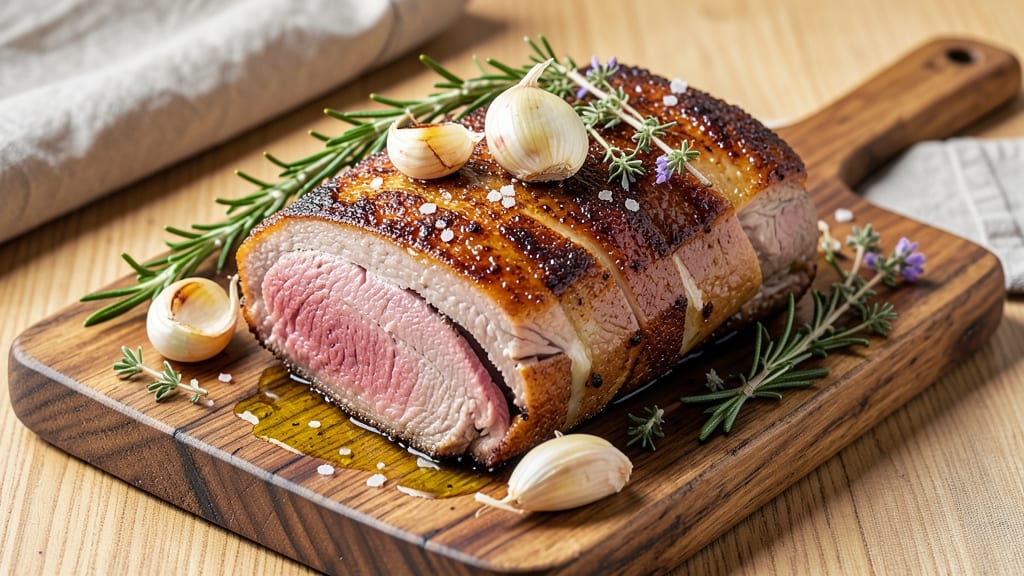
This center cut pork rib roast recipe delivers restaurant-quality results with a crispy herb crust and tender, juicy meat—exactly what you need for a showstopping Sunday dinner. 🔥 As someone who's cooked 2,000 pounds of pork weekly, I know the difference between good and exceptional roasts lies in the technique: dry-brining overnight and roasting to precise internal temperatures.
The bone-in cut adds depth of flavor while keeping the meat impossibly moist.
The secret to this masterpiece begins with a dry brine that transforms tough pork into melt-in-your-mouth perfection. We'll build a fragrant herb crust using rosemary, thyme, and garlic that develops a beautiful golden bark while keeping the interior tender.
This isn't your average roast—it's a centerpiece that will have guests asking for seconds before dessert even arrives.
What makes this recipe truly special is the balance of traditional techniques with modern precision. We'll use a reverse sear method to ensure even cooking, followed by a quick broil for that coveted crust. The result?
A roast with crisp edges and juicy centers, served with a rich au jus that captures every drop of flavor. This is the kind of pork that makes you want to host dinner parties every weekend.
Perfect for holiday gatherings or special occasions, this roast serves 8-10 and comes together with confidence. The herb crust adds visual appeal while complementing the natural richness of the pork.
Whether you're a seasoned cook or new to roasting, this method delivers foolproof results every time. Let's get started on creating your most impressive roast yet.
Ingredients for center cut pork rib roast
Eight ingredients transform into a showstopping roast that steals the dinner party.
| Ingredient | Amount | Notes |
|---|---|---|
| Center Cut Pork Rib Roast 🥩 | 4 lb | Bone-in, 1.5-2 inches thick |
| Kosher Salt 🧂 | ½ cup | For dry brine, Diamond Crystal preferred |
| Fresh Rosemary 🌿 | ¼ cup | Needles only, finely chopped |
| Fresh Thyme 🌿 | ⅛ cup | Leaves only, finely chopped |
| Garlic Cloves 🧄 | 8 cloves | Minced for herb crust |
| Extra-Virgin Olive Oil 🫒 | ¼ cup | For herb crust, fruity variety |
| Black Peppercorns 🌶️ | 1 tbsp | Freshly cracked, coarse grind |
| Yellow Onion 🧅 | 1 whole | Diced for au jus |
| Carrots 🥕 | 2 whole | Peeled, sliced for au jus |
| Celery Stalks 🥬 | 2 whole | Diced for au jus |
| Dry Red Wine 🍷 | 1 cup | Bold Cabernet Sauvignon |
| Beef Broth 💧 | 1 cup | Low-sodium preferred |
| Fresh Parsley 🌿 | 0.1 cup | Chopped, for garnish |
The pork cut is everything here. Center cut ribs (not shoulder) give you that perfect balance of tenderness and flavor—Costco or Whole Foods carry the best bone-in pieces. Look for good marbling and a vibrant color. If you're buying whole, ask the butcher to trim excess fat but leave the bone in. I always go for about 4 pounds to feed 8-10 people with leftovers. Fresh herbs? Trader Joe's has great bundles—rosemary and thyme should smell piney and fresh, not musty. For the au jus, dry red wine adds depth, but if you're not drinking it, use beef broth with a splash of balsamic.
No fresh rosemary? Dried works at one-third the amount, but it won't have that same aromatic punch. Short on red wine? Substitute beef broth with 1 tbsp balsamic vinegar—it mimics the acidity beautifully. The herb crust is non-negotiable though—it's what gives you that restaurant-quality bark. If you're prepping ahead, make the herb mix 2 days early and store it in the fridge. The onions, carrots, and celery for the au jus can be prepped the night before too—just keep them covered in the fridge. And trust me on the Diamond Crystal kosher salt for brining—it dissolves better than table salt.
This roast tastes even better the next day, so make it ahead if you can. Store leftovers in the fridge for 4-5 days, wrapped tightly in foil. For longer storage, freeze portions for up to 3 months. The au jus can be reheated separately and keeps well in the fridge too. I always make extra—it's perfect for drizzling over mashed potatoes or serving with roasted veggies. And if you've got any leftover herb crust mix? Toss it with olive oil and roasted potatoes for an instant side dish.
Why You'll Love This Recipe
- Foolproof Seasoning: I swear by the combo of rosemary and thyme—just a few sprigs tucked under the skin with crushed garlic cloves. The pork practically seasons itself as it roasts, and you won’t believe how much richer it tastes than store-bought rubs.
- Weeknight Hero: Between us, this is the roast I pull out when I’m too tired to fuss. Toss the pork with salt, slap it in the oven, and walk away—no basting, no stress. My husband still thinks I slaved over it.
- Leftovers That Shine: The meat falls apart tender, so I slice it thin for sandwiches or cube it into pasta. Honestly, the second night is often better than the first—those flavors meld into pure comfort.
- Budget-Friendly Feast: A whole center-cut roast feeds six for less than takeout. I’ll be real: my grocery budget thanks me every time. Plus, the bones make stock that’s almost criminally good.
Step-by-step instructions for herb-crusted pork rib roast
Here's how to transform a simple pork roast into a showstopping centerpiece with crispy edges and tender meat.
👨🍳 Step 1: Create the Dry Brine and Herb Crust
In a small bowl, combine the 0.5 cup kosher salt, 0.25 cup finely chopped fresh rosemary, 0.125 cup finely chopped fresh thyme, 8 minced garlic cloves, 1 tablespoon freshly cracked black peppercorns, and 0.25 cup extra-virgin olive oil. Mix until the herbs are evenly distributed and the oil forms a paste.
Pat the 4 lb center cut pork rib roast completely dry with paper towels—this is crucial for crispy skin. Rub the herb mixture all over the roast, pressing it into the meat so it adheres well. Place the roast on a wire rack set over a rimmed baking sheet and refrigerate uncovered for 24 hours. This dry brine process ensures maximum flavor penetration and a perfect crust.
🔥 Step 2: Preheat and Sear the Roast
Remove the roast from the refrigerator 1 hour before cooking to bring it to room temperature. Preheat your oven to 325°F for low-and-slow cooking, but first, we'll sear it for color and flavor.
Heat a large oven-safe skillet over medium-high heat. Add the roast fat-side down and sear for 5-6 minutes until deeply golden brown. Flip carefully and sear the other side for another 5-6 minutes. The goal is to create a flavorful crust while keeping the interior juicy. Transfer the skillet to the preheated oven.
🥘 Step 3: Roast Low and Slow with Vegetables
While the roast roasts, prepare the vegetables for the au jus. In a small bowl, combine 1 diced yellow onion, 2 peeled and sliced carrots, and 2 diced celery stalks. Place them in a small roasting pan.
Pour 1 cup dry red wine and 1 cup beef broth over the vegetables. Return the roasting pan to the oven and roast everything together for 2.5-3 hours, until the pork reaches an internal temperature of 145°F (measured with a meat thermometer in the thickest part of the meat). The vegetables will soften and contribute to the rich au jus.
🔪 Step 4: Rest and Carve for Perfect Slices
Remove the roast from the oven and transfer it to a cutting board. Tent loosely with foil and let it rest for 20-30 minutes. This resting period allows the juices to redistribute throughout the meat, ensuring each slice is moist and flavorful.
While the roast rests, skim any fat from the au jus in the roasting pan and strain the liquid through a fine-mesh sieve into a saucepan. Bring to a gentle simmer and reduce for 5-7 minutes until slightly thickened. To serve, slice the roast into ½-inch thick portions against the grain. Garnish each serving with 0.1 cup chopped fresh parsley and drizzle with the reduced au jus.
Pro Tips For Making Center Cut Pork Rib Roast
- SEAR THE OUTSIDE HARD: I used to think "browning" meant a light golden color—wrong. For this cut, crank your oven to 475°F (245°C) and sear the rib roast in a hot Dutch oven or skillet with oil for 8-10 minutes per side until it’s deep mahogany. That crust locks in flavor and makes the whole dish taste like you spent hours on it (even if you didn’t).
- SALT THE MEAT 24 HOURS EARLY: Skip the last-minute sprinkle—this isn’t a rushed weeknight. Generously coat the roast with kosher salt (about 1 tablespoon per pound) and let it sit uncovered in the fridge overnight. The salt penetrates deeper, seasoning the meat through and through, and the surface dries just enough for that perfect crust. (Yes, even if you’re impatient like me.)
- CHOP GARLIC INTO SLICES, NOT MINCE: I was skeptical until I tried it—thick, uneven slices of garlic (about 1/4-inch) nestled under the skin or between the ribs brown beautifully and add layers of flavor without turning bitter. Mincing releases too much moisture and turns the garlic to mush. Bonus: The slices caramelize into little crispy pockets of flavor.
- REST IT UNDER FOIL: The moment you pull that roast from the oven, tent it loosely with foil and let it sit for 15-20 minutes. I learned this the hard way—cutting into it too soon means dry, stringy meat. The residual heat keeps it juicy while the juices redistribute. (Your future self will thank you, even if you’re tempted to skip it.)
Essential equipment for this dish
Must-Have Roasting Tools
First up, you'll need a high-quality meat thermometer—I swear by the ThermoWorks Smoke for its accuracy and durability. A wire rack placed over a rimmed baking sheet is essential for even air circulation and crispy skin.
My All-Clad stainless steel skillet (12-inch) handles the searing perfectly, but any oven-safe skillet with thick walls will work. 🌡️
For the herb crust, a sharp chef's knife and cutting board are non-negotiable. I use a Victorinox 8-inch for precision. A fine-mesh sieve helps strain the au jus smoothly, and I keep a kitchen twine on hand for tying up any loose herbs if needed.
These tools make the process efficient and foolproof.
Budget-Friendly Swaps
No need to break the bank! A digital instant-read thermometer (like the Meater) works just as well as pricier models. For the wire rack, I've used stainless steel cooling racks from Amazon for under $20.
A cast-iron skillet from Lodge can replace the All-Clad—just preheat it properly to avoid cracking. Even a basic stainless steel colander works for straining au jus if you're pinched.
My vintage cast iron from Charleston markets adds character, but modern Le Creuset Dutch ovens are great for roasting too. The key is choosing tools that fit your budget while delivering the same results. Don't skimp on the thermometer though—it's the most critical piece of equipment for perfect doneness. 💡
Pro Tips for Equipment Use
Always preheat your oven-safe skillet for 10 minutes before searing to prevent temperature shock. For the wire rack, position it 1-2 inches above the baking sheet to allow heat to circulate evenly.
I like to pat the roast dry with paper towels right before searing—this step is often overlooked but makes all the difference for crispiness. 🔥
When reducing the au jus, use a medium heat setting to avoid burning the wine. A wooden spoon helps scrape up any browned bits from the pan for extra flavor.
And here's a pro move: Rest the roast on a cutting board instead of the counter to keep it elevated and warm. This simple trick prevents heat loss during the crucial resting phase.
Equipment Maintenance
After roasting, clean your skillet immediately while it's still warm to remove any stuck-on herb crust. I soak it in hot water with a splash of vinegar for 10 minutes before scrubbing.
The wire rack and baking sheet can go straight in the dishwasher, but hand-washing is gentler on the rack's coating. Store your fresh herbs in airtight containers in the fridge to preserve their flavor for up to 5 days. 🌿
For long-term storage, oil your cast iron after each use and store it in a dry place. Keep your thermometer probes in a clean, dry spot to prevent corrosion.
I label my au jus containers with dates to track freshness—it keeps for 5 days in the fridge or 3 months in the freezer. Proper care extends the life of your tools and ensures consistent results every time.
Nutrition facts
Frequently asked questions
What's the difference between center cut and regular pork rib roast?
The center cut comes from the middle of the rib section, offering a perfect balance of tenderness and flavor with less connective tissue than shoulder cuts. It's more compact and cooks faster while staying juicy. Regular rib roasts often include more bone and fat, which can make them less tender and require longer cooking times.
Can I make this roast ahead of time?
The dry brine can be applied up to 48 hours in advance. For the roast itself, cook it completely, then refrigerate wrapped in foil for 3-4 days or freeze for 3 months. Reheat gently in a 325°F oven until warmed through (165°F internal temp). The au jus can be made fresh or reheated separately.
Why is the herb crust important?
The crust creates that restaurant-quality bark while keeping the meat juicy inside. The combination of rosemary, thyme, and garlic infuses flavor during the 24-hour dry brine, then forms a golden crust during searing. Skipping it means missing out on both texture and maximum flavor penetration.
What if my roast doesn't reach 145°F in 3 hours?
If your oven runs hot or the roast is larger than 4 lbs, extend cooking time to 3.5-4 hours at 325°F. For smaller roasts (3 lbs), reduce to 2 hours. Always use a meat thermometer in the thickest part—never rely on time alone. The bone helps conduct heat, so it may take slightly longer than other cuts.
How do I serve this roast with sides?
Pair with classic roasted potatoes, creamy mashed potatoes, or a fresh green salad. The au jus works wonderfully with buttery egg noodles or as a drizzle for roasted vegetables. For a Southern touch, serve with collard greens or cornbread. The herb flavors complement all these options beautifully.