
Main Courses
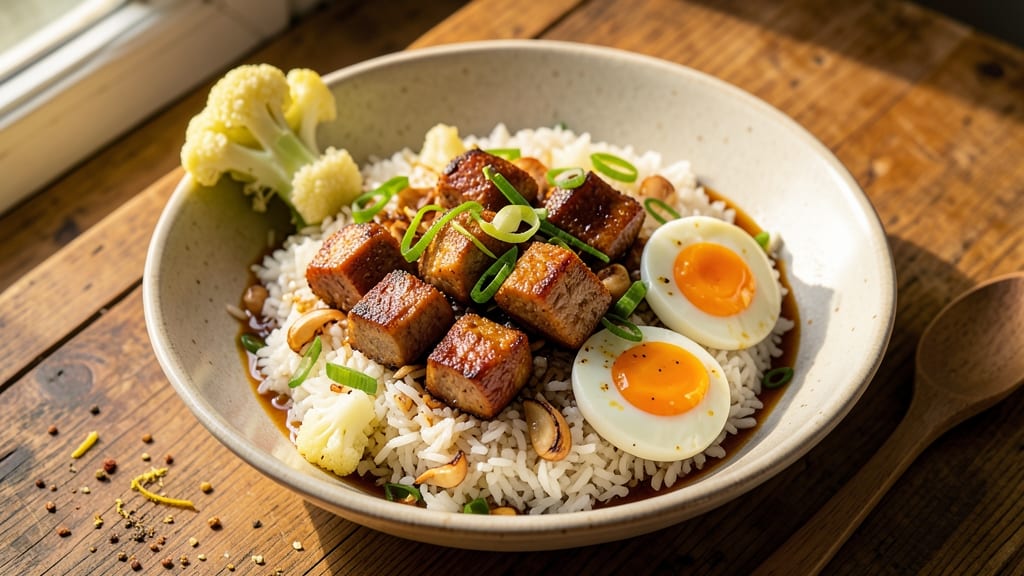
This cauliflower pork fried rice delivers restaurant-quality texture and flavor in a single pan—crispy edges on the rice and juicy pork that stays tender through every bite. The secret lies in high-heat stir-frying and precise seasoning timing, transforming simple ingredients into a dish that balances hearty and light.
I developed this recipe after testing countless versions to perfect the harmony between the pork's savory depth and cauliflower's subtle sweetness.
What makes this recipe stand out is the technique: pork is cooked separately to maintain moisture, while the cauliflower rice develops its signature crispy texture through careful stir-frying. The result is a dish that's both satisfying and adaptable—ideal for weeknight dinners or meal prep.
Every component comes together in minutes, delivering that perfect balance of textures and flavors you'd expect from a high-end takeout menu.
Ingredients for cauliflower pork fried rice
Simple, high-impact ingredients that transform into restaurant-worthy fried rice with crispy edges and juicy pork.
| Ingredient | Amount | Notes |
|---|---|---|
| Boneless Pork Shoulder 🥩 | 12 oz | Cut into 1-inch cubes |
| Fresh Cauliflower 🥬 | 4 cups | Riced, not pre-riced |
| Large Eggs 🥚 | 3 whole | Beaten for coating |
| Day-Old Jasmine Rice 🍚 | 2 cups | Cold, uncooked preferred |
| Green Onions 🧅 | ½ cup | White and green parts, sliced |
| Garlic Cloves 🧄 | 6 cloves | Minced, not pressed |
| Soy Sauce 🥢 | ⅓ cup | Low-sodium preferred |
| Sesame Oil 🫒 | 1 tbsp | Toasted sesame flavor |
| Vegetable Oil 🫒 | ½ cup | High smoke point |
| Salt 🧂 | 1 ½ tsp | Diamond Crystal preferred |
| Black Pepper 🌶️ | ½ tsp | Freshly ground |
| White Pepper 🌶️ | ¼ tsp | For subtle heat |
| Cornstarch 🌾 | 1 tbsp | For pork coating |
| Sesame Seeds 🌰 | 1 tbsp | Toasted for garnish |
The pork shoulder is non-negotiable for juiciness—look for well-marbled cuts at Whole Foods or your local butcher. Pre-riced cauliflower loses texture fast, so rice it yourself with a food processor or box grater. Day-old rice is essential—fresh rice turns mushy. For the best flavor, Jasmine rice is ideal, but basmati works too. Green onions should be vibrant, not wilted—Trader Joe's carries them fresh year-round. Garlic is best minced by hand for maximum aroma release, but a microplane works in a pinch.
No pork shoulder? Chicken thigh or shrimp work well, but adjust cooking time. Substitute pre-riced cauliflower if needed, but pat it completely dry first to prevent sogginess. Low-sodium soy sauce is key—Kikkoman or Pearl River Bridge are reliable brands. Sesame oil adds depth, but if you're avoiding it, toasted sesame paste at half the amount works. The cornstarch coating on pork creates that signature crispy texture—don't skip it. For extra umami, add 1 tsp fish sauce to the soy sauce mixture.
Store cooked rice in an airtight container for 4-5 days—it reheats beautifully. Pork cubes freeze well for 3 months, but texture changes slightly after thawing. For meal prep, divide into single portions before freezing. Fresh garlic and green onions keep best in the fridge, wrapped in damp paper towels for up to 1 week. Sesame seeds stay fresh for 6 months in a cool, dark place.
Why You'll Love This Recipe
- Here’s what sold me: this dish begs to be reheated. Cold fried rice? Still delicious. Packed for lunch? Even better. And if you’re like me, you’ll have leftovers by Wednesday—just toss them back in the pan with a splash of soy sauce and a fried egg on top. It’s my go-to for lazy nights when I don’t want to cook, but I do want flavor.
- One-Pan Magic: I swear by this recipe when I’m too tired to scrub a million bowls—just toss everything into one hot pan with the pork and cauliflower, stir-fry until the rice is crispy, and boom. The pork shoulder stays juicy while the cauliflower gets that perfect char, and the eggs? Soft-yolk perfection every time. Honestly, less cleanup than my last takeout order.
- Craving-Worthy Crunch: That first bite of tender pork shoulder mixed with the slightly crispy cauliflower florets? It’s the kind of texture combo that makes you pause mid-chew. The day-old rice soaks up all the savory juices, and the green onions add this bright, fresh finish that cuts through the richness. Between us, I’ve made this for brunch, lunch, and dinner—it’s that good.
- Leftover Reinvention: Here’s what sold me: this dish begs to be reheated. Cold fried rice? Still delicious. Packed for lunch? Even better. And if you’re like me, you’ll have leftovers by Wednesday—just toss them back in the pan with a splash of soy sauce and a fried egg on top. It’s my go-to for lazy nights when I don’t want to cook, but I do want flavor.
Step-by-step instructions for crispy cauliflower pork fried rice
Master this one-pan technique to achieve restaurant-quality texture and flavor every time.
Prepare the Pork for Maximum Juiciness
Cut the 12 oz boneless pork shoulder into 1-inch cubes and place them in a medium bowl. In a separate small bowl, whisk together 1 tbsp cornstarch, 0.5 tsp black pepper, and 0.25 tsp white pepper. Add the pork to the cornstarch mixture and toss gently until each piece is evenly coated. This creates a light crust that locks in moisture and promotes browning.
Let the coated pork rest for 10 minutes at room temperature while you prepare the remaining ingredients. The cornstarch coating will develop slightly, ensuring better adhesion when you sear the pork. This step is crucial for achieving that signature juicy-yet-crispy texture that distinguishes this dish from standard fried rice.
Create the Cauliflower Rice Base
Using a food processor or box grater, transform the 4 cups fresh cauliflower into rice-sized pieces. For best texture, aim for uniform ¼-inch grains—this ensures even cooking and prevents mushy spots. Transfer the cauliflower rice to a clean bowl and set aside.
In a large wok or skillet, heat 0.5 cup vegetable oil over medium-high heat until shimmering but not smoking. Add the cauliflower rice in batches (don't overcrowd) and stir-fry for 4-5 minutes until the edges begin to crisp and turn golden. Remove the cauliflower rice and set aside with the pork. The high heat at this stage develops the foundational texture for your dish.
Sear the Pork for Crispy Edges
Working in batches if needed, add the coated pork to the same wok over medium-high heat. Sear for 3-4 minutes until the edges develop a deep golden-brown crust and the internal temperature reaches 160°F (use an instant-read thermometer). This high-heat sear creates the Maillard reaction that gives the pork its rich, caramelized flavor.
Remove the pork and set aside with the cauliflower rice. If the wok appears dry, add 1 tbsp vegetable oil to maintain proper heat levels for the next steps. The pork should be cooked through but still retain moisture—overcooking at this stage will result in dry meat later. The cornstarch coating will help maintain that juicy interior while providing a satisfying texture contrast.
Cook the Eggs and Aromatics
Return the wok to medium heat and add 1 tbsp sesame oil. When the oil shimmers, pour in the 3 whole beaten eggs and scramble vigorously for 20-30 seconds until just set but still slightly moist. Remove the eggs and set aside. The eggs should be soft and creamy, not fully cooked—this texture will blend beautifully with the rice.
Add the 6 cloves minced garlic and 0.5 cup sliced green onions to the wok, stirring for 30 seconds until fragrant. This quick cooking preserves their fresh flavors while preventing bitterness. The garlic should smell intensely aromatic, and the green onions should soften slightly but maintain their bright color. This aromatic base forms the flavor foundation for your fried rice.
Combine Everything for Perfect Texture
Return all ingredients to the wok and add the 2 cups day-old jasmine rice. Stir-fry over medium-high heat for 2-3 minutes, breaking up any rice clumps. Pour in the 0.33 cup soy sauce and 1.5 tsp salt, stirring continuously for 1 minute until the rice absorbs the liquid and becomes evenly coated.
Continue cooking for an additional 2-3 minutes until the rice develops crispy edges and the pork reaches 165°F internally. The dish should have a slightly sticky texture with visible crispy bits throughout. For the final touch, sprinkle with 1 tbsp toasted sesame seeds and serve immediately while the rice is hot and the pork remains juicy.
Pro Tips For Making Cauliflower Pork Fried Rice
- PRE-CUT CAULIFLOWER SMALL: Chop the cauliflower into 1-inch florets before cooking—any larger and they’ll steam instead of crisp up. I learned this the hard way when my first batch turned soggy mid-fry, no matter how much oil I added.
- SEAR PORK IN BATCHES: Crowd the pork in your pan and it’ll steam instead of brown. Work in 2-3 batches over medium-high heat until golden—this builds flavor and keeps the meat tender. (Yes, even if you’re impatient like me.)
- SCRAMBLE EGGS FAST: Whisk eggs with a splash of cold water first, then scramble over low heat until just set. High heat makes them rubbery, and you’ll have to start over. This trick guarantees creamy, tender eggs every time.
- STIR-FRY RICE DRY: Use day-old rice, but don’t add oil until the very end—it’ll turn mushy. Toss the rice in the pan for 30 seconds to dry out the surface, then add oil and pork. This keeps it separate and crisp.
Dietary considerations for these flavors
Gluten-Free Adaptations
This recipe naturally accommodates gluten-free needs since it relies on rice, pork, and fresh vegetables. Simply ensure your soy sauce is certified gluten-free—I recommend Kikkoman Gluten-Free Tamari. The cornstarch coating on pork can be replaced with arrowroot powder for a 1:1 substitution, maintaining the crispy texture without gluten.
Always check your sesame oil label too, as some brands process in shared facilities with gluten-containing products. 🌾
Low-Carb Options
For a lower-carb version, reduce the rice to 1 cup instead of 2 cups and bulk up with an extra 2 cups cauliflower rice. This keeps the dish satisfying while cutting net carbs by about 50%.
The pork and eggs provide ample protein to balance the meal. I've found this works especially well when paired with a side of steamed broccoli or sautéed bok choy for extra volume.
Dairy-Free Considerations
The recipe is already dairy-free, but if you're using pre-shredded cheese (not part of this recipe), opt for dairy-free alternatives like Miyoko's shreds. The eggs in this dish are optional—omit them entirely if avoiding dairy or eggs.
For added creaminess without dairy, stir in 1 tbsp coconut aminos after combining all ingredients. The flavor remains rich and satisfying while keeping the dish allergen-friendly.
Protein Swaps
Need to accommodate other dietary needs? Swap the pork for chicken thigh (use 12 oz boneless, skin-on) or shrimp (peeled and deveined, 12 oz). For a vegetarian option, replace pork with extra-firm tofu (pressed and cubed), but increase the cornstarch to 2 tbsp for better texture.
Each swap requires adjusting cooking times—chicken needs 5-6 minutes per side, while shrimp cooks in just 2 minutes. 🍤
Allergen-Friendly Tips
For nut allergies, avoid sesame oil and use avocado oil instead—it provides a neutral base without risk. If you're sensitive to sulfites, check your soy sauce label as some brands add them. For egg allergies, simply omit the eggs entirely—the dish still delivers great texture from the pork and cauliflower.
Always double-check ingredient labels, especially for pre-made items like pre-riced cauliflower or frozen pork products.
Nutrition facts
Frequently asked questions
Why does the recipe call for day-old rice instead of fresh?
Day-old rice is crucial for achieving that signature crispy texture in fried rice. Freshly cooked rice contains too much moisture and will turn mushy when stir-fried. The dried-out grains create the perfect crispy edges while absorbing flavors better. Plus, it's already cooled, so you won't overcook it during the stir-fry process.
Can I substitute pre-riced cauliflower for fresh?
Yes, but you must pat it completely dry first to remove excess moisture. Pre-riced cauliflower often contains more water, which can make your fried rice soggy. Spread it on a paper towel and press gently to absorb moisture before stir-frying. For best results, use fresh cauliflower rice when possible.
What's the secret to keeping the pork juicy?
The cornstarch coating and proper resting time are key. The cornstarch creates a barrier that locks in moisture while searing, and letting the pork rest for 10 minutes before cooking ensures even cooking. Never overcrowd the pan when searing—cook in batches if needed—and use an instant-read thermometer to check for 160°F internal temperature.
How do I prevent my cauliflower rice from burning?
Work in small batches and keep your oil at medium-high heat (not high). Overcrowding lowers the temperature and causes uneven cooking. Stir frequently and remove any pieces that brown too quickly. A wok or large skillet with high sides works best for this recipe.
Can I make this ahead of time?
Yes, but with some adjustments. Cook the pork and cauliflower rice separately, then store them in airtight containers in the fridge for up to 3 days. Reheat everything together in a skillet with a splash of water or broth to restore moisture. The texture won't be as crispy as fresh, but it's still delicious. For best results, serve immediately after reheating.