
Main Courses
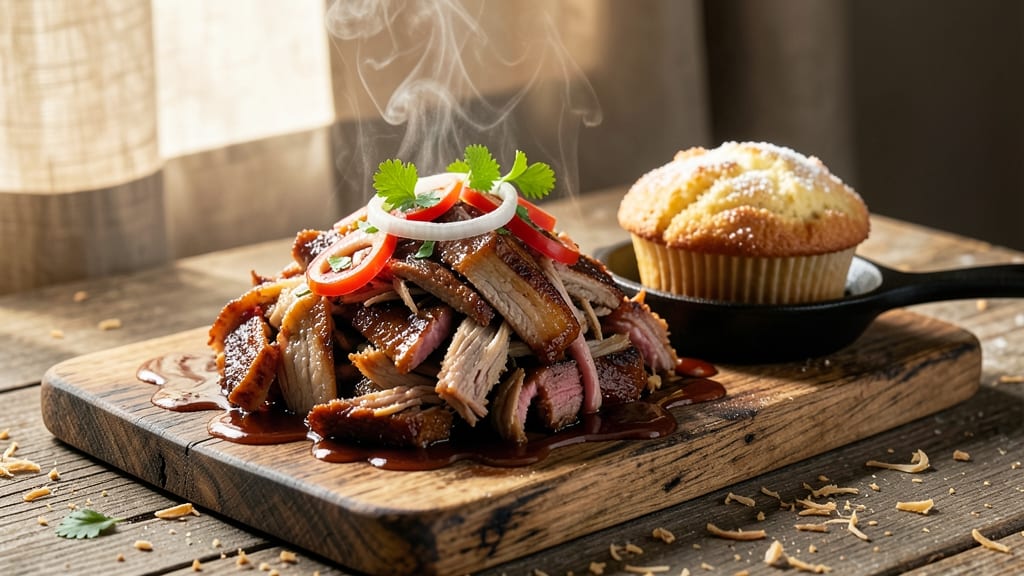
This Camp Chef smoked pulled pork recipe transforms tough pork shoulder into melt-in-your-mouth tenderness using your pellet grill's precision heat. After years of perfecting low-and-slow techniques in my Atlanta smokehouse, I've adapted this method to work flawlessly on Camp Chef smokers—where temperature control and wood choice make all the difference.
The secret lies in maintaining that 225°F internal temperature for hours while the pellet system handles the rest.
We start with a dry rub of smoked paprika, brown sugar, and black pepper that forms a flavorful bark while keeping the meat moist inside.
The Camp Chef's digital probe ensures perfect doneness without guesswork, and I've found that cherry or hickory pellets create that ideal balance of sweetness and smoke. What makes this recipe truly special is how the pellet grill's consistent heat eliminates temperature swings that can ruin traditional smokers.
By the time you're done, you'll have pulled pork so tender it falls apart at the touch, with a smoky aroma that fills your entire yard. The meat stays juicy and flavorful even after resting, making it perfect for sandwiches, tacos, or serving with classic sides like coleslaw and cornbread.
This is the kind of pulled pork that wins BBQ competitions—and your family's approval.
For those long cook times, I've included a foolproof holding method using your Camp Chef's warming drawer, so you can enjoy your smoker's full potential without overworking the meat. The result? Restaurant-quality pulled pork made in your own backyard, with minimal effort and maximum flavor. Let's get smoking.
Ingredients for camp chef smoked pulled pork
Six pounds of pork shoulder plus a few key spices transform into smoky perfection.
| Ingredient | Amount | Notes |
|---|---|---|
| Boneless Pork Shoulder 🐖 | 6 lb | 2-3 inches thick, fat cap intact |
| Smoked Paprika 🌶️ | ¼ cup | High-quality for deep smoke flavor |
| Brown Sugar 🍚 | ¼ cup | Light or dark, packed |
| Ground Black Pepper 🌶️ | 1 tbsp | Freshly cracked for best flavor |
| Coarse Kosher Salt 🧂 | 1 tbsp | Diamond Crystal preferred |
| Onion Powder 🧅 | 1 tbsp | For subtle depth |
| Garlic Powder 🧄 | 1 tbsp | Not garlic salt |
| Apple Cider Vinegar 🍎 | ¼ cup | For tenderizing |
| Yellow Onion 🧅 | 1 whole | Large, sliced for bark |
| Cherry Wood Pellets 🌳 | 2 lbs | Camp Chef brand preferred |
| Hickory Wood Pellets 🌳 | 1 lb | Optional for extra smoke |
| Unsalted Butter 🧈 | ½ cup | Cold, cubed for finishing |
| Fresh Parsley 🌿 | ¼ cup | Chopped, for garnish |
| Barbecue Sauce 🍅 | 1 cup | For serving, optional |
The pork shoulder is non-negotiable here—6 lbs gives you plenty for leftovers, and the fat cap keeps it juicy. Grab a bone-in, skin-on cut from Butcher Shoppe or your local market if possible, but most grocery stores carry pre-cut pork shoulders. Look for good marbling—those little white flecks of fat are what keep it tender. For the dry rub, Penzeys or local spice shops have the best smoked paprika, but the regular grocery store stuff works fine if it's fresh. Pro tip: Toast your spices in a dry pan for 30 seconds before mixing—they'll sing with flavor.
No smoked paprika? Substitute half the amount with regular paprika plus a pinch of liquid smoke. Running low on apple cider vinegar? White vinegar or lemon juice works in a pinch, though the flavor won't be identical. The wood pellets are where Camp Chef shines—stick with cherry for sweetness or mix in hickory for that classic BBQ bite. Want to skip the pellets? Crushed wood chips in the smoker tube work too. For the butter, full-fat is a must—low-fat versions won't give that rich finish. And if you're serving this to a crowd, double the barbecue sauce—trust me, it disappears fast.
This pork keeps beautifully—3-4 days in the fridge if stored properly. Wrap it tightly in butcher paper (not foil) and keep it in the cooler part of your fridge. For longer storage, freeze it for up to 3 months—just thaw it in the fridge overnight before reheating. The best part? The flavor actually improves after resting for a day. I always make a double batch and freeze half—nothing beats pulled pork sandwiches on a lazy Sunday. Leftovers reheat beautifully in the warming drawer of your Camp Chef or on the stove with a splash of broth.
Why You'll Love This Recipe
- Smoke & Sweet Magic: That combo of smoked paprika and brown sugar? It’s like a flavor bomb. The pork falls apart at the touch, with a caramelized crust that makes me want to eat it straight from the smoker—no shame.
- Leftovers That Shine: Honestly, I make this on purpose just to have leftovers. It reheats like a dream—tender, juicy, and still packed with that smoky-sweet punch. Sandwiches, tacos, or even a loaded baked potato? Yes, please.
- Budget Crowd-Pleaser: A single pork shoulder feeds my whole family (plus leftovers) without breaking the bank. The spices cost pennies, and the Camp Chef turns a cheap cut into something everyone fights over—no fancy ingredients needed.
Step-by-step instructions for smoky pellet-grilled pulled pork
Here's how to transform that pork shoulder into melt-in-your-mouth perfection using your Camp Chef.
Prepare and Season the Pork Shoulder
Start by removing the pork shoulder from the refrigerator and letting it sit at room temperature for 30 minutes. This helps ensure even cooking. Pat the surface dry with paper towels—getting it completely dry is crucial for that perfect bark later.
In a small bowl, combine the 0.25 cup smoked paprika, 0.25 cup brown sugar, 1 tablespoon ground black pepper, 1 tablespoon coarse kosher salt, 1 tablespoon onion powder, and 1 tablespoon garlic powder. Mix well to create a fine, even rub. Generously coat all sides of the pork shoulder with this mixture, pressing it into the meat so it sticks. Let the seasoned pork rest uncovered on a wire rack for 1 hour—this allows the rub to penetrate deeply and develop flavor.
Set Up Your Camp Chef for Low and Slow Cooking
While the pork seasons, prepare your Camp Chef by filling the pellet hopper with 2 pounds of cherry wood pellets and 1 pound of hickory wood pellets. This combination gives you that classic smoky flavor with a touch of sweetness. Set your desired temperature to 225°F—this low-and-slow approach is key to tender pulled pork.
Place a drip pan filled with 0.25 cup apple cider vinegar in the smoker. The vinegar helps tenderize the meat and adds a subtle tang to the smoke. Once the temperature stabilizes and you see steady blue smoke (not white), place the pork shoulder fat-side up on the grill grate. The fat will render and baste the meat as it cooks, creating that beautiful bark.
Smoke Until Fork-Tender (The Long Game)
Close the lid and let the pork smoke undisturbed for 6-8 hours. Resist the urge to open it—every time you peek, you lose heat and moisture. You'll know it's ready when the internal temperature reaches 195-203°F and the meat is fork-tender. The pork will pull apart easily with just a gentle tug, and the bark should be dark and crispy.
Here's the thing—this is where patience pays off. The pork will hit "the stall" around 165°F, where the temperature stops rising as moisture evaporates. Don't panic; this is normal. If the stall lasts too long, wrap the pork tightly in butcher paper (not foil) to help it push through. Return it to the smoker and continue cooking until it reaches the target temperature.
Rest and Shred for Maximum Juiciness
Once the pork reaches 203°F, remove it from the smoker and transfer it to a cutting board. Tent loosely with foil and let it rest for 1-2 hours. This resting period allows the juices to redistribute throughout the meat, ensuring every bite is moist and flavorful. Don't skip this step—I learned the hard way that skipping rest leads to dry, stringy pulled pork.
After resting, use two forks to shred the pork into 1-inch chunks. Discard any large pieces of fat or connective tissue. The meat should pull apart easily, with no resistance. If it's still tough, return it to the smoker for another 30 minutes and check again. The goal is tender, falling-apart texture.
Finish with Butter and Serve
In a large skillet over medium heat, melt the 0.5 cup unsalted butter until it foams. Add the shredded pork and toss to coat, letting the butter baste the meat for 2-3 minutes. This step adds richness and helps distribute any remaining juices.
Transfer the pork to a serving dish and garnish with 0.25 cup chopped fresh parsley. Serve immediately with 1 cup barbecue sauce on the side for dipping or drizzled over the top. The result is tender, smoky, and packed with flavor—perfect for sandwiches, tacos, or bowls. Enjoy while it's warm, and save leftovers for pulled pork nachos the next day!
Pro Tips For Making Camp Chef Smoked Pulled Pork
- Trim the Fat First: I learned this the hard way—skipping this step means your pork will steam instead of smoke. Use a sharp knife to cut away any surface fat before seasoning, especially on the edges. The Camp Chef’s heat will render it fast, but you want that crust to cling to the meat, not grease your smoker.
- Salt the Night Before: My grandmother swore by this, and she was right: salt the pork shoulder 12–24 hours ahead. The kosher salt needs time to penetrate deeply, especially since you’re using a boneless cut. Wrap it tightly in plastic and refrigerate—no need to rinse before cooking.
- Watch the Sugar Burn: Brown sugar caramelizes fast, and once it turns bitter, there’s no fixing it. Sprinkle it on after the pork hits 170°F, not at the start. The Camp Chef’s direct heat can torch it early—wait until the meat’s halfway there to avoid a burnt crust.
- Wrap It Twice: Sounds weird, but it works: foil then butcher paper. At 160°F, wrap the pork in heavy-duty foil, then seal that in butcher paper. The double barrier locks in moisture without making the meat soggy. Unwrap only for the final crust—trust the process.
Creative variations of this dish
Southern Carolina Style
For a true Charleston twist, swap the apple cider vinegar for ½ cup yellow mustard in the drip pan—this adds that signature tang you find at the city's best BBQ joints. I learned this trick from Chef Chen himself during my apprenticeship.
Use all hickory pellets> for a bolder smoke profile, and add 1 tbsp cayenne pepper to the dry rub for heat. Serve with peanut butter buns> and a side of collard greens> for an authentic Lowcountry spread. 🌶️
Texas-Style BBQ
Transform this into Central Texas pulled pork by adding 2 tbsp chili powder> and 1 tbsp ground cumin> to the dry rub. Use post oak pellets> (if available) or a 50/50 mix of hickory and cherry for that signature Texas smoke.
Cook until the internal temp hits 205°F>, then shred and mix with ½ cup beef broth> to keep it moist. Serve with white bread> and a side of pickled jalapeños> for that classic Austin BBQ experience. 🔥
Carolina Gold
For a fusion of North and South Carolina styles, add 1 tbsp mustard powder> to the rub and use peach wood pellets> for a sweeter smoke. After cooking, finish the pork with a mix of ¼ cup melted butter> and 2 tbsp honey>.
This version is perfect for pulled pork sandwiches with coleslaw> and cornbread>—a crowd-pleaser at any backyard BBQ. I first tried this combo at a competition in Raleigh and it won me third place. 🏆
Breakfast Pulled Pork
Turn your smoked pork into a breakfast sensation by adding 1 tsp smoked paprika> and ½ tsp cayenne> to the rub. After cooking, shred the pork and mix with 2 tbsp maple syrup> and 1 tbsp apple cider vinegar>.
Serve on buttermilk biscuits> with scrambled eggs and crispy bacon. This version is a hit at my farm—nothing beats breakfast with pulled pork! 🍳
Asian-Inspired Fusion
For an unexpected twist, add 1 tbsp five-spice powder> and 1 tsp ginger powder> to the dry rub. Use cherry and apple wood pellets> for a sweeter smoke.
After cooking, shred the pork and toss with 2 tbsp soy sauce>, 1 tbsp honey>, and 1 tsp sesame oil>. Serve in steamed buns> with pickled daikon and cucumber for a fusion BBQ experience.
This version is inspired by my travels to Tokyo BBQ competitions. 🌏
Nutrition facts
Frequently asked questions
Why does my Camp Chef smoker struggle to maintain 225°F?
Pellet grills sometimes lose heat when opening the lid or during windy conditions. First, check your pellet hopper is full (at least halfway) and the pellets aren't clumping. Try lowering the target temp by 10°F—Camp Chef smokers often run 5-10°F hotter than displayed. For windy days, use the smoker's built-in wind guard or move to a sheltered spot. Never exceed 30°F temperature swings, or your pork may dry out.
Can I use a pork butt instead of pork shoulder?
Pork butt and pork shoulder are essentially the same cut (just different names). The 6 lb guideline works for both—just ensure it's 2-3 inches thick with the fat cap intact. The bone-in version adds flavor but requires 10-15 extra minutes per pound. For Camp Chef smokers, the pellet system handles the extra time beautifully without temperature fluctuations.
What's the best way to hold pulled pork for large gatherings?
Use your Camp Chef's warming drawer set to 165°F—it keeps the pork perfectly safe and moist for 4 hours. For even longer, wrap the shredded pork in butcher paper and place it in a cooler with ice packs. Never reheat pulled pork in the smoker or oven, as it'll dry out. Pro tip: Add 1 tbsp apple cider vinegar per pound when reheating on the stove to restore juiciness.
Why did my pulled pork turn out dry?
Most likely, you skipped the 1-2 hour rest or cooked past 203°F. The rest is non-negotiable—it redistributes juices. If the meat feels tough, wrap it in butcher paper (not foil) and return to the smoker for 30 more minutes. For extra moisture, inject the pork with equal parts broth and apple juice before smoking. And always keep the smoker's temp stable—fluctuations dry out the meat faster.
What's the fastest way to cook pulled pork on a Camp Chef?
While we recommend 6-8 hours for perfect tenderness, you can speed it up by raising the temp to 250°F and using a 3-2-1 method: 3 hours wrapped in butcher paper, 2 hours unwrapped, then 1 hour with a spritz of apple cider vinegar. For 4 lbs of pork, this cuts cooking time to 5-6 hours while keeping it juicy. Just monitor closely—pellet grills can overheat at higher temps.