
Main Courses
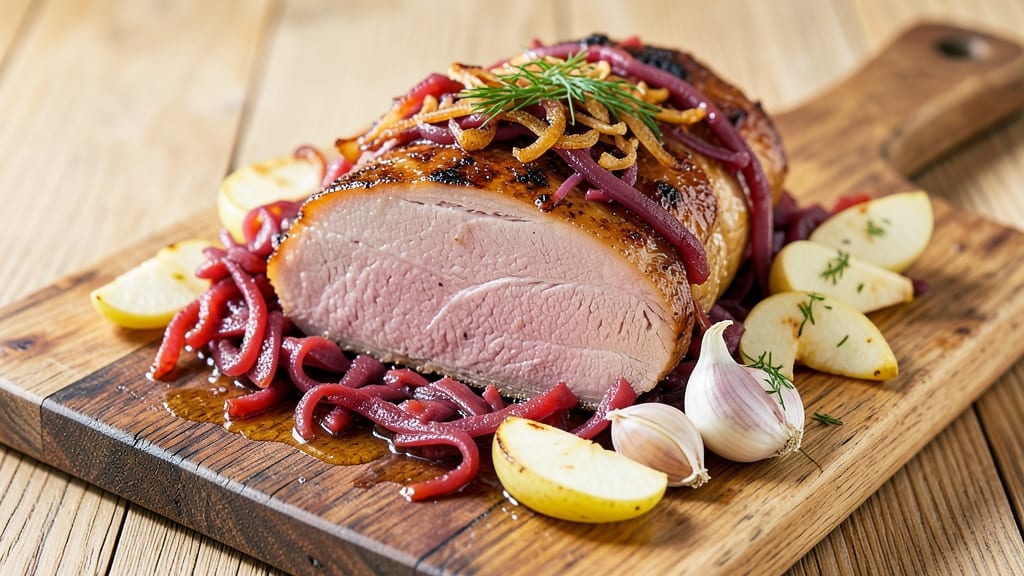
This boneless pork loin roast and sauerkraut recipe delivers the hearty, comforting flavors of German braised pork without the fuss of multiple pots. 🔥 Growing up in small-town Georgia, I learned that pork roasts belong at the center of family gatherings—juicy, tender, and paired with sauerkraut that cuts through the richness perfectly.
The secret lies in slow-braising the pork with just enough liquid to keep it moist while developing deep, savory flavors.
The beauty of this recipe is its simplicity: a single one-pot approach where the pork roast simmers alongside sauerkraut, absorbing its tangy, fermented notes. I’ve perfected this method over years of cooking for crowds at Atlanta’s Smoky Pig, where pork is the star.
The result? A tender, fall-apart roast with crisp edges and a sauce thickened just enough to coat every bite—no dryness, no guesswork.
By the time you’re done, you’ll have a restaurant-quality meal that’s ready in under 2 hours of active time (plus braising). The sauerkraut softens into a silky, slightly sweet accompaniment, balancing the pork’s richness.
Serve it with roasted potatoes or a crisp apple salad for a complete, satisfying dinner that feels like a hug on a plate.
This dish is especially comforting—ideal for chilly evenings or when you crave the kind of home-cooked meal that lingers in your memory. The technique is foolproof, and the flavors are undeniably rewarding. Let’s get cooking!
Ingredients for boneless pork loin roast and sauerkraut
Six hearty ingredients transform into German-style braised pork that feels like a warm hug.
| Ingredient | Amount | Notes |
|---|---|---|
| Boneless Pork Loin Roast 🥩 | 3 lb | Center-cut for tenderness |
| Sauerkraut (Unopened Jar) 🥬 | 1 jar | High-quality, tangy variety |
| Yellow Onion 🧅 | 1 whole | Medium size, diced |
| Garlic Cloves 🧄 | 4 cloves | Freshly minced for aroma |
| Carrots 🥕 | 3 medium | Peeled, sliced into rounds |
| Apples 🍎 | 2 medium | Tart variety like Granny Smith |
| Beef Broth 💧 | 2 cups | Low-sodium preferred |
| Dry Red Wine 🍷 | 1 cup | Bold Cabernet Sauvignon |
| Apple Cider Vinegar 🍏 | 1 tbsp | For tangy depth |
| Fresh Thyme 🌿 | 2 sprigs | Leaves only, chopped |
| Fresh Bay Leaves 🌿 | 2 whole | For aromatic complexity |
| Black Peppercorns 🌶️ | 1 tsp | Freshly cracked |
| Kosher Salt 🧂 | 1 ½ tsp | Diamond Crystal preferred |
| Unsalted Butter 🧈 | 2 tbsp | For finishing sauce |
The pork loin is the star—center-cut stays juicy while the outer edges crisp beautifully. Costco or Whole Foods carry the best quality, or ask your butcher for a well-marbled cut. Sauerkraut isn't just a side here; it's the secret weapon. Look for jars with live cultures (no vinegar added)—the tangier, the better. If your jar doesn't specify, add 1 extra tablespoon of apple cider vinegar to boost flavor. The apples should be tart—Granny Smith or Braeburn work perfectly, but any crisp apple in season will do.
No red wine? Substitute with extra beef broth and a splash of balsamic vinegar. Fresh thyme unavailable? Dried works at one-third the amount, but the aroma is worth hunting down. The carrots can be baby carrots if that's what's in your fridge—just trim the ends. For the onions, yellow or red both work, but yellow has a slightly sweeter flavor that pairs beautifully. If you're making this ahead, prep all veggies the night before—they keep well in the fridge for 2 days. The butter at the end? Full-fat is non-negotiable—it adds richness to the sauce that nothing else can match.
This dish tastes even better the next day—plan ahead. The roast keeps 3-4 days in the fridge, and the sauce freezes beautifully for up to 3 months. I always make a double batch because leftovers make perfect sandwiches. Store the pork and sauerkraut separately in airtight containers—the sauerkraut will soften more over time, but that's exactly what you want. For serving, warm everything gently on the stove or in a 350°F oven for 10 minutes.
Why You'll Love This Recipe
- One-Pan Magic: I swear by this recipe—just toss the pork, sauerkraut, onions, and carrots into one pan, add a splash of water, and let it slow-cook. No chopping, no fuss, and that jarred sauerkraut does half the work for you.
- Tangy-Sweet Crunch: The sauerkraut brings that bright, tangy bite while the carrots caramelize into sweet little bursts. Honestly? That contrast is what makes this dish feel like a hug—especially when the garlic starts seeping into every bite.
- Leftovers for Days: Between us, this recipe makes enough for dinner and lunch the next day. The pork stays juicy, the sauerkraut keeps its crunch, and honestly? I’ve reheated this three times and it’s still the star of my week.
- Budget-Friendly Feast: Pork loin is affordable, carrots and onions stretch far, and that jar of sauerkraut? It’s a pantry MVP. I’ll be real—this feeds four for under $15, and the leftovers make it even better value.
Step-by-step instructions for German-style braised pork loin
Here's how to transform simple ingredients into hearty, German-inspired comfort.
🍳 Step 1: Sear the Pork Loin for Deep Flavor
Pat the 3 lb boneless pork loin roast completely dry with paper towels—this ensures a perfect crust. Heat a large Dutch oven over medium-high heat and add just enough oil to coat the bottom lightly (about 1 tablespoon). Place the pork loin in the pot and sear for 4-5 minutes per side until it develops a deep golden-brown crust. You'll see the edges begin to caramelize—that's your signal to flip.
While the pork sears, I like to press down gently on the roast during the first minute—this prevents it from curling and ensures even contact with the pan. The goal here is to create a flavorful crust that will later dissolve into the braising liquid. Once seared, remove the pork and set it aside on a plate, leaving all the browned bits in the pot—these are packed with flavor.
👨🍳 Step 2: Build the Aromatic Base
In the same Dutch oven, add the diced whole yellow onion and cook for 5 minutes until softened and just beginning to caramelize. Add the 4 cloves freshly minced garlic cloves and cook for another 30 seconds until fragrant—don't let it brown or it'll turn bitter. Here's where it gets good: pour in the 1 cup dry red wine and scrape up all those browned bits from the bottom with a wooden spoon. This deglazing step captures all that meaty flavor.
Stir in the 3 medium peeled carrots sliced into rounds, 2 medium tart apples chopped, 1 tbsp apple cider vinegar, 2 sprigs fresh thyme leaves, 2 whole fresh bay leaves, and 1 tsp freshly cracked black peppercorns. The vinegar adds a bright tang that balances the richness, while the apples and carrots sweeten the braise naturally. Let everything cook together for 3-4 minutes until the vegetables begin to soften slightly.
🥘 Step 3: Braise with Sauerkraut and Broth
Add the unopened jar of high-quality sauerkraut (open it directly in the pot) and the 2 cups beef broth. Stir gently to combine, then return the pork loin to the pot, placing it on top of the vegetables. The sauerkraut will release its tangy juice, creating a perfect braising liquid. Bring everything to a gentle simmer over medium heat, then reduce the heat to low to maintain a steady, barely bubbling simmer.
Here's the thing—this isn't a quick cook. Cover the pot and let it braise for 2 to 2½ hours, turning the pork occasionally. You're looking for the meat to become fork-tender and easily pull apart. The pork should be so tender that when you pierce it with a fork, it offers no resistance. If the liquid reduces too much before then, add a splash of water to maintain the moisture.
🔥 Step 4: Finish with Butter and Rest
Once the pork is tender, remove it from the pot and set it aside on a cutting board. Strain the braising liquid through a fine-mesh sieve into a clean saucepan to remove any solids. Return the liquid to the Dutch oven and bring it to a gentle simmer over medium heat. Reduce by half to thicken the sauce slightly—this concentrates the flavors beautifully.
Remove the pot from heat and stir in the 2 tbsp unsalted butter, allowing it to melt and create a glossy finish. Season the sauce with the 1.5 tsp kosher salt, tasting as you go. Return the pork to the pot and let it soak up the sauce for 5 minutes. This resting step ensures the meat absorbs all those delicious flavors. Slice the pork against the grain into ½-inch thick portions and serve family-style with the braised vegetables and sauce.
Pro Tips For Making Boneless Pork Loin Roast And Sauerkraut
- SEAR THE PORK FIRST: That jarred sauerkraut might smell amazing, but your pork won’t taste like it if you skip the sear. Hit the roast with a hot pan—no oil needed—until it’s deep golden brown on all sides. The crust locks in flavor and keeps the meat from drying out later, especially since boneless pork loin can get tough if overcooked.
- DRAIN AND RINSE THE SAUERKRAUT: I learned this the hard way—those juices in the jar are strong. Dump the kraut into a colander, rinse it under cold water, and give it a good squeeze to remove excess liquid. You’ll thank me when your dish isn’t swimming in vinegar and your pork isn’t fighting for dominance with sauerkraut acidity.
- DON’T OVERCOOK THE CARROTS: Toss the carrots in with the onions and garlic, but pull them out when they’re just tender—not mushy. Overcooked carrots turn to mush and disappear into the kraut, leaving you with a one-note side. Aim for bright orange, fork-tender, and still holding shape.
- USE THE JUICE FROM THE JAR: That leftover sauerkraut liquid isn’t waste—it’s flavor. After draining the kraut, pour the juice into your roasting pan (about ½ cup) and let it reduce while the pork rests. It adds depth and keeps the dish from tasting like it was made from a box. (Yes, even if you’re impatient like me.)
Storing and reheating this boneless pork loin roast and sauerkraut
Fridge Storage
Your braised pork loin and sauerkraut keep beautifully in the fridge for 3-4 days when stored properly. I recommend transferring the pork to an airtight glass container (like a Pyrex dish) and covering the sauerkraut separately in its own container—this prevents the sauerkraut from becoming too mushy.
The pork stays juicy and flavorful, while the sauerkraut maintains its tangy texture. Label with the date to track freshness. ❄️
To reheat, warm the pork and sauerkraut together in a skillet over medium heat for 8-10 minutes, adding 2-3 tablespoons of water or broth to prevent drying. Stir occasionally and cover with a lid to trap steam.
The sauerkraut will soften further, creating a silky texture that pairs perfectly with the tender pork. For best results, reheat only what you plan to eat immediately.
Freezer Prep
This dish freezes exceptionally well—both the pork and the sauce can be frozen for up to 3 months without losing quality. After cooling completely, transfer the pork to a freezer-safe bag (I use quart-sized Ziploc bags) and squeeze out excess air to prevent freezer burn.
For the sauce, portion it into 1-cup servings in small containers or bags. The sauerkraut doesn’t freeze as well, so I recommend using it fresh or within 2-3 days of storage.
When ready to enjoy, thaw overnight in the fridge. Reheat the pork and sauce in a pot over low heat, stirring occasionally and adding a splash of water or broth as needed. The texture will be slightly softer after freezing, but the flavors remain rich and comforting.
I often double the recipe just for this reason—leftovers make incredible sandwiches or quick meals later in the week.
Reheating Tips
For a quick stovetop reheat, combine the pork and sauce in a heavy-bottomed pot (like your Dutch oven) and warm over low heat for 10-12 minutes. This gentle approach prevents the pork from drying out.
If the sauce seems too thick after reheating, add a splash of beef broth or apple cider to loosen it up. The goal is to restore the dish to its original, saucy glory—just as flavorful as the first time. 🔥
Microwave reheating works in a pinch, but it’s not ideal. Place the pork and sauce in a microwave-safe dish, cover loosely with a damp paper towel, and heat on 50% power for 2-3 minutes, stirring halfway through.
The damp towel helps retain moisture, but the texture won’t be as tender as stovetop reheating. For best results, always opt for the stovetop method if you have the time.
Make-Ahead Magic
This recipe is one of my favorite make-ahead dishes for gatherings. Prepare it completely the day before, then refrigerate until ready to serve. The flavors deepen overnight, and the sauerkraut softens into a luxurious side.
On serving day, simply reheat gently and garnish with fresh thyme leaves or a sprinkle of toasted black peppercorns for a pop of color and aroma. It’s a crowd-pleaser that feels like a labor of love—without the last-minute stress. 💫
For large groups, I often prep the pork and sauce separately and reheat them in batches. This keeps everything at the perfect temperature and ensures no one goes hungry.
The sauerkraut can be reheated in a separate skillet if needed, but I find it’s best served at room temperature for a nice contrast. Plan for ½ pound of pork per person if serving as the main dish, and you won’t be disappointed.
Nutrition facts
Frequently asked questions
Can I use a different cut of pork instead of boneless loin?
While boneless pork loin is ideal for this recipe, you can substitute with pork shoulder (cut into chunks) or pork tenderloin. For shoulder, increase braising time to 3-4 hours until fork-tender. Tenderloin cooks faster (1.5-2 hours) but may dry out if overcooked. Never use pork chops—they won't hold up to the long braising process.
What if I don't have red wine? Can I substitute?
Replace the wine with 1 cup beef broth plus 1 tablespoon balsamic vinegar for similar depth. For extra richness, add 1 teaspoon soy sauce or 1 tablespoon Worcestershire sauce. The dish will still be delicious—just slightly less complex. The key is maintaining the balance of acidity and umami.
How do I know when the pork is fully cooked?
Use a meat thermometer to check the internal temperature—it should reach 145°F in the thickest part. The pork should also be fork-tender, falling apart easily when pierced. If using a thermometer, remove the pork 5°F below target temp and let it rest—it'll carry over to perfect doneness. Never rely on color alone.
Can I make this recipe in a slow cooker? Yes! Sear the pork as directed, then transfer everything to a 6-quart slow cooker. Cook on low for 6-8 hours or high for 3-4 hours until tender. The slow cooker method is perfect for hands-off preparation. Just
What's the best way to serve this dish?
This hearty roast pairs beautifully with crusty German rye bread or roasted potatoes. For a complete meal, add a simple mixed greens salad with a light vinaigrette to balance the richness. Garnish with fresh parsley or chives for color. The sauerkraut's tang cuts through the pork perfectly—don't skip serving it alongside!