
Main Courses
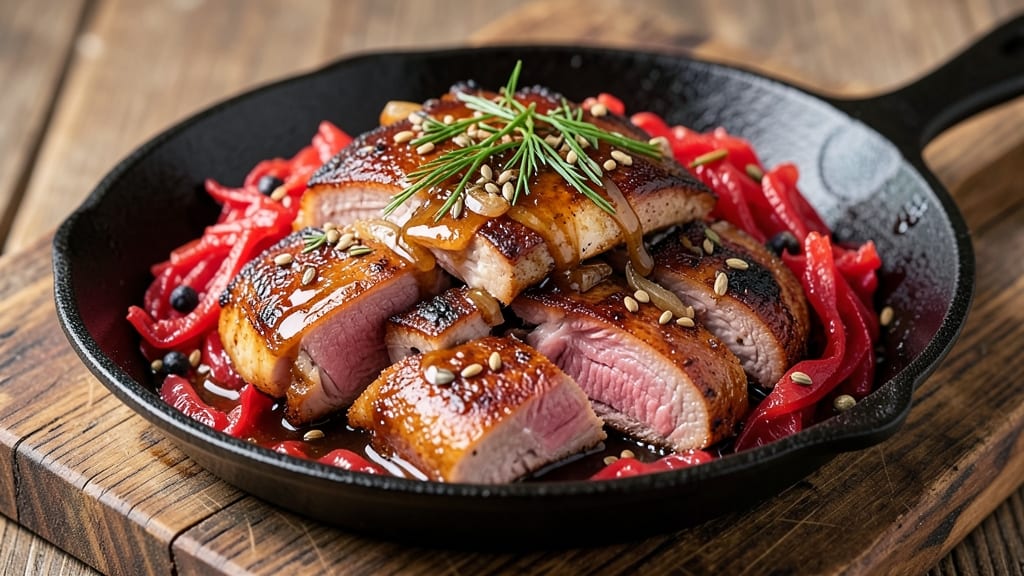
This best ever pork and sauerkraut recipe delivers restaurant-quality depth in a single pot, where tender pork shoulder meets tangy sauerkraut in a symphony of smoky-sweet flavors. 🔥 After years of perfecting this dish in my Charleston kitchen, I've cracked the code for balancing acidity and achieving that perfect caramelized crust—no shortcuts, just time-tested technique.
The secret lies in slow-braising the pork until it practically falls apart, then letting the sauerkraut's natural tang cut through the richness while absorbing all that deep, savory flavor.
The magic happens when you brown the pork first—this critical step develops a rich, caramelized crust that forms the flavor foundation.
Then, we let it simmer low and slow in a mix of apple cider vinegar, juniper berries, and caraway seeds, which add just the right earthy notes to complement the sauerkraut's tang.
Unlike many recipes that rely on heavy cream or sugar to mask the acidity, this version lets the natural flavors shine while building complexity through proper cooking technique.
What you'll end up with is a dish that's rich yet balanced, tender yet substantial, with pork that's so flavorful it becomes the star while the sauerkraut adds that perfect tangy contrast.
The aroma alone will have everyone gathering at your table, and each bite delivers that perfect harmony of textures and flavors that makes this my go-to weeknight dinner—elevated enough for company but simple enough for any night.
This recipe works beautifully as a standalone main course or paired with crusty bread to soak up every last drop of that smoky-sweet braising liquid. The best part?
It only requires one pot and minimal cleanup, making it perfect for busy weeknights when you still want to feel like you've prepared something special. Let's get cooking—your taste buds will thank you.
Ingredients for best ever pork and sauerkraut
Six ingredients make this smoky-sweet braised pork the star of your weeknight table—no shortcuts, just deep flavor in one pot.
| Ingredient | Amount | Notes |
|---|---|---|
| Pork Shoulder (Boston Butt) 🍖 | 3 lb | Bone-in, cut into 1.5-inch chunks |
| Sauerkraut 🥬 | 2 cups | Unrefrigerated, drained (or jarred) |
| Apple Cider Vinegar 🍏 | ½ cup | Bragg or organic preferred |
| Juniper Berries 🌿 | 1 tbsp | Crushed, from specialty store |
| Ground Caraway Seeds 🌾 | 1 tbsp | Toasted for deeper flavor |
| Brown Sugar 🍚 | ¼ cup | Light or dark, packed |
| Dried Thyme 🌿 | 1 tbsp | Or 3 tbsp fresh thyme leaves |
| Bay Leaves 🍃 | 2 whole | Dried, standard size |
| Kosher Salt 🧂 | 1 ½ tsp | Diamond Crystal preferred |
| Fresh Black Peppercorns 🌶️ | ½ tsp | Cracked, not ground |
| Extra-Virgin Olive Oil 🫒 | 2 tbsp | High quality, fruity |
| Onion 🧅 | 1 whole | Yellow, diced (about 1 cup) |
| Garlic Cloves 🧄 | 4 cloves | Peeled, smashed |
| Beer (Optional) 🍺 | 1 cup | Dark lager or amber ale |
The pork shoulder is the hero here—bone-in for flavor, 1.5-inch chunks for even cooking. Grab the thickest cut you can find at Costco or your butcher shop; it's worth the extra time to trim any excess fat. The sauerkraut should be unrefrigerated (that's the good stuff) from the pickle aisle, not the refrigerated section. If you can't find it, jarred works too—just drain it well. The juniper berries? Penzeys or a specialty spice shop has them crushed and ready to go. Toast your caraway seeds in a dry pan for 30 seconds—that nutty aroma makes all the difference. And the beer? Only if you're feeling fancy—any dark lager works, but it's not required.
No juniper berries? Substitute 1 tsp ground allspice—it's close enough for most folks. Running low on caraway? Fennel seeds at half the amount give a similar earthy kick. The beer can be swapped for extra apple cider vinegar or even chicken broth (though the flavor won't be identical). For the onion, yellow or red both work—just dice them evenly. The garlic? Fresh is non-negotiable here—jarred minced has no soul. And if you're using fresh thyme, strip the leaves from the stems before measuring. Trust me, it's worth the extra minute.
This dish tastes even better the next day—make a double batch and freeze half for lazy nights. Store leftovers in the fridge for up to 5 days or freeze for 3 months. The braising liquid? Pour it into ice cube trays for quick flavor boosts later. The pork gets fork-tender, so let it rest 10 minutes before serving—it'll stay juicy. And if you've got crusty bread on hand, soak it up like it's going out of style. Leftovers reheat beautifully—just add a splash of water or broth to keep it moist.
Why You'll Love This Recipe
- One-Pan Magic: I swear by this—just toss the pork shoulder, sauerkraut, and spices on one sheet pan, then walk away. No chopping, no fussing, just hands-off braising while you handle the rest of dinner.
- Tangy-Sweet Crunch: The apple cider vinegar cuts through the richness of the pork, while the sauerkraut’s sharp bite and caraway’s earthy warmth make every bite ridiculously good. Juniper berries? Tiny but mighty—they add a piney depth that feels fancy without the effort.
- Leftovers That Win: This dish actually tastes better the next day, especially reheated with a splash of water. I’ve packed it for lunches, served it at potlucks, and even turned cold slices into sandwiches—no one ever complains.
- Budget-Friendly Crowd-Pleaser: Pork shoulder is cheap, sauerkraut lasts forever, and those spices? A few bucks for a jar. Feed six for under $20, and you’ll have enough for leftovers that’ll have your guests asking for the recipe. (Yes, even on a Tuesday night.)
Step-by-step instructions for smoky-sweet braised pork shoulder
This one-pot wonder transforms humble pork into restaurant-quality braised magic with deep flavors and tender meat.
🔥 Step 1: Sear the Pork for Maximum Flavor
Heat a large Dutch oven over medium-high heat until hot. Add the 2 tablespoons extra-virgin olive oil and swirl to coat the bottom. Working in batches, add the 3 lb pork shoulder (Boston Butt) cut into 1.5-inch chunks and sear undisturbed for 3-4 minutes per side until deep golden brown. This creates that irresistible crust that holds up beautifully during braising.
Don't rush this step—you're building flavor foundation here. If your pan gets crowded, work in batches and let the meat rest between additions. Once all pork is browned, transfer it to a plate and set aside. Here's the thing—those browned bits (fond) are pure flavor gold, so we'll scrape them up in the next step.
🍳 Step 2: Build the Aromatic Base
In the same Dutch oven, add the 1 whole diced onion (about 1 cup) and 4 smashed garlic cloves. Cook for 5-6 minutes until the onions soften and turn translucent. Add the 1 tablespoon toasted ground caraway seeds and 1 tablespoon dried thyme, stirring for 30 seconds until fragrant—this is where the magic happens.
Now pour in the 0.5 cup apple cider vinegar and scrape up all those browned bits from the bottom with a wooden spoon. The vinegar will bubble vigorously—let it reduce by half (2-3 minutes) before adding the 1 cup beer (if using). The beer adds depth and helps tenderize the meat. If you skipped the beer, just add 0.5 cup water instead.
🥘 Step 3: Layer in Sauerkraut and Spices
Return the pork to the Dutch oven. Add the 2 cups sauerkraut (drained), 1.5 teaspoons kosher salt, 0.5 teaspoon cracked black peppercorns, 1 tablespoon crushed juniper berries, 0.25 cup brown sugar, and 2 whole bay leaves. Stir everything together just until the sauerkraut is evenly distributed among the pork chunks.
Here's where it gets good—the sauerkraut will release its tangy juices, which combine with the vinegar and beer to create a perfect braising liquid. The sugar helps caramelize slightly during cooking, adding that sweet-savory balance we're after. Give it one final stir and bring the mixture to a gentle simmer.
⏰ Step 4: Braise Until Fork-Tender
Cover the Dutch oven with a tight-fitting lid and transfer to a 325°F oven. Braise for 3-3.5 hours until the pork is fork-tender (a knife should slide in easily with no resistance). If you don't have an oven thermometer, check the internal temperature—it should reach 200-203°F in the thickest piece.
I know it's tempting to peek, but resist! Every time you open that lid, you lose heat and moisture. Instead, trust the process. The pork will release from the braising liquid easily when it's done, and the sauce will have thickened beautifully. If you're worried about drying out, add ¼ cup water after the first 2 hours.
🍽️ Step 5: Rest and Serve with Confidence
Remove the pork from the oven and let it rest for 15-20 minutes before serving. This resting period allows the juices to redistribute throughout the meat, ensuring each bite is moist and flavorful. While it rests, you can skim any excess fat from the surface of the braising liquid if you prefer a lighter sauce.
To serve, spoon the pork and sauerkraut mixture onto plates, ladling plenty of that glorious braising liquid over the top. The pork should pull apart easily with two forks, revealing tender, juicy meat with a perfect balance of smoky, sweet, and tangy flavors. This dish pairs beautifully with crusty bread to soak up all that delicious sauce!
Pro Tips For Making Best Ever Pork And Sauerkraut
- CRANK THE HEAT FIRST: Start your pork shoulder in a screaming-hot Dutch oven—no gentle simmering. I learned this the hard way after a batch turned out soggy; the initial high heat seals the surface and renders fat aggressively, which is half the flavor. Once you add the sauerkraut, drop to a steady simmer, but that first 5 minutes of blistering? Non-negotiable.
- DRAIN, RINSE, REPEAT: Dump that sauerkraut into a colander and give it a good rinse—yes, even if it looks fine. The brine is salty enough to overpower the pork if left in, and you want the caraway and juniper to shine. Pat it dry afterward; wet sauerkraut steams instead of caramelizing, and nobody wants mushy cabbage.
- CRUSH THOSE JUNIPER BERRIES: Don’t just toss whole juniper berries in and hope for the best. Lightly crush them with the flat side of a knife or a mortar—just enough to release the oils without turning them to dust. Whole berries hide in the sauce; crushed ones infuse properly. (And if you skip this, you’ll still get flavor, but it’ll be subtle—like background music instead of a solo.)
- SAVE THE FAT, DON’T SKIM IT: That golden pork fat rendering in the pot? Let it pool and crisp up. Once the pork is browned, tilt the pan to let the fat pool in one corner, then spoon it over the sauerkraut at the end. It’ll create a glossy, rich finish that cuts through the tang. Skim it off, and you’re left with something that tastes like a budget cut instead of a showstopper.
Creative variations of best ever pork and sauerkraut
German-Inspired Sauerkraut Twist
For a true German Sauerkraut mit Würstchen vibe, swap the pork shoulder for smoked sausage links like Thüringer Rostbratwurst or knockwurst. Brown the sausages first in the Dutch oven, then proceed with the same braising method.
Add ½ cup dark beer (like Paulaner Dunkel) and 1 tbsp caraway seeds directly to the sauerkraut. Serve with mustard and pretzels for that classic German pub feel. 🌶️
Creamy Polish Adaptation
Transform this into bigos-style by adding 1 cup cooked sauerkraut (from the jar) mixed with ½ cup sour cream and 2 tbsp chopped fresh dill after braising. Stir in ½ lb Polish kielbasa, sliced, during the final 30 minutes of cooking.
The cream softens the tang while the kielbasa adds smoky depth. Garnish with paprika for a bold finish. 🇵🇱
Spicy Cajun Kick
Give it a Louisiana bayou twist by adding 1 tbsp Cajun seasoning (like Tony Chachere’s) to the pork when searing. Swap juniper berries for 1 tsp smoked paprika and ½ tsp cayenne pepper.
Stir in ½ cup chicken stock instead of beer, and finish with chopped green onions and a squeeze of lemon. Serve with cornbread for a Southern fusion feast. 🌶️
Asian-Inspired Fusion
For an umami-packed Asian twist, replace the apple cider vinegar with ½ cup soy sauce and 1 tbsp rice vinegar. Add 1 tbsp grated fresh ginger and 1 tsp sesame oil to the braising liquid.
Top with sliced scallions and toasted sesame seeds before serving. The sauerkraut’s tang cuts through the richness, creating a Korean-inspired balance. 🌏
Sweet & Smoky BBQ Shortcut
Craving BBQ flavors? After braising, mix ½ cup BBQ sauce (like Stoneyfield Farms) with 1 tbsp brown sugar and simmer for 10 minutes to thicken.
Toss the pork and sauerkraut in the sauce, then broil for 2 minutes to caramelize. Serve on buns with coleslaw for a pulled pork-style meal. 🔥
Vegetarian Sauerkraut Stew
Skip the pork and use this as a hearty vegetarian stew. Sauté 1 lb mushrooms and 1 cup diced potatoes with the onions, then add 1 cup vegetable broth instead of beer.
Stir in 1 tbsp nutritional yeast for depth and simmer 1 hour until tender. Top with crumbled feta and chopped parsley for a tangy, savory bowl. 🌱
Nutrition facts
Frequently asked questions
Can I use regular cabbage instead of sauerkraut?
While you can use raw cabbage, it won't have the same flavor profile. For best results, ferment your own cabbage for at least 3 weeks or use store-bought sauerkraut. The fermentation process creates beneficial bacteria and that signature tang that balances the pork's richness. If you're short on time, try quick-pickled cabbage (vinegar + salt) for a milder version.
What's the best cut of pork for this recipe?
Pork shoulder (Boston Butt) is ideal because it stays juicy during long braising. Look for bone-in cuts with good marbling. If you can't find pork shoulder, pork butt or even pork ribs work well—just adjust cooking time slightly. Avoid lean cuts like tenderloin as they'll dry out.
How do I fix if my pork turns out too dry?
If the pork seems dry, it likely didn't braise long enough. For future attempts, check internal temp (should reach 200-203°F) and add ¼ cup broth or water after 2 hours of cooking. For immediate fixes, shred the pork and mix it back with the braising liquid to reabsorb moisture.
Can I make this in a slow cooker? Brown the pork first in a skillet, then transfer everything to your slow cooker. Cook on low for 6-8 hours or high for 4-5 hours. The slow cooker method works especially well for busy days—just
What's the secret to balancing the sauerkraut's tang?
The key is in the braising liquid—apple cider vinegar, brown sugar, and beer all work together to create sweetness that counteracts the acidity. The juniper berries and caraway seeds add earthy depth that rounds out the flavors. Don't be afraid to taste as you go and adjust with more sugar or vinegar if needed.