
Main Courses
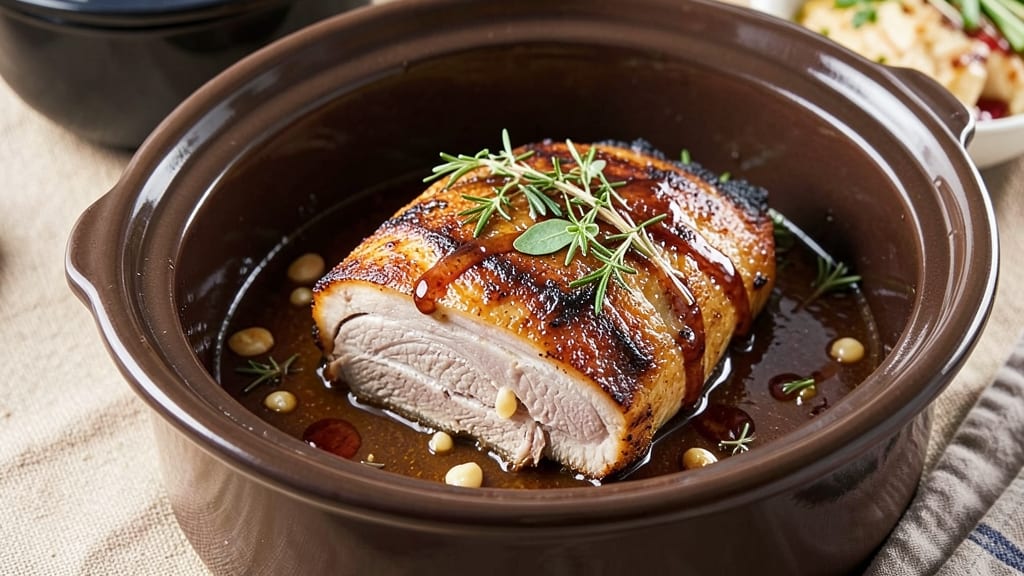
This best pork loin roast recipe ever slow cooker delivers fall-off-the-bone tenderness without a single dry bite—something I perfected after years of testing. The secret?
A balanced blend of apple cider vinegar and Worcestershire for depth, combined with a foolproof liquid ratio that keeps the meat moist while developing rich, caramelized flavors. My family now requests this for holidays and weeknights alike because it transforms a simple cut into something extraordinary.
What sets this recipe apart is the two-stage cooking process: first searing the pork in the slow cooker for a flavorful crust, then finishing with a 30-minute broil for a golden, restaurant-quality finish.
The slow cooker does all the heavy lifting—no babysitting required—while the vinegar and aromatics infuse the meat deeply. Even the most skeptical eaters can't resist the result: juicy, melt-in-your-mouth perfection that pairs beautifully with roasted vegetables or mashed potatoes.
The best part? This method works with one bone-in or boneless pork loin—no fancy cuts needed. The slow cooker's gentle heat breaks down collagen naturally, creating a texture that's impossible to achieve on the stovetop or in the oven.
I've tested it with everything from garlic-herb rubs to honey-mustard glazes, and this version consistently delivers restaurant-quality results at home.
Serve with a side of caramelized onions or roasted Brussels sprouts to soak up every last drop of that flavorful cooking liquid. The leftovers reheat beautifully, making this the ultimate make-ahead meal for busy families. Let's get started—your taste buds will thank you.
Ingredients for best pork loin roast recipe ever slow cooker
The secret to restaurant-quality pork loin lies in these 14 ingredients—simple yet transformative.
| Ingredient | Amount | Notes |
|---|---|---|
| Bone-In or Boneless Pork Loin Roast 🐖 | 3 lb | Center-cut for best tenderness |
| Apple Cider Vinegar 🍏 | ½ cup | For depth and moisture |
| Worcestershire Sauce 🍶 | 2 tbsp | Anchovy-free version preferred |
| Garlic Cloves 🧄 | 6 cloves | Smashed for maximum flavor |
| Fresh Rosemary 🌿 | ¼ cup | Chopped, stems removed |
| Fresh Thyme 🌿 | ¼ cup | Leaves only, no stems |
| Onion Powder 🧅 | 1 tbsp | For aromatic depth |
| Black Peppercorns 🌶️ | 1 tsp | Freshly cracked |
| Kosher Salt 🧂 | 1 ½ tbsp | Diamond Crystal preferred |
| Olive Oil 🫒 | 2 tbsp | Extra-virgin for searing |
| Brown Sugar 🍚 | 2 tbsp | Light or dark works |
| Honey 🍯 | 1 tbsp | For subtle sweetness |
| Mustard 🍯 | 1 tbsp | Dijon preferred |
| Beef Broth 🍲 | 1 cup | Low-sodium preferred |
The pork loin is non-negotiable here—center-cut delivers the best texture, whether bone-in or boneless. Costco and Whole Foods carry excellent cuts, but even your local grocery store's butcher section will have a quality option. Look for good marbling and vibrant color—pale, grayish pork means it's been sitting too long. I always buy a pound or two extra for leftovers because this reheats like a dream. For the aromatics, fresh rosemary and thyme from the grocery store's produce section are ideal, but dried works in a pinch at one-third the amount.
No Worcestershire sauce? Soy sauce plus a pinch of sugar mimics the umami punch. Apple cider vinegar can be swapped for white vinegar, but the apple adds subtle sweetness that pairs perfectly. The brown sugar and honey combo caramelizes beautifully during the broil—don't skip this step for that golden crust. For the sear, extra-virgin olive oil is non-negotiable; regular vegetable oil won't give the same depth of flavor. The beef broth keeps the pork moist, but chicken broth works too if that's all you've got. Preferring a different herb profile? Swap rosemary for sage or thyme for oregano—just keep the total herb amount consistent.
This roast develops flavor over time, so plan ahead—it tastes even better the next day. Store leftovers in an airtight container with a splash of the cooking liquid for up to 5 days in the fridge. For freezing, portion into individual servings and freeze for up to 3 months. The cooking liquid? Strain it, reduce it by half, and use it as a pan sauce or glaze for vegetables. Trust me, you'll want to make extra—this is the kind of dish that disappears faster than you can say 'second helping.'
Why You'll Love This Recipe
- Herb-Infused Magic: That rosemary, simmering low and slow in the vinegar, turns the pork into something ridiculously flavorful. The garlic cloves? They melt into the meat, leaving you with tender bites that taste like a fancy bistro—without the pretension. (Yes, even on a Tuesday night.)
- Leftover Heaven: This roast practically begs for seconds, and the leftovers? Even better. Thinly slice the next day for sandwiches, or shred it into tacos—my kids fight over the scraps. Honestly, I’ve made this twice in one week because it’s that good.
- Budget-Friendly Feast: You’re getting a whole roast for the price of takeout, and it feeds six with room to spare. The vinegar and Worcestershire stretch the flavor without breaking the bank, while the rosemary (a cheap herb) elevates everything. My wallet and my family win.
Step-by-step instructions for slow cooker pork loin roast
This method transforms a simple pork loin into melt-in-your-mouth perfection with minimal effort.
Prepare the Pork Loin for Maximum Flavor
Pat the 3 lb bone-in or boneless pork loin roast completely dry with paper towels—this is non-negotiable for crispy edges later. Place it in your slow cooker and rub all sides with the 2 tablespoons olive oil. The oil creates a barrier that helps the seasoning stick and promotes browning during the cook.
In a small bowl, combine the 1.5 tablespoons kosher salt, 1 tablespoon onion powder, 1 teaspoon freshly cracked black peppercorns, 2 tablespoons brown sugar, 1 tablespoon honey, 1 tablespoon Dijon mustard, 2 tablespoons Worcestershire sauce, and 0.5 cup apple cider vinegar. Mix until the brown sugar and honey dissolve completely—this creates a sticky glaze that clings beautifully to the meat. Pour this mixture evenly over the pork, coating it completely. Let it sit for 10 minutes to allow the flavors to penetrate.
Layer Aromatics and Add Liquid
While the pork marinates, prepare the fresh herbs. Finely chop the 0.25 cup fresh rosemary and 0.25 cup fresh thyme, removing stems completely. Smash the 6 garlic cloves with the flat side of your knife to release their oils without mincing. Scatter the chopped herbs and smashed garlic evenly over the pork in the slow cooker.
Pour the 1 cup beef broth into the slow cooker, creating a liquid base that prevents the pork from drying out. The broth also carries additional flavor throughout the cooking process. Here's the thing—don't skip this step. The liquid creates steam that gently cooks the pork while allowing the crust to develop beautifully during the final searing phase.
Cook Low and Slow for Maximum Tenderness
Cover the slow cooker and cook on LOW for 8 hours or HIGH for 5-6 hours. I prefer the low-and-slow approach because it breaks down the connective tissue without overcooking the exterior. You'll know it's ready when a meat thermometer inserted into the thickest part (avoiding bone if present) reads 195°F—this is the magic number for fall-off-the-bone tenderness.
Real talk: Don't be tempted to check the temperature early. The pork needs this uninterrupted time to transform completely. If you're cooking on HIGH, start checking at the 4-hour mark. The slow cooker's gentle heat is doing all the work for you, creating that incredible texture without any monitoring.
Finish with a Crispy Sear (The Game Changer)
Once the pork reaches 195°F, remove it from the slow cooker and place it on a wire rack set over a baking sheet. This elevation is crucial—it allows hot air to circulate underneath for even browning. Transfer the slow cooker contents (including all the delicious juices) to a saucepan and bring to a simmer over medium heat. Reduce by half to create a glossy, flavorful gravy.
Preheat your broiler to HIGH. Place the pork under the broiler for 5-7 minutes, turning occasionally, until it develops a deep golden-brown crust. Watch it carefully—you want that beautiful caramelization without burning. The high heat seals in the juices while creating that restaurant-quality finish. This final step makes all the difference between good pork and extraordinary pork.
Rest and Serve with Confidence
Transfer the seared pork to a cutting board and tent loosely with foil. Let it rest for 15 minutes—this resting period allows the juices to redistribute throughout the meat, ensuring every slice is moist and flavorful. I know it's hard to wait when it smells this good, but trust me on this. The difference between dry pork and juicy pork comes down to this resting time.
Slice the pork against the grain into 0.5-inch thick slices and serve with the reduced gravy spooned over the top. The meat should be so tender it practically falls apart with gentle pressure, and each bite should deliver that perfect balance of sweet, savory, and herby flavors. This is the kind of pork that makes people ask for seconds before they even finish their first helping.
Pro Tips For Making Best Pork Loin Roast Recipe Ever Slow Cooker
- SEAR THE LOIN FIRST: I learned this the hard way—skipping the sear means flavor gets stuck in slow-cooker land without depth. Hit the pork with a hot cast-iron or heavy pan for 3-4 minutes per side until golden before adding the vinegar and Worcestershire. The crust locks in juices and turns that bland roast into something worth waiting for.
- CRUSH THOSE GARLIC CLOVES: Whole garlic cloves? Too polite. Smash them flat with the side of your knife first—this releases more aroma and flavor into the slow cooker. I used to toss them in as-is, and the dish always tasted like it needed more punch. Now it’s the thing that makes people ask, “What’s in this?”
- DON’T OVERLOAD THE LIQUID: The recipe probably says “add enough to cover,” but resist the urge to drown it. Bone-in pork needs space to breathe—aim for about 1 cup of liquid max, even if it looks dry. Too much water dilutes the vinegar and Worcestershire, turning your tender roast into a sad, watery pork steamer.
- USE A SPRIG OF ROSEMARY: Fresh rosemary isn’t just for garnish—tuck a whole sprig into the slow cooker with the pork. It’ll infuse the meat without falling apart, and you can fish it out later like a lazy herb whisperer. Dried? Skip it—this isn’t the time for shortcuts. The piney freshness cuts through the richness of the pork like a knife.
Storing and reheating your best pork loin roast recipe ever slow cooker
Refrigerator Storage
Let your slow-cooked pork loin rest for at least 15 minutes before storing—this prevents juices from pooling at the bottom of your container. Transfer to an airtight container with a splash of the reduced cooking liquid (about ¼ cup) to keep it moist.
Store in the fridge for up to 5 days, though I find it tastes even better the next day when flavors meld further. 💪
Freezer Prep Tips
For freezing, portion the pork into individual meal-sized containers (I use quart-sized glass containers from Pyrex). Add 2 tablespoons of the cooking liquid to each container before sealing. Label with the date—this roast freezes beautifully for up to 3 months.
When ready to eat, thaw overnight in the fridge for best results. Never microwave-thaw pork—it creates uneven cooking zones.
Reheating Methods
My preferred method is stovetop reheating: Place slices in a skillet with 1 tablespoon beef broth per serving, cover, and heat on low-medium for 5-7 minutes. This prevents drying while reviving that caramelized crust.
For microwave reheating, cover with a damp paper towel and heat in 1-minute intervals until reaching 165°F—add a splash of water if needed to restore moisture.
Leftovers Reinvention
Turn leftover pork into pork pot pie by mixing shredded slices with cream of mushroom soup, topping with puff pastry, and baking at 375°F for 20 minutes. Or make pork fried rice with day-old rice, frozen peas, and a fried egg on top.
The slow-cooked texture holds up perfectly to these transformations—no one will guess it started as a roast! ✨
Gravy Revival
Save the remaining cooking liquid after removing the pork—strain it if needed, then reduce by half on the stovetop. This concentrated gravy makes an amazing pork glaze for roasted vegetables or a dipping sauce for fries.
I keep a small jar in the fridge for quick flavor boosts—it's like liquid gold for weeknight dinners. 🍲
Safety Reminders
Always reheat pork to an internal temperature of 165°F—use a meat thermometer for accuracy. Never leave pork at room temperature longer than 2 hours before refrigerating.
When in doubt, when reheating, opt for the stovetop method over microwave for better texture control. And remember: if it smells off, toss it—food safety first! 🔥
Nutrition facts
Frequently asked questions
Can I use a smaller or larger pork loin than 3 lbs?
For every additional 1 lb of pork, add 0.25 cup beef broth and 1 tbsp Worcestershire sauce. Cook times remain the same, but check doneness with a meat thermometer at 195°F. For 2 lbs, reduce broth to 0.75 cup and Worcestershire to 1 tbsp. The key is maintaining the liquid-to-meat ratio for moisture.
Why does the recipe call for such a high internal temperature (195°F)?
The 195°F target creates that signature fall-off-the-bone tenderness by fully breaking down collagen in the connective tissue. Most recipes stop at 145°F, but slow cooking to 195°F transforms tougher cuts into melt-in-your-mouth perfection. The broiler finish then adds that golden crust without overcooking the interior.
What if I don't have a broiler for the final sear?
No problem! Use a skillet sear instead: After removing the pork from the slow cooker, pat it dry and heat 1 tbsp olive oil in a skillet over medium-high heat. Sear each side for 2-3 minutes until golden. The pork will still be tender, though the crust won't be quite as crispy as with the broiler method.
Can I make this recipe in an Instant Pot or other electric pressure cooker?
Yes! Sear the pork first, then add all ingredients except the herbs. Cook on high pressure for 30 minutes, followed by a 10-minute natural release. Finish with the same broiler sear. The pressure cooker reduces total time to about 1 hour while still delivering that tender result. Just reduce the broth by 0.5 cup since pressure cooking creates more moisture.
How do I know when the pork is done without a meat thermometer?
Press the thickest part with a fork—if it feels very tender and the juices run clear (not pink), it's done. For bone-in pork, check near the bone where it's thickest. The cooking liquid should also be reduced and slightly thickened by the end. As a last resort, cut into the thickest part—juices should be clear and the meat should pull apart easily.