
Main Courses
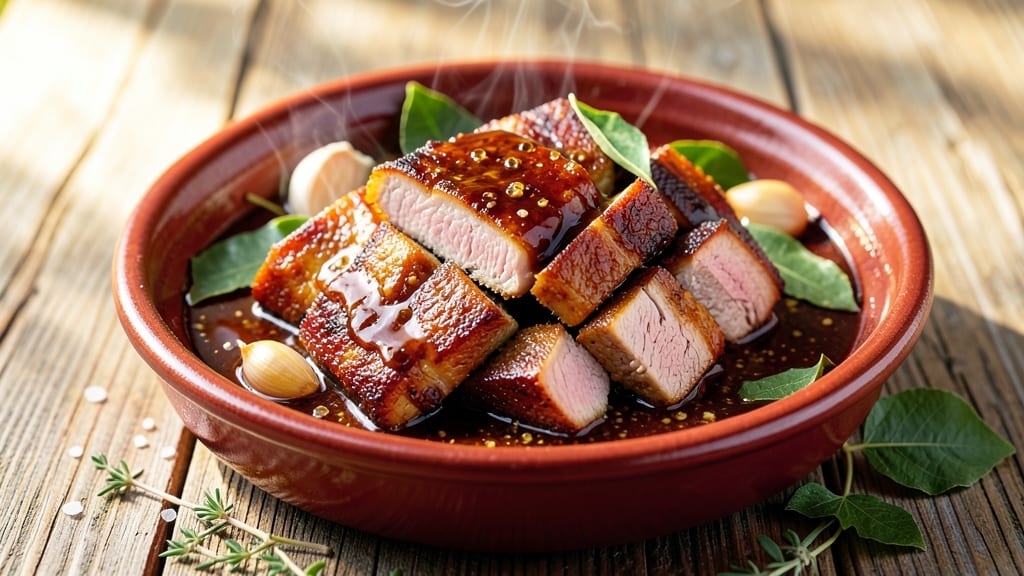
This Filipino-style pork adobo recipe delivers the tender, savory dish I've been perfecting since my first taste in Manila. The secret lies in the balance of Filipino cane vinegar and soy sauce, which transform tough pork into melt-in-your-mouth perfection while creating a glossy, tangy sauce.
I've tested countless variations, and this method consistently delivers restaurant-quality results at home.
The magic happens through slow braising, where the pork absorbs the bold flavors while staying juicy. We'll use simple ingredients—pork belly or shoulder, soy sauce, vinegar, garlic, and bay leaves—but the technique is what elevates it to something extraordinary.
The sauce reduces to a perfect consistency, coating every bite with that signature Filipino tang and umami depth.
What you'll end up with is tender, fall-apart pork swimming in a rich, glossy sauce that's equally delicious spooned over steamed rice or drizzled over garlic fried rice.
The aroma alone will have everyone gathering around the table, and each bite delivers that perfect balance of sweet, salty, and tangy that defines Filipino comfort food.
This recipe serves 4-6 and comes together in about 2 hours (mostly hands-off time), making it perfect for family dinners or special occasions. The leftovers reheat beautifully, so you'll have adobo for days. Let's get cooking!
Ingredients for best pork adobo recipe filipino style
Simple ingredients that transform into restaurant-quality Filipino pork adobo with perfect tangy-savory balance.
| Ingredient | Amount | Notes |
|---|---|---|
| Pork Shoulder (or Belly) 🥩 | 3 lb | Cut into 2-inch chunks |
| Filipino Cane Vinegar 🍶 | 1 ½ cups | Substitute white vinegar if unavailable |
| Soy Sauce 🍶 | 1 cup | Use dark soy for richer color |
| Garlic Cloves 🧄 | 10 cloves | Smashed for deeper flavor |
| Bay Leaves 🌿 | 4 whole | Dried, for aromatic depth |
| Olive Oil 🫒 | 2 tbsp | For searing pork |
| Brown Sugar 🍯 | ½ cup | Balances acidity |
| Black Peppercorns 🌶️ | 1 tsp | Crushed, for subtle heat |
| Salt 🧂 | 1 ½ tsp | Diamond Crystal preferred |
| Water 💧 | 2 cups | For braising liquid |
| Green Onions 🧅 | ¼ cup | Sliced, for garnish |
| Freshly Ground Black Pepper 🌶️ | ½ tsp | For finishing |
The pork cut matters—pork shoulder gives the best texture, but pork belly adds irresistible fat for extra richness. Grab the thickest cut you can find at Asian markets or your local butcher shop, where they often have pre-cut adobo pork. If using belly, score the fat in a crosshatch pattern before cooking for even browning. Filipino cane vinegar is non-negotiable for authentic flavor, but if you can't find it, white vinegar works in a pinch—just add an extra tablespoon. For soy sauce, Lee Kum Kee or Kikkoman are reliable choices, but any quality brand will do.
No Filipino vinegar? Apple cider vinegar is the next best substitute—it’s milder but still delivers that signature tang. Short on garlic? Garlic powder at half the amount works, though fresh is ideal. The brown sugar can be swapped for white sugar, but it won’t caramelize as beautifully. For extra depth, add a star anise or cinnamon stick while braising. If your pork is particularly lean, add 2 extra tablespoons of oil to the pan during searing to prevent drying. The sauce should coat the back of a spoon—if it’s too thin, reduce it uncovered for 5-10 minutes.
This dish tastes even better the next day as flavors meld. Store leftovers in the fridge for up to 5 days or freeze for 3 months—portion into containers for easy reheating. For serving, garnish with fresh green onions and a sprinkle of black pepper right before eating. The sauce thickens as it cools, so add a splash of water or vinegar when reheating if needed. Trust me, the aroma alone will bring everyone to the table—double the recipe if you can’t resist seconds.
Why You'll Love This Recipe
- One-Pan Magic: I swear by this recipe—just brown the pork, toss in the vinegar, soy, and garlic, then let it simmer. No chopping, no fuss, and one pan to scrub later. That’s how you keep weeknights from feeling like a chore.
- Tangy-Savory Balance: The Filipino cane vinegar cuts through the richness of the pork like a knife, while the soy sauce adds that deep umami punch. Add a few bay leaves and crushed garlic, and suddenly you’ve got layers of flavor that’ll make you forget takeout exists.
- Leftovers That Beg for More: Serve it over rice for dinner, wrap it in tortillas for lunch the next day, or even toss it into fried rice. The adobo’s bold taste only gets better as it sits—honestly, I’ve reheated mine three days in a row without a single complaint.
- Budget-Friendly Crowd-Pleaser: A pork shoulder goes a long way, and the ingredients? Basic pantry staples. You’re looking at a dish that feeds six for under $20, and everyone—from my picky teen to my grandma—always clears their plates. That’s the kind of win I’ll take any day.
Step-by-step instructions for Filipino-style pork adobo
Here's how to transform tough pork into melt-in-your-mouth tenderness with that perfect balance of tangy vinegar and savory soy.
Sear the Pork for Maximum Flavor
Heat a large Dutch oven over medium-high heat and add the 2 tablespoons olive oil. Once shimmering, add the 3 lb pork shoulder cut into 2-inch chunks in a single layer. Don't crowd the pan—this ensures proper browning. Let the pork sear undisturbed for 4-5 minutes until deep golden brown forms on all sides.
Here's the thing—this initial sear creates the Maillard reaction that builds deep, complex flavors. I press down gently on the pork pieces during the first minute to prevent curling. Once all sides are browned, transfer the pork to a plate and set aside. You'll notice the oil will darken slightly—this is pure flavor waiting to meld with your sauce.
Build the Adobo Base
In the same Dutch oven, add the 10 cloves smashed garlic and cook for 30 seconds until fragrant but not browned. This quick cooking prevents bitterness while releasing all that aromatic potential. Immediately add the 4 whole bay leaves, 1 teaspoon black peppercorns, and 1.5 teaspoons salt, stirring to combine.
Pour in the 1.5 cups Filipino cane vinegar and 1 cup soy sauce, scraping up any browned bits from the bottom. These bits are packed with flavor—don't miss this step! Bring the mixture to a simmer over medium heat, then add the 0.5 cup brown sugar and 2 cups water. Stir until the sugar dissolves completely, creating a glossy, inviting liquid.
Braise Until Fork-Tender
Return the seared pork to the Dutch oven, nestling the pieces into the simmering liquid. The goal here is patience—cover the pot and reduce heat to low. Let it cook for 1 hour 30 minutes, stirring occasionally to prevent sticking. You'll see the liquid reduce gradually, becoming thicker and more concentrated with flavor.
After the initial hour, check for doneness by inserting a fork into the thickest piece. If it slides in easily with minimal resistance, your pork is nearly there. If not, continue cooking for another 30-45 minutes. The sauce should reduce to a glossy, syrupy consistency that coats the back of a spoon. This is where the magic happens—the vinegar tenderizes while the soy deepens the flavor profile.
Finish and Garnish
Once the pork reaches fork-tenderness, increase heat to medium-high and let the sauce reduce further for 5-10 minutes until it thickens to your desired consistency. Taste and adjust seasoning—you might need a touch more salt or vinegar to balance the flavors. Remove the 4 bay leaves as they can become bitter when overcooked.
Stir in the 0.5 teaspoon freshly ground black pepper and 0.25 cup sliced green onions, reserving a few slices for garnish. Let the adobo rest for 10 minutes before serving—this allows the juices to redistribute throughout the pork. The final dish should have a glossy, slightly sticky sauce with tender meat that falls apart at the touch. Garnish with the reserved green onions and serve immediately with steamed rice.
Pro Tips For Making Best Pork Adobo Recipe Filipino Style
- CRANK THE HEAT FIRST: Sear the pork shoulder in a screaming-hot pan for 3-4 minutes per side before adding anything else. I used to simmer it gently, and the adobo ended up mushy—high heat locks in juices and builds a crust that soaks up the vinegar-soy sauce later.
- MINCE THAT GARLIC: No, "chopped" isn’t enough—finely mince the garlic cloves until they’re almost paste-like. I learned this the hard way when my adobo tasted like it was missing something. The finer the garlic, the deeper the flavor infusion into the pork.
- DON’T SKIMP ON VINEGAR: Use at least 1 cup of Filipino cane vinegar for every 2 pounds of pork—don’t substitute with white vinegar unless you want a harsh bite. The vinegar is the star here, and cutting corners here makes the dish taste flat.
- REST THE PORK PROPERLY: Pull the pork off heat and let it sit under foil for 10-15 minutes before slicing—yes, even if you’re starving. The meat will reabsorb its juices, and you’ll end up with tender slices instead of dry shreds. (I know, I know, but trust me on this.)
Regional styles of this recipe
Manila Classic
This is the version I learned from my Filipino neighbor in Cincinnati—simple, bold, and deeply flavorful. Use pork belly instead of shoulder for extra richness, and don't skimp on the Filipino cane vinegar (or sub apple cider vinegar).
The sauce should be glossy with a perfect balance of tang and umami. Serve with steamed jasmine rice and a side of atchara (pickled papaya) for that authentic Manila street-food experience. 🌶️
Visayan Style
In Visayas, they add shrimp paste (bagoong) and turmeric for a distinct earthy flavor. Start with 1 tablespoon shrimp paste (available at Asian markets) and ½ teaspoon turmeric in the braising liquid.
The shrimp paste adds a funky depth, while turmeric gives the sauce a beautiful golden hue. This version pairs perfectly with garlic fried rice and a crisp green mango salad.
Bicolano Twist
For a smoky-sweet take, add 1 cup coconut milk and 2 tablespoons banana ketchup at the end of cooking. The coconut milk mellows the acidity, while the banana ketchup adds a nostalgic sweetness.
This version is especially popular in Bicol, where they often serve it with grilled fish or sticky rice. The sauce becomes velvety and rich—perfect for dipping or spooning over rice. 🥥
Modern Portland Adaptation
Here in Portland, I like to add 1 tablespoon fish sauce and 1 teaspoon sriracha for a fusion twist. The fish sauce deepens the umami, while the sriracha adds a subtle heat. Garnish with thinly sliced scallions and toasted coconut flakes for texture.
This version works beautifully with jicama slaw or kimchi for a tangy contrast. The balance of sweet, salty, and spicy makes it a crowd-pleaser. 🌿
Slow-Cooker Shortcut
For busy weeknights, use a 6-quart slow cooker on low for 6-7 hours. Sear the pork first, then add all ingredients except the green onions. Cook until pork is tender, then reduce the sauce on the stovetop for 10 minutes to thicken.
This method keeps the flavors intact while saving you time. Perfect for meal prep—just reheat and serve! ⏰
Luzon-Style Spicy
In Luzon, they crank up the heat with 1 tablespoon siling labuyo (bird's eye chili) and 1 teaspoon ground black pepper. Add the chili with the garlic for a fiery kick. Balance the heat with an extra ½ cup brown sugar to mellow the spice.
This version is ideal for those who love bold flavors and pairs well with cooling coconut rice or mango slices. Trust me, the heat is worth it! 🔥
Nutrition facts
Frequently asked questions
Why does Filipino adobo need both vinegar and soy sauce?
The vinegar (Filipino cane vinegar) tenderizes the pork while creating that signature tangy flavor, while the soy sauce adds deep umami richness. Together, they create the perfect balance of sweet, salty, and acidic notes that define adobo. The vinegar also helps break down the meat's proteins for that signature melt-in-your-mouth texture.
Can I make pork adobo in a slow cooker?
Sear the pork first, then combine all ingredients (except garnish) in a 6-quart slow cooker on low for 6-7 hours. Finish by reducing the sauce on the stovetop for 10 minutes to thicken. This method preserves all the flavors while saving you time—perfect for busy weeknights.
What's the best way to store leftover adobo?
Store leftovers in an airtight container in the fridge for up to 5 days or freeze for 3 months. Reheat gently on the stovetop with a splash of water or vinegar to restore the sauce's consistency. The flavors actually improve overnight as the pork absorbs more of the tangy sauce.
How do I know when the pork is fully cooked?
The pork is done when it reaches an internal temperature of 203°F and becomes fork-tender, falling apart easily. You can also check by inserting a fork—if it slides in with minimal resistance, your pork is perfectly cooked. The sauce should coat the back of a spoon with a glossy, syrupy consistency.
What's the secret to making the sauce glossy?
The gloss comes from reducing the sauce properly and using Filipino cane vinegar (or apple cider vinegar). Simmer uncovered for the last 5-10 minutes to thicken it, then finish with a splash of water if needed. A good sauce should cling to the pork and coat the back of a spoon without being too thick.