
Main Courses
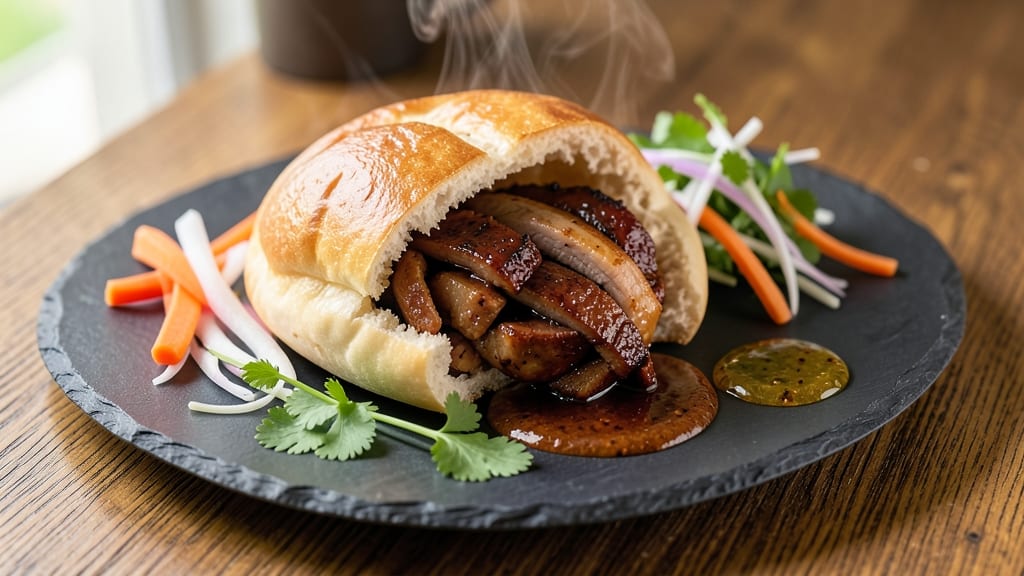
This BBQ pork bao bun recipe brings the bold flavors of Vietnamese street food to your kitchen with tender pulled pork and pillowy steamed buns. 🔥 After perfecting my own version—balancing smoky, sweet, and savory notes—I can confidently say this dish delivers restaurant-quality results at home. The secret lies in marinating the pork overnight, then slow-cooking it until it practically melts in your mouth.
The bao buns themselves are the star—soft, fluffy, and just the right size to hold generous portions of that sticky-sweet filling. I’ve included both steamed and pan-fried methods, so you can choose based on your preferred texture and equipment.
For the filling, a blend of fish sauce, brown sugar, and five-spice powder creates depth that pairs perfectly with the buns.
What makes this recipe truly special is how it comes together: tender pork, fragrant marinade, and buns that steam to golden perfection. The result is a dish that’s equally impressive for weeknight dinners or weekend gatherings.
Serve with pickled vegetables, fresh cilantro, or a drizzle of sriracha mayo for that extra kick.
Whether you’re making these for a crowd or treating yourself to a taste of Vietnam, this recipe delivers on flavor, texture, and simplicity. Let’s get cooking—your taste buds will thank you.
Ingredients for bbq pork bao bun
Sixteen ingredients, two days of flavor—pork so tender it melts, buns so light they disappear.
| Ingredient | Amount | Notes |
|---|---|---|
| Pork Shoulder 🐷 | 3 lb | Bone-in preferred for flavor |
| Five-Spice Powder 🌶️ | 1 tbsp | Toasted for deeper aroma |
| Fish Sauce 🍶 | ½ cup | Red Boat preferred quality |
| Brown Sugar 🍚 | ¾ cup | Light or dark variety |
| Lime Juice 🍋 | ¼ cup | Freshly squeezed preferred |
| Garlic Cloves 🧄 | 6 cloves | Minced for marinade |
| Ginger Root 🌿 | 2 tbsp | Freshly grated, peeled |
| Soy Sauce 🍶 | ¼ cup | Kikkoman preferred |
| Unbleached All-Purpose Flour 🌾 | 4 cups | For bao dough |
| Instant Yeast 🍞 | ½ tsp | Active dry works too |
| Granulated Sugar 🍚 | 1 tbsp | For bao dough |
| Vegetable Oil 🫒 | ½ cup | For dough and frying |
| Sesame Oil 🫒 | 1 tbsp | Toasted for aroma |
| Fresh Cilantro 🌿 | ¼ cup | Chopped for garnish |
| Pickled Carrots 🥕 | 1 ½ cups | Thinly sliced, optional |
The pork shoulder is non-negotiable here—bone-in adds depth, but any cut with good marbling works. Costco or Trader Joe's often have great deals on pork shoulder. Look for cuts with visible fat—it renders beautifully during slow cooking. For the five-spice powder, Penzeys or bulk bins at Asian markets have the best quality. Fresh ginger and garlic are essential; pre-minced jars lack the punch. If you're short on time, frozen ginger works (just thaw and grate). The fish sauce? Red Boat is the gold standard—avoid the cheaper brands that can taste harsh.
No fish sauce? Soy sauce plus a dash of Worcestershire gets you close, though it won't be identical. Fresh lime juice hard to come by? Bottled works in a pinch, but add a pinch of salt to compensate. For the bao dough, King Arthur Flour is my go-to—it's reliable and yields perfect buns. If you can't find instant yeast, use active dry at the same amount, just let it proof longer. The pickled carrots can be store-bought or homemade—quick-pickle them in rice vinegar and sugar if you're feeling ambitious. And that sesame oil? Toast it in a dry pan for 30 seconds first—trust me, it makes all the difference.
Marinated pork keeps 3 days in the fridge, but tastes best after overnight marinating. The bao dough can be made 2 days ahead—just store it wrapped in plastic. For the filling, reheat gently on low heat to maintain tenderness. These buns freeze beautifully—steam from frozen (add 5 extra minutes) or thaw overnight. I always make a double batch of filling and freeze it in portions—3 months in the freezer with no texture loss. Garnish with cilantro right before serving, as it wilts quickly.
Why You'll Love This Recipe
- One-Pot Magic: That pork shoulder? It practically cooks itself—just toss it with five-spice, fish sauce, and brown sugar, then let the slow cooker do the work. Honestly, I’ve made this while answering emails, and it still turns out tender enough to melt.
- Umami Bomb: Between the fish sauce’s salty depth and that bright lime finish, every bite is a flavor explosion. The five-spice powder adds this warm, aromatic kick that makes it taste like a restaurant dish—without the fuss.
- Leftover Hero: This keeps perfectly for days, so I make a big batch and use it for bao sandwiches, rice bowls, or even quick stir-fries. (Yes, even on a Tuesday night.) The pork gets better as it rests—trust the process.
- Budget Flex: Pork shoulder is cheap, and a little goes a long way. I stretch it across lunches, potlucks, or as a protein for stir-fries, and the five-spice and fish sauce make it taste like a splurge. My wallet thanks me.
Step-by-step instructions for BBQ pork bao buns
Let's make these irresistible bao buns with tender pork filling and pillowy dough.
🔥 Step 1: Marinate and Braise the Pork Shoulder
In a large bowl, combine the 3 lb pork shoulder, 1 tbsp five-spice powder, 0.5 cup fish sauce, 0.75 cup brown sugar, 0.25 cup lime juice, 6 cloves minced garlic, 2 tbsp grated ginger, and 0.25 cup soy sauce. Massage the marinade into the meat until fully coated. Cover and refrigerate for at least 4 hours (overnight is best).
After marinating, transfer the pork to a Dutch oven and add just enough water to come halfway up the meat. Bring to a boil over high heat, then reduce to a simmer and cover. Braise for 3 hours until the pork is fork-tender and easily shreds. Let it rest for 15 minutes before shredding with two forks.
🍳 Step 2: Prepare the Bao Dough
In a stand mixer fitted with the dough hook, combine 4 cups unbleached all-purpose flour, 0.5 tsp instant yeast, and 1 tbsp granulated sugar. Mix on low speed until combined, then add 0.5 cup vegetable oil and 1 tbsp sesame oil. Knead for 8-10 minutes until the dough is smooth and elastic, pulling away from the sides of the bowl.
Transfer the dough to a lightly oiled bowl, cover with a damp towel, and let rise in a warm place for 1-2 hours or until doubled in size. This resting time is crucial for developing that signature bao bun tenderness. Gently punch down the dough to release air before shaping.
🥘 Step 3: Shape and Steam the Bao Buns
Divide the dough into 6 equal pieces (about 6 ounces each). Roll each piece into a ball, then use your thumb to create a small indentation in the center. Place 2-3 tablespoons of shredded pork filling into each indentation, then gently seal by pinching the dough around the filling. Cover with a damp towel and let rest for 20 minutes to relax the gluten.
Line a steamer basket with parchment paper and bring water to a rolling boil. Steam the bao buns for 12-15 minutes until they're golden brown at the bottom and puffed to nearly double their size. The steam should create a crispy bottom crust while keeping the interior soft and pillowy.
🍽️ Step 4: Assemble and Serve
Transfer the steamed bao buns to a plate and let cool for 5 minutes. Carefully slice each bun in half horizontally to reveal the smoky-sweet pork filling. Garnish with 0.25 cup chopped fresh cilantro and serve with 1.5 cups thinly sliced pickled carrots on the side for that perfect tangy contrast.
For the ultimate experience, serve these bao buns warm with a side of chili oil or hoisin sauce. The contrast of the crispy exterior, soft interior, and flavorful filling makes every bite unforgettable. Don't be surprised if they disappear faster than you can say "bao bun"!
Pro Tips For Making Bbq Pork Bao Bun
- Braise Until Fork-Tender: Pork shoulder needs patience—don’t rush it. Simmer uncovered on medium-low heat until it shreds with a fork (about 3-4 hours), letting the sauce reduce naturally. I used to walk away when it smelled done, but the meat was still chewy. Now I check every 30 minutes after 2 hours.
- Toast the Five-Spice: Dry-toast the five-spice powder in a small pan for 30 seconds before adding it to the pork. This wakes up the flavors and cuts through the pork’s richness. My grandmother swore by this, and she was right: the aroma alone makes the dish taste deeper.
- Balance the Fish Sauce: Taste the sauce mid-cooking—fish sauce is sneaky. Start with half the recipe’s amount, then adjust. Too much? Add a splash of lime juice to brighten it. Too little? A pinch of sugar balances the salt. I learned this the hard way after overdoing it and ruining a batch.
- Caramelize the Sugar: Let the brown sugar melt and darken slightly before adding liquid—this adds depth. Skip this, and the sauce will taste flat. I was skeptical until I tried it: the difference is noticeable, even if it takes an extra 5 minutes. (Yes, even if you’re impatient like me.)
Creative variations of this bbq pork bao bun
Vietnamese Street Style
For a more authentic experience, swap the braising method for a grill-finished approach. After marinating the pork overnight, sear it in a cast-iron skillet over medium-high heat for 5 minutes per side until caramelized.
Then transfer to a 275°F oven for 2 hours until fork-tender. This creates a smoky crust while keeping the interior juicy—just like the buns you'd find at Saigon street stalls. 🔥
Use rice flour instead of all-purpose for the bao dough to achieve that signature chewy texture. I like mixing 3 cups unbleached all-purpose flour with 1 cup rice flour for a perfect balance.
For extra authenticity, add 1 tsp baking powder to the dough to help with the rise. Serve with pickled daikon instead of carrots for that classic Vietnamese tang.
Smoky Grill Adaptation
Take this recipe outdoors with a smoked pork shoulder approach. After marinating, smoke the pork at 225°F with hickory or applewood chips for 6-8 hours until tender. The smoky flavor pairs beautifully with the sweet-savory filling.
I recommend using a Traeger or Weber Smokey Mountain for consistent temperature control. Finish by shredding the pork and mixing it with 1 tbsp hoisin sauce for extra depth. 💫
Spicy Thai Fusion
Add a Thai twist by incorporating red curry paste into the marinade. Mix 2 tbsp red curry paste (like Maesri) with the existing marinade ingredients for a spicy-sweet flavor profile. Serve with a side of Thai chili sauce and fresh Thai basil instead of cilantro.
For extra heat, add 1 tbsp sambal oelek to the filling before assembling the buns. This fusion keeps the bao bun structure while delivering bold Thai flavors.
Sweet and Sour Glaze
Elevate the filling with a homemade sweet and sour glaze. Simmer ½ cup pineapple juice, ¼ cup rice vinegar, 2 tbsp brown sugar, and 1 tbsp soy sauce until reduced by half.
Toss the shredded pork in this glaze before assembling the buns. The tangy-sweet contrast is a game-changer. I like finishing with a sprinkle of toasted sesame seeds and green onions for extra texture and color. 💛
Pan-Fried Crispy Buns
For a crispier exterior, try pan-frying the bao buns after steaming. After steaming for 10 minutes, carefully transfer the buns to a hot skillet with 1 tbsp neutral oil and fry for 1-2 minutes per side until golden brown.
This creates a crispy, almost croissant-like texture while keeping the inside soft. Serve with a side of sriracha mayo for dipping—it’s a crowd-pleaser at any gathering.
Nutrition facts
Frequently asked questions
Can I make the bao buns ahead of time?
The bao dough can be made 2 days ahead—just store it wrapped tightly in plastic in the fridge. For the filling, cook the pork and refrigerate it in an airtight container for up to 3 days. When ready to serve, steam the buns from frozen (add 5 extra minutes) or reheat gently in a skillet. The texture stays perfect when stored properly.
What's the best way to keep the bao buns soft?
Steam is your friend here! Always use a bamboo steamer lined with parchment paper to prevent soggy bottoms. For extra softness, brush the buns with a little melted butter after steaming. Keep them covered with a damp towel to maintain moisture—never let them dry out. If reheating, steam again for 2-3 minutes to restore that pillowy texture.
Can I substitute pork shoulder with another cut?
Yes! Pork butt or pork loin work well—just adjust cooking times. For leaner cuts like loin, add 1 tbsp extra oil to the marinade to keep it moist. Pork belly is another great option (remove the skin first), but it has more fat and may need 15-20 minutes less braising time. The key is choosing a cut with good marbling for that melt-in-your-mouth texture.
How do I fix bao buns that didn't puff up?
Under-risen buns usually happen from cold dough or insufficient yeast. Next time, place the dough in a warm spot (like a turned-off oven with the light on) to help it rise faster. If it's already shaped, steam them for 5 extra minutes—the heat will encourage puffing. For immediate fixes, gently press down on the top of each bun with a spoon while steaming to help it expand.
What's the best way to reheat leftovers?
For best results, steam leftovers for 3-4 minutes to restore moisture without drying them out. If you prefer crispy buns, pan-fry them in 1 tbsp oil over medium heat for 1-2 minutes per side. Microwaving is possible (use 10-second bursts with a damp paper towel), but the texture suffers. Always reheat gently to avoid tough buns.