
Main Courses
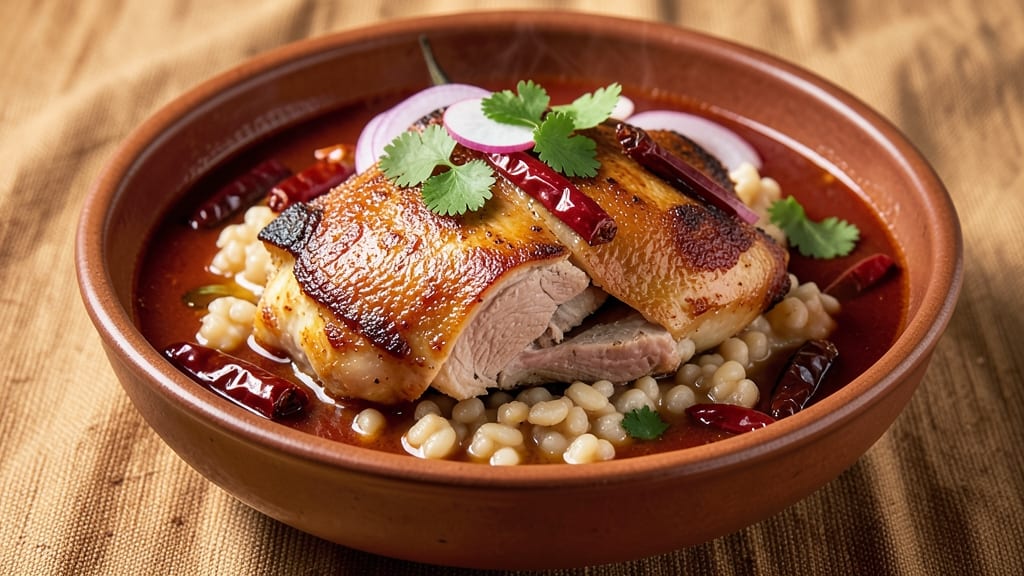
This chicken and pork posole recipe brings the hearty, smoky comfort of Mexican home cooking to your table with every tender bite. 🌟 The secret lies in slow-simmered broth infused with hominy, where crispy pork and juicy chicken melt into a flavorful embrace—just like your abuela used to make.
What sets this version apart is the balance of rich red chile and earthy spices, creating depth that transforms simple ingredients into something extraordinary.
Traditional posole begins with properly prepared hominy—soaked and simmered until tender, forming the stew's creamy backbone. The broth develops layers of smoky flavor from charred chiles and aromatic spices, while the pork shoulder breaks down into fork-tender pieces.
This isn't just a stew; it's a celebration of Mexican comfort food that brings warmth to any meal.
The result is a bowl of smoky homestyle stew with perfectly seasoned meat, velvety hominy, and a broth so flavorful it disappears faster than you can say "más." Garnishes like crisp radishes, fresh cilantro, and a squeeze of lime add brightness and texture, turning each serving into a complete experience.
Whether you prefer red or white posole, this recipe delivers authentic taste without compromise.
Serve with warm tortillas and a cold beer for the full experience—this is the kind of meal that feeds the soul as much as it satisfies hunger. Let's get cooking and bring a taste of Mexico home.
Ingredients for chicken and pork posole
Sixteen ingredients for a stew that tastes like home—smoky, tender, and full of tradition.
| Ingredient | Amount | Notes |
|---|---|---|
| Pork Shoulder 🐖 | 2 ½ lb | Bone-in, cut into 1-inch chunks |
| Chicken Thighs 🍗 | 1 ½ lb | Bone-in, skin-on, trimmed |
| White Hominy 🌽 | 2 cans | 15 oz each, drained and rinsed |
| Dried Ancho Chiles 🌶️ | 4 whole | Stems and seeds removed |
| Dried Guajillo Chiles 🌶️ | 3 whole | Stems and seeds removed |
| Onion 🧅 | 1 whole | Yellow or white, chopped |
| Garlic Cloves 🧄 | 6 cloves | Peeled and smashed |
| Tomatoes 🍅 | 4 whole | Roma or vine-ripened, quartered |
| Chicken Broth 💧 | 6 cups | Low-sodium preferred |
| Bay Leaves 🌿 | 2 whole | Dried, for depth of flavor |
| Oregano 🍃 | 1 tbsp | Dried Mexican oregano preferred |
| Cumin 🌿 | 1 tbsp | Ground, toasted for warmth |
| Salt 🧂 | 1 ½ tsp | Kosher or sea salt |
| Black Pepper 🌶️ | ½ tsp | Freshly ground |
| Lime 🍋 | 1 whole | Juiced, for finishing |
| Radishes 🥕 | 2 whole | Thinly sliced, for garnish |
| Fresh Cilantro 🌿 | ½ cup | Chopped, for garnish |
| Avocado Oil 🫒 | 2 tbsp | High smoke point for searing |
The pork shoulder is non-negotiable here—it's what gives posole that signature melt-in-your-mouth texture. Look for bone-in cuts at Whole Foods or your local butcher shop, as the bones add richness to the broth. Chicken thighs hold up better than breasts to the long simmer, so don't swap unless you're okay with drier meat. For the chiles, La Costeña or Goya brands are reliable, but any dried Mexican chiles work. Toast them lightly before soaking to deepen their flavor—this is where the smoky depth comes from. The hominy should be canned, not dried, for convenience without sacrificing texture.
No ancho or guajillo chiles? Ancho alone works in a pinch, but the guajillo adds a bright, tangy contrast. Substitute with pasilla chiles at half the quantity if that's what you've got. The Mexican oregano is a game-changer—regular oregano won't cut it. If you can't find it, double the regular oregano and add a pinch of cinnamon. For the tomatoes, vine-ripened ones have more flavor, but Roma tomatoes are a solid backup. The broth can be homemade or store-bought—just watch the sodium. Pacific Foods or Imagine brands are low-sodium and widely available.
This stew tastes even better the next day, so make a big batch. Store in airtight containers in the fridge for up to 5 days or freeze for 3 months. The hominy and meat keep well separately if you prefer, but the broth freezes beautifully. For serving, keep the garnishes—radishes, cilantro, and lime—separate until ready to eat. They add freshness and crunch that contrasts perfectly with the rich stew. Reheat gently on the stove, adding a splash of water if it's too thick.
Why You'll Love This Recipe
- One-Pot Magic: I swear by this recipe when I’m too tired to dirty more than one pot. The pork shoulder and chicken thighs practically fall apart on their own—just sear them, add the hominy and chiles, and let the slow simmer do the work. Honestly, the cleanup is almost as good as the meal.
- Smoky Depth Bomb: Between the ancho and guajillo chiles, this broth has that rich, smoky punch that makes you forget it’s just a stew. I’ll be real: the first time I tasted it, I thought, "Wait, is this actually homemade?"—because it’s that good. The hominy adds this perfect chewy bite that balances everything.
- Party-Ready Crowdpleaser: This is my go-to when I’ve got friends over or need to feed a family. It’s hearty enough for a main dish but still light enough that no one feels stuffed. Between us, I’ve served it at everything from casual Taco Tuesdays to holiday dinners—it’s that versatile.
- Budget-Friendly Feast: Pork shoulder and chicken thighs stretch for miles, and dried chiles last forever, so this recipe actually saves me money. Plus, leftovers reheat like a dream—better the next day, if you ask me. It’s the kind of dish that makes grocery day feel like a win.
Step-by-step instructions for smoky homestyle chicken and pork posole
Here's how to build this hearty stew with deep, smoky flavors and tender meat.
🔥 Step 1: Toast the Chiles and Build the Base
Heat a dry skillet over medium heat and toast the 4 whole dried ancho chiles and 3 whole dried guajillo chiles for 30 seconds per side until fragrant. This step develops their smoky depth without burning. Transfer to a bowl and cover with 2 cups hot water from the kettle—this rehydrates them while you prep the rest.
In the same skillet, add the 2 tablespoons avocado oil and heat over medium-high heat. Add the 1 whole chopped onion and cook for 5-6 minutes until softened and golden. Add the 6 smashed garlic cloves and cook for 30 seconds until fragrant. Stir in the 1 tablespoon toasted cumin and 1 tablespoon oregano, cooking for 1 minute to toast the spices.
🍳 Step 2: Sear the Meats and Add Tomatoes
Push the onion mixture to one side of the skillet and add the 2.5 lb pork shoulder in 1-inch chunks. Sear for 4-5 minutes until browned on all sides, working in batches if needed. Transfer to a plate and repeat with the 1.5 lb chicken thighs, skin-side down first, until golden brown.
Return all meat to the skillet and add the 4 quartered tomatoes. Cook for 3 minutes until they soften slightly. Pour in the 6 cups chicken broth and scrape up any browned bits from the bottom—this captures all the flavor. Add the 2 whole bay leaves and bring to a simmer.
🥘 Step 3: Simmer the Posole Until Tender
Cover the skillet and transfer to the oven preheated to 325°F. Braise for 2 hours until the pork is fork-tender and falls apart easily. If using a stovetop, simmer uncovered for 2.5-3 hours, skimming any foam that rises to the surface. The meat should pull apart with minimal resistance when tested with a fork.
Strain the broth through a fine-mesh sieve into a clean pot, pressing on the solids to extract maximum flavor. Discard the solids and return the strained broth to the pot. Add the 2 cans drained white hominy and simmer for 10 minutes to heat through. Season with 1.5 teaspoons salt and 0.5 teaspoon black pepper to taste.
🍽️ Step 4: Finish and Serve with Fresh Garnishes
Remove the posole from heat and stir in the rehydrated chiles (with their soaking liquid) and their seeds. Simmer for 5 minutes to blend the smoky flavors. Squeeze in the juice of the 1 whole lime and adjust the seasoning if needed.
Ladle the posole into bowls and garnish with the 0.5 cup chopped fresh cilantro and 2 thinly sliced radishes. Serve immediately with warm corn tortillas and extra lime wedges on the side. The radishes add a crisp contrast to the rich stew, while the cilantro brightens each bite with freshness.
Pro Tips For Making Chicken And Pork Posole
- Brown the Meat First: High heat. Seriously, crank it up until that pork shoulder and chicken thighs hit a deep golden crust—no pale, sad meat here. I learned this the hard way: skipping this step means flavorless broth, no matter how long you simmer. Use about 2 tablespoons of oil per pound of meat, and don’t crowd the pan.
- Toast the Chiles Properly: Dry your ancho and guajillo chiles in a skillet over medium heat for 30 seconds per side—just until they smell like smoke and fire. Too long, and they’ll turn bitter; too short, and they’ll lack depth. My grandmother swore by this, and she was right: the aroma alone makes the broth sing.
- Don’t Rush the Hominy: Soak your white hominy overnight in cold water—yes, even if you’re impatient like me. Trust me, the texture difference is night and day. Drain and rinse well before adding it to the pot, or you’ll end up with a gummy, gluey mess. (Your future self will thank you.)
- Simmer Low and Slow: After the initial boil, drop the heat to a bare simmer—just enough to keep tiny bubbles breaking the surface. I used to crank it higher to save time, but the meat turned out tough, and the broth lost its richness. Patience here guarantees tender pork that falls apart and a broth that tastes like it’s been cooking all day.
Storing and reheating your leftovers
Refrigerator Storage
Store your posole in an airtight container with a lid, allowing the broth to settle over the meat and hominy. I use glass Pyrex containers because they distribute heat evenly when reheating. Keep it refrigerated for up to 5 days—the flavors actually deepen as the spices meld together.
Let it cool completely before storing to prevent condensation, which can make the broth watery. 🌡️
Freezer Prep Tips
For long-term storage, portion your posole into quart-sized freezer bags or glass containers, leaving 1-inch headspace for expansion. Freeze for up to 3 months—the hominy and meat retain their texture surprisingly well.
I like to freeze the broth separately if I plan to reheat it quickly, as it reheats faster than the full stew. Label bags with the date to track freshness. ❄️
Stovetop Reheating
My preferred method is stovetop reheating—it preserves the stew’s texture and depth. Transfer posole to a pot over medium-low heat and add ¼ cup water or broth to prevent sticking. Stir occasionally and heat for 10-15 minutes, until steaming throughout.
If the hominy looks dry, add a splash more liquid. Taste and adjust seasoning—posole often needs a pinch of salt after reheating. 🔥
Microwave Safety
For quick reheating, use the microwave on 50% power in 2-minute intervals, stirring between each interval. Cover loosely with a microwave-safe lid to retain moisture. Avoid full power—it can turn the hominy mushy.
If the stew seems too thick, add 1-2 tablespoons of water or broth and stir. Always check the internal temperature reaches 165°F for safety. ✨
Garnish Refresh
Reheated posole tastes even better with fresh garnishes. Add thinly sliced radishes and chopped cilantro right before serving—they brighten the flavors and cut through the richness. Squeeze in fresh lime juice to revive the acidity.
For extra crunch, toast corn tortilla strips in a dry skillet until golden. These finishing touches make reheated posole taste almost as good as fresh! 🌿
Nutrition facts
Frequently asked questions
What's the difference between red and white posole?
Red posole gets its color and depth from dried chiles like ancho and guajillo, creating a rich, smoky broth. White posole skips the chiles, using chicken broth and white hominy for a lighter, milder flavor. This recipe makes red posole—the chiles add incredible complexity, but white posole is perfect if you prefer something brighter and less intense.
Can I substitute chicken or pork if I don't have both?
This recipe works beautifully with just chicken or just pork—just adjust the cooking time. Chicken alone will be ready in 1.5-2 hours, while pork-only posole needs 2.5-3 hours to become tender. For a vegetarian version, swap the meats for extra hominy and hearty beans like pinto or black beans. The broth will still be flavorful!
Why does my posole turn out too thin or too thick?
Thin posole usually means the broth needs more reduction—simmer uncovered for 10-15 extra minutes to thicken. If it's too thick, stir in ¼ cup broth or water while reheating. The key is balancing the hominy-to-broth ratio: aim for 1 can hominy per 3 cups broth. For extra richness, mash some hominy into the broth to create a creamy texture.
How do I make this recipe gluten-free?
This recipe is naturally gluten-free, but check your ingredients: ensure the chicken broth, hominy, and tortillas are certified gluten-free. The dried chiles, spices, and fresh garnishes are safe. For extra assurance, use corn tortillas made from 100% corn flour. The posole's hearty texture comes from the hominy and meat, so no gluten is needed!
Can I make posole in a slow cooker?
Yes! Brown the meats and toast the spices in a skillet first, then transfer everything to the slow cooker. Cook on low for 6-8 hours or high for 3-4 hours. The slow cooker's gentle heat keeps the meat tender without overcooking. Just add the hominy in the last 30 minutes to prevent mushiness. Perfect for hands-off cooking!