
Main Courses
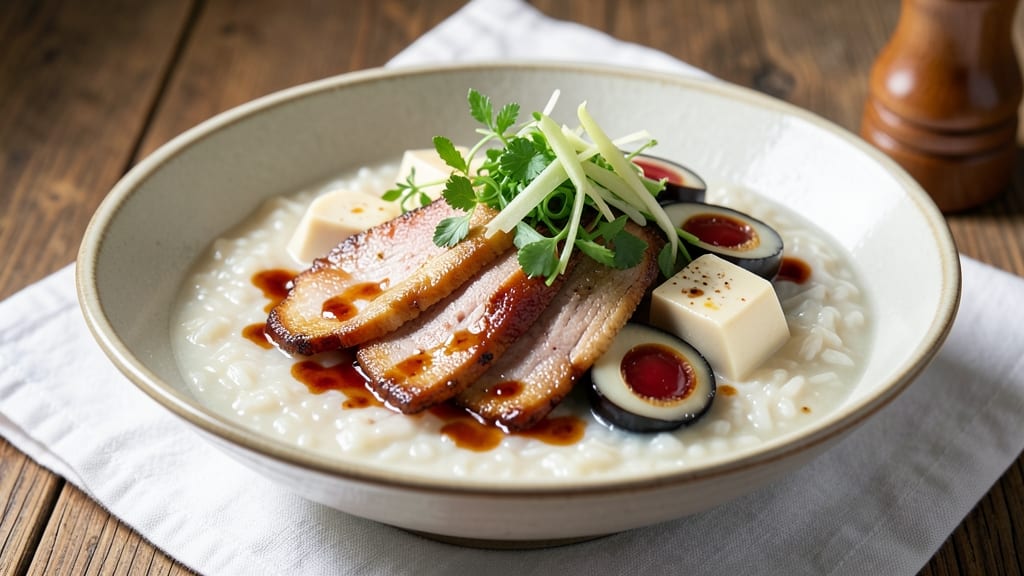
This century egg and pork congee recipe delivers a symphony of textures and flavors that will transport you to a bustling Chinese street food stall. 🌟 The silky congee absorbs the rich pork broth while century eggs add their signature umami depth and chewy texture—each spoonful is a perfect balance of tender, savory, and slightly salty.
I first encountered this dish in a dim sum restaurant in Charleston, where the chef emphasized how the century egg's preserved yolk transforms the entire bowl into something extraordinary.
The secret to authentic results lies in the pork broth, which should be slow-cooked until deeply flavorful and slightly gelatinous. I use pork belly and shoulder for maximum richness, simmered with ginger and scallions to build complex aromatics.
The congee itself requires patience—it needs to cook until it reaches that perfect silky consistency, where each grain is distinct yet the whole transforms into a smooth, comforting base.
What makes this dish truly special is the contrast of textures: the soft, porridge-like congee cradles the tender pork pieces and century eggs, while their chewy centers provide satisfying resistance.
The preserved yolk from the century egg adds a briny, almost custard-like richness that elevates every bite. This is comfort food at its finest—warm, nourishing, and deeply satisfying.
Perfect for chilly evenings or when you're craving something hearty yet delicate, this congee is equally impressive as a family meal or an elegant gathering dish. The preparation might take time, but the results are worth every minute of slow cooking. Let's create this restaurant-quality bowl at home.
Ingredients for century egg and pork congee
Silky congee meets umami richness in this restaurant-quality bowl—just 14 ingredients transform simple rice into comfort food gold.
| Ingredient | Amount | Notes |
|---|---|---|
| Pork Belly 🥓 | 1 lb | Skin-on for maximum flavor |
| Pork Shoulder 🥩 | 1 lb | Cut into 1-inch cubes |
| Century Eggs 🥚 | 4 whole | High-quality, black-shelled |
| Silken Tofu 🍲 | 1 package (14 oz) | Soft, unpressed tofu |
| Fresh Ginger 🧄 | 2 tbsp | Grated, aromatic variety |
| Green Onions 🧅 | 4 whole | White and green parts separated |
| Jasmine Rice 🍚 | ½ cup | Uncooked, long-grain |
| Water 💧 | 6 cups | Filtered preferred |
| Light Soy Sauce 🍶 | 2 tbsp | Kikkoman preferred |
| Dark Soy Sauce 🍶 | 1 tbsp | For color depth |
| Sesame Oil 🫒 | 1 tsp | Toasted for aroma |
| White Peppercorns 🌶️ | ½ tsp | Freshly cracked |
| Salt 🧂 | 1 tsp | Diamond Crystal preferred |
| Sugar 🍬 | ½ tsp | White granulated |
The pork is non-negotiable for that deep, savory broth. Pork belly and shoulder from the butcher counter—ask for well-marbled cuts—give you that signature gelatinous richness. I always grab mine at Whole Foods or my local Asian market where they cut it fresh. Century eggs? Look for black-shelled ones—the green or white shells are lower quality. If you can't find them, duck eggs preserved for 3 months work as a substitute (though not traditional). The silken tofu should be unpressed—Kirkland brand at Costco is my go-to, but any soft tofu will do.
No century eggs? Preserved duck eggs are your next best bet, but they won't have the same marbled yolk. Short on pork belly? Double the pork shoulder and add 1 tbsp of pork fat to mimic the richness. The ginger and green onions can be swapped for galangal and shallots if you're going full authentic, but honestly, the regular stuff works fine. For the soy sauces, Kikkoman light and Lee Kum Kee dark are my staples—don't use the cheap brands. The sesame oil? Toast it first—heat 1 tsp in a dry pan for 30 seconds to deepen the aroma.
This congee tastes even better the next day as flavors meld. Store in airtight containers for 3-4 days in the fridge or freeze portions for up to 3 months. I always make extra—double the batch and freeze half for lazy mornings. The century eggs keep 1 month in the fridge once opened, so buy a few extra if you're making this regularly. For serving, I like to keep the tofu whole and slice it just before eating—prevents it from turning mushy
Why You'll Love This Recipe
- One-Pot Magic: I swear by this—just toss in the pork belly and shoulder, let it simmer low and slow, and the broth thickens into that velvety congee all by itself. No straining, no fussing, just hands-off perfection while you sip tea or scroll through your phone.
- Umami Bomb: That first bite? The century eggs burst with their salty, creamy center, while the pork belly adds rich, fatty depth, and the ginger? It cuts through everything like a bright little wake. Honestly, it’s the kind of flavor that makes you pause mid-spoonful.
- Leftovers That Shine: Between us, this congee only gets better the next day. The flavors meld even more, and I’ve turned last night’s dinner into tomorrow’s lunch by adding a quick scramble of eggs or a sprinkle of green onions. No sad, watery leftovers here—just better food.
- Budget Comfort Food: Pork shoulder and belly stretch for miles in this dish, and century eggs? You can buy them in bulk for next to nothing. I’ve fed my whole family (plus a couple of friends who “stopped by”) for under $15—warm, filling, and no one questions where the money went.
Step-by-step instructions for century egg and pork congee
Transform humble ingredients into a luxurious, umami-packed congee that balances rich pork with delicate century egg and silken tofu.
🔥 Step 1: Render Pork Fat and Build Deep Flavor
Cut the 1 lb pork belly into ½-inch thick slices and the 1 lb pork shoulder into 1-inch cubes. Heat a heavy-bottomed pot over medium-low heat and add the pork belly slices skin-side down. Let them render fat for 15-20 minutes until the fat is shimmering and the pork begins to brown at the edges.
Once the pork belly releases easily from the pan, remove it and set aside. Add the pork shoulder cubes to the same pot and cook for 8-10 minutes, stirring occasionally, until they develop a golden crust. This slow rendering creates a luxurious fat base that will infuse the entire congee with rich flavor. Don't rush this step—the patience pays off in every spoonful.
🍳 Step 2: Sauté Aromatics and Prepare the Rice
In the same pot with all that rendered fat, add the 2 tbsp grated fresh ginger and white parts of the 4 green onions (sliced into ½-inch pieces). Sauté for 2-3 minutes until fragrant and the ginger turns golden. Here's where it gets good—add 2 tbsp light soy sauce and 1 tbsp dark soy sauce, stirring constantly for 1 minute to deepen the umami.
Add the 0.5 cup jasmine rice and stir to coat it in the fat and sauces. Pour in 6 cups water, then add 1 tsp salt and 0.5 tsp sugar. Bring to a gentle boil, then immediately reduce heat to lowest setting—this is crucial. The rice needs to simmer undisturbed for 45-50 minutes until it breaks down into a creamy, porridge-like consistency. Cover with a tight lid and resist the urge to peek—every time you lift it, you risk breaking the delicate texture.
🥘 Step 3: Incorporate Century Eggs and Silken Tofu
While the congee simmers, peel the 4 century eggs (crack the shells gently—they're fragile) and separate the yolks from the whites. The whites should be firm but jelly-like, while the yolks are creamy with marbled black streaks. Chop the yolks into small pieces and set aside.
When the congee reaches a thick, pudding-like consistency (it should coat the back of a spoon), gently stir in the silken tofu (cut into small cubes) and century egg yolks. The silken tofu will melt into silky swirls, while the century egg adds a luxurious, briny contrast. Keep the heat at lowest—you're just warming through now, not cooking. If the congee looks too thick, add ½ cup hot water to reach your desired consistency. This is where the magic happens: rich pork broth meets delicate tofu and century egg in perfect harmony.
🍽️ Step 4: Finish with Garnishes and Serve Immediately
Ladle the congee into deep bowls, reserving some of the broth. Drizzle with 1 tsp sesame oil and sprinkle with 0.5 tsp freshly cracked white peppercorns. Top with the century egg whites (cut into small pieces) and the green parts of the 4 green onions (thinly sliced). The contrast of textures—creamy congee, jelly-like egg whites, and silky tofu—makes every bite exciting.
Serve with a side of steamed jasmine rice if desired, but the congee alone is satisfying enough. The pork belly adds luxurious fat, the century eggs bring umami depth, and the silken tofu creates elegant swirls with each spoonful. This isn't just congee—it's a luxurious, restaurant-quality experience you can make at home. The key is patience: letting the flavors meld slowly and respecting the delicate textures of each ingredient.
Pro Tips For Making Century Egg And Pork Congee
- Simmer Pork Low and Slow: I learned this the hard way—rushing the pork belly or shoulder turns your congee into mush. Once the water boils, drop the heat to the lowest setting (just above a simmer) and keep it there. A gentle roll every 20 minutes prevents sticking, and you’ll get tender pork without breaking the congee’s texture.
- Peel Century Eggs Fresh: Store-bought century eggs lose their jelly-like yolk if peeled too early. Crack them open right before adding to the congee—use a spoon to scoop out the black jelly and white albumen separately. The yolk’s texture is delicate; handle it like you would raw egg whites.
- Skip the Overcrowded Pot: Piling all ingredients in at once turns your congee into a thick stew. Start with just the pork and ginger in cold water, then add century eggs and tofu after the pork has softened. Crowding raises the pot’s temperature too fast, and your congee will seize up.
- Toast Ginger in Oil First: Sounds weird, but it works: Sauté 1-inch slices of fresh ginger in pork fat or oil for 30 seconds until fragrant. This pulls out the heat and aroma before it even hits the water. My grandmother swore by this—it makes the congee taste deeper without overpowering the century egg’s funk.
Flavor customization for this dish
Century Egg Variations
Trade traditional century eggs for preserved duck eggs if you can't find them—simmer duck eggs in 10% brine for 3 months to mimic the preservation process.
For a vegetarian twist, substitute with miso-marinated tofu cubes (marinate 1 block firm tofu in 3 tbsp white miso + 1 tbsp mirin for 4 hours before adding).
I've also experimented with black garlic cloves (peeled and sliced) for a deep, molasses-like sweetness that pairs beautifully with the pork broth. 🌟
Pork Substitutions
Swap pork belly for chicken thighs (skin-on, 1.5 lbs) for a lighter version—render the skin first to create richness. For a seafood adaptation, use shrimp shells (simmer 1 cup shells with the broth for 20 minutes first) and add 1 lb shrimp in the final 5 minutes.
My favorite shortcut? Rotisserie chicken (shredded) adds convenience while keeping the dish hearty. Just ensure you're using dark meat for maximum flavor.
Umami Boosters
Enhance the broth with 1 tbsp fish sauce (like Red Boat) or 1 dried shiitake mushroom (soaked in hot water for 30 minutes) for extra depth. For a smoky note, add ½ tsp smoked paprika when sautéing the aromatics.
I also love a splash of oyster sauce (1 tbsp)—it adds a velvety texture and umami punch that bridges the gap between the pork and century egg flavors.
Texture Adjustments
For a chewier congee, reduce the water by ½ cup and simmer 10 minutes longer. Prefer a lighter texture? Add ½ cup coconut milk at the end for creaminess without heaviness. To make the century egg whites firmer, chill them for 30 minutes before slicing.
The silken tofu can be replaced with chilled tapioca pearls (soaked in 2 cups water for 1 hour) for a playful, bouncy texture.
Sweet-Savory Balance
Add 1 tsp honey or 1 tsp rock sugar to the congee base for a subtle sweetness that complements the century egg's saltiness. For a tangy kick, stir in 1 tsp rice vinegar at the end.
I once added ½ tsp star anise to the broth for warmth—it disappeared into the flavors but left a lingering aromatic note. The key is to taste as you go and adjust gradually.
Spice Level Control
For mild heat, add ½ tsp chili crisp (like Lao Gan Ma) and serve with extra green onions. Craving fire? Stir in 1 tsp gochujang (Korean chili paste) with the soy sauces. A pinch of Sichuan peppercorns (toasted and crushed) adds a tingling numbness that elevates the dish.
Always taste the broth before adding the rice—you can adjust spice levels without altering the congee's delicate balance.
Nutrition facts
Frequently asked questions
What makes century eggs unique in this congee?
The century egg's preserved yolk adds a luxurious, briny depth that transforms the congee into something extraordinary. The jelly-like whites provide satisfying texture while the marbled black yolks create a visual and flavor contrast that's both intriguing and delicious. This dish wouldn't be the same without their signature umami complexity!
Can I make this congee ahead of time?
This dish actually tastes better the next day as flavors meld. Store in airtight containers for 3-4 days in the fridge or freeze portions for up to 3 months. Just reheat gently on low heat, adding a splash of water if needed to restore the creamy texture. The century egg whites will firm up slightly when chilled overnight.
What if I can't find century eggs?
No problem! Try preserved duck eggs (simmer duck eggs in 10% brine for 3 months) or marinate 1 block firm tofu in 3 tbsp white miso + 1 tbsp mirin for 4 hours as a vegetarian alternative. The dish will still be delicious—just the century egg's unique texture and flavor will be different.
How do I know when the congee is done?
The congee is ready when it reaches a thick, pudding-like consistency that coats the back of a spoon. This typically takes 45-50 minutes of simmering at the lowest heat setting. The grains should be distinct yet the whole should transform into a smooth, creamy porridge. Resist the urge to peek or stir too often!
What's the best way to serve this congee?
Serve immediately in deep bowls with a drizzle of sesame oil and sprinkle of white peppercorns. Top with century egg whites and green onions for that perfect textural contrast. While you can serve with steamed rice, the congee alone is hearty and satisfying enough—it's designed to be the star of the meal!