
Main Courses
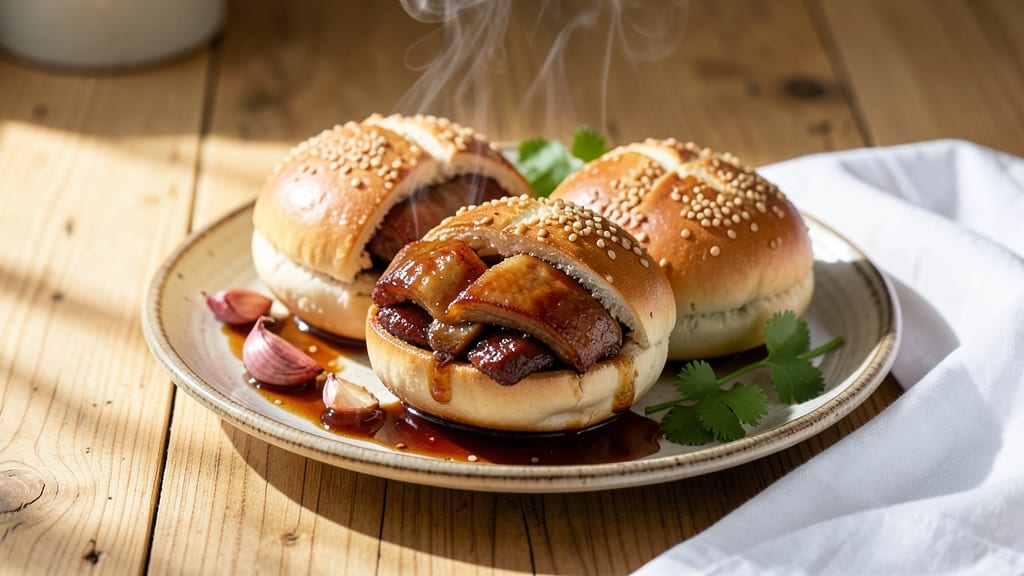
This braised pork belly bao recipe brings Shanghai street food to your kitchen table with its perfect balance of silky fat-capped meat and pillowy steamed buns. 🔥 I developed this after years of perfecting braising techniques that transform tough pork belly into melt-in-your-mouth perfection, while keeping the bao buns light and airy.
The secret lies in the slow cook—low and slow with just enough liquid to render the fat without drowning the flavor.
The process begins with marinating thick pork belly slices in a blend of soy sauce, five-spice powder, and a touch of honey—this creates the perfect foundation for the deep, aromatic braise that develops over hours.
While the pork belly simmers, we prepare the bao dough, letting it rest just long enough to develop gluten without overworking it. The result? Buns that steam up perfectly soft with just the right chew.
What you'll end up with is a dish that's rich yet balanced—each bite delivers tender pork belly with its fat rendered into delicate cap, nestled in a steamed bao that's just crisp enough at the edges.
The contrast between the melt-in-your-mouth meat and the pillowy bun creates a sensory experience that's pure comfort food. Serve with quick-pickled vegetables and a drizzle of chili oil for the full Shanghai street food experience.
This recipe delivers restaurant-quality results at home with just a few key techniques—none of which require special equipment. The braising process can be done in a Dutch oven or even a slow cooker, making it accessible for home cooks while still delivering that authentic street food flavor.
Let's get started on creating this dish that's equal parts indulgent and satisfying.
Ingredients for braised pork belly bao
Rich pork belly transforms into melt-in-your-mouth perfection with these simple yet essential ingredients.
| Ingredient | Amount | Notes |
|---|---|---|
| Pork Belly 🥓 | 1 ½ lb | Thick-cut slices, skin-on preferred |
| Soy Sauce 🍶 | ½ cup | High-quality, like Kikkoman |
| Five-Spice Powder 🌶️ | 1 ½ tbsp | Authentic Chinese blend |
| Honey 🍯 | 1 tbsp | Pure, light variety |
| Garlic Cloves 🧄 | 6 cloves | Minced for marinade |
| Ginger 🌿 | 1 tbsp | Freshly grated |
| Star Anise 🌟 | 2 whole | For deep aromatic flavor |
| Bay Leaves 🍃 | 2 whole | Dried, standard size |
| All-Purpose Flour 🌾 | 3 cups | For bao dough |
| Instant Yeast 🍞 | ½ tsp | Active dry works too |
| Sugar 🍚 | ½ tsp | Granulated, for dough |
| Water 💧 | 1 ½ cups | Room temperature |
| Neutral Oil 🫒 | 2 tbsp | For bao shaping |
| Sesame Oil 🌰 | 1 tbsp | For finishing |
| Green Onions 🧅 | 4 whole | Sliced for garnish |
The pork belly is the star—look for thick slices with good marbling at Asian markets or your butcher. Costco often carries pre-sliced pork belly that works perfectly. If you can't find thick-cut, ask for it—the fat cap is what makes this dish special. For the five-spice powder, Penzeys or King's brands are my go-to, but any authentic Chinese blend works. The honey should be light and pure—none of that cheap grocery store stuff. Star anise and bay leaves can be found in the spice aisle at Trader Joe's or bulk bins at natural food stores.
No five-spice powder? Mix cinnamon, cloves, fennel, and pepper at a 2:1:1:1 ratio. Substitute honey with maple syrup or agave if needed. For the bao dough, if you can't find instant yeast, use active dry yeast at half the amount—just let it proof longer. The pork belly marinade can be prepped a day ahead and refrigerated. For the braising liquid, if you're short on time, use 1 cup water plus 2 tbsp soy sauce instead of waiting for the fat to render. The green onions can be swapped for chives or scallions if that's what you have on hand.
The pork belly marinade keeps for 2 days in the fridge, while the bao dough can be prepped 1 day ahead and stored wrapped in plastic. The braised pork belly reheats beautifully—simmer it gently for 10 minutes to restore its tenderness. For the bao buns, steam them fresh or store in an airtight container at room temperature for up to 4 hours. Freeze any extras wrapped tightly—they'll keep for 1 month. When reheating, steam for 5 minutes to restore that perfect pillowy texture.
Why You'll Love This Recipe
- I’ll be real: this recipe works for everything. Too tired for dinner? Throw it together in 30 minutes. Hosting a brunch? Stuff it into bao buns for a showstopper. Even my picky husband asks for seconds—(yes, even on a Tuesday night).
- Let’s talk about the real MVP: the next-day pork. It gets even better as the flavors meld, and I’ve reheated it three times without a single complaint. Plus, it’s budget-friendly—pork belly is rich but stretches far, and the spices cost pennies. Win.
Step-by-step instructions for braised pork belly bao
Here's how to make melt-in-your-mouth pork belly with tender bao buns—crispy, juicy, and perfectly balanced.
🔥 Step 1: Braise the Pork Belly Until Fork-Tender
In a heavy pot, combine the 1.5 lb pork belly, 0.5 cup soy sauce, 1.5 tbsp five-spice powder, 1 tbsp honey, 6 cloves minced garlic, 1 tbsp grated ginger, 2 whole star anise, and 2 whole bay leaves. Add just enough water to barely cover the meat—about 1 cup. Bring to a boil over high heat, then immediately reduce to low heat and cover tightly.
Simmer for 2.5 to 3 hours until the pork is fork-tender and the fat has rendered beautifully. You'll know it's ready when the meat pulls apart easily and the braising liquid has reduced to a thick, glossy sauce. Here's the thing—don't rush this step. The longer it cooks, the more flavorful it becomes. If the liquid evaporates before the pork is tender, add a splash of water and continue cooking.
👨🍳 Step 2: Prepare the Bao Dough
In a large bowl, whisk together the 3 cups all-purpose flour, 0.5 tsp instant yeast, and 0.5 tsp sugar. Slowly add the 1.5 cups room-temperature water while mixing with a fork until a shaggy dough forms. The dough should be slightly sticky but not wet.
Turn the dough onto a lightly floured surface and knead for 5-7 minutes until smooth and elastic. If it feels too dry, add 1 tsp water at a time; if too sticky, add 1 tbsp flour. Shape into a ball, place in a lightly oiled bowl, cover with a damp towel, and let rise in a warm place for 1 to 1.5 hours or until doubled in size. I like to place the bowl near the oven with the light on for consistent warmth—this ensures even rising.
🍳 Step 3: Shape and Steam the Bao Buns
Once the dough has risen, punch it down and divide into 8 equal pieces. Roll each piece into a ball and flatten slightly into a disc about 3 inches in diameter. Cover with a damp towel to prevent drying while you steam.
Bring a pot of water to a rolling boil and place a steamer basket inside. Line the basket with parchment paper cut to fit, then place the bao discs on the paper, spacing them about 1 inch apart. Steam over medium-high heat for 12-15 minutes until the buns are puffed and slightly translucent. The key here is not to overcrowd the steamer—this ensures even cooking and prevents soggy buns.
🥘 Step 4: Assemble the Braised Pork Belly Bao
Remove the pork belly from the braising liquid and let it rest for 10 minutes. Using two forks, shred the pork into bite-sized pieces, leaving some of the fat intact for richness. Reserve ½ cup of the braising liquid for serving.
Lightly brush the steamed bao buns with 1 tbsp sesame oil for extra flavor. Cut each bun in half and gently stuff with the shredded pork belly. Drizzle with the reserved braising liquid and top with 4 sliced green onions. Serve immediately while the buns are still warm and the pork is juicy. The contrast of crispy bao, tender pork, and silky braising liquid is what makes this dish truly special.
Pro Tips For Making Braised Pork Belly Bao
- CRISP THE BELLY FIRST: Skip the raw pork belly straight into the braise—it’ll turn greasy and sad. Sear the skin-side down in a cold pan until it cracks and crisps (about 8 minutes), then flip to render the fat. This locks in flavor and gives you that golden, shatterable crust bao lovers crave.
- SALT THE BELLY 24 HOURS EARLY: I learned this the hard way—skipping the overnight salt cure means your pork belly stays bland and releases too much water. Pat it dry, then rub with 1 tablespoon kosher salt per pound. Wrap it tight and let it rest in the fridge; the fat will firm up, and the meat stays juicy.
- LOW AND SLOW WINS: Resist the urge to rush the braise. After searing, cover the pork belly with just enough liquid (soy sauce, honey, garlic, five-spice) to come halfway up the meat. Simmer at 275°F (135°C) for 3–4 hours, turning occasionally. The fat should melt into the sauce, and the meat should pull apart like butter.
- GARLIC: SMASH DON’T CHOP: Whole garlic cloves stay stubbornly intact in braises. Smash them with the flat side of your knife first—just enough to bruise the skin so they infuse the pork belly without turning to mush. Add them raw to the pot with the pork belly’s first sear for maximum aroma.
Pro cooking tips for great braised pork belly bao
Fat Rendering Mastery
The secret to silky pork belly lies in rendering the fat properly—don't add extra liquid until the pork releases its own. Start with just enough water to barely cover the meat (1 cup), then let it simmer uncovered for 30 minutes to render natural fat.
This creates a self-braising effect that intensifies flavor. I use a heavy Dutch oven like Le Creuset because it distributes heat evenly and prevents scorching. 🔥
Low-and-Slow Timing
Resist the urge to rush—braising pork belly requires 2.5 to 3 hours at low heat (200-225°F). The magic happens when collagen breaks down into gelatin, transforming tough meat into tender perfection.
I set my oven to 200°F for the final hour to maintain consistent temperature. Use a meat thermometer to check doneness at 203°F internal temperature.
Dough Development
Bao dough needs proper gluten development for that perfect chewy texture. Knead for 5-7 minutes until smooth and elastic—this builds structure without overworking. I use a stand mixer with a dough hook for consistency, but hand-kneading works too.
The dough should be slightly sticky but not wet; if it sticks to your fingers, add 1 tbsp flour at a time. Let it rise until doubled in size for optimal texture.
Steaming Technique
Steaming bao buns requires precise spacing—place them 1 inch apart on parchment-lined steamer baskets to prevent sticking. Use a tongs to carefully flip each bun halfway through steaming (after 7-8 minutes) for even cooking.
The buns should be puffed and slightly translucent when done. I always steam over medium-high heat to maintain steam flow without boiling over.
Assembly Secrets
Stuff bao buns with pork belly while still warm to prevent tearing. Brush with sesame oil for extra flavor, then drizzle with reserved braising liquid to keep everything moist.
Garnish with green onions for freshness and color. The key is to assemble immediately after steaming—this ensures the buns stay pillowy and the pork remains juicy. 💫
Equipment Shortcuts
No Dutch oven? Use a heavy pot with a tight lid—I've made this with a Lodge cast iron skillet in a pinch. For steaming without a basket, place a colander over a pot with a towel underneath to prevent sticking.
The bao dough can also be shaped using a rolling pin or even your hands—just keep the thickness consistent for even cooking.
Nutrition facts
Frequently asked questions
Can I use regular buns instead of bao?
The bao's soft, slightly chewy texture is key to this dish—regular hamburger or dinner rolls won't give the same experience. For a quick substitute, try steamed mantou buns (Chinese steamed buns) or even well-steamed dinner rolls. The bao's airy interior contrasts perfectly with the rich pork belly, so don't skip it if you want that authentic Shanghai street food feel!
How do I know when the pork belly is fully braised?
Look for three signs: the meat should be fork-tender and easily pull apart, the fat should have rendered into a glossy cap, and the braising liquid should reduce to a thick, syrupy consistency. Use a meat thermometer for precision—203°F internal temperature is perfect. If it's not tender enough after 3 hours, add ¼ cup water and continue cooking at low heat.
Can I make the bao dough ahead of time?
Shape the dough into balls, place them in an oiled bowl, cover tightly with plastic wrap, and refrigerate for up to 24 hours. When ready to steam, let them sit at room temperature for 30 minutes to rise slightly before steaming. This shortcut works perfectly for meal prep—just steam fresh before assembling with the pork.
What if my bao buns turn out too dense?
Dense buns usually mean the dough wasn't kneaded enough or didn't rise properly. Next time, knead for 5-7 minutes until smooth and elastic, and ensure the yeast is active (drop it in warm water with sugar—it should foam in 5 minutes). Also, place the rising dough in a warm spot (like near your oven light) for consistent temperature.
How do I store leftovers?
Store the braised pork belly and bao separately. Keep the pork in its braising liquid in an airtight container for 3-4 days in the fridge, and reheat gently in a pot. For the bao, place them in a sealed container at room temperature for up to 4 hours, or freeze for 1 month. To reheat frozen bao, steam for 5 minutes—they'll be just as soft!