
Main Courses
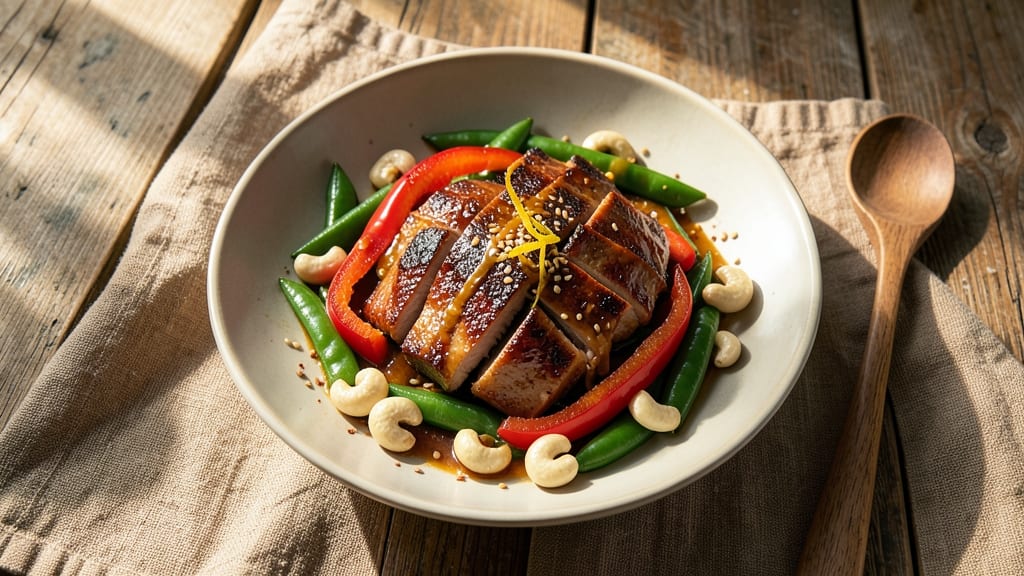
This cashew pork stir fry recipe delivers restaurant-quality flavor in just 20 minutes—crispy pork, buttery cashews, and a perfect balance of sweet and savory. I developed this version after perfecting the technique for my restaurant menu, where it became a customer favorite.
The secret lies in marinating the pork properly and achieving that signature wok hei (breath of the wok) aroma without needing a professional stove.
The recipe starts with thinly sliced pork tenderloin marinated in a simple blend of soy sauce, brown sugar, and garlic—this ensures tender, flavorful meat that stays juicy even after stir-frying. Toasted cashews add a satisfying crunch, while bell peppers and snap peas bring freshness to balance the richness.
The stir-fry method is straightforward: high heat, quick cooking, and constant motion to prevent sticking.
What you'll end up with is a dish that's restaurant-quality at home—golden pork pieces, glossy cashews, and vibrant vegetables all coated in a light, savory-sweet sauce. The texture contrast between the crispy pork and tender vegetables makes every bite exciting, while the nutty sweetness of the cashews adds depth.
This stir fry pairs beautifully with steamed jasmine rice to soak up every bit of flavor.
For those who prefer a modern twist, you can bake the pork instead of stir-frying for a crispier texture while still maintaining that nutty-sweet profile. The recipe scales easily for feeding a crowd, and leftovers reheat well for quick lunches.
Let's get started on creating this crowd-pleasing dish that's perfect for weeknights or special occasions.
Ingredients for cashew pork stir fry
Restaurant-quality stir-fry starts with these carefully chosen ingredients for perfect texture and flavor balance.
| Ingredient | Amount | Notes |
|---|---|---|
| Pork Tenderloin 🥩 | 1 ¼ lb | Thinly sliced against grain |
| Raw Cashews 🥜 | ¾ cup | Toasted until golden |
| Red Bell Pepper 🍆 | 1 whole | Thinly sliced, seeds removed |
| Snap Peas 🌱 | 1 ½ cups | Fresh or frozen, thawed |
| Soy Sauce 🍶 | ½ cup | Light or all-purpose |
| Brown Sugar 🍯 | ¼ cup | Packed, light brown preferred |
| Garlic Cloves 🧄 | 6 cloves | Minced, fresh preferred |
| Fresh Ginger 🌿 | 2 tbsp | Finely grated, peeled |
| Sesame Oil 🫒 | 1 tbsp | Toasted, for aroma |
| Vegetable Oil 🫒 | 2 tbsp | High smoke point |
| Cornstarch 🌾 | 1 tbsp | For tossing pork |
| Green Onion 🧅 | 3 whole | Thinly sliced, white and green |
| Sesame Seeds 🌾 | 1 tbsp | Toasted for garnish |
| Salt 🧂 | 1 tsp | Diamond Crystal preferred |
| Black Pepper 🌶️ | ½ tsp | Freshly ground |
The pork tenderloin is non-negotiable for this dish—look for a well-marbled cut at your local butcher or Costco for the best texture. Thinly slicing against the grain ensures tender bites, and marinating for at least 30 minutes (or overnight) maximizes flavor penetration. For the cashews, raw and unroasted is key—they toast beautifully in the pan, adding that signature crunch. Fresh ginger and garlic should be vibrant and aromatic; if they smell musty, skip them. The bell pepper should be firm with a glossy skin, and snap peas can be fresh or frozen (thawed and drained).
No pork tenderloin? Substitute chicken breast or shrimp, but reduce marinating time to 15 minutes. Cashews too expensive? Peanuts or almonds work, though texture differs slightly. The soy sauce can be swapped for coconut aminos for a gluten-free option, and brown sugar can be replaced with maple syrup or agave. For extra depth, add a splash of Mirin or rice vinegar to the marinade. The cornstarch is essential for that signature stir-fry crispiness—don't skip it, even if you're baking instead of stir-frying.
Marinated pork keeps 3 days in the fridge, covered tightly. Toasted cashews stay fresh for 2 weeks in an airtight container, while fresh ginger and garlic last 1 week in the crisper drawer. The stir-fry reheats best in a skillet over medium heat—add a splash of water to prevent drying. For meal prep, portion into glass containers with a layer of plastic wrap pressed directly on the sauce to prevent sogginess. This dish freezes beautifully for 3 months—just thaw overnight in the fridge before reheating.
Why You'll Love This Recipe
- One-Pan Magic: I swear by this recipe—just toss everything on one skillet, and you’re done. No chopping boards to clean, no extra pans, just that rich soy-cashew sauce clinging to perfectly seared pork and crisp-tender bell peppers.
- Nutty-Savory Crunch: Between us, the cashews take this dish from "good" to "I’ll make it again." They add this buttery crunch that contrasts so well with the tender pork and snap peas—like a little flavor explosion in every bite.
- Lunchbox Hero: Honestly, this is my go-to for meal prep. Double the batch, and you’ve got flavorful leftovers that taste just as good cold the next day—ideal for packed lunches or a quick reheat when you’re starving.
- Budget-Friendly Feast: Pork tenderloin stretches far here, and cashews bulk it up without breaking the bank. Plus, snap peas and bell peppers are cheap staples—this meal feeds four for what I’d normally pay for two takeout orders.
Step-by-step instructions for cashew pork stir fry
This method delivers perfectly tender pork with crisp cashews and vibrant vegetables in under 20 minutes.
Prepare the Pork for Maximum Tenderness
Slice the 1.25 lb pork tenderloin thinly against the grain into ¼-inch strips. This ensures each bite remains tender rather than tough. Place the sliced pork in a bowl and toss with 1 tablespoon cornstarch, 1 teaspoon salt, and ½ teaspoon black pepper until evenly coated. Let it sit for 10 minutes while you prep the remaining ingredients—this resting period allows the cornstarch to adhere fully, creating a perfect sear and preventing the pork from drying out.
I always use a sharp knife for slicing—dull blades crush the meat instead of cleanly cutting it. If your pork slices look uneven, don't worry; the stir-fry technique will still work, but uniform slices ensure even cooking. Keep the seasoned pork covered until you're ready to cook it to maintain moisture.
Toast the Cashews and Prep Vegetables
Heat a dry skillet over medium heat and add the 0.75 cup raw cashews. Toast them for 3-4 minutes, stirring constantly, until they turn golden brown and release a nutty aroma. Remove them immediately and set aside—they'll continue cooking slightly when added to the stir-fry. This toasting step enhances their flavor and prevents them from becoming soggy later.
While the cashews toast, slice the 1 whole red bell pepper into thin strips (about ¼-inch thick) and remove the seeds. If using frozen snap peas, thaw them completely by soaking in warm water for 5 minutes, then drain well. Finely grate the 2 tablespoons fresh ginger and mince the 6 cloves garlic. Thinly slice the 3 whole green onions, separating the white and green parts. Having all vegetables prepped and ready ensures a quick, efficient cooking process.
Stir-Fry the Pork Until Fully Cooked
Heat 2 tablespoons vegetable oil in a wok or large skillet over high heat until shimmering. Add the cornstarch-coated pork in a single layer and let it sear undisturbed for 1-2 minutes until the edges turn opaque and golden. This initial sear locks in juices and creates a flavorful crust. Stir-fry for an additional 2-3 minutes until the pork is fully cooked through—it should reach an internal temperature of 145°F when checked with a meat thermometer.
Remove the pork from the skillet and set it aside on a plate. If the pork releases easily from the pan, it's ready. If it sticks, let it cook another 30 seconds before stirring. The high heat is crucial here—it prevents the pork from steaming and ensures a proper sear. Don't overcrowd the pan, or the pork will steam instead of sear.
Build the Stir-Fry Sauce and Combine Ingredients
In the same skillet, reduce the heat to medium and add the 2 tablespoons fresh ginger and 6 cloves minced garlic. Cook for 30 seconds until fragrant—this releases their natural oils and deepens the flavor. Pour in the 0.5 cup soy sauce and 0.25 cup brown sugar, scraping up any browned bits from the bottom of the pan. These bits, called fond, are packed with flavor that enhances the entire dish.
Add the 1.5 cups snap peas and thinly sliced red bell pepper to the skillet, stirring to coat them in the sauce. Cook for 2-3 minutes until the vegetables begin to soften but still retain a crisp-tender texture. Return the pork to the skillet and toss everything together for 1-2 minutes until evenly coated and heated through. The sauce should glaze the pork and vegetables lightly, creating a perfect balance of sweet, savory, and umami flavors.
Finish with Aromatics and Garnish
Drizzle 1 tablespoon sesame oil over the stir-fry and toss gently to combine. The sesame oil adds a rich, nutty aroma that complements the cashews. Stir in the toasted cashews and white parts of the sliced green onions, reserving the green parts for garnish. Cook for an additional 30 seconds to heat through. The cashews should be warm but not soggy—adding them at the end preserves their texture.
Transfer the stir-fry to serving plates and garnish with the reserved green onion tops and 1 tablespoon toasted sesame seeds. Serve immediately while the pork is still hot and the vegetables retain their crispness. Each bite should deliver a perfect harmony of tender pork, crunchy cashews, and vibrant vegetables coated in a glossy, nutty-sweet sauce.
Pro Tips For Making Cashew Pork Stir Fry
- Slice Pork Thinly: Pork tenderloin fights back when you cut against the grain—thin slices cook faster and stay tender. Use a sharp knife and slice at a 45-degree angle for uniform pieces, or ask your butcher to do it. Thick slices turn rubbery while waiting for the veggies.
- Toast Cashews First: Raw cashews need a quick dry toast in the same pan before adding anything else. A minute at medium-high heat brings out their nuttiness and prevents them from turning greasy later. Skip this, and they’ll just soak up oil like sponges.
- Prep Veggies Last: Bell peppers and snap peas soften fast—wait until the pork is nearly done to toss them in. Overcrowding the pan steams the veggies instead of searing them, and you’ll end up with sad, limp textures. Add them in two batches if needed.
- Use Less Soy Sauce: Stir-fries need balance, not salt bombs. Start with half the soy sauce called for, taste, then add more—you can’t undo over-salting. The cashews and pork already pack enough umami to make extra soy sauce unnecessary. Trust your palate.
Storing and reheating this cashew pork stir fry
Refrigerator Storage
Store your cashew pork stir fry in an airtight container for up to 3 days in the refrigerator. The key is to let it cool completely before transferring—never store it hot to prevent condensation that makes the cashews soggy.
I use glass Pyrex containers because they maintain the dish's integrity better than plastic. Press plastic wrap directly onto the sauce layer to minimize drying. 🥫
Freezer Prep Tips
For longer storage, freeze portions in single-serving glass containers for up to 3 months. The cashews stay crisp when frozen properly—just add them fresh when reheating.
Label containers with dates and portion sizes. I recommend freezing the stir-fry without rice to prevent mushiness, then serving it over freshly cooked rice. 🧊
Stovetop Reheating
My preferred method is reheating in a skillet over medium heat with 1 tablespoon water or vegetable oil. Add the stir-fry and toss for 3-4 minutes until everything is heated through.
The moisture prevents drying while restoring that wok hei aroma. For extra flavor, add a splash of soy sauce or sesame oil during reheating. 🔥
Microwave Method
For quick reheating, use the microwave on 70% power for 1-2 minutes, stirring halfway. Cover with a damp paper towel to retain moisture. The texture won't be as crisp as stovetop, but it's perfect for a fast lunch. Add fresh toasted cashews after microwaving to restore crunch. ✨
Reviving Texture
If your reheated stir-fry loses crispness, don't worry! Sprinkle with 1 teaspoon toasted sesame seeds and a pinch of salt to brighten flavors. For extra crunch, add 1 tablespoon chopped peanuts or water chestnuts on top. The contrast makes it taste almost as good as fresh. 🌟
Meal Prep Strategy
I prep stir-fry components separately for flexible assembly: marinate the pork, toast the cashews, and chop vegetables ahead. Store them in separate containers in the fridge. When ready to eat, cook the pork and vegetables fresh, then combine with pre-toasted cashews. This keeps everything at peak texture. 💡
Nutrition facts
Frequently asked questions
Can I use a different cut of pork instead of tenderloin?
Yes! For best results, use pork shoulder or loin sliced thinly against the grain. If using shoulder, trim excess fat and marinate longer (1-2 hours) to tenderize. Pork chops work too, but slice them ⅛-inch thick and reduce cooking time by 1 minute to avoid overcooking.
How do I prevent the pork from drying out during stir-frying?
Keep the heat high and cook in batches if needed—overcrowding steams instead of sears. Toss pork constantly for 2-3 minutes max after initial searing. The cornstarch coating creates a protective barrier, but don't skip marinating (30+ minutes) for moisture retention. A meat thermometer ensures 145°F don't exceed.
Can I make this recipe without a wok?
A large skillet or cast iron pan works perfectly. Look for one with sloped sides to toss ingredients easily. For extra crispiness, use a griddle or grill pan—just preheat it thoroughly and keep the heat high. The key is maintaining that wok hei aroma through quick, high-heat cooking.
What's the best way to add extra protein to this dish?
Try adding shrimp or chicken breast—cook them separately for 2-3 minutes before combining with the pork. For a heartier version, stir in ½ cup cooked quinoa or edamame at the end. If using tofu, press and pan-fry it first to achieve a similar texture.
How can I make this dish spicier?
Add ½ teaspoon red pepper flakes or 1 tablespoon sriracha to the sauce. For heat lovers, include 1 chopped Thai chili with the garlic and ginger. Balance with a splash of rice vinegar to prevent overpowering the sweet-savory profile. Adjust to taste!