
Soups & Stews
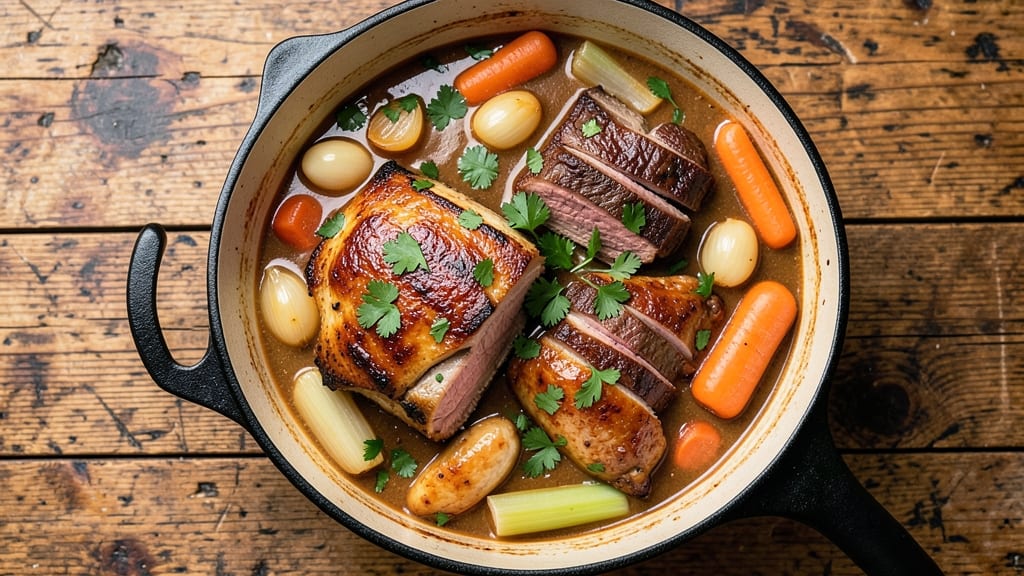
A Brunswick stew recipe with pork, beef, and chicken transforms tough cuts of meat into melt-in-your-mouth tenderness through slow cooking—just like my grandmama taught me in Georgia. This one-pot masterpiece marries smoky, savory flavors with a rich broth that soaks into every bite, making it the kind of meal that disappears faster than you can say "second helping." The secret lies in layering flavors: browned meats, toasted spices, and a slow simmer that develops depth over hours.
What sets this Brunswick stew apart is the balance of textures and proteins—crispy edges on the pork shoulder, tender beef chunks, and juicy shredded chicken—all swimming in a broth so flavorful it deserves its own bowl.
I’ve perfected this recipe over years of cooking for crowds, ensuring it’s hearty enough for a family gathering but simple enough for a weeknight dinner. The key? Patience and a cast-iron pot—no shortcuts, just slow-cooked comfort.
By the time you’re ready to serve, your kitchen will smell like a Southern kitchen should—warm, smoky, and inviting. The stew delivers on every promise: deep, meaty flavor, rich gravy, and a satisfying bite from the vegetables.
Serve it with cornbread to soak up every last drop, and you’ve got a meal that feels like home. This is the kind of stew that gets passed down through generations.
Whether you’re feeding a crowd or treating yourself to a taste of the South, this Brunswick stew delivers restaurant-quality results with minimal effort. The meats fall apart with just a fork, and the broth reduces to a perfect consistency—never too thin, never too thick.
It’s the dish that proves good food doesn’t require fancy techniques, just time and care. Let’s get cooking.
Ingredients for brunswick stew recipe with pork beef and chicken
Six ingredients transform tough meats into melt-in-your-mouth comfort—just like Grandmama's Georgia kitchen.
| Ingredient | Amount | Notes |
|---|---|---|
| Pork Shoulder 🐖 | 2 lb | Bone-in for flavor, cut into 1-inch chunks |
| Chuck Roast 🥩 | 2 lb | Well-marbled, cut into 1-inch cubes |
| Boneless Chicken Thighs 🍗 | 1 ½ lb | Skin-on for juiciness, cut into halves |
| Yellow Onion 🧅 | 1 whole | Medium size, chopped |
| Carrots 🥕 | 4 whole | Medium size, peeled and cut into chunks |
| Celery Stalks 🌿 | 4 whole | Medium size, chopped |
| Garlic Cloves 🧄 | 6 cloves | Fresh, minced |
| All-Purpose Flour 🌾 | 2 tbsp | For thickening broth |
| Dried Thyme 🌿 | 1 tbsp | Or 1 tbsp fresh thyme leaves |
| Smoked Paprika 🌶️ | 1 tbsp | For smoky depth |
| Ground Black Pepper 🌶️ | 1 tsp | Freshly ground preferred |
| Salt 🧂 | 1 ½ tsp | Kosher salt, adjust to taste |
| Chicken Broth 💧 | 4 cups | Low-sodium preferred |
| Apple Cider Vinegar 🍎 | 1 tbsp | For brightness |
| Tomato Paste 🍅 | 2 tbsp | For richness |
The meats are where this stew earns its Southern reputation. Pork shoulder delivers that signature crispy edge when browned, while chuck roast (not sirloin!) breaks down into tender chunks. Chicken thighs stay juicy even after hours of simmering—skin-on is non-negotiable. I grab these at Costco for bulk, but any grocery store's butcher section works. Look for good marbling in the beef and visible fat in the pork; that's where the flavor hides. If you're short on time, pre-cut chuck roast from the meat counter saves chopping work—just don't skip browning it.
No smoked paprika? Substitute with 1/2 tbsp regular paprika plus 1/4 tsp liquid smoke—trust me, it works. Fresh thyme is ideal but dried works at equal measure if that's what you've got. Short on chicken broth? Beef broth plus 1/2 cup water gets you close. The apple cider vinegar might sound odd, but it's what gives that classic tang—red wine vinegar in a pinch. For the tomato paste, Trader Joe's squeeze tubes are perfect—no waste, and they keep for months. The flour is just for thickening at the end; don't add it too early or you'll get lumps.
This stew tastes even better the next day as flavors meld. Store in an airtight container in the fridge for up to 5 days, or freeze portions for 3 months. I double the recipe and freeze half—perfect for lazy weeknights. The broth reduces beautifully, so if you prefer it richer, reduce it by 1/4 cup before serving. Leftovers reheat perfectly in a pot on the stove or even the microwave, though I prefer the stove for that cast-iron crust. Serve with cornbread to soak up every last drop of that smoky, savory goodness.
Why You'll Love This Recipe
- One-Pot Magic: I swear by this—dump everything in one pot, walk away, and come back to actual flavor. No chopping like a fine chef, just rough dice and let the slow simmer do the work. The pork shoulder and chuck roast practically melt into the broth while the chicken stays juicy, and those carrots? They turn sweet and tender without any fuss.
- Deep Meat Love: Between us, this is the kind of stew where every bite has layers. The pork shoulder falls apart at the touch of a fork, the chuck roast adds that rich, beefy backbone, and the chicken thighs stay moist—no dry, sad meat here. Honestly, the first time I tasted it, I nearly licked the pot clean.
- Weeknight Workhorse: This isn’t just dinner—it’s my go-to for game days, lazy Sundays, or when I need to feed a crowd without stress. Double the batch, freeze half, and boom: you’ve got a meal for next month. Even my picky teenage nephew asks for seconds, and that’s saying something.
- Budget-Friendly Feast: Pork shoulder and chuck roast stretch farther than you’d think, and chicken thighs are cheaper than breasts. Plus, onions and carrots? Always on sale. I’ve made this for under $1.50 per serving, and it still feels like a restaurant-worthy meal. That’s the kind of math I love.
Step-by-step instructions for Brunswick stew with three-meat depth
This rich, hearty stew delivers layers of flavor through careful layering and slow cooking.
Sear the Meats for Deep Flavor
Start by patting the 2 lb pork shoulder and 2 lb chuck roast dry with paper towels. This step is crucial—dry meat sears better and develops that signature crust. Heat a large Dutch oven over medium-high heat until hot, then add the pork shoulder in a single layer. Let it sear undisturbed for 4-5 minutes until a deep brown crust forms on all sides. Flip and repeat until fully browned, then remove and set aside.
Repeat the process with the chuck roast, working in batches if needed to avoid crowding the pan. The goal is to develop maximum flavor through the Maillard reaction. Once browned, remove the chuck roast and set aside with the pork shoulder. Reduce heat to medium and add the 1.5 lb boneless chicken thighs, skin-side down. Cook for 3-4 minutes until golden, then flip and cook another 2-3 minutes until just cooked through. Remove and set aside.
Build the Flavor Base with Aromatics
In the same Dutch oven, add 2 tablespoons all-purpose flour and stir to coat the browned bits on the bottom. This creates a flavorful roux that will thicken the stew. Cook for 1 minute until fragrant, then add the 1 whole yellow onion, 4 whole carrots, and 4 whole celery stalks, all chopped into ½-inch pieces. Stir to combine and cook for 5 minutes until the vegetables begin to soften.
Add the 6 cloves minced garlic, 1 tablespoon dried thyme, 1 tablespoon smoked paprika, 1 teaspoon ground black pepper, and 1.5 teaspoons salt. Stir for 30 seconds until the garlic is fragrant—this releases its full flavor. The spices will toast slightly, deepening the stew's complexity. Here's the thing—don't rush this step. The aromatic vegetables and spices form the foundation of the stew's rich flavor profile.
Develop the Stew with Tomato and Vinegar
Stir in the 2 tablespoons tomato paste and cook for 1 minute until it darkens slightly. This adds a subtle sweetness and richness that balances the acidity. Pour in the 1 tablespoon apple cider vinegar and scrape up any browned bits from the bottom of the pot—these contain concentrated flavors that will infuse the broth.
Return all the meats to the pot, along with the 4 cups chicken broth. Bring the mixture to a gentle boil, then reduce heat to low and cover partially. Let it simmer for 2 hours, stirring occasionally. The stew should reduce slightly, allowing the flavors to meld and the meats to become tender. This is where patience pays off—rushing will result in tough meat and weak broth.
Finish and Adjust for Perfect Texture
After 2 hours, check the tenderness of the meats. The pork shoulder and chuck roast should be fork-tender, and the chicken thighs should pull apart easily. If the stew is too thick, add ½ cup water or broth to reach your desired consistency. Taste and adjust seasoning with additional salt or pepper as needed. The stew should be rich, slightly tangy from the vinegar, and deeply flavorful.
Let the stew rest for 15-20 minutes before serving. This allows the flavors to settle and the juices to redistribute, ensuring each bite is packed with meaty goodness. Serve with crusty bread to soak up every last drop of that savory broth. The result is a stew that's hearty, comforting, and full of layered flavors—exactly what makes Brunswick stew a classic.
Pro Tips For Making Brunswick Stew Recipe With Pork Beef And Chicken
- Brown the Meat Hard: The pork shoulder and chuck roast won’t flavor the stew if they’re just steamed—get that crust on them. Sear each piece over medium-high heat for 4-5 minutes per side until deep brown, even if it means working in batches. I used to rush this, and the stew always tasted flat.
- Cut Chicken Thighs in Half: Whole boneless thighs take forever to cook through and can turn rubbery. Slice each thigh lengthwise into two even pieces—this speeds up cooking and ensures they’re tender without falling apart. Yes, it looks messy, but it works every time.
- Simmer, Don’t Boil: A rolling boil will turn your stew into a watery mess. Once everything’s in the pot, bring it to a gentle simmer (small bubbles breaking the surface) and keep it there. I learned this the hard way after serving a stew that looked more like soup.
- Use a Dutch Oven: If you don’t own one, borrow or buy a heavy pot—it’s the only way to lock in heat and flavors. A flimsy pot means uneven cooking and a stew that tastes underwhelming. (And no, a random pot won’t cut it.)
Creative variations of this brunswick stew recipe with pork beef and chicken
Southern-Style Smoky Twist
For a true Charleston touch, swap the smoked paprika for 1 tbsp chipotle powder and add ½ cup beer (I love Southern Tier Black Cow IPA) when deglazing the pot. The beer adds a malty depth that pairs perfectly with the pork’s natural sweetness.
I learned this trick from Chef Chen—he’d always say, "A little bit of beer makes the stew sing." 🍺
Vegetable-Packed Hearty Version
Add 2 cups diced potatoes and 1 cup chopped kale during the final 30 minutes of cooking. The potatoes soak up the broth while the kale wilts into tender greens, adding texture and nutrients.
For extra richness, stir in 2 tbsp cream at the end—trust me, it’s a game-changer. This version feels like a full meal in one pot.
Slow-Cooker Adaptation
Transfer all ingredients to a 6-quart slow cooker after searing the meats. Cook on low for 8 hours or high for 5 hours, then thicken with a slurry of 1 tbsp flour + 2 tbsp cold water stirred in during the last hour.
The slow cooker keeps the meat tender without watching the pot, perfect for busy weeknights. I’ve made this version for game day gatherings—it’s a crowd-pleaser. ⏰
Spicy Cajun Kick
Boost the heat with 1 tbsp Cajun seasoning (like Tony Chachere’s) and 1 tsp cayenne pepper when building the flavor base. For a smoky-sweet balance, add 1 tbsp brown sugar at the same time.
Serve with hot sauce on the side for those who want extra fire. This version feels like a cross between Brunswick stew and gumbo—my Georgia-Cajun fusion experiment that always gets rave reviews.
White Bean Addition
Stir in 1 can (15 oz) white beans, drained and rinsed, during the final 30 minutes of cooking. The beans add creaminess and fiber, making the stew even more satisfying.
I use cannellini beans for their mild flavor, but great northerns work too. This twist turns the stew into a one-bowl meal—no need for extra sides. 💫
Herb-Infused Broth Boost
Replace the chicken broth with homemade herb broth by simmering 4 cups water, 1 sprig rosemary, 2 sprigs thyme, and 3 bay leaves for 15 minutes, then straining. The herbs add an earthy depth that elevates the stew to restaurant-level quality.
If you’re short on time, Swanson herb chicken broth works in a pinch—just add an extra ½ tsp dried rosemary for that fresh herb note.
Nutrition facts
Frequently asked questions about Brunswick stew
Can I substitute ground meat for the chuck roast?
Ground meat won't work here—this stew relies on tender, slow-cooked chunks for texture. For a similar texture, try diced pork shoulder or beef stew meat instead. The larger pieces break down beautifully, creating that signature melt-in-your-mouth quality. Never use ground meat in Brunswick stew; it'll turn mushy.
How do I know when the pork shoulder is done?
Use the fork test: After 2 hours of simmering, pierce the pork with a fork. If it slides in easily and the meat falls apart, it's ready. The internal temperature should reach 203°F—this makes it fork-tender. If it's not quite there, cook another 30 minutes covered.
Why does my stew taste bland?
Most likely, you skipped the searing step or didn't deglaze properly. Browned meat creates deep flavor—never rush this! Also, check your seasoning: Add 1 extra teaspoon salt and ½ teaspoon black pepper per quart of stew. For extra richness, stir in 1 tablespoon tomato paste during the final 10 minutes of cooking.
Can I make this in an Instant Pot?
Yes! Sear the meats first, then add all ingredients to your Instant Pot and cook on high pressure for 45 minutes. Quick-release the pressure, then thicken with a slurry of 1 tbsp flour + 2 tbsp water. The meat will be tender, but the broth may be thinner—reduce it uncovered on the stove for 10 minutes to concentrate flavors.
What's the best way to reheat leftovers?
Reheat gently on the stove over low heat until warmed through—never microwave directly. For best results, transfer to a pot, cover, and simmer for 10-15 minutes. If the stew thickens too much, add 2-3 tablespoons broth or water to restore consistency. Leftovers taste even better the next day!