
Main Courses
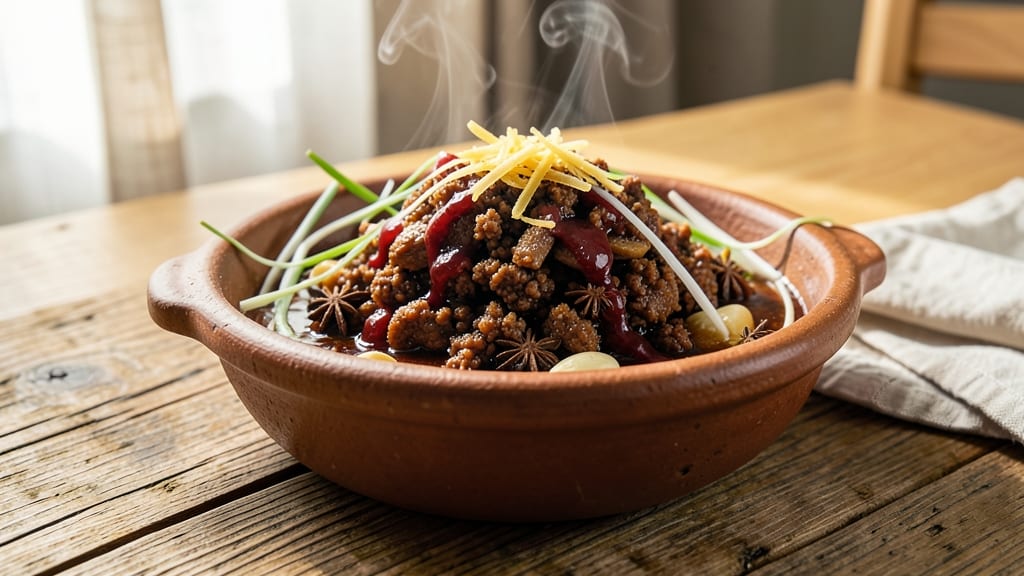
This braised minced pork recipe transforms humble ground pork into a restaurant-worthy dish with deep umami and tender texture. The secret lies in slow simmering—where pork develops rich, caramelized flavors while absorbing aromatic herbs and red wine.
I perfected this technique after years of working with heritage pork, and it never fails to impress.
What makes this recipe special is the balance of French braising methods and Southeast Asian influences—think tender pork with a glossy, slightly sweet sauce. The process starts with searing the pork to build flavor, then deglazing with wine to create a velvety base.
Aromatics like ginger and star anise infuse the sauce while it simmers, creating layers of complexity.
By the time you serve it, you'll have fork-tender pork with a sauce so rich it coats every bite. The texture is velvety yet substantial, and the aroma alone will draw everyone to the table.
This dish pairs beautifully with steamed jasmine rice or buttery mashed potatoes to soak up every last drop of sauce.
Perfect for weeknight dinners or special occasions, this braised pork is versatile enough to adapt with different herbs or sauces. The technique is straightforward yet professional—ideal for home cooks who want restaurant-quality results without the fuss. Let's get started on creating this comforting classic.
Ingredients for braised minced pork
Heritage pork and aromatic spices create restaurant-worthy richness through slow simmering techniques.
| Ingredient | Amount | Notes |
|---|---|---|
| Ground Pork 🐖 | 1 ½ lb | Heritage pork preferred for richness |
| Red Wine 🍷 | 1 cup | Bold dry variety like Cabernet |
| Beef Broth 🍲 | 1 ½ cups | Low-sodium preferred for balance |
| Fresh Ginger 🌿 | 2 tbsp | Grated, aromatic variety |
| Star Anise 🌶️ | 2 whole | Whole pods for infusion |
| Garlic Cloves 🧄 | 6 cloves | Minced for aromatic depth |
| Tomato Paste 🍅 | 2 tbsp | Smooth consistency preferred |
| Soy Sauce 🥢 | 2 tbsp | Dark soy for color depth |
| Honey 🍯 | 1 tbsp | For subtle sweetness balance |
| Olive Oil 🫒 | 2 tbsp | Extra-virgin for richness |
| All-Purpose Flour 🌾 | 1 tbsp | For thickening sauce |
| Salt 🧂 | 1 tsp | Kosher salt preferred |
| Black Pepper 🌶️ | ½ tsp | Freshly ground for heat |
| Fresh Cilantro 🌿 | ¼ cup | Chopped for garnish |
The ground pork is where this dish starts—heritage pork has more marbling and flavor than conventional cuts. Look for it at specialty butchers or high-end grocery stores like Whole Foods or Wegmans, where they often carry it in the meat department. If heritage pork isn't available, regular ground pork works fine, but you might want to add an extra pinch of salt. The red wine should be bold and dry—Cabernet Sauvignon or Merlot are my go-tos, but whatever's open in your cabinet will do. For the beef broth, low-sodium versions give you more control over seasoning, and brands like Swanson or Pacific Foods are reliable choices.
No red wine? Substitute with extra beef broth and a splash of balsamic vinegar—it adds depth without altering the flavor profile. Fresh ginger loses potency fast, so buy it whole and grate only what you need. If you can't find star anise, a pinch of cinnamon and cloves can mimic its warm, aromatic qualities. The tomato paste can be thick or smooth—Mueller's or Hunt's are my preferred brands. For extra richness, consider adding a dash of fish sauce if you're open to Southeast Asian influences, but it's optional. The honey should be mild—clover honey works best for balancing the savory flavors without overpowering them.
This dish tastes even better the next day as the flavors meld together. Store leftovers in an airtight container in the fridge for up to 5 days, or freeze for 3 months. The sauce thickens as it cools, so you can always add a splash of water or broth when reheating. For serving, I like to garnish with fresh cilantro and a drizzle of the cooking liquid—it adds freshness that cuts through the richness. The pork reheats beautifully, so plan ahead if you're making this for a crowd.
Why You'll Love This Recipe
- One-Pot Magic: I swear by this recipe when I’m too tired to wash a second pan. Brown the pork, toss in the wine and broth, and let it simmer—no flipping, no fuss. The ginger and star anise do all the work while I stir once, maybe twice.
- Wine-Infused Richness: That splash of red wine isn’t just for show—it melts into the pork, giving it a depth you won’t find in basic ground pork dishes. Add the beef broth, and suddenly you’ve got a sauce that’s velvety, savory, and actually tastes like you put in effort.
- Leftovers That Shine: This dish only gets better the next day. I make a double batch on Sundays because reheating it turns the pork tender and the flavors even more concentrated. Slap it on toast, in noodles, or straight from the pot—it’s always a win.
- Budget Meal, Big Impact: Ground pork is affordable, and a bottle of red wine stretches across multiple meals. The star anise and ginger add a fancy touch without breaking the bank, making this my go-to when I need a hearty, satisfying dinner that won’t drain my wallet.
Step-by-step instructions for slow-simmered braised pork
This method delivers melt-in-your-mouth pork with deep umami flavor through precise layering and slow cooking.
Sear the Ground Pork for Maximum Flavor
Heat the 2 tablespoons olive oil in a heavy-bottomed Dutch oven over medium-high heat. Add the 1.5 lb ground pork and break it apart with a wooden spoon, distributing it evenly. Cook for 6-8 minutes, stirring occasionally, until the pork loses its raw color and begins to brown in patches.
This initial searing step is critical—it develops a rich, caramelized crust that forms the flavor foundation. You'll know it's ready when the pork releases easily from the bottom of the pan and has a deep brown appearance. Avoid overcrowding the pan, as this prevents proper browning. If needed, work in batches and set the second portion aside temporarily.
Build the Aromatic Base with Ginger and Garlic
Reduce heat to medium and add the 2 tablespoons grated fresh ginger and 6 minced garlic cloves. Stir constantly for 1-2 minutes until the ginger becomes fragrant and the garlic turns golden around the edges. Be careful not to let the garlic burn—it should smell sweet and nutty, not bitter.
Next, stir in the 2 whole star anise and cook for an additional 30 seconds to release their essential oils. This aromatic trio forms the flavor backbone of the dish. The star anise will infuse a subtle licorice note that deepens as the braise simmers. Remove the star anise pods before serving if you prefer a cleaner finish, though they're harmless when left in.
Deglaze and Combine Wet Ingredients
Pour in the 1 cup red wine, scraping up all the browned bits from the bottom of the pan with a wooden spoon. Let the wine simmer for 3-4 minutes until reduced by half. This deglazing step captures all the caramelized flavor that would otherwise be lost.
Add the 1.5 cups beef broth, 2 tablespoons tomato paste, 2 tablespoons soy sauce, 1 tablespoon honey, 1 tablespoon all-purpose flour, 1 teaspoon salt, and 0.5 teaspoon black pepper. Stir well to combine all ingredients into a smooth mixture. The tomato paste will help thicken the sauce slightly, while the honey adds subtle sweetness that balances the umami flavors.
Simmer Until Tender and Rich
Bring the mixture to a gentle simmer over medium-low heat. Cover the Dutch oven with a lid and let it cook for 45-50 minutes, stirring occasionally. The pork is ready when it's fork-tender and the sauce has thickened to a glossy consistency that coats the back of a spoon.
Here's where patience pays off: the slow simmer allows the pork to absorb all the complex flavors while breaking down into tender, melt-in-your-mouth pieces. If the sauce reduces too quickly, add 1-2 tablespoons water to maintain the proper consistency. The dish should have a rich, velvety texture with visible strands of pork suspended in the sauce.
Finish and Garnish for Presentation
Remove the Dutch oven from heat and let it rest for 5 minutes. This resting period allows the flavors to meld completely and the sauce to thicken slightly. Stir in the 0.25 cup chopped fresh cilantro just before serving to add a bright, herbal finish that cuts through the richness.
Serve immediately, ladling the pork and sauce over steamed rice or noodles. Each bite should deliver tender pork with a sauce that's perfectly balanced—sweet from the honey, salty from the soy and broth, and aromatic from the ginger, garlic, and star anise. The texture should be luxurious, with the pork falling apart easily and the sauce clinging to every strand.
Pro Tips For Making Braised Minced Pork
- Brown First, Braise Later: Don’t skip the initial sear—crank the heat and cook the ground pork in batches until it’s deep golden, not just pink. I learned this the hard way when my braise tasted bland; the Maillard reaction here is what builds flavor, and minced pork needs that extra push to develop depth.
- Deglaze with Wine, Then Wait: Pour in that red wine right after browning, but don’t stir immediately—let it bubble and reduce by half before scraping up those stuck bits. I used to rush this step, and the sauce always ended up thin and one-dimensional. Patience here makes the sauce rich and cohesive.
- Grate the Ginger Fine: Skip the julienne or thin slices—grate the ginger so fine it nearly dissolves into the broth. My grandmother swore by this, and she was right: it infuses flavor evenly without leaving chewy bits. A microplane works best, and trust me, your dish will thank you.
- Simmer Low and Covered: Once everything’s in the pot, reduce to a gentle simmer and cover it tight. Too much heat = a watery mess; too little = tough pork. I was skeptical until I tried it—now I never cook it any other way. The star anise and ginger need time to meld, so give it at least 45 minutes.
Flavor customization for this braised minced pork
Sweet & Tangy Twist
Swap the red wine for ½ cup pineapple juice and ½ cup apple cider vinegar to create a tropical-inspired sweet-tangy sauce. Add 1 tablespoon fish sauce and 1 teaspoon sesame oil for depth, then simmer with the pork for 30 minutes uncovered to reduce the liquid.
Finish with 1 tablespoon toasted sesame seeds—this Southeast Asian-inspired version is perfect with jasmine rice. 🌺
Spicy & Smoky Heat
Boost the heat by adding 1 tablespoon gochujang (Korean chili paste) and 1 teaspoon smoked paprika during the deglazing step. For extra smokiness, replace the star anise with 1 chipotle pepper in adobo (minced).
Garnish with sliced scallions and a drizzle of chili oil before serving. This version pairs beautifully with corn tortillas for tacos or over cilantro-lime rice. 🔥
Herb-Forward Mediterranean
Replace the star anise with 1 teaspoon dried oregano and 1 bay leaf, then add ½ cup chopped kalamata olives and 1 tablespoon capers during the final 10 minutes of simmering. Deglaze with ½ cup white wine instead of red for a brighter profile.
Finish with fresh parsley and a squeeze of lemon juice—this version works perfectly with crusty bread or roasted potatoes. 🌿
Creamy & Mushroom-Infused
After the initial sear, add 8 oz sliced cremini mushrooms and cook until golden. Deglaze with ½ cup heavy cream (instead of wine) along with the beef broth. Stir in 1 teaspoon thyme and ½ teaspoon nutmeg for warmth.
This richer version pairs well with wild rice or egg noodles, and the mushrooms add an earthy depth that balances the creaminess. 🍄
Citrus & Chili Zing
Add zest and juice of 1 orange (about 2 tablespoons juice) during the final 15 minutes of simmering. For heat, include 1 teaspoon chili flakes and 1 thinly sliced jalapeño.
Garnish with cilantro and a sprinkle of cotija cheese—this bright, zesty version is ideal for summer meals or as a taco filling. The citrus cuts through the richness while keeping the pork tender. 🍊
Umami Bomb with Miso
Replace the soy sauce with 2 tablespoons white miso paste (dissolved in the broth) and add 1 tablespoon mirin for sweetness. Simmer the pork with ½ cup shiitake mushrooms (sliced) for an extra umami punch.
Garnish with green onions and toasted sesame seeds—this Japanese-inspired version is perfect with steamed udon noodles or over sushi rice. 🍜
Nutrition facts
Frequently asked questions
Can I use ground pork shoulder instead of regular ground pork?
Ground pork shoulder adds even more richness and fat content, which helps create a silkier sauce. Just be sure to trim any large fat chunks first and use the same quantity by weight. The extra fat will make the dish more decadent, but it also means you may need to adjust the simmering time slightly—watch for doneness after 35-40 minutes instead of 45-50 minutes.
What if I don't have red wine? Can I substitute something else?
Yes! For a non-alcoholic version, use 1 cup beef broth + 1 tablespoon balsamic vinegar. For a sweeter profile, try ½ cup apple juice + ½ cup chicken broth. The key is maintaining the acidity and depth—never skip the deglazing step, as those caramelized bits are essential for flavor.
How do I prevent the sauce from getting too thin or too thick?
For a thinner sauce, add 1-2 tablespoons water or broth during simmering. For thickening, mix 1 tablespoon cornstarch with 2 tablespoons cold water, stir into the sauce at the end, and simmer for 2-3 minutes until it reaches your desired consistency. The sauce should coat the back of a spoon but remain silky, not gluey.
Can I make this recipe in a slow cooker or Instant Pot?
Slow cooker: Brown the pork first, then transfer everything to the slow cooker and cook on low for 3-4 hours or high for 2 hours. Instant Pot: Sear the pork, then add all ingredients and cook on high pressure for 20 minutes, followed by a 10-minute natural release. Both methods work, but the stovetop version gives you more control over the sauce's texture.
What's the best way to store and reheat leftovers?
Store in an airtight container in the fridge for up to 5 days or freeze for 3 months. To reheat, warm gently on the stovetop over medium-low heat with a splash of water or broth to restore moisture. Avoid microwaving—it can make the sauce watery. Leftovers actually taste better the next day as flavors meld!