
Main Courses
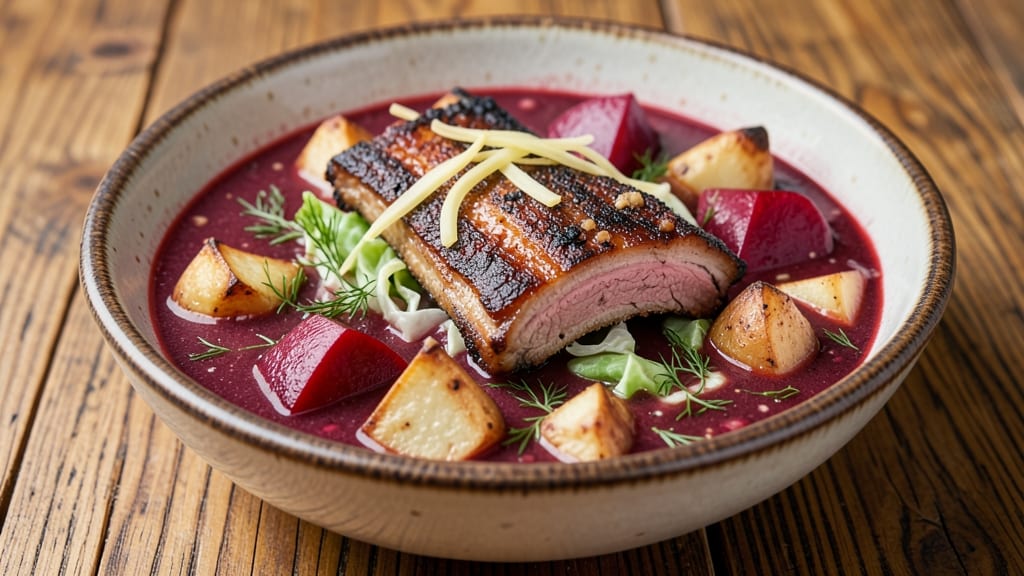
This borscht recipe with pork ribs transforms a traditional Eastern European classic into a hearty, smoky masterpiece where tender meat falls from the bone. The secret lies in slow-braising pork ribs until they're fork-tender while building a deep, beet-infused broth that balances earthy and tangy flavors.
I developed this version after years of perfecting the balance between rich meat and vibrant vegetables—no shortcuts, just layers of flavor that make every spoonful satisfying.
The beauty of this recipe is its two-part approach: first, the ribs simmer until they're so tender they practically dissolve, then the vegetables join in for a harmonious blend of textures.
Cabbage wilts into sweet submission, potatoes soak up the smoky broth, and carrots add natural sweetness that cuts through the richness. The result is a soup that's equal parts comforting and complex, with each ingredient playing its own role in the symphony of flavors.
What makes this borscht truly special is the way the pork ribs infuse the broth with their deep, smoky character while remaining melt-in-your-mouth tender. The broth develops a rich, slightly sweet depth from the beets and vegetables, creating a perfect canvas for the pork's natural flavor.
Served with a dollop of sour cream and fresh dill, this isn't just soup—it's a complete meal that warms the soul and feeds the family.
Perfect for chilly evenings or special gatherings, this recipe delivers restaurant-quality results at home. The slow cooking process means you'll have a fragrant kitchen filled with the aroma of simmering meat and vegetables, making it impossible to resist.
Whether you're feeding a crowd or treating yourself to a comforting bowl, this borscht brings the essence of Eastern European tradition with a Southern twist that's impossible to resist.
Ingredients for borscht recipe with pork ribs
Pork ribs and vibrant vegetables create a smoky, rich borscht that's pure comfort in a bowl.
| Ingredient | Amount | Notes |
|---|---|---|
| Pork Ribs 🍖 | 3 lb | Bone-in, meaty cuts preferred |
| Beets 🧅 | 2 medium | Approximately 1 lb total |
| Yellow Onion 🧅 | 1 whole | Medium size, chopped |
| Carrots 🥕 | 4 medium | Approximately 1 lb total |
| Russet Potatoes 🥔 | 4 medium | Approximately 2 lb total |
| Green Cabbage 🥬 | 1 small head | About 1.5 lb total |
| Tomato Paste 🍅 | ½ cup | Squeeze tube preferred |
| Beef Broth 💧 | 6 cups | Low-sodium preferred |
| Apple Cider Vinegar 🍎 | ¼ cup | For tangy depth |
| Bay Leaves 🌿 | 2 whole | Fresh preferred |
| Black Peppercorns 🌶️ | 1 tsp | Freshly cracked |
| Salt 🧂 | 1 ½ tsp | Kosher or sea salt |
| Fresh Dill 🌿 | ¼ cup | Chopped, for garnish |
| Sour Cream 🥛 | ½ cup | Full-fat preferred |
The ribs are the star here—bone-in, meaty cuts give you that fall-off-the-bone texture. Most butchers will cut them for you, but if you're buying a whole rack, look for thick, fatty sections. Costco or local meat markets often have pre-cut pork ribs at great prices. For the beets, organic from the farmers market has the best flavor, but regular grocery store beets work fine. The key is peeling them after roasting—they'll glaze beautifully and caramelize for that deep sweetness. Don't skip the apple cider vinegar—it's what balances the richness of the meat with that bright tang.
No beef broth? Vegetable broth with a splash of soy sauce works in a pinch. Fresh dill is ideal, but dried dill at one-third the amount gets you close. The tomato paste can be the squeeze tube kind—Trader Joe's has great ones that last forever. For the cabbage, if you only have green cabbage, use half red cabbage for color. The potatoes can be Yukon gold if you prefer creamier texture, but russets hold up better during long cooking. No fresh dill? Parsley works in a pinch, though it's not traditional.
This soup gets better the next day—tastes even richer after flavors meld. Keeps 4-5 days in the fridge, freezes beautifully for 3 months. I always make a double batch because it reheats perfectly. Store the sour cream separately—just stir it in when serving. The broth reduces as it cooks, so add extra broth if it gets too thick. Leftovers? Portion into containers for easy lunches—just add a dollop of sour cream when reheating.
Why You'll Love This Recipe
- One-Pot Magic: I swear by this—just toss everything into the same pot, and the ribs practically melt into the broth while the beets and carrots soften to perfection. No fussing between pans, no extra dishes.
- Rich, Unexpected Depth: The pork ribs add a smoky, savory backbone that cuts through the earthy sweetness of the beets. Honestly, it’s the kind of flavor that makes you pause mid-bite—like a cozy hug in soup form.
- Leftovers That Shine: This borscht tastes better the next day, especially if you let the flavors meld overnight. I freeze portions too—just reheat, and it’s like fresh soup again, no extra effort.
- Budget-Friendly Feast: Pork ribs stretch across multiple meals, and beets last forever in the fridge. Between us, this is my go-to when I need to feed a crowd without breaking the bank—everyone clears their plate.
Step-by-step instructions for borscht with pork ribs
Here's how to make this hearty Eastern European classic with melt-in-your-mouth pork ribs.
Prepare the Pork Ribs for Maximum Flavor
Start by trimming any excess fat from the 3 lb pork ribs, leaving about ¼ inch of fat cap for moisture during cooking. Pat the ribs dry with paper towels—this helps create a better sear. In a large Dutch oven, heat 1 tablespoon of olive oil over medium-high heat. Add the ribs fat-side down and sear for 5-6 minutes until deeply golden brown. Flip and sear the other side for another 5 minutes.
Once browned, remove the ribs from the pot and set them aside. The goal here is to develop that rich, caramelized crust that'll infuse the entire soup with deep flavor. Don't rush this step—patience now means better-tasting borscht later. I like to make a few small slashes in the meatier parts of the ribs to help them cook through more evenly.
Build the Vegetable Base
In the same Dutch oven, add 2 tablespoons of butter and let it melt completely. Add the chopped 1 whole yellow onion and cook for 5 minutes until softened and translucent. Add the peeled and chopped 2 medium beets and 4 medium carrots, stirring to coat in the butter. Cook for another 5 minutes until the vegetables begin to soften slightly.
Stir in the 0.5 cup tomato paste and cook for 2 minutes, stirring constantly to prevent burning. This step develops the soup's signature deep color and rich flavor. Add the 6 cups beef broth, 0.25 cup apple cider vinegar, 2 whole bay leaves, 1 tsp cracked black peppercorns, and 1.5 tsp salt. Bring to a gentle boil, then reduce heat to medium-low and let it simmer for 15 minutes to allow the flavors to meld.
Add Potatoes and Cabbage
While the broth simmers, peel and chop the 4 medium russet potatoes into 1-inch cubes. Core and shred the 1 small head green cabbage into thin strips. Add both to the simmering broth along with the pork ribs. The potatoes should be mostly submerged—if not, add a little water. Return to a gentle simmer and cook for 45-50 minutes, or until the pork ribs are fork-tender and the potatoes are fully cooked.
Here's the thing—you want the ribs to fall off the bone, but you don't want the vegetables to turn to mush. Check the potatoes after 40 minutes by piercing one with a fork. They should be tender but not falling apart. The cabbage will soften as it cooks, but you want to preserve some texture. If the soup reduces too much, add a little water or broth to maintain the proper consistency.
Finish and Serve
Once everything is tender, remove the pork ribs from the soup and let them rest for 5 minutes before carefully picking the meat off the bones. Discard the bones and any large pieces of fat. Return the meat to the soup and stir in the chopped 0.25 cup fresh dill. Taste and adjust seasoning if needed—sometimes the vinegar makes the soup taste a bit sharp, so a pinch more salt might help balance it.
Ladle the hot borscht into bowls and top each serving with 2 tablespoons of the 0.5 cup sour cream. The contrast of cool, creamy sour cream against the warm, smoky broth is what makes this dish truly special. Serve immediately with crusty bread to soak up every last drop of that flavorful broth. The ribs should be so tender they practically melt in your mouth, and the vegetables should be perfectly cooked without being mushy.
Pro Tips For Making Borscht Recipe With Pork Ribs
- Sear Ribs First: I learned this the hard way—skipping the sear makes the ribs turn out bland and mushy. Get a heavy pot smoking hot, pat the ribs dry, and sear them 3-4 minutes per side until deep brown. That crust locks in flavor when they later simmer in the broth.
- Boil Beets Whole: Peeling and chopping beets before cooking wastes their natural sweetness and makes the broth muddy. Toss them whole into the pot with the ribs, add a bay leaf, and let them steam until fork-tender. Peel and cube them at the end—they’ll be vibrant and concentrated.
- Salt the Potatoes Early: Adding salt only at the end lets the potatoes turn bland and watery. Toss them in the pot with a pinch of salt as soon as they hit the water, then adjust later. This guarantees they stay firm and absorb flavor without turning to mush.
- Strain the Broth Twice: After simmering, strain the broth through a fine-mesh sieve, then a cheesecloth for a silky texture. The first pass catches big bits; the second removes the fine grit that makes cheap borscht taste off. (Yes, it’s extra work—but your soup will thank you.)
Wine and beer pairings for this borscht recipe with pork ribs
Red Wine Classics
For this rich, meaty borscht, I reach for Pinot Noir from the Willamette Valley—its bright acidity and red fruit notes cut through the pork's richness beautifully. A 2019 Domaine Serene or La Crema offers that perfect balance between earthy and fruity that complements the beets and smoky ribs.
If you prefer something bolder, a Hungarian Egri Bikavér (Bull's Blood) from the Tokaj region brings deep berry flavors that mirror the soup's depth. 🍷
Crisp White Options
When I want to highlight the vegetable elements, I switch to a dry Riesling from Germany's Mosel region. The Dr. Loosen Blue Slate variety has that mineral crispness that refreshes your palate between spoonfuls.
For something lighter, a Sauvignon Blanc from New Zealand—like Oyster Bay—adds citrusy brightness that pairs wonderfully with the vinegar tang in the broth.
Beer Pairings
For beer lovers, a Belgian-style witbier like Hoegaarden brings coriander and citrus notes that contrast the soup's richness. I also love a German Helles Lager—the Weihenstephaner brand is my go-to—because its malty sweetness complements the caramelized beets.
For something stronger, a smoked porter from Deschutes Brewery mirrors the pork's smokiness while adding depth. 🍺
Local Southern Twist
If you're serving this in the Southeast like I often do, a Georgia Chardonnay from Chateau Elan offers that buttery richness that pairs surprisingly well with the pork.
For a local beer option, try Atlanta's SweetWater 420 IPA—its hoppy bitterness balances the soup's richness while the citrus notes cut through the fat. It's not traditional, but it's become a crowd-pleaser at my restaurant.
Non-Alcoholic Options
Don't overlook sparkling water with a splash of cranberry juice for a refreshing alternative. I also love ginger beer—like Feather's—because the spicy kick complements the soup's depth. For something more substantial, a cucumber-mint infused iced tea with a squeeze of lemon keeps the palate clean between bites.
The mint adds a freshness that contrasts the rich pork beautifully. 💧
Nutrition facts
Frequently asked questions
Can I substitute beef broth with chicken broth in this recipe?
While chicken broth will work, it won't provide the same rich depth of flavor as beef broth. The pork ribs already contribute a meaty taste, but beef broth enhances the savory notes that balance the sweet beets and tangy vinegar. If using chicken broth, add an extra 1 teaspoon of soy sauce to compensate for the lost umami.
How do I know when the pork ribs are fully cooked?
Ribs are done when they're fork-tender and the meat pulls away from the bone with minimal resistance. Insert a fork into the thickest part of a rib—if it slides in easily and the meat separates cleanly, it's ready. For extra safety, check the internal temperature with a meat thermometer: 195°F for fall-off-the-bone tenderness.
Why does my borscht turn out too thick or too thin?
The consistency depends on cooking time and liquid reduction. For thicker borscht, simmer uncovered for 10-15 extra minutes to evaporate excess liquid. If too thick, add ½ cup hot water or broth. Pro tip: Skim excess fat from the surface while simmering to prevent greasiness, and adjust seasoning gradually—vinegar and salt are your best friends for balancing texture.
Can I make this recipe in a slow cooker?
Brown the ribs first, then transfer everything to a 6-quart slow cooker on low for 7-8 hours. Add potatoes and cabbage in the last 2 hours of cooking. The slow cooker method actually enhances the meat's tenderness and allows flavors to meld beautifully. Just check the ribs' doneness with a fork before serving.
What's the best way to reheat leftovers?
Reheat gently on the stove over low-medium heat until warmed through (165°F). Never microwave—it turns the broth rubbery. Add a splash of water or broth if needed to restore consistency. Stir in fresh dill and a dollop of sour cream just before serving to keep the flavors vibrant. Leftovers taste even better the next day!