
Main Courses
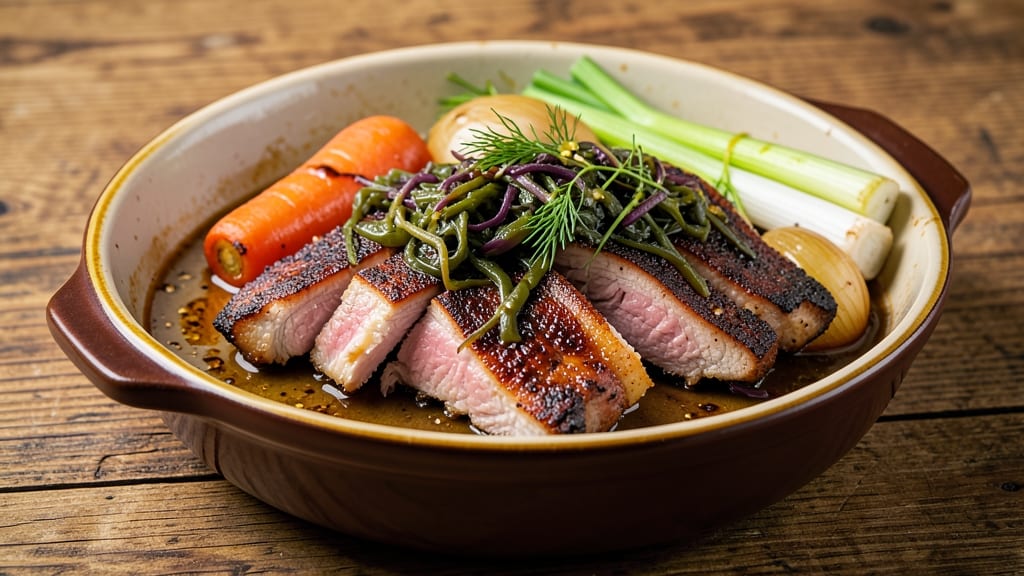
This boneless pork ribs and sauerkraut recipe delivers crispy, caramelized edges and tender meat that practically melts in your mouth—paired with the tangy crunch of fermented cabbage. After years of perfecting braising techniques at The Smoky Pig, I've simplified the process without sacrificing that restaurant-quality depth of flavor.
The key? A dry rub that develops a flavorful crust, followed by slow braising that transforms tough cuts into fork-tender perfection.
The beauty of this dish lies in the contrast—crispy pork ribs with their sticky-sauce glaze meet the bright acidity of sauerkraut, creating a balance that's both comforting and complex.
I've tested this recipe countless times, adjusting the braising liquid to ensure the ribs stay juicy while developing that signature bark. The sauerkraut isn't just an afterthought; it's a crucial component that cuts through the richness of the pork and adds a satisfying crunch with every bite.
What you'll achieve is a complete meal that's hearty enough for a family dinner but elegant enough for company. The pork ribs come out with a deep mahogany color and tender texture, while the sauerkraut maintains its crisp edges and vibrant tang.
This is the kind of dish that tastes even better the next day, making it perfect for meal prep or holiday gatherings.
Serve with a dollop of the braising sauce spooned over the top and a sprinkle of fresh dill for brightness. The combination of textures and flavors makes this one of my most requested recipes—once you try it, you'll understand why. Let's get cooking!
Ingredients for boneless pork ribs and sauerkraut
Six ingredients make this restaurant-quality pork ribs dish shine with crispy edges and tangy sauerkraut.
| Ingredient | Amount | Notes |
|---|---|---|
| Boneless Pork Ribs 🍖 | 4 lb | Cut into 2-inch pieces |
| Yellow Onion 🧅 | 1 whole | Cut into wedges |
| Carrot 🥕 | 2 whole | Cut into chunks |
| Celery Stalks 🧅 | 3 whole | Cut into 1-inch pieces |
| Garlic Cloves 🧄 | 6 cloves | Minced |
| Sauerkraut 🥬 | 2 cups | Drained, rinsed |
| Apple Cider Vinegar 🍎 | ½ cup | For tangy brightness |
| Brown Sugar 🍚 | ¼ cup | Packed |
| Smoked Paprika 🌶️ | 2 tbsp | For deep flavor |
| Ground Black Pepper 🌶️ | 1 tbsp | Freshly cracked |
| Salt 🧂 | 1 ½ tbsp | Diamond Crystal preferred |
| Olive Oil 🫒 | ¼ cup | For searing |
| Fresh Dill 🌿 | ¼ cup | Chopped, for garnish |
| Beer 🍺 | 1 cup | Dark lager preferred |
| Chicken Broth 💧 | 2 cups | Low-sodium preferred |
The pork ribs are the star, so look for well-marbled cuts—the fat renders down during braising, keeping the meat juicy. Costco or local butchers often have great deals on boneless pork ribs, but check the grocery store's meat counter too. If you can't find boneless, ask for the ribs trimmed of fat but still intact. The smoked paprika here is non-negotiable—it's what gives that signature depth. Penzeys or the bulk spice section at Whole Foods have the best quality, but regular grocery store brands work fine if they're fresh. Fresh dill is worth hunting down at the farmers market—it brightens up the dish beautifully.
No smoked paprika? Substitute half regular paprika and half liquid smoke for a similar effect. Running out of beer? Apple cider or even water works, though the flavor won't be as rich. The sauerkraut should be crisp and tangy—if it's too soft, squeeze out extra liquid before adding. For the ribs, don't skip the browning step—that's where all the flavor develops. The brown sugar caramelizes during braising, creating that sticky glaze. If you're short on time, pre-cut the onions, carrots, and celery before starting—it saves 10 minutes of chopping later. The beer adds body, but if you're avoiding alcohol, use extra chicken broth.
This dish tastes even better the next day—make extra and save it for lunch. The ribs keep 3-4 days in the fridge, covered in their braising liquid, and freeze beautifully for up to 3 months. I like to portion the ribs into containers with a little extra sauce and sauerkraut on top. The sauerkraut itself stays crisp for 5-6 days in the fridge, so buy it fresh if you're making this ahead. Store the fresh dill in a jar with water—it'll last a full week that way. The braising liquid can be repurposed for gravy or rice dishes—never waste it!
Why You'll Love This Recipe
- One-Pot Magic: I swear by this—just toss the ribs, chopped veggies, and sauerkraut in one pot, add some broth, and let it simmer. No flipping pans, no extra dishes, and honestly? The cleanup is just rinsing a single pot.
- Tangy-Sweet Crunch: That sauerkraut’s sharp bite cuts through the pork’s richness, while the caramelized onions and garlic make every bite ridiculously good. Between us, I’ll take this over dry, bland ribs any day.
- Leftovers for Days: This recipe practically begs to be made extra. The ribs stay tender, the sauerkraut keeps its crunch, and I’ve reheated portions for lunch for weeks—no one complains, and my wallet thanks me.
- Budget Feast: Boneless pork ribs stretch further than you’d think, and sauerkraut lasts forever. I’ve fed four people for under $15, and the leftovers? Even better the next day. (Yes, even on a Tuesday night.)
Step-by-step instructions for braised boneless pork ribs with sauerkraut
Here's how to transform tender pork ribs into crispy, braised perfection with tangy sauerkraut.
Sear the Pork Ribs for Maximum Flavor
Heat the 0.25 cup olive oil in a large Dutch oven over medium-high heat until shimmering. Working in batches if needed, add the 4 lb boneless pork ribs cut into 2-inch pieces and sear for 3-4 minutes per side until deeply golden brown. You want that beautiful crust that locks in all the juices.
While the ribs are searing, I like to sprinkle them lightly with 1.5 tbsp salt and 2 tbsp smoked paprika as they cook. This gives an extra layer of flavor that penetrates during the braising. Once all the ribs are browned, remove them from the pot and set aside on a plate.
Build the Aromatic Base
In the same Dutch oven, reduce the heat to medium and add the 1 whole yellow onion wedges, 2 whole carrots chunks, and 3 whole celery stalks pieces. Sauté for 5 minutes until the vegetables begin to soften and release their natural sweetness. This is where all the deep flavors start to develop.
Add the 6 cloves minced garlic and cook for another 30 seconds until fragrant. Here's where it gets good - pour in the 1 cup beer and scrape up all those delicious browned bits from the bottom of the pot. Let it simmer for 2 minutes until the liquid reduces by about half. This step creates the foundation for your rich braising liquid.
Braise Until Tender with Sauerkraut
Return the pork ribs to the Dutch oven. Add the 2 cups drained sauerkraut, 0.5 cup apple cider vinegar, 0.25 cup packed brown sugar, and 2 cups chicken broth. Stir everything together just to combine, then bring to a gentle simmer. The ribs should be mostly submerged in the liquid.
Cover the pot with a tight-fitting lid and transfer to a 325°F oven. Here's the key part - braise for 2 to 2.5 hours until the ribs are fork-tender and the sauce has thickened slightly. You'll know they're done when the meat pulls apart easily and the sauce coats the back of a spoon. The sauerkraut should be tender but still hold its shape.
Finish with Fresh Herbs and Crispy Edges
Once the ribs are perfectly tender, remove the lid and increase the oven temperature to 375°F. Return the pot to the oven uncovered for 15-20 minutes to let the sauce reduce and the edges crisp up. This final step adds that restaurant-quality texture that makes all the difference.
Just before serving, stir in the 0.25 cup chopped fresh dill and taste for seasoning. You might need a little more salt or pepper to balance the tangy sauerkraut. The ribs should be fork-tender with slightly crispy edges, and the sauce should coat everything beautifully. Let it rest for 5 minutes before serving to let the juices redistribute.
Pro Tips For Making Boneless Pork Ribs And Sauerkraut
- Cut Ribs in Half: Boneless pork ribs are easier to cook evenly when sliced crosswise into 1-inch chunks—no need for perfect uniformity, but larger pieces stay chewy. I used to leave them whole and wondered why they never softened properly; this simple step makes all the difference.
- Sweat Onions Low and Slow: Cook your yellow onion at a gentle simmer (not a sizzle) for 10-12 minutes until translucent but not browned. Rushing this step turns your base into a bitter mess—patience here means deeper flavor later.
- Don’t Overcrowd the Pot: If your ribs are packed in like sardines, they’ll steam instead of brown and crisp. Work in batches—even if it means two pans—so the meat gets that caramelized edge that makes sauerkraut pairing worth it.
- Use Sauerkraut Juice: Drain the sauerkraut, but save that tangy liquid—it’s liquid gold for balancing flavors. Add ¼ cup to the pot in the last 5 minutes of cooking; it cuts through richness and keeps the ribs juicy. (Yes, even if you’re skeptical.)
Make-ahead tips for leftovers
Prep Ahead for Perfect Ribs
Start by prepping your ribs the night before—pat them dry and apply the dry rub (1.5 tbsp salt, 2 tbsp smoked paprika, 1 tbsp black pepper) at least 12 hours ahead. Store them uncovered in the fridge so the flavors penetrate deeply.
I like to marinate mine in the apple cider vinegar and beer mixture for 4-6 hours before cooking to tenderize further. This step alone makes a noticeable difference in texture. 💫
Sauerkraut Prep Shortcut
The sauerkraut needs minimal prep—just drain and rinse it thoroughly to remove excess liquid. For extra tang, mix in 1 tbsp apple cider vinegar and ½ tsp caraway seeds (if you like) and store in an airtight container in the fridge for up to 3 days.
This keeps it crisp and ready to toss with the ribs at the last minute. I often pre-chop the onions, carrots, and celery for the braising liquid and store them in a sealed bag in the fridge for 3 days too.
Braise in Advance
This dish tastes even better the next day, so don’t hesitate to braise the ribs completely ahead of time. After the 2.5-hour braise, let them cool in the liquid, then refrigerate overnight. Reheat gently on the stovetop with a splash of water or broth to restore moisture.
The flavors meld beautifully overnight, and the sauerkraut stays crisp. I like to reheat just the ribs first, then add the sauerkraut and fresh dill at the end to keep it vibrant. ⏰
Storage Solutions
For leftovers, store the ribs and their braising sauce in airtight containers for up to 4 days. The sauerkraut can be kept separately for 5-6 days in its juices. To reheat, warm everything together on the stovetop over medium-low heat for 10-15 minutes**, stirring occasionally.
For freezing, portion the ribs with some sauce into freezer bags, leaving 1 inch headspace for expansion. They’ll keep for 3 months—just thaw overnight in the fridge before reheating.
Sauerkraut Refresh
If your sauerkraut loses its crispness after storage, revive it by draining it well and tossing with 1 tbsp apple cider vinegar and 1 tsp sugar. Let it sit for 10 minutes before serving—this restores its tangy crunch.
I also like to add a pinch of fresh dill right before serving to brighten up the flavors. This trick works wonders if you’re reheating leftovers or serving the dish the next day. 🌿
Make-Ahead Plating
For effortless serving, plate the ribs and sauerkraut separately in serving dishes, then reheat just before guests arrive. Spoon the braising sauce over the ribs and garnish with fresh dill.
Keep the sauerkraut in a separate bowl with a sprinkle of black pepper and a drizzle of apple cider vinegar on top. This keeps everything fresh and allows everyone to customize their portions. I often prep this way for large gatherings—it saves time and keeps the dish looking restaurant-quality. 💡
Nutrition facts
Frequently asked questions
Can I use bone-in pork ribs instead of boneless?
Bone-in ribs will work, but the cooking time and technique need adjustment. Increase braising time by 30-45 minutes and use a meat thermometer to check doneness (203°F for fall-off-the-bone tenderness). The bones add wonderful flavor, but the meat may take longer to become tender. If using bone-in ribs, trim excess fat first to prevent greasy braising liquid.
What's the best way to reheat leftovers?
For perfect reheating, place the ribs and sauce in a skillet over medium-low heat with a splash of water or broth. Cover and warm for 10-15 minutes, stirring occasionally. Add the sauerkraut and fresh dill only at the very end to maintain its crispness. Never microwave—it makes the ribs rubbery and the sauerkraut soggy.
Can I substitute sauerkraut with another fermented vegetable?
While sauerkraut is ideal for its tangy crunch, you can use kimchi or pickled red cabbage in a pinch. For kimchi, reduce the apple cider vinegar to 0.25 cup since it's already acidic. The flavor profile will differ slightly, but the texture contrast remains. If using pickled vegetables, drain them thoroughly to prevent a watery sauce.
How do I make the ribs extra crispy?
For maximum crispiness, after braising, transfer the ribs to a baking sheet lined with parchment paper. Broil on high for 3-5 minutes until the edges are deeply browned and slightly charred. Work quickly and watch carefully to avoid burning. This step creates that coveted restaurant-quality texture that makes all the difference.
What's the best way to serve this dish?
For a complete meal, serve the crispy pork ribs with their tangy braising sauce spooned over the top, alongside the sauerkraut in a separate bowl. Garnish with fresh dill and a sprinkle of black pepper. Pair with crusty bread to soak up the delicious sauce, or serve with roasted potatoes for a heartier meal. The contrast of textures and temperatures makes this dish especially satisfying.