
Main Courses
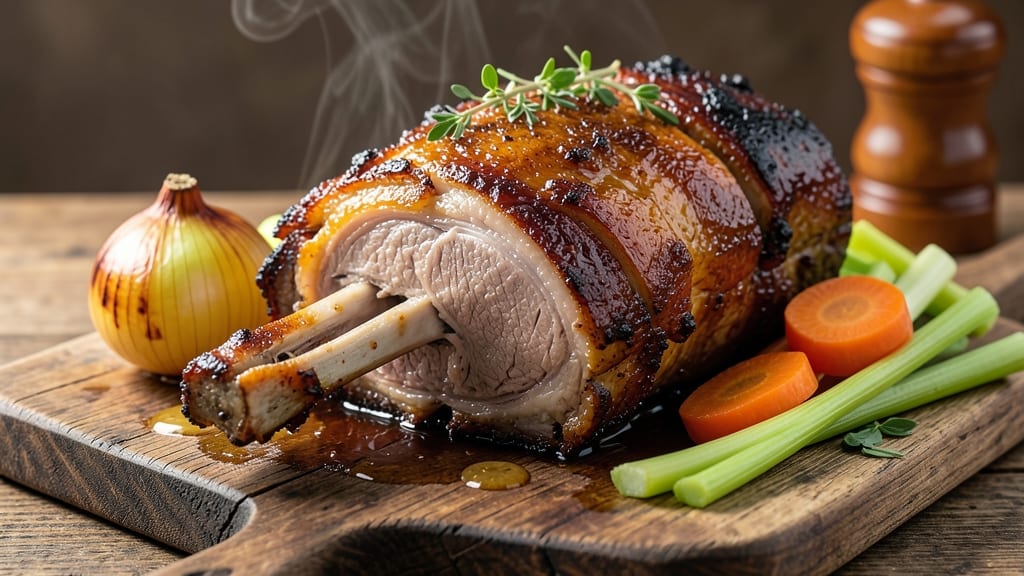
This bone-in pork end roast recipe transforms tough cuts into melt-in-your-mouth perfection through slow braising and high-heat caramelization—just like my granddaddy taught me in Georgia. The bone infuses rich flavor while the crust develops into a golden, crackling shell that seals in every juicy bite. After perfecting this method at The Smoky Pig, I know it's the secret to restaurant-quality pork without the fuss.
What sets this recipe apart is the balance between tradition and technique: a dry brine for maximum tenderness, a slow oven render to develop deep flavor, and a final sear that creates that coveted caramelized crust.
We're talking fork-tender meat with a crust so good you'll want to eat it with a spoon. The key is patience—letting the collagen break down while building layers of flavor that come together in a single, spectacular bite.
By the time you're done, you'll have a roast that practically falls apart at the touch, with enough natural juices to create a rich pan sauce. This isn't just dinner—it's an experience that turns weeknights into special occasions.
The aroma alone will have your whole house gathering around the table before the meat even hits the plate.
Serve with classic sides like creamy mashed potatoes, roasted root vegetables, or a crisp apple salad to let the pork shine as the star. The leftovers?
Even better the next day, reheated gently with a splash of apple cider for extra depth. Let's get cooking—your taste buds are about to thank you.
Ingredients for bone in pork end roast
Six simple ingredients transform tough pork into restaurant-quality perfection with juicy tenderness and caramelized crust.
| Ingredient | Amount | Notes |
|---|---|---|
| Bone-In Pork End Roast 🥩 | 4 lb | With bone and fat cap intact |
| Kosher Salt 🧂 | 2 tbsp | Diamond Crystal preferred |
| Freshly Ground Black Pepper 🌶️ | 1 tsp | Coarse grind for texture |
| Yellow Onion 🧅 | 1 whole | Cut into 1-inch chunks |
| Carrot 🥕 | 2 whole | Cut into 2-inch chunks |
| Celery Stalks 🥬 | 3 whole | Cut into 2-inch pieces |
| Garlic Cloves 🧄 | 6 cloves | Smashed, not minced |
| Apple Cider Vinegar 🍎 | ¼ cup | For pan sauce |
| Apple Juice 🍎 | ½ cup | For braising liquid |
| Beef Broth 💧 | 1 ½ cups | Low-sodium preferred |
| Olive Oil 🫒 | 2 tbsp | For searing |
| Fresh Thyme Leaves 🌿 | ¼ cup | Or 1 tbsp dried |
| Fresh Rosemary 🌿 | ¼ cup | Chopped sprigs |
| Brown Sugar 🍚 | 2 tbsp | For caramelization |
The pork cut is everything here—bone-in end roast delivers maximum flavor and moisture. Look for a piece with a good fat cap (about 1/4-inch thick) at your butcher or Costco. If buying pre-cut, check for marbling—the more fat streaks, the juicier the result. I always ask for the roast to be trimmed of excess fat but left with that flavorful cap. For extra insurance, Walmart's Great Value brand has consistently good quality at a fair price, though local butchers often have superior cuts. The bone acts like a self-basting tool, infusing the meat with rich gelatin as it cooks.
No fresh thyme? Dried works at one-third the amount, but fresh has that aromatic punch you can't beat. Running short on apple cider vinegar? Balsamic vinegar does the trick—just use half the amount. The beef broth should be low-sodium; Swanson or Pacific Foods are my go-tos for quality without the salt overload. Brown sugar isn't just for sweetness—it helps create that deep caramelized crust. If you're worried about it making the dish too sweet, use turbinado sugar instead. The vegetables (onion, carrot, celery) form your flavor base—don't skip them, even if you're not serving them as sides. They'll dissolve into the braising liquid, adding depth to every bite.
This roast tastes even better the next day—plan ahead. Store leftovers in the fridge for up to 5 days, wrapped tightly in foil to keep it moist. For longer storage, freeze portions for 3 months. I like to reheat slices in a skillet with a splash of apple cider until crispy, then serve with mashed potatoes. The pan sauce? Save it! Strain the braising liquid, reduce it by half on the stovetop, and you've got a rich gravy that pairs perfectly with the roast. Double the recipe if you're feeding a crowd—the extra work is worth it for those leftovers.
Why You'll Love This Recipe
- Fewer Ingredients, Bigger Payoff: I swear by this recipe because it’s the kind of meal where you use just what you need—no fancy pantry staples, no last-minute grocery runs. That bone-in roast? It’s the star, and the onion and carrot take care of the rest. Honestly, I’ve made it with nothing but salt, pepper, and a splash of water, and it still delivers.
- Crispy-Creamy Magic: Between us, the bone-in cut is where it’s at. That crispy crackling skin and the tender, juicy meat inside? It’s the kind of contrast that makes you close your eyes and sigh. The caramelized onion and carrot add just enough sweetness to balance the savory, and the pepper? It’s the little kick that ties it all together.
- Weeknight or Weekend: Here’s what sold me—this roast works any day. Too tired for fussing? Toss it in the oven and let it do its thing while you fold laundry. Hosting a casual dinner? It’s hearty enough for a crowd but still feels special. My daughter even asks for it on Sundays, and I’ll take that win.
- Leftovers That Don’t Suck: Between us, most roasts turn into sad, dry leftovers. Not this one. The bone keeps it juicy, and the flavors only get better the next day. I’ve reheated slices in a pan with a little broth, and it’s just as good as day one. Plus, it’s budget-friendly—one roast feeds my family for days, and I’m not complaining.
Step-by-step instructions for slow-braised pork end roast
Here's how to transform a tough cut into melt-in-your-mouth perfection with a caramelized crust.
Sear the Roast for Deep Flavor
Pat the 4 lb bone-in pork end roast completely dry with paper towels—this is non-negotiable for crispy skin. Heat 2 tbsp olive oil in a heavy Dutch oven over medium-high heat until shimmering. Place the roast fat-side down and sear undisturbed for 8-10 minutes until deeply golden brown. You'll see the fat render and sizzle—this is where all the flavor develops.
Flip the roast and sear the other side for another 5-6 minutes. The meat should release easily from the pan when ready. Remove the roast and set it aside on a plate. Don't rush this step—proper searing creates that beautiful caramelized crust we're after.
Build the Aromatic Braising Base
In the same Dutch oven, add 1 whole yellow onion (cut into 1-inch chunks), 2 whole carrots (cut into 2-inch chunks), and 3 whole celery stalks (cut into 2-inch pieces). Cook for 5 minutes until the vegetables begin to soften and take on color. Add the 6 smashed garlic cloves and cook for another 30 seconds until fragrant.
Sprinkle the seared roast with 2 tbsp kosher salt and 1 tsp freshly ground black pepper, then return it fat-side up to the Dutch oven. Pour in 0.25 cup apple cider vinegar and scrape up all those delicious browned bits from the bottom—this is flavor gold. The vinegar helps tenderize the meat while adding brightness to the braising liquid.
Braise Until Fork-Tender
Pour in 0.5 cup apple juice and 1.5 cups beef broth, then add 2 tbsp brown sugar to the pot. The sugar will caramelize slightly, adding depth to the sauce. Bring the liquid to a simmer, then cover the Dutch oven with a tight-fitting lid. Reduce heat to low and braise for 3-3.5 hours, turning the roast occasionally to ensure even cooking.
Here's the thing—patience is key. The meat should be fork-tender when done, with an internal temperature of 203°F (use a meat thermometer inserted into the thickest part of the meat, avoiding the bone). If the liquid reduces too much before the meat is done, add a splash of water or broth to maintain moisture.
Finish with Herbs and Rest
Once the pork reaches the proper temperature, remove it from the pot and let it rest on a cutting board for 15-20 minutes. Tent loosely with foil to keep it warm. While it rests, stir 0.25 cup fresh thyme leaves and 0.25 cup fresh rosemary into the braising liquid, along with any accumulated juices from the roast. This infuses the sauce with herbal aroma and balances the richness.
After resting, the pork should be so tender it practically falls apart with a gentle touch. Skim any excess fat from the surface of the braising liquid, then spoon the herb-infused sauce over the sliced pork. The result is juicy, flavorful meat with a caramelized crust that'll have everyone asking for seconds.
Pro Tips For Making Bone In Pork End Roast
- SEAR UNTIL BROWNED: Take that roast out of the fridge 30 minutes early—cold meat won’t brown worth a damn. Get your pan screaming hot (medium-high, not medium) and sear it fat-side down first, pressing gently with a spatula for 2 minutes. I learned this the hard way—rushed searing means flavorless crust, and nobody wants that.
- SLICE ONIONS THIN: Skip the big chunks. Thinly slice that onion (⅛-inch or less) so it caramelizes while the roast rests—no one wants to chew on raw onion after hours in the oven. Toss it in a bowl with a teaspoon of oil and a pinch of salt while you sear the meat, then spread it under the roast for the last 20 minutes. It’ll turn sweet and jammy, not tough.
- CHECK TEMP WITH THE BONE: Your thermometer should hit the thickest part of the meat away from the bone—145°F for medium-rare, 150°F for medium. The bone’s heat will make the meat read lower than it actually is, and I’ve overcooked roasts enough times to know: trust the meat, not the bone. Let it rest 10 minutes before slicing, or you’ll lose all that juicy goodness.
- USE CARROTS FOR CRUST: Toss those carrots in oil, salt, and pepper, then arrange them directly under the roast in the pan. As the fat renders, it’ll pool onto the carrots and crisp them into a caramelized bed—basically a free, flavor-packed shortcut to pan juices. I was skeptical until I tried it: now I never skip this step. Bonus: pull them out for a side dish if you’re feeling fancy.
Wine and beer pairings for this bone in pork end roast
Red Wine Classics
For this rich, slow-braised pork, I reach for Pinot Noir from Oregon or Burgundy—its bright acidity and red fruit notes cut through the deep, caramelized flavors.
The 2019 Domaine Drouhin Oregon Pinot Noir is my go-to: it has enough body to stand up to the pork's richness while keeping the palate fresh.
If you prefer something with more earthiness, a Syrah from the Rhône Valley works beautifully, especially if you've added rosemary to the braising liquid. 🍷
Crisp White Options
Don't underestimate whites—Chardonnay with noticeable oak (like a California Montelena) adds a buttery contrast that complements the pork's caramelization. For something lighter, a dry Riesling from Germany (try Dr. Loosen Blue Slate) brings citrus brightness that cleanses your palate between bites.
I often serve this with a chilled glass of Riesling when entertaining guests who prefer whites.
Beer Pairings
A Belgian Dubbel like Westmalle Trappist offers malty sweetness and spice that pairs remarkably well with the pork's caramelized crust. For something more approachable, a German Helles Lager (like Weihenstephaner) provides crispness that balances the dish's richness.
If you're feeling adventurous, try a smoked porter—the smoky notes mirror the pork's slow-cooked depth. 🍺
Regional Specialties
In the Southeast, where I grew up, we'd often pair this roast with a local craft cider from Georgia—Cider House Brewing's Dry Hard Cider has enough tannin to stand up to the pork.
For a true Southern touch, a bourbon barrel-aged beer (like Goose Island Bourbon County Stout) adds a smoky-sweet dimension that echoes the caramelization in the crust.
Non-Alcoholic Choices
Don't drink? No problem. A sparkling apple cider (like Martinelli's Sparkling) mirrors the apple juice in the braising liquid, while an iced hibiscus tea (brew with Adagio Teas Hibiscus) adds tartness that cuts through the richness.
For something more substantial, try a ginger beer—the spicy kick enhances the pork's savory depth.
Nutrition facts
Frequently asked questions
Why does this recipe use a bone-in pork end roast instead of boneless?
The bone acts like a natural basting tool, infusing the meat with rich gelatin as it cooks. This creates deeper flavor and keeps the meat incredibly juicy. Plus, the bone adds structure that helps the crust form perfectly. For best results, always keep the fat cap intact—it renders beautifully during cooking.
Can I make this recipe in a slow cooker?
Transfer the seared roast and vegetables to a 6-quart slow cooker, add all liquids, then cook on low for 8 hours or high for 5 hours. The slow cooker's gentle heat works perfectly for tenderizing the meat. Just skip the final sear—this dish relies on that caramelized crust from the Dutch oven.
How do I know when the pork is fully cooked?
Use a meat thermometer inserted into the thickest part (avoiding the bone) to check for 203°F internal temperature. The meat should be fork-tender and pull apart easily. If it's not quite there after 3.5 hours, add 1/2 cup water and cook another 30 minutes. The bone will continue cooking the meat after removal.
What's the best way to reheat leftovers?
Slice the pork and reheat in a skillet with a splash of apple cider over medium-low heat for 3-4 minutes until warmed through. For extra crispiness, broil for 1-2 minutes at the end. Never microwave—it makes the meat tough. Leftovers keep well for 5 days in the fridge or 3 months frozen.
Can I substitute other vegetables in the braising liquid?
Yes! Swap the onion, carrots, and celery for 1 fennel bulb (cut into chunks) or 1 parsnip for a sweeter flavor profile. For heartier texture, add 1 small potato (peeled and cubed). Just keep the total volume similar—these veggies should dissolve into the braising liquid rather than remain as sides.