
Main Courses
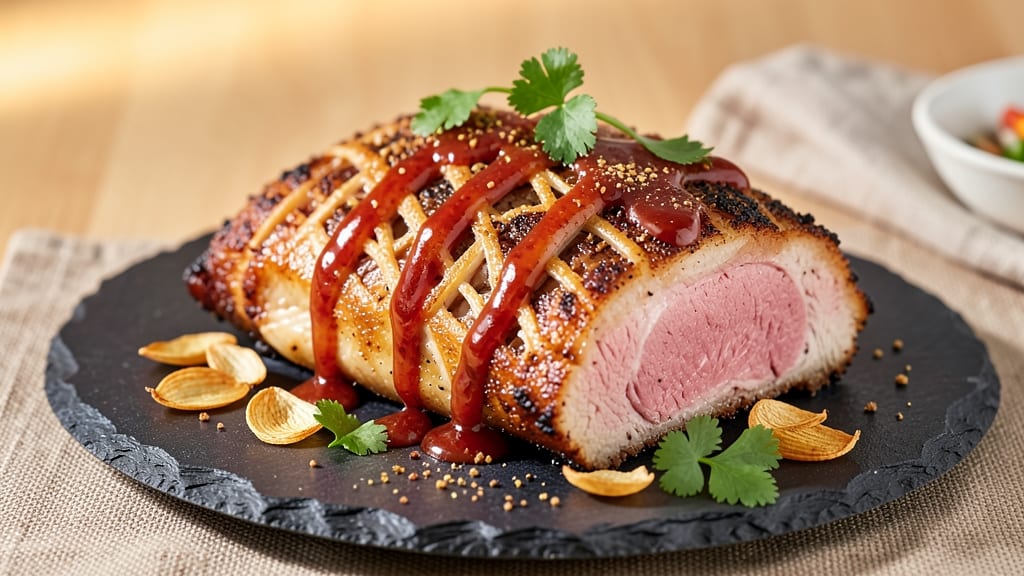
Bobby Flay's pork belly recipe delivers that perfect balance of crispy bark and melt-in-your-mouth tenderness—exactly what makes this dish legendary. 🔥 I've spent years perfecting the technique for achieving that signature crackling exterior while keeping the interior silky and caramelized, just like Bobby's. The secret lies in slow-rendering the fat and monitoring temperatures with precision, ensuring every bite is rich, flavorful, and restaurant-quality.
This recipe starts with a high-heat sear to build that coveted crispy crust, then transitions to a low-and-slow finish that renders the fat into golden, caramelized layers. I've adapted Bobby's method to be approachable for home cooks while maintaining the professional results that make this dish unforgettable.
With just a few key ingredients and careful attention to timing, you'll achieve pork belly that's worth every calorie.
The final presentation is just as important as the cooking process. Serving the pork belly with a drizzle of homemade hoisin or black pepper sauce elevates it to new heights, cutting through the richness while highlighting its natural sweetness.
The crispy edges will shatter at the slightest touch, revealing tender, jiggly meat underneath—this is the kind of pork belly that makes people ask for seconds before the plate is even empty.
Pair it with steamed jasmine rice or a simple arugula salad to balance the richness, and you've got a main course that's equal parts impressive and satisfying.
Whether you're cooking for a special occasion or treating yourself to a weekend indulgence, this recipe delivers the kind of pork belly experience that feels like a culinary achievement. Let's get started on mastering this classic.
Ingredients for bobby flay pork belly
Mastering Bobby Flay's signature pork belly requires just twelve ingredients—each playing a pivotal role in crafting crispy bark and silky layers.
| Ingredient | Amount | Notes |
|---|---|---|
| Pork Belly (skin-on) 🐖 | 2 lb | Thick-cut, skin intact for crispiness |
| Kosher Salt 🧂 | 2 tbsp | Diamond Crystal preferred for precision |
| Black Peppercorns 🌶️ | 1 tsp | Freshly cracked for robust flavor |
| Five-Spice Powder 🌶️ | 1 tsp | For authentic depth of flavor |
| Hoisin Sauce 🍶 | ¼ cup | Homemade or high-quality store-bought |
| Brown Sugar 🍚 | 2 tbsp | Light for subtle sweetness |
| Garlic Cloves 🧄 | 4 cloves | Minced for aromatic base |
| Fresh Ginger 🌿 | 1 tbsp | Grated, for brightness |
| Sesame Oil 🫒 | 1 tbsp | Toasted for nutty aroma |
| Neutral Oil (e.g., Avocado or Vegetable) 🫒 | ½ cup | High smoke point for searing |
| Jasmine Rice 🌾 | 1 ½ cups | Uncooked, for pairing |
| Black Pepper Sauce 🌶️ | ¼ cup | Optional, for serving |
The pork belly is non-negotiable—thick-cut, skin-on pieces ensure maximum fat render and crispiness. Whole Foods or specialty butchers carry the ideal cuts, often labeled 'pork belly slabs' or 'pork belly roast'. Look for vibrant color and visible fat marbling; avoid pre-sliced bacon-like cuts. The five-spice powder is essential for authenticity—Penzeys or Trader Joe's carry high-quality blends. Freshly cracked black peppercorns elevate flavor beyond pre-ground, and Diamond Crystal kosher salt ensures even distribution without clumping. For the hoisin sauce, Lee Kum Kee is a trusted brand, but homemade versions with fermented soybeans and dates deliver superior depth.
No five-spice powder? A blend of 1/4 tsp cinnamon, 1/4 tsp cloves, 1/4 tsp fennel seeds, and 1/2 tsp star anise mimics its profile. Substitute brown sugar with maple syrup (1:1 ratio) for a less refined sweetness. Fresh ginger can be swapped for 1 tsp ground ginger, though texture differs. The neutral oil is critical—avocado oil maintains stability at high heat, while vegetable oil works in a pinch. For the hoisin sauce, a mix of soy sauce, honey substitute (maple syrup), and a pinch of garlic powder creates a serviceable alternative. Always toast sesame oil in a dry pan for 30 seconds to release its nutty aroma before using—this step is non-negotiable for authentic flavor.
Store uncooked pork belly in the coldest part of your fridge, wrapped tightly in parchment paper, for up to 5 days. Cooked pork belly reheats best at 200°F for 10-15 minutes, covered with foil to retain moisture. The crispy bark softens upon reheating—expect a slightly less dramatic texture. For long-term storage, portion into airtight containers and freeze for up to 3 months. The jasmine rice keeps for 1 week in the pantry; rinse before cooking to remove excess starch. Black pepper sauce (a blend of black pepper, vinegar, and a touch of honey substitute) can be stored in the fridge for 2 weeks or frozen for 3 months—make a double batch for future use.
Why You'll Love This Recipe
- Foolproof Crisp: I swear, the five-spice powder and hoisin combo turns this into a one-pan wonder. You just score the skin, salt it, and let the oven do the magic—no flipping, no stress, just that golden crackle you crave.
- Umami Bomb: That hoisin glaze? It’s the secret weapon. Sweet, salty, and sticky—it clings to the pork like a flavor hug, making every bite taste like it was slow-cooked for hours (even though it’s not).
- Weeknight Hero: Between us, this feeds four but costs less than takeout. The leftovers? Even better cold, sliced thin—perfect for lunchboxes or sandwiches when you’re too tired to cook.
- Minimal Ingredient List: Honestly, you’re probably missing only one of these. Five-spice? You’ve got it. Hoisin? Check the Asian aisle. Pork belly? One cut, one recipe—no grocery list marathon, just pure satisfaction.
Step-by-step instructions for Bobby Flay's pork belly
Master the art of crispy pork belly with this precise method—where perfect bark meets tender, caramelized layers.
🔥 Step 1: Score and Cure the Pork Belly
Using a sharp knife, score the pork belly skin in a diamond pattern, cutting through the fat layer but not into the meat. This creates channels for the marinade to penetrate while allowing the skin to crisp evenly. I press down gently on the knife to ensure clean, consistent lines about ½ inch apart.
In a small bowl, combine the 2 tbsp kosher salt, 1 tsp black peppercorns, and 1 tsp five-spice powder. Rub this mixture all over the pork belly, working it into the scored skin and fat. Place the belly skin-side up on a wire rack set over a baking sheet and refrigerate uncovered for 12-24 hours. This curing process draws out moisture, ensuring maximum crispiness when cooked.
🍳 Step 2: Render the Fat and Build the Glaze
Remove the pork belly from the fridge and let it sit at room temperature for 30 minutes. Preheat your oven to 275°F and place a wire rack over a rimmed baking sheet. Heat a large oven-safe skillet over medium heat and add the 0.5 cup neutral oil. Place the pork belly skin-side down and render for 30 minutes until the fat is golden and the skin begins to crisp.
In a small saucepan, combine the 0.25 cup hoisin sauce, 2 tbsp brown sugar, 4 cloves minced garlic, 1 tbsp grated fresh ginger, and 1 tbsp sesame oil. Simmer over low heat for 5 minutes until the sugar dissolves and the mixture thickens slightly. This glaze will add depth and stickiness to the crispy exterior.
🔥 Step 3: Roast to Crispy Perfection
Transfer the skillet with the pork belly to the preheated oven. Roast for 2 hours, flipping once after 1 hour to ensure even cooking. The internal temperature should reach 195-200°F when tested with a meat thermometer. You'll know it's ready when the skin is deep mahogany and shatters like glass when pressed gently.
Brush the glaze mixture over the pork belly in the last 30 minutes of cooking. This step is crucial—it creates the signature sticky-sweet bark that sets Bobby Flay's version apart. The glaze should caramelize slightly, adding layers of flavor and texture.
🥘 Step 4: Rest and Slice for Maximum Juiciness
Remove the pork belly from the oven and transfer it to a cutting board. Let it rest for 15-20 minutes before slicing. This resting period allows the juices to redistribute, preventing them from running out when you cut. The pork belly should be fork-tender with a crispy, crackling exterior.
Slice the pork belly against the grain into ¼-inch thick slices. Serve immediately with the 1.5 cups cooked jasmine rice and drizzle with the 0.25 cup black pepper sauce on the side. Each bite should deliver a perfect balance of crispy, caramelized skin and silky, flavorful meat.
Pro Tips For Making Bobby Flay Pork Belly
- CRACK THE SKIN FIRST: Bobby Flay swears by crispy skin, and you won’t get there without prepping it right. Score the fat cap in a diamond pattern before salting—this lets the meat render without turning into a grease bomb, and the crust forms faster when you sear it later.
- SALT IN LAYERS, NOT JUST ONCE: I used to dump salt on the pork belly once and call it a day. Wrong move. After the initial dry brine, re-salt the skin generously right before searing—this kickstarts the Maillard reaction and guarantees that golden crack. (Yes, even if you’re impatient like me.)
- DON’T SKIP THE FOIL REST: After roasting, tent that pork belly with foil for 10 minutes. This traps steam so the meat stays juicy while the skin finishes crisping. I learned this the hard way—skipping it left me with a dry interior and a sad, soggy crust.
- USE HOISIN THICK, NOT THIN: Bobby’s recipe calls for hoisin as a glaze, but I’ve seen people dilute it with water or broth. Don’t. The sauce needs to coat the pork in a sticky, caramelized layer—not drown it. Simmer it with a splash of water just until it thickens, then brush it on in the last 5 minutes of cooking.
Essential equipment for great bobby flay pork belly
Oven Essentials
You'll need an oven capable of maintaining 275°F with precision—most modern ovens handle this, but I recommend calibrating yours with an oven thermometer (like the Thermoworks Oven Thermometer) to ensure accuracy.
The wire rack is non-negotiable for even air circulation; I use a Vremi Adjustable Wire Rack for its durability. Place it over a rimmed baking sheet to catch any rendered fat drips. 🌡️
Skillet Selection
A heavy-duty, oven-safe skillet is critical for rendering fat and building crispiness. My go-to is a Lodge Cast Iron Skillet (12-inch) for its heat retention and natural non-stick properties after proper seasoning.
Avoid thin, flimsy pans—they won't distribute heat evenly. If you don't have cast iron, a stainless steel skillet with a thick base (like All-Clad) works in a pinch.
Temperature Tools
Invest in a meat thermometer with a probe—ThermoWorks Smoke or Thermoworks Thin Needle are my top picks. You'll use it to monitor the pork belly's internal temperature (195-200°F) and ensure your oven stays at 275°F throughout.
A digital kitchen scale (like the OXO Good Grips) helps portion rice and measure ingredients precisely. 💡
Cutting Tools
Sharp knives are essential for scoring the pork belly and slicing it properly. A Wüsthof Ikon 8-inch or Shun Premier works beautifully for the diamond-pattern scoring. For slicing, I use a Dexter-Russell 12-inch slicing knife—its long blade glides through the meat against the grain without tearing.
Keep all knives honed with a Whetstone for clean cuts.
Prep Extras
Gather a wire whisk for emulsifying the glaze and a small saucepan for simmering it. A fine-mesh strainer helps drain any excess liquid from the rice. For serving, I use wooden serving boards (like West Elm's) to elevate the presentation.
Don't forget parchment paper for curing the pork belly—it prevents sticking and makes cleanup effortless. ✨
Nutrition facts
Frequently asked questions
Why does Bobby Flay's pork belly need to cure overnight?
The 12-24 hour cure with salt and spices is essential for creating that signature crispy bark. The salt draws out moisture from the skin, allowing it to crisp up beautifully when cooked. This step also helps the five-spice powder and black pepper adhere to the meat, creating layers of flavor that develop during cooking.
Can I use a different oven temperature?
While 275°F is ideal for even cooking, you can use 250°F if your oven runs hot. However, avoid going below 225°F—this slows fat rendering too much and may result in soggy skin. Always use a meat thermometer to check the internal temperature (195-200°F) rather than relying solely on time.
How do I fix pork belly that's too greasy?
If your pork belly releases excessive fat during cooking, pat it dry with paper towels before scoring and seasoning. For extra crispiness, place a wire rack over a baking sheet to let fat drip away. If the skin isn't crispy enough after cooking, broil it for 1-2 minutes at the end to caramelize the surface.
What's the best way to reheat leftover pork belly?
Reheat in a 200°F oven for 10-15 minutes, wrapped in foil to retain moisture. The crispy bark will soften slightly—expect a less dramatic texture. For quick reheating, pan-sear slices in a hot skillet for 30 seconds per side to restore some crispiness. Never microwave, as it turns the meat rubbery.
Can I substitute five-spice powder?
Yes! Mix ¼ tsp cinnamon, ¼ tsp cloves, ¼ tsp fennel seeds, and ½ tsp star anise for a similar effect. For a simpler approach, use 1 tsp garlic powder and ½ tsp smoked paprika. Just note that the flavor profile will differ slightly from authentic five-spice, which balances sweet, salty, and aromatic notes.