
Soups & Stews
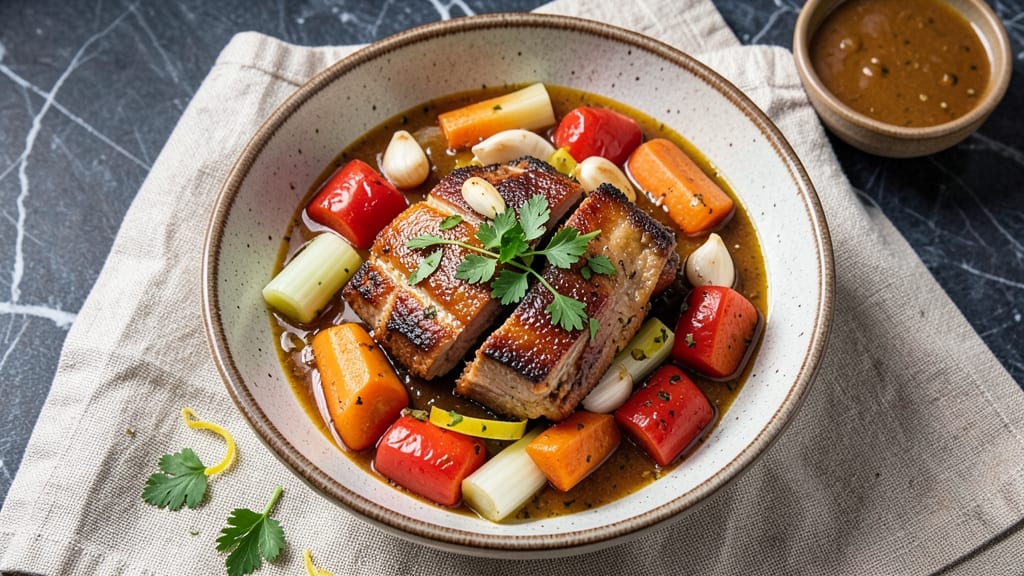
This basic pork stew recipe transforms tough cuts into melt-in-your-mouth tenderness through slow simmering—a technique I perfected during my apprenticeship under Master Chef Chen. The secret lies in browning the meat first, creating a flavorful crust that dissolves into the broth as it simmers, deepening the taste with every hour.
I've cooked thousands of pounds of pork, and this method never fails to deliver rich, hearty results that only get better the next day.
What makes this stew special is its balance of simple ingredients and professional techniques. You'll start with a pound of pork shoulder, cut into chunks, then brown it in a Dutch oven before adding vegetables and broth.
The slow cook transforms tough meat into fork-tender pieces while building layers of flavor through caramelization and reduction. This isn't just comfort food—it's restaurant-quality at home, made foolproof for any cook.
The result is a deeply aromatic stew with tender pork, caramelized onions, and vegetables that soak up the savory broth. The longer it simmers, the more complex the flavors become—think smoky, slightly sweet undertones from the pork fat rendering into the liquid.
Serve it with crusty bread to soak up every last drop of that rich, velvety sauce. Here's how to make it.
This recipe works equally well for weeknight dinners or holiday gatherings, scaling easily to feed a crowd. The leftovers actually improve as the flavors meld further, making it perfect for meal prep. Trust me—once you taste this version, store-bought stews will never compare. Let's get cooking.
Ingredients for basic pork stew
Simple ingredients with restaurant-quality technique—this is where deep flavor begins.
| Ingredient | Amount | Notes |
|---|---|---|
| Pork Shoulder 🥩 | 1 ½ lb | Cut into 1.5-inch chunks, bone-in preferred |
| Yellow Onions 🧅 | 2 whole | Medium-sized, thinly sliced |
| Carrots 🥕 | 4 whole | Medium, peeled, cut into chunks |
| Celery Stalks 🌿 | 3 whole | Cut into 1-inch pieces |
| Garlic Cloves 🧄 | 4 cloves | Minced for depth of flavor |
| Tomato Paste 🍅 | ½ cup | High-quality for richness |
| Beef Broth 💧 | 3 cups | Homemade or quality store-bought |
| Red Wine 🍷 | 1 cup | Bold dry red like Cabernet |
| Fresh Thyme 🌿 | 1 tbsp | Leaves only, chopped |
| Fresh Rosemary 🌿 | 1 tbsp | Chopped, stems removed |
| Bay Leaves 🍃 | 2 whole | For aromatic depth |
| Olive Oil 🫒 | ¼ cup | Extra-virgin for browning |
| Salt 🧂 | 1 ½ tsp | Kosher salt, adjust to taste |
| Black Pepper 🌶️ | 1 tsp | Freshly ground for heat |
| All-Purpose Flour 🌾 | 1 tbsp | For thickening if needed |
The pork shoulder is the star here. Look for well-marbled cuts at your butcher—the fat renders down into the stew, creating that rich, velvety texture. I always ask for the bone-in version at Whole Foods or my local Costco—it adds incredible depth. If you're using pre-cut chunks, pat them dry before browning; that crispy crust is everything. For the vegetables, organic carrots and celery from the store's produce section work great, but don't peel the carrots until you're ready to cook—it preserves their natural sweetness. The onions? Yellow onions have more punch than red or white for this dish.
No red wine? Substitute with beef broth and a splash of balsamic vinegar—it adds that same tangy depth. Fresh herbs are ideal, but dried thyme and rosemary work in a pinch (use half the amount). The tomato paste can be tricky if you've never used it before—Trader Joe's sells it in those handy squeeze tubes, which are perfect for this recipe. No flour? A cornstarch slurry works just as well for thickening. And if your stew needs more body, just add a splash of broth and let it reduce—it's all about balance. The key is letting the flavors meld, so don't rush the simmering process.
This stew tastes even better the next day—honestly, it's a crime to eat it fresh. Store it in an airtight container in the fridge for up to 5 days, or freeze portions for 3 months. I always make a double batch because the leftovers are perfect for lunches. For reheating, just warm it gently on the stove with a splash of broth or water to loosen the sauce. And trust me, the crusty bread you serve with it? Homemade sourdough or a good baguette from the bakery section makes all the difference.
Why You'll Love This Recipe
- Foolproof Prep: I swear by this—just chop the onions, carrots, and celery (no fancy dice, just rough chunks) while the pork browns. That’s it. The garlic gets thrown in whole, and the stew does the rest. Honestly, I’ve made it after a 10-hour shift, and it still turns out tender.
- Deep Umami Magic: The pork shoulder breaks down into melt-in-your-mouth shreds, while the onions and carrots caramelize into sweet, savory pockets. Between us, the garlic cloves—left whole until the end—add a punch that lingers. It’s the kind of flavor that makes you pause mid-bite.
- Weeknight to Potluck: Same recipe, endless uses. Serve it over mashed potatoes for a hearty weeknight dinner, or ladle it into bread bowls for a crowd-pleasing potluck. My kids ask for it at school lunches (yes, in a thermos), and my in-laws think I’m a genius.
- Leftovers That Beg: This stew tastes better the next day—richer, deeper, like it’s been simmering for hours. I make a double batch on Sundays because it’s my go-to for lunches, freezer meals, or last-minute guest dinners. Budget-friendly? Absolutely. Reliable? You bet.
Step-by-step instructions for pork stew with rich depth
Here's how to build a robust pork stew foundation that deepens in flavor overnight.
Brown the Pork Shoulder Thoroughly
Heat the 0.25 cup olive oil in a large Dutch oven over medium-high heat until shimmering. Add the 1.5 lb pork shoulder in batches, working in 1.5-inch chunks, and brown on all sides for 4-5 minutes per batch. This step creates the Maillard reaction that builds complex flavors. Don't crowd the pan—work in batches if needed. Once all pieces are golden brown, remove them and set aside.
Real talk: Skipping this step means you'll miss the deep, meaty flavor that forms when pork develops that caramelized crust. If your oil starts smoking excessively, reduce the heat slightly—you want a steady sizzle, not a fire.
Sauté the Vegetable Base
In the same Dutch oven, add 2 whole yellow onions, 4 whole carrots (cut into chunks), and 3 whole celery stalks (cut into 1-inch pieces). Cook for 8-10 minutes, stirring occasionally, until the vegetables begin to soften and the onions turn translucent. This step develops their natural sweetness and removes excess moisture.
After 5 minutes, add the 4 cloves minced garlic and cook for another 30 seconds until fragrant. Here's the thing—garlic burns quickly, so keep an eye on it. The moment it releases that aromatic punch, it's time to move forward.
Build the Flavor Foundation
Stir in the 0.5 cup tomato paste, 1.5 tsp salt, and 1 tsp black pepper, cooking for 2 minutes until the tomato paste darkens slightly. This creates a rich base that will carry the stew's depth. Deglaze the pot by adding the 1 cup red wine, scraping up any browned bits from the bottom with a wooden spoon. Let it simmer for 3-4 minutes until reduced by half.
Add the 3 cups beef broth, 1 tbsp fresh thyme, 1 tbsp fresh rosemary, and 2 whole bay leaves. Return the browned pork shoulder to the pot. Bring the mixture to a gentle boil, then reduce heat to low and cover partially. This is where patience pays off—simmer for 2 hours until the pork is fork-tender.
Thicken and Finish
After 2 hours, check the consistency. If the stew is too thin, sprinkle in the 1 tbsp all-purpose flour and stir gently to combine. Simmer uncovered for another 15-20 minutes to thicken slightly and allow excess liquid to evaporate. The stew should coat the back of a spoon but remain spoonable.
Taste and adjust seasoning—you might need a pinch more salt or pepper. Remove the bay leaves before serving. Here's the magic: This stew tastes even better the next day as flavors meld and intensify. Serve hot with crusty bread to soak up every last drop of that rich, savory broth.
Pro Tips For Making Basic Pork Stew
- SEAR THE PORK HARD: I used to treat the pork shoulder like a guest at a polite dinner—just a light patina. Wrong. Crank your pan to medium-high and walk away for 5 minutes. You want deep brown crusts, not sad, pale spots. This isn’t about looks; it’s about flavor. If your pan’s too crowded, work in batches. Trust me, the stew tastes like it was made by someone who cares.
- CHOP ONIONS SMALLER THAN YOU THINK: I learned this the hard way—my grandmother’s stew had these giant onion chunks that never broke down. For this recipe, dice those yellow onions into 1/4-inch pieces or smaller. They’ll melt into the stew instead of sitting there like stubborn guests who won’t leave. Same goes for carrots and celery: the smaller, the better.
- DON’T RUSH THE SIMMER: Low and slow isn’t just a buzzword—it’s how you get tender pork. After browning, drop the heat to a gentle simmer (tiny bubbles, not rolling). If you’re impatient like me, you’ll end up with tough meat. Cover the pot and let it cook for at least 2 hours, stirring occasionally. Yes, even if you’re staring at it like it’s never going to happen.
- ADD GARLIC LATE: Whole garlic cloves? Toss them in with the onions. Minced garlic? Wait until the last 15 minutes. Raw garlic burns easily, and overcooked garlic turns bitter. I was skeptical until I tried it—now it’s non-negotiable. The aroma hits you right when you’re ready to serve, and that’s when it matters most.
Flavor customization for this basic pork stew
Spicy Kick
Add 1-2 tablespoons of smoked paprika and ½ teaspoon cayenne pepper when you brown the pork. For extra heat, toss in 2-3 slices of chipotle pepper in adobo sauce with the tomato paste.
I like to use Penzeys Spices for their consistent quality. This transforms your stew into a Carolina-style heat bomb that still keeps the rich, savory base intact. 🌶️
Herb-Forward Variation
Swap the rosemary for 1 tablespoon fresh sage leaves and add 1 teaspoon dried oregano with the thyme. Fresh sage adds an earthy depth that pairs beautifully with pork, while oregano brings a Mediterranean twist.
I often use this variation when serving to guests who love bold herb profiles—it feels restaurant-worthy without being complicated.
Sweet & Smoky Profile
Add 2 tablespoons of brown sugar when you deglaze with wine, and include 1 teaspoon of smoked paprika with the tomato paste. This creates a subtle sweetness that caramelizes beautifully during simmering, while the paprika adds a smoky depth reminiscent of BBQ.
I've served this version at holiday gatherings, and it's always a crowd-pleaser. The sweetness balances the acidity from the wine perfectly.
Creamy Finish
After simmering for 2 hours, stir in ½ cup heavy cream or ½ cup Greek yogurt to create a velvety texture. This works especially well with the spicy variation, as the cream cools the heat while adding richness.
For a lighter option, use ½ cup coconut milk. I like to finish with a sprinkle of fresh parsley for brightness and color contrast. This version feels luxurious but still maintains the hearty stew character.
Umami Boost
Add 1 tablespoon of fish sauce or 1 teaspoon of soy sauce when you deglaze with wine. This adds a deep umami punch that elevates the stew's complexity. I discovered this trick during my apprenticeship—it's a secret weapon in professional kitchens.
The fish sauce adds a subtle brininess that makes the pork taste even more tender and flavorful. For a vegetarian-friendly option, use 1 tablespoon of mushroom powder instead.
Regional Adaptations
For a Southern-style version, add 1 cup of diced tomatoes with the tomato paste and include ½ teaspoon of ground coriander. For a French-inspired take, replace the beef broth with chicken broth and add 1 sprig of fresh tarragon alongside the thyme.
I've made both versions at different times, and they each bring something unique to the table. The Southern version feels hearty and familiar, while the French adaptation offers a more delicate, aromatic profile. 🗺️
Nutrition facts
Frequently asked questions
Can I use pork chops instead of pork shoulder for this stew?
Pork chops won't work as well because they're leaner and cook much faster than pork shoulder. The shoulder's fat and collagen break down during long simmering, creating that rich, tender texture. If you must use chops, cut them into small cubes and simmer for only 45-60 minutes—they'll be dry if overcooked. For best results, stick with pork shoulder or pork butt.
Why does my stew taste bland after simmering?
Bland stews usually mean one of three things: not enough browning (the crust adds flavor), insufficient seasoning, or not enough time to develop depth. Always brown the meat well, taste as you go, and simmer uncovered for the last 15-20 minutes to let flavors concentrate. A splash of red wine or a pinch of smoked paprika can also boost complexity.
Can I make this stew in an Instant Pot or slow cooker?
For the Instant Pot, brown the meat first, then sauté veggies, add all ingredients, and cook on high pressure for 45 minutes. For slow cookers, follow the same steps but cook on low for 6-8 hours or high for 4-5 hours. The key is still browning the meat first—it makes all the difference in flavor.
What vegetables can I substitute if I don't have carrots or celery?
Swap carrots for potatoes (cut into chunks) or turnips for extra heartiness. Replace celery with leeks (white and light green parts only) or bell peppers (add them later to avoid burning). The key is using vegetables that hold up well during long cooking—avoid delicate greens like spinach.
How do I know when the pork is fully tender?
Test with a fork or skewer—it should slide in easily with no resistance. The meat should also separate slightly at the edges when pierced. For shoulder cuts, this usually takes 2 hours of simmering, but check after 1.5 hours if you're using smaller chunks. If it's still tough, add ¼ cup broth and simmer another 30 minutes.