
Main Courses
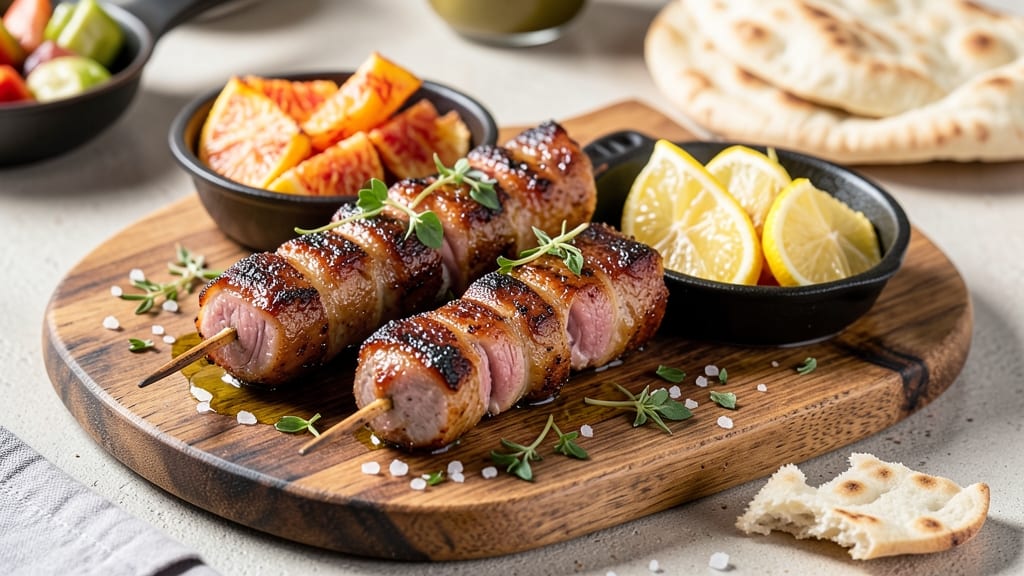
This authentic Greek pork souvlaki recipe brings the smoky, charred flavors of Athens street markets straight to your grill. 🔥 After perfecting skewers for years—from my CIA training to grilling for crowds at The Smoky Pig—I've distilled the essentials: tender pork marinated overnight in lemon, oregano, and olive oil, then grilled over hot coals until caramelized at the edges.
The secret lies in the marinade's balance of acidity and herbs, which transforms tough pork into melt-in-your-mouth bites.
The recipe maintains traditional methods while offering modern adaptations—whether you use a charcoal grill, gas grill, or even an oven broiler. I've tested this with both fresh and pre-marinated pork, and the results are consistently restaurant-quality, with that signature Greek combination of smoky grill marks and bright lemon-herb notes.
The skewers are designed to cook evenly, ensuring no dry edges or undercooked centers, even when grilling for a crowd.
What makes this recipe truly special is how it comes together: juicy, charred pork skewers served with warm pita bread, crumbled feta, and a dollop of tzatziki. The marinade's citrus and herbs cut through the richness of the pork, while the grill adds that unmistakable smoky depth.
It's the kind of dish that feels both celebratory and effortless—perfect for summer evenings or game day gatherings.
For those short on time, I've included tips for speeding up the process without sacrificing flavor, like using pre-cut pork chunks or store-bought pita.
The full recipe delivers on its promise of authentic taste, with techniques I've refined over years of grilling—so you can recreate that iconic Greek street food experience at home.
Ingredients for authentic greek pork souvlaki
Greek flavors meet smoky grill magic—just these ingredients transform simple pork into restaurant-worthy skewers.
| Ingredient | Amount | Notes |
|---|---|---|
| Boneless Pork Shoulder 🥩 | 1 ½ lb | Cut into 1-inch cubes |
| Extra-Virgin Olive Oil 🫒 | ½ cup | For marinade and grilling |
| Fresh Lemon Juice 🍋 | ½ cup | From 2-3 lemons |
| Dried Oregano 🌿 | 2 tbsp | Greek oregano preferred |
| Garlic Cloves 🧄 | 6 cloves | Minced for marinade |
| Salt 🧂 | 1 ½ tsp | Diamond Crystal preferred |
| Black Peppercorns 🌶️ | 1 tsp | Freshly cracked |
| Wooden Skewers 🪵 | 8 whole | Soaked in water 30 mins |
| Fresh Dill 🌿 | ¼ cup | Chopped for garnish |
| Pita Bread 🍞 | 4 whole | Warm, for serving |
| Crumbled Feta Cheese 🧀 | ½ cup | For topping |
| Tzatziki Sauce 🥒 | ½ cup | Store-bought or homemade |
The pork shoulder is your secret weapon here—it stays juicy even after grilling. Look for well-marbled cuts at Whole Foods or your local butcher, and ask for it pre-cut if you're short on time. I always grab a 1.5 lb package because it's perfect for 4 skewers with leftovers for lunches. The skewers? Soak them in water for at least 30 minutes to prevent burning. If you're grilling for a crowd, double the batch—Costco sells pre-cut pork shoulder in bulk, which is a game-changer for parties.
No fresh dill? Dried dill at half the amount works in a pinch, though fresh has that bright, herby kick. Running low on oregano? Italian oregano is fine, but Greek oregano has a more complex flavor profile. The lemon juice is non-negotiable—fresh is best, but if you're using bottled, make sure it's 100% pure. For the marinade, I like to add a splash of red wine vinegar (1 tbsp) if I'm feeling fancy, but it's optional. And if you can't find wooden skewers, metal or soaked bamboo skewers work just as well.
Marinate the pork overnight for maximum flavor, but if you're in a hurry, 4 hours minimum still works wonders. Store the marinade in a sealed container in the fridge, and the pork cubes can stay in it for up to 24 hours. The cooked skewers reheat beautifully—toss them in a bit of olive oil and grill again for 2-3 minutes per side. Pita bread stays fresh for 3 days in a paper bag, and the feta keeps for 1 week in the fridge if wrapped tightly. The tzatziki? Make a double batch—it's perfect with these skewers and keeps for 5 days.
Why You'll Love This Recipe
- Here’s the truth: I always make extra. Cold souvlaki in pita the next day? Still a win. Or toss them in a salad—suddenly you’ve got lunch sorted.
- No Chopping Nightmare: I swear by this trick—just slice the pork shoulder into chunks before marinating, no fancy knife skills needed. The garlic and lemon do all the work while you sip coffee.
- Crispy-Juicy Magic: That pork shoulder? It’s the secret weapon—tender inside, golden crust outside. A quick sear in olive oil locks in flavor, and the oregano? It’s like a little Mediterranean hug in every bite.
- Leftovers That Lie: Here’s the truth: I always make extra. Cold souvlaki in pita the next day? Still a win. Or toss them in a salad—suddenly you’ve got lunch sorted.
Step-by-step instructions for authentic Greek pork souvlaki
Here's how to create restaurant-quality souvlaki with smoky, charred edges and juicy meat infused with bright Mediterranean flavors.
👨🍳 Step 1: Marinate the Pork for Maximum Flavor
In a large bowl, combine the 1.5 lb boneless pork shoulder cut into 1-inch cubes with the 0.5 cup extra-virgin olive oil, 0.5 cup fresh lemon juice, 2 tbsp dried oregano, 6 minced garlic cloves, 1.5 tsp salt, and 1 tsp freshly cracked black peppercorns. I use my hands to gently massage the marinade into the meat—this ensures every bite gets coated with those bright, herby flavors.
Let the pork marinate for at least 4 hours (overnight is even better) in the refrigerator. The acid from the lemon juice will tenderize the meat while the olive oil keeps it moist. You'll know it's ready when the pork absorbs the marinade and smells irresistibly aromatic—like a Greek taverna on a summer evening.
🔪 Step 2: Prep the Skewers and Pita
Soak the 8 wooden skewers in water for 30 minutes to prevent burning on the grill. While they soak, warm the 4 whole pita bread in a 350°F oven for 3-5 minutes until pliable. This makes them perfect for wrapping around the juicy souvlaki later.
Thread the marinated pork cubes onto the skewers, leaving a small gap between each piece. I arrange them in a single layer so they cook evenly and develop that beautiful charred crust. Keep the skewered pork refrigerated until you're ready to grill—this helps maintain the marinade's flavor and prevents the meat from drying out.
🔥 Step 3: Grill to Charred Perfection
Preheat your grill to medium-high heat (about 400°F). You'll want to see those grill grates glowing red when you check them. Place the skewers on the grill and cook for 8-10 minutes, turning occasionally, until the pork reaches an internal temperature of 145°F and develops deep char marks on all sides.
Here's the thing—don't rush this step. You want that signature Greek grill flavor, which comes from the caramelization of the meat's sugars and the smoky char. Watch for those beautiful grill marks and slightly crispy edges. If the skewers start to burn before the pork is cooked through, move them to a cooler part of the grill or reduce the heat slightly.
🍽️ Step 4: Assemble Like a Pro
Let the grilled pork rest for 5 minutes before serving—this keeps it juicy. While it rests, spread 0.5 cup tzatziki sauce on each warm pita bread. Then, top with 0.5 cup crumbled feta cheese and 0.25 cup chopped fresh dill. Finally, add the skewered pork to the pita and fold it in half.
For that authentic Greek touch, I like to drizzle any remaining marinade from the bowl over the top of the assembled souvlaki. The combination of cool tzatziki, salty feta, fresh dill, and smoky pork creates a perfect balance of flavors and textures. Serve immediately while everything is warm and the pita is still soft.
Pro Tips For Making Authentic Greek Pork Souvlaki
- CUT PORK INTO 1-INCH CHUNKS: Pork shoulder is forgiving, but smaller pieces cook faster and develop better grill marks. I learned this the hard way—oversized chunks end up dry or undercooked. Use a sharp knife and work in one direction to keep them uniform.
- MARINATE WITH GARLIC AND OIL FIRST: Crush the garlic cloves and mix them with olive oil before adding lemon juice and oregano. This lets the oil infuse the meat for 30 minutes—it’s the thing that matters most for flavor penetration. Skip this, and your skewers taste like they’re missing something.
- DON’T OVERCROWD THE GRILL: I used to pile skewers too close, and they’d steam instead of sear. Leave at least an inch between them and cook in batches if needed. High heat is your friend here—let those edges crisp without fighting for space.
- LEMON JUICE LAST MINUTE: Add the fresh lemon juice right before grilling, not during marinating. The acid breaks down the meat over time, turning tough chunks into mush. A quick squeeze before cooking brightens the flavors without ruining the texture. (Yes, even if you’re impatient like me.)
Essential equipment for authentic greek pork souvlaki
Charcoal Grill Essentials
For that authentic Greek flavor, a charcoal grill is non-negotiable—I use a Weber Original Kettle for its even heat distribution. Start with 20 briquettes for medium-high heat, arranged in two zones: one for direct grilling and one for indirect heat if needed.
The hardwood charcoal (I swear by Lumbar Charcoal) burns hotter and cleaner than lump charcoal, giving you those coveted smoky grill marks. 🔥
Gas Grill Adaptations
Don’t have a charcoal grill? No problem. Preheat your gas grill to medium-high heat (around 400°F) and use the middle rack for even cooking. I like the Weber Spirit II E-310 for its precise temperature control.
For extra smokiness, add 5-6 wood chips (like hickory or oak) to the smoker box—just don’t overdo it, or the skewers will taste like a campfire instead of a Greek taverna.
Skewer Must-Haves
Wooden skewers are traditional, but I keep metal skewers (like 12-inch stainless steel ones from Amazon) on hand for extra durability—especially when grilling for a crowd. If using wooden skewers, soak them in water for 30 minutes to prevent burning.
Pro tip: Cut the pork into 1-inch cubes for even cooking and easy skewering. I also recommend skewer clips (available at Williams Sonoma) to secure the meat without overcrowding.
Heat Control Tools
A grill thermometer (I love the Meater) is a game-changer for monitoring internal temperature. Aim for 400°F on the grill and 145°F internal temp for the pork. For larger batches, use a grill spray bottle with water to control flare-ups—just a quick mist keeps things under control.
And always keep a long-handled spatula (like the OXO Good Grips) nearby to flip those skewers without burning your hands.
Accessory Upgrades
Invest in a grill basket (I use the GrillGrates) to keep smaller pieces like onions or bell peppers from falling through the grates. For serving, a large platter (like the Le Creuset Stoneware) keeps the skewers warm and makes for easy transport.
And don’t forget a tongs set—I prefer 12-inch stainless steel tongs for flipping skewers without piercing the meat. These tools make the difference between a good batch of souvlaki and a showstopper. ✨
Nutrition facts
Frequently asked questions
Can I use chicken or beef instead of pork for souvlaki?
While chicken works well (especially thighs), beef souvlaki is less traditional and often requires longer marinating. For pork, the fat content renders beautifully on the grill, creating those signature charred edges. If using chicken, marinate for 6-8 hours and cook to 165°F—beef needs 145°F but tends to dry out faster. Stick with pork for authentic flavor!
How do I prevent the skewers from falling apart on the grill?
Use metal skewers or soak wooden ones for 30+ minutes—this prevents burning. Cut pork into 1-inch cubes (no larger) and arrange them tightly but not overcrowded. For extra security, thread a small piece of bell pepper or onion between meat chunks to help hold everything together.
What's the best way to reheat leftover souvlaki?
Reheat skewers in a 400°F oven for 5-7 minutes—this restores the crispy exterior. For grilled reheating, place over medium heat for 2-3 minutes per side. Never microwave—it turns the meat rubbery. Store leftovers in the fridge for 3 days or freeze for 1 month in an airtight container.
Can I make this recipe without a grill?
Use a broiler pan on high heat (about 500°F) for 8-10 minutes, flipping once. For an oven version, bake at 425°F for 15-18 minutes on a wire rack over a baking sheet (this prevents soggy meat). The key is getting those char marks—use a grill pan if you have one!
Why does my souvlaki turn out dry?
Overcooking is the #1 culprit—pork reaches 145°F safely without drying out. Use a meat thermometer to check! Also, don't overcrowd skewers (leave gaps for air circulation) and avoid long marinating (>24 hours) which can break down the meat too much. For extra juiciness, baste with marinade while grilling.