
Main Courses
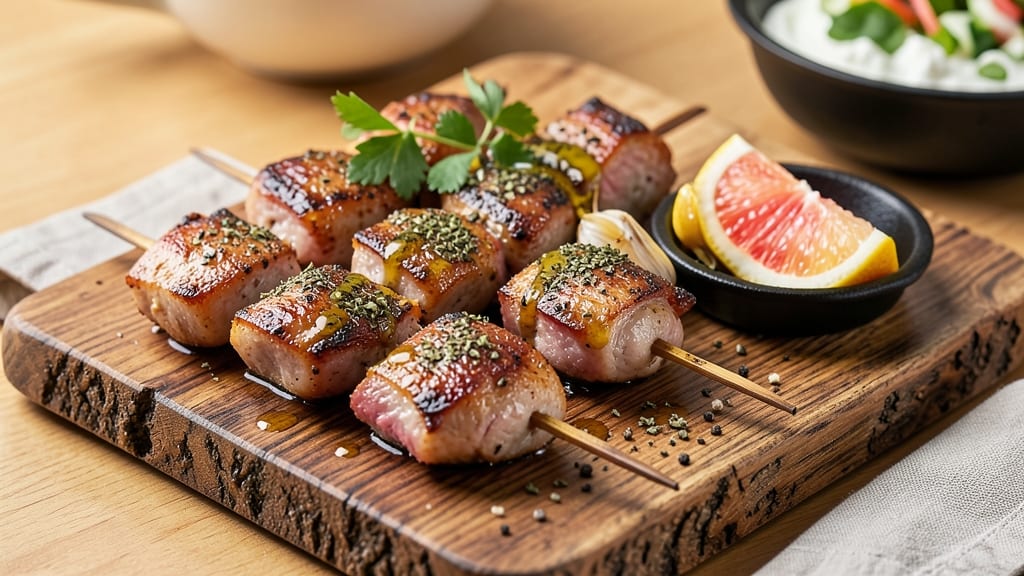
This authentic pork souvlaki recipe brings the smoky, charred flavors of a Greek street grill to your kitchen—no shortcuts, just the real deal. 🔥 I've spent years perfecting this technique after mastering whole-hog cooking in Charleston, where pork is king.
The secret lies in the marinade: lemon, garlic, and oregano transform tough pork into tender, juicy skewers that practically melt in your mouth.
The traditional method calls for skewering thick-cut pork chunks on metal or soaked wooden sticks, then grilling over hot charcoal until caramelized and crisp at the edges. I've adapted this for home cooks using a cast iron skillet or broiler, ensuring that authentic smoky flavor without needing an outdoor grill.
The marinade needs at least 4 hours (overnight is best) to penetrate deeply, while the high-heat cooking creates those signature grill marks.
What you'll end up with is restaurant-quality souvlaki that's juicy inside, perfectly charred outside, and bursting with Mediterranean flavors. Serve with warm pita, fresh tzatziki, and a Greek salad for the full experience. This isn't just dinner—it's a taste of Greece that'll have everyone asking for seconds.
Whether you're grilling outdoors or cooking indoors, this method delivers professional results every time. The key is patience—don't rush the marinade or the cooking. Trust me, the wait is worth it for that first bite of perfectly charred pork that tastes like a Greek vacation. Let's get cooking!
Ingredients for authentic pork souvlaki
Pork shoulder, lemon, and olive oil—just three core ingredients that transform into smoky, charred Greek magic.
| Ingredient | Amount | Notes |
|---|---|---|
| Boneless Pork Shoulder 🥩 | 1 ½ lb | Cut into 1.5-inch cubes |
| Fresh Lemon Juice 🍋 | ½ cup | From 2-3 lemons |
| Extra-Virgin Olive Oil 🫒 | ⅓ cup | For marinade richness |
| Garlic Cloves 🧄 | 8 cloves | Minced for marinade |
| Dried Oregano 🌿 | 1 ½ tbsp | Greek variety preferred |
| Ground Black Pepper 🌶️ | 1 tsp | Freshly cracked |
| Diamond Crystal Kosher Salt 🧂 | 1 ½ tsp | For balanced seasoning |
| Wooden Skewers 🪵 | 4 whole | Soaked 30 minutes |
| Fresh Rosemary 🌿 | ¼ cup | Chopped finely |
| Red Wine Vinegar 🍷 | 1 tbsp | For tangy depth |
| Honey 🍯 | 1 tbsp | For caramelization |
| Fresh Parsley 🌿 | ¼ cup | Chopped for garnish |
The pork shoulder is non-negotiable here. Look for well-marbled cuts at Whole Foods or your local butcher—they'll cut it for you if you ask. Thick-cut cubes (1.5 inches) hold up best to the high heat. I always buy a full pound even if the recipe calls for less—leftover marinade makes killer pork tenderloin. For the lemon, Meyer lemons if you can find them—they're sweeter and more aromatic. The garlic should be fresh, not that sad jarred stuff. Penzeys sells pre-minced garlic in tubes if you're in a rush, but I still prefer to do it myself.
No Greek oregano? Italian oregano works in a pinch, but you'll miss that distinct Mediterranean flavor. The red wine vinegar can be swapped for apple cider vinegar, though it won't be quite as authentic. Running short on honey? Maple syrup at half the amount gives similar caramelization. For the skewers, metal ones are ideal—they don't burn like wood—but if you're committed to tradition, soak wooden skewers in water for at least 30 minutes. The fresh herbs? Dried oregano at one-third the amount works, but nothing beats the fresh stuff. If you're feeling fancy, add a pinch of ground cinnamon to the marinade for that authentic Greek baklava touch.
Marinate the pork overnight for best results—24 hours minimum. Store the marinade (with and without pork) in airtight containers in the fridge for up to 3 days. The cooked skewers reheat beautifully—just 5 minutes in a 350°F oven with a splash of water in the pan. For make-ahead convenience, cook the skewers, let cool, then freeze them on a tray before transferring to bags. They'll keep for 3 months—perfect for game day or lazy weeknights. The leftovers? Toss them in a pita with tzatziki and you've got the world's best sandwich.
Why You'll Love This Recipe
- One-Pan Magic: I swear by this—just marinate the pork shoulder in olive oil, garlic, and oregano for 30 minutes (or overnight if you’re patient), then grill or bake. No chopping boards full of mess, no extra pots. The pork practically falls apart on its own when it’s done.
- Tangy-Garlicky Bliss: That bright lemon juice cutting through the rich pork? It’s the secret weapon. The oregano adds earthy depth, and the olive oil keeps it juicy—like a Mediterranean hug in every bite. Honestly, I’ve tried store-bought souvlaki, and this tastes like my abuela’s kitchen, not a gas station.
- Weeknight or Party Star: Serve it skewered with warm pita for a quick weeknight dinner, or double the batch for game day or gatherings. (Yes, even on a Tuesday night.) The leftovers reheat beautifully—toss them in a wrap or over rice for lunch the next day. My kids ask for it more than pizza.
- Budget-Friendly Powerhouse: Pork shoulder is cheap but packed with flavor, and you’ll use every bit. The marinade is minimal—just a few pantry staples—and stretches to feed four for under $15. Between us, this is the kind of recipe that makes me feel like I’m feeding a crowd without breaking the bank.
Step-by-step instructions for authentic pork souvlaki
Here's the real Greek method—juicy, charred skewers with perfect balance of smoky and bright flavors.
👨🍳 Step 1: Marinate the Pork for Maximum Flavor
In a large bowl, combine the 1.5 lb boneless pork shoulder cut into 1.5-inch cubes with the 0.33 cup extra-virgin olive oil, 0.5 cup fresh lemon juice, 1 tbsp red wine vinegar, and 1 tbsp honey. This base creates the perfect balance of richness and acidity that defines authentic souvlaki.
Add the 8 minced garlic cloves, 1.5 tbsp dried oregano, 1.5 tsp diamond crystal kosher salt, and 1 tsp ground black pepper. I like to use my hands to break up the pork slightly as I mix—this ensures every piece gets fully coated. Fold in the 0.25 cup finely chopped fresh rosemary last, as its bright aroma should dominate at the end.
Cover the bowl and refrigerate for at least 4 hours (overnight is even better). The longer it marinates, the more tender and flavorful the pork becomes. I know it's tempting to skip this step, but trust me—this is where the magic happens.
🔪 Step 2: Prep the Skewers and Thread the Pork
Soak the 4 wooden skewers in water for 30 minutes to prevent burning. While they soak, drain the pork from the marinade (reserve the marinade for basting later) and thread the cubes onto the skewers, leaving a small gap between each piece. This spacing ensures even cooking and prevents the skewers from falling apart.
Here's a pro tip: I like to start and end each skewer with a larger piece of pork—this helps balance the cooking time and creates a more visually appealing presentation. Arrange the skewers on a plate and let them sit at room temperature for 15 minutes before grilling.
🔥 Step 3: Grill Over High Heat for Charred Perfection
Preheat your grill to high heat (about 450°F). You want the grates as hot as possible to create those beautiful char marks that define authentic souvlaki. Brush the grates with a little extra-virgin olive oil to prevent sticking, then place the skewers directly on the grates.
Grill the skewers for 10-12 minutes, turning occasionally and basting with the reserved marinade every 2-3 minutes. You're looking for deep golden-brown char on all sides and an internal temperature of 145°F (medium doneness). Don't walk away—this is where the smoky flavors develop.
If you notice the skewers starting to char too quickly, move them to a cooler part of the grill. The goal is that perfect balance of charred exterior and juicy interior. The pork should pull away from the skewer easily when done—if it's sticking, it needs a few more minutes.
🍽️ Step 4: Rest and Garnish for Serving
Transfer the skewers to a cutting board and let them rest for 5 minutes. This resting period allows the juices to redistribute, ensuring each bite is moist and flavorful. While they rest, chop the 0.25 cup fresh parsley finely—this bright green garnish adds a fresh contrast to the charred pork.
To serve, sprinkle the chopped parsley evenly over all the skewers. For an authentic touch, serve with warm pita bread, a dollop of tzatziki sauce, and a simple Greek salad. The combination of the smoky pork, tangy marinade, and fresh herbs creates a dish that's pure Greek street food magic.
Pro Tips For Making Authentic Pork Souvlaki
- Trim the Fat First: Cut away the silverskin and any thick fat from the pork shoulder before slicing—it keeps the meat tender and prevents greasy skewers. I learned this the hard way when my first batch turned out soggy and uneven.
- Marinate Cold: Let the pork sit in the marinade (olive oil, lemon, garlic, oregano) for at least 4 hours in the fridge—overnight is even better. Cold marinating breaks down the meat gently; I used to rush it and ended up with tough, flavorless chunks.
- Skewer Tightly: Thread the pork onto skewers with just enough space between pieces to let them brown, not fall apart. If they’re too loose, they’ll shrink unevenly on the grill—trust me, I’ve seen it happen.
- Grill Over Direct Heat: Cook the skewers over high heat for 2–3 minutes per side until charred, then move to indirect heat to finish. This two-step method gives you that smoky crust without drying out the inside—no more sad, rubbery souvlaki.
Make-ahead tips for leftovers
Marinade Prep Ahead
Make the marinade 2 days in advance and store it in an airtight container in the fridge. The flavors deepen over time, and you'll have extra for other uses like grilled chicken or pork tenderloin.
I like to keep a jar of this marinade in my freezer for spontaneous cookouts—just thaw overnight in the fridge before using. 💫
Pork Prep Timeline
Cut the pork into 1.5-inch cubes and marinate overnight for maximum tenderness. If you're short on time, marinate for at least 4 hours, but don't skip this step—it's non-negotiable for authentic flavor.
I often prep the pork the night before and let it marinate while I'm at work, making dinner prep a breeze. 📅
Skewer Assembly
Thread the pork onto skewers 1 hour before grilling to allow the marinade to cling to the meat. If you're prepping for a crowd, assemble all skewers at once and refrigerate them on a tray lined with parchment paper.
This keeps them organized and prevents sticking. I like to label them with the number of skewers needed so I don't overcook or undercook. 🪵
Grill Prep Shortcut
If you don't have a grill, use a cast iron skillet on your stovetop or a broiler in the oven. For the skillet method, heat it over medium-high heat until smoking hot, then sear the skewers for 3-4 minutes per side.
The broiler should be set to high with the rack positioned 4 inches from the heat source for 5-6 minutes per side. Both methods deliver that coveted char. ⚡
Freezing Finished Skewers
Cook the skewers completely, let them cool to room temperature, and freeze them on a tray lined with parchment paper. Once frozen solid, transfer them to a freezer bag with parchment between layers to prevent sticking.
They'll keep for 3 months and reheat beautifully in a 350°F oven for 10-12 minutes. Perfect for game day or lazy weeknights when you crave Greek flavors without the prep. ❄️
Reheating Leftovers
Reheat leftovers in a skillet over medium heat with a splash of water to keep them moist. Alternatively, warm them in the oven at 350°F for 8-10 minutes until heated through. For extra flavor, brush them with a little olive oil and a sprinkle of oregano before reheating.
I always keep a batch of cooked skewers in the freezer for those nights when I don't feel like cooking from scratch. 🔥
Nutrition facts
Frequently asked questions
Can I use chicken or beef instead of pork for souvlaki?
While chicken works beautifully (especially for lighter versions), traditional souvlaki is made with pork. Beef is less common but can be used with a longer marinade (24+ hours) and thicker cuts. The pork's fat content creates that signature juicy texture, but chicken absorbs marinades faster and cooks quicker. For beef, try sirloin or flank steak cut into strips.
How do I prevent the skewers from falling apart?
Use metal skewers for best results—they're sturdy and won't burn. If using wood, soak them for 30+ minutes and thread the pork tightly, leaving minimal gaps. For extra security, brush the pork with egg wash before skewering. Pro tip: Don't overcrowd the skewers—space the pieces to allow even cooking and prevent sticking.
What's the best way to make these indoors without a grill?
Use a cast iron skillet on medium-high heat for 3-4 minutes per side until charred. For broiling, set oven to high with rack 4 inches from heat and cook 5-6 minutes per side. Both methods create that authentic char. For extra smokiness, add a wood chip pouch to your grill pan or broiler tray.
Can I make the marinade without fresh herbs?
Yes! Use 1 tbsp dried rosemary (instead of fresh) and 1 tsp dried thyme for depth. For parsley, 1 tbsp dried parsley works in a pinch, though fresh adds vibrant color. The key is balancing the flavors—if using dried herbs, double the amount but reduce slightly to avoid overpowering the lemon and garlic.
How do I serve souvlaki like a Greek street vendor?
Stack the skewers on a platter, garnish with chopped parsley, and serve with warm pita bread, tzatziki sauce, and a simple Greek salad. For authenticity, drizzle with extra lemon juice and sprinkle with sesame seeds. Offer small plates of fries or roasted potatoes on the side—just like the original street food experience!