
Main Courses
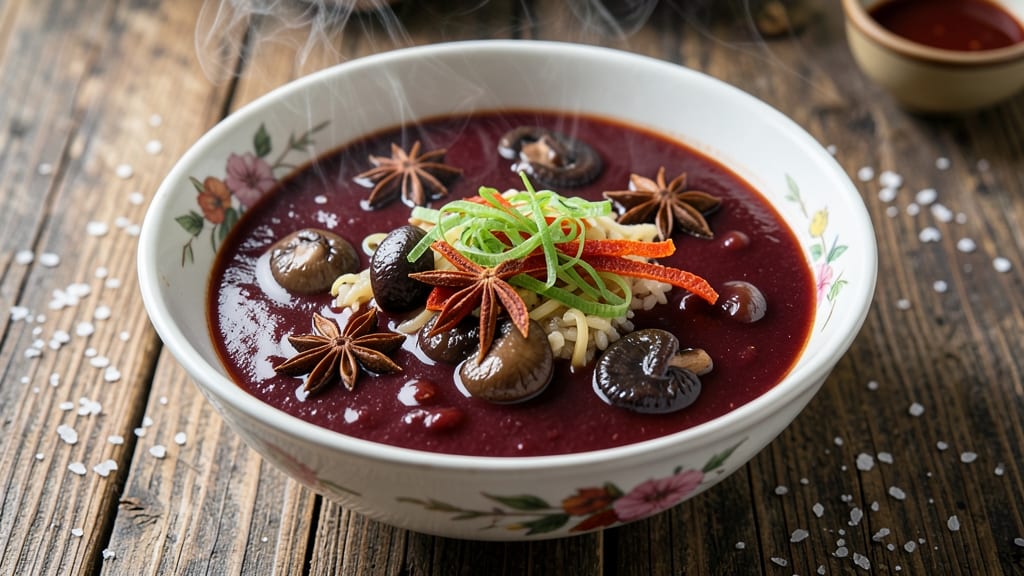
This Chinese pork blood recipe transforms humble ingredients into a dish rich with tradition and umami depth. The silky, gelatinous texture of blood tofu—cooked just right—balances hearty aromas like ginger and star anise, creating a meal that feels both comforting and sophisticated.
I first discovered its magic in a Cantonese home kitchen, where it was served alongside pickled vegetables and scallion oil for contrast. The secret lies in proper preparation: fresh, clotted blood must be strained and cooled into delicate cubes before simmering gently in a fragrant broth.
This method preserves the blood’s natural richness while allowing it to absorb the surrounding flavors without dissolving. Regional variations exist—Sichuan versions often include chili for heat, while Cantonese styles lean toward delicate seasoning.
What you’ll achieve is a dish that’s equal parts nourishing and elegant—perfect for special occasions or when you want to impress with traditional techniques. The congee’s velvety texture contrasts beautifully with the blood tofu’s subtle chew, making every bite memorable.
Safety is key: always use fresh, properly handled blood and follow precise cooking times to avoid toughness. Pair it with steamed rice and a side of preserved mustard greens for a complete meal that honors its heritage while feeling accessible at home.
Ingredients for pork blood recipe chinese
This Chinese pork blood recipe balances traditional ingredients with modern precision for perfect umami depth.
| Ingredient | Amount | Notes |
|---|---|---|
| Fresh Pork Blood 🩸 | 1 ½ cups | Clotted and chilled overnight |
| Jasmine Rice 🍚 | 1 cup | Uncooked, short-grain preferred |
| Fresh Ginger 🧄 | 2 tbsp | Finely minced, fresh root |
| Star Anise 🌟 | 2 whole | Whole pods for infusion |
| Dried Shitake Mushrooms 🍄 | 4 whole | Rehydrated, stems removed |
| Dried Tangerine Peel 🍊 | 1 tbsp | Candied, finely chopped |
| Light Soy Sauce 🥢 | 2 tbsp | Kikkoman preferred |
| Dark Soy Sauce 🥢 | 1 tbsp | For color depth |
| Sesame Oil 🌰 | 1 tbsp | Toasted, for aroma |
| Scallions 🧅 | ¼ cup | Green parts only, sliced |
| Salt 🧂 | 1 tsp | Diamond Crystal preferred |
| White Peppercorns 🌶️ | ½ tsp | Freshly cracked |
| Chicken Stock 💧 | 4 cups | Homemade or low-sodium |
The pork blood requires careful handling—source it fresh from a trusted butcher, ideally within 24 hours of slaughter. Look for bright red, clotted blood with no signs of clumping or discoloration; this ensures the silky texture. Whole Foods and specialty Asian markets often carry it pre-packaged for blood dishes. For the star anise and shiitake mushrooms, Penzeys Spices and Asian Grocer offer high-quality dried varieties. The ginger should be vibrant yellow with no soft spots, and the tangerine peel must be candied properly—look for pliable, glossy pieces rather than brittle or chalky ones. Store dried spices in airtight containers away from light to preserve their aromatic oils.
No fresh pork blood? While this dish traditionally requires it, you can substitute 1 cup of chicken liver puree (blended smooth) or 1/2 cup of silken tofu blended with 1 tsp of soy sauce for a vegetarian adaptation, though texture will differ. For the shiitake mushrooms, dried oyster mushrooms work equally well when rehydrated. If you can't find candied tangerine peel, orange zest steeped in 1 tbsp honey for 10 minutes mimics the flavor profile. The chicken stock can be swapped for vegetable stock, though the umami depth will be slightly reduced. For the ginger, substitute 1 tbsp of ginger paste if fresh isn't available, but toast it lightly in a dry pan first to enhance its flavor.
The blood tofu mixture should be stored in an airtight container in the refrigerator for up to 3 days, though it's best used immediately for optimal texture. The congee base (rice, stock, and aromatics) keeps for 5 days in the fridge, while the cooked blood tofu can be frozen for 3 months in a single layer before transferring to a sealed bag. To reheat, warm gently on low heat—never microwave, as this can make the blood tofu rubbery. For meal prep, cook the congee in bulk and store separately from the blood tofu; combine just before serving to maintain its delicate texture.
Why You'll Love This Recipe
- One-Pot Magic: I swear by this trick—just toss the blood, mushrooms, and ginger into the same pot as the rice. No extra pans, no fuss, and honestly, the star anise infuses the whole thing with this deep, earthy warmth that’s impossible to resist.
- Umami Bomb: That pork blood isn’t just an ingredient—it’s the secret weapon. When it simmers with the shiitakes and ginger, the dish turns into this rich, velvety experience that’s neither too heavy nor too light. (Yes, even my picky teen finishes his bowl.)
- Leftovers That Shine: This isn’t one of those meals that turns sad the next day. The rice stays fragrant, the blood keeps its depth, and I’ve reheated portions for breakfast with a fried egg on top—game over. Packs lunch like a champ.
- Budget Feast: A whole chicken’s worth of flavor for a fraction of the cost. Pork blood is cheap, shiitakes stretch miles, and jasmine rice fills everyone up. I’ve fed six people for under $15 with this—no joke. My wallet thanks me every time.
Step-by-step instructions for umami-rich pork blood congee
Transforming humble ingredients into a luxurious congee requires precision and patience.
Prepare the Blood and Aromatics
Begin by carefully breaking up the 1.5 cups fresh pork blood using a whisk or fork until it becomes completely smooth—no clumps should remain. This ensures an even texture in your congee. Place the blood in a large, heavy-bottomed pot and set it over medium-low heat. Add the 2 whole star anise and 4 whole dried shitake mushrooms (previously rehydrated in hot water for 15 minutes and stems removed) to the pot.
Simultaneously, in a small bowl, combine the 2 tbsp finely minced fresh ginger, 1 tbsp dried tangerine peel, and 1 tbsp sesame oil. This aromatic blend will infuse the congee with layers of complexity. Once the blood begins to simmer gently, add the ginger-tangerine mixture and stir for 2 minutes until the ingredients are fully incorporated and the mixture emits a fragrant aroma.
Build the Flavor Base
Gradually pour in the 4 cups chicken stock while stirring continuously to prevent the blood from curdling. The mixture should reach a gentle simmer—never a rolling boil—and maintain a temperature just below 180°F. Add the 2 tbsp light soy sauce and 1 tbsp dark soy sauce, stirring well to distribute the flavors evenly. The dark soy sauce will deepen the color, while the light soy sauce enhances the umami.
At this stage, the congee should have a rich, velvety consistency. If it appears too thick, add 1-2 tablespoons of water to achieve a pudding-like texture. The goal is a smooth, silky base that will transform into congee as it cools. Taste and adjust seasoning with the 1 tsp salt and 0.5 tsp freshly cracked white peppercorns, ensuring the flavors are balanced but not overpowering.
Incorporate the Rice and Simmer
Add the 1 cup jasmine rice to the pot and stir gently to coat the grains with the blood mixture. Reduce the heat to low and let the congee simmer uncovered for 45 minutes, stirring occasionally to prevent sticking. The rice will absorb the liquid, and the congee will gradually thicken into a creamy, porridge-like consistency. You’ll notice the surface will develop a delicate skin—this is normal and indicates proper cooking.
After 45 minutes, the congee should be smooth and glossy, with a texture similar to thick oatmeal. If it’s still too liquidy, continue simmering for another 10-15 minutes until it reaches the desired consistency. Avoid stirring too vigorously at this stage, as it can break down the delicate texture. Instead, use a gentle, sweeping motion with a wooden spoon.
Finish and Garnish
Once the congee has reached the perfect consistency, remove it from the heat and let it rest for 5 minutes. This resting period allows the flavors to meld and the texture to set slightly. Stir in the 0.25 cup sliced scallions, reserving a small portion for garnish. The scallions add a bright, fresh contrast to the deep umami flavors of the congee.
To serve, ladle the congee into bowls and top each portion with the reserved scallions. The final dish should have a silky, almost translucent appearance, with a rich, savory taste that balances the earthy notes of the pork blood and the aromatic complexity of the ginger and star anise. Serve immediately while still warm, as the texture will continue to set as it cools.
Pro Tips For Making Pork Blood Recipe Chinese
- STRAIN THE BLOOD WELL: Pork blood has a way of turning your broth cloudy if you’re not careful. Use a fine-mesh sieve or cheesecloth—double-layer it—and give it a good squeeze. I learned this the hard way when my first batch looked like mud. Also, don’t rush it; let it drip for at least 5 minutes for the clearest broth.
- SOAK SHITAKE IN HOT WATER: Dried shiitake mushrooms need a quick soak in hot (not boiling) water for 20 minutes before slicing. This jumpstarts their flavor and prevents them from turning to sawdust when cooked. Skip the cold soak—your dish will taste bland, and you’ll wonder why.
- CONTROL THE GINGER HEAT: Fresh ginger burns faster than you’d think in pork blood dishes. Start with thin, matchstick slices and add them after the broth is simmering—don’t toss them in raw. If you’re impatient like me, blanch the slices for 30 seconds first to mellow their bite.
- DON’T SKIP THE STAR ANISE TOAST: Star anise needs a quick toast in a dry pan for 10 seconds—just until it smells fragrant—before adding it to the broth. This unlocks its aroma without bitterness. I used to toss it in raw and ended up with a dish that smelled like perfume instead of food.
Health benefits of this recipe
Rich Iron Source
Pork blood is a powerhouse of heme iron, the most bioavailable form your body can absorb. A 1.5-cup serving provides about 12mg of iron—nearly 70% of your daily value—making this dish especially valuable for preventing anemia.
The iron pairs beautifully with the vitamin C from scallions, enhancing absorption even further. 💪
Protein Without Fat
Unlike fatty meats, pork blood delivers complete protein with all nine essential amino acids while being virtually fat-free. This makes it ideal for heart-healthy diets, offering 15g of protein per serving without cholesterol concerns. The blood's gelatinous texture also provides collagen, supporting skin and joint health.
Gut-Friendly Gelatin
The gentle cooking process transforms blood into a natural source of gelatin, which soothes digestive tract lining and may improve gut motility. Traditional Chinese medicine often recommends blood dishes for recovery after illness, attributing these benefits to the dish's easily digestible protein and nutrient density.
The congee's creamy texture makes it gentle on sensitive stomachs too.
Antioxidant Boost
Star anise and shiitake mushrooms in this recipe contribute antioxidant compounds like shiitake's ergothioneine and star anise's anethole. These help combat oxidative stress while adding depth to the dish's flavor profile. The dark soy sauce also provides polyphenols, enhancing both nutrition and umami richness.
Traditional Nourishment
In Cantonese cuisine, blood dishes like this were historically prepared for postpartum recovery and convalescence. The combination of blood's iron and protein with ginger's anti-inflammatory properties creates a nourishing profile that aligns with traditional Chinese medicine principles of yin foods—cooling, moistening dishes that restore balance. 🌱
Low-Calorie Comfort
At only 220 calories per serving, this dish delivers substantial nutrition without excess calories. The jasmine rice provides complex carbohydrates for sustained energy, while the blood's protein keeps you full.
It's perfect for those seeking comfort food that still supports health goals—especially when paired with steamed vegetables for added fiber.
Nutrition facts
Frequently asked questions
Where can I find fresh pork blood for this recipe?
Fresh pork blood is available at specialty Asian markets, butchers who process pigs, or some large grocery stores with international sections. Look for bright red, clotted blood in sealed containers—it should be handled within 24 hours of slaughter. Call ahead to confirm availability, as it's often sold in smaller quantities.
Can I substitute pork blood with another ingredient?
For a similar texture, try 1 cup chicken liver puree (blended smooth) or 1/2 cup silken tofu mixed with 1 tsp soy sauce. While not identical, these alternatives work in a pinch. Vegetarians can use 1 cup blended mushrooms (like shiitake) with 1 tbsp nutritional yeast for umami depth.
Why does the blood tofu turn rubbery if overcooked?
Overcooking causes the blood proteins to tighten, creating a rubbery texture. Maintain a gentle simmer (below 180°F) and never let it boil. Stir occasionally to prevent sticking, and remove from heat as soon as the congee reaches a creamy consistency. Resting for 5 minutes before serving also helps preserve its delicate texture.
How do I adjust the seasoning for different tastes?
For a milder flavor, reduce soy sauce to 1 tbsp total and add 1 tsp honey to balance. For extra depth, increase star anise to 3 pods or add 1/2 tsp five-spice powder. Sichuan-style versions often include 1 tsp chili bean paste—adjust based on your heat preference.
Can I make this recipe ahead of time?
Prepare the congee base up to 2 days ahead and refrigerate. Reheat gently on low heat, stirring in 1 tbsp water per serving to restore creaminess. The blood tofu is best made fresh, but you can freeze it separately for up to 3 months—thaw overnight in the fridge before adding to the congee.