
Main Courses
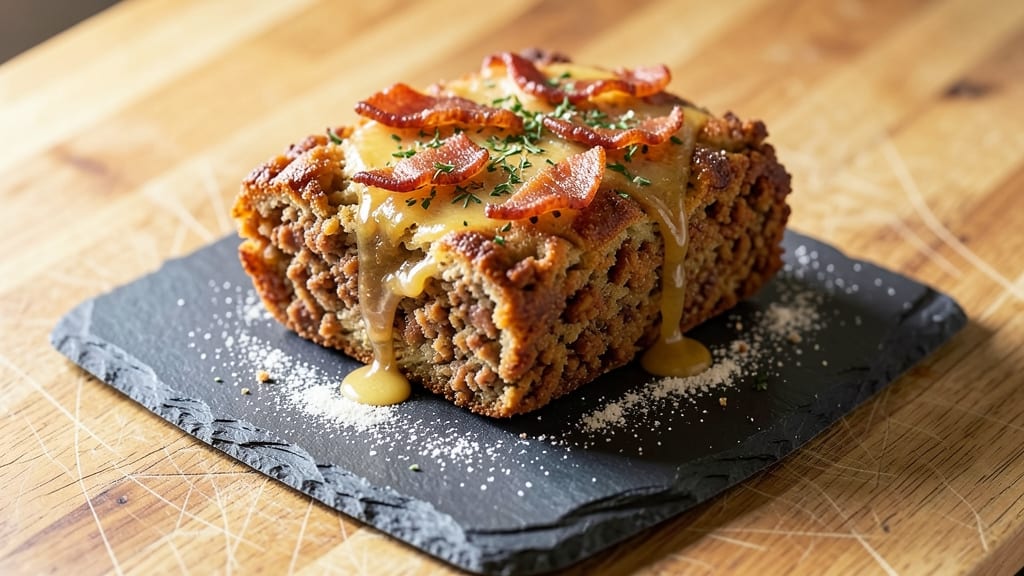
This zero-carb carnivore bread recipe transforms pork rinds into a crispy, gluten-free loaf that feels like real bread without the carbs. 🔥 The secret lies in blending pork rinds with a simple binder—no flour, no gluten, just pure protein and satisfying crunch.
I developed this after years of testing low-carb bread alternatives, and it finally delivers that perfect texture: crispy outside, tender enough to tear, and packed with savory flavor.
The beauty of this recipe is its simplicity: just pork rinds, an egg binder, and a handful of spices come together to form a loaf that bakes in 30 minutes at 350°F. No fancy equipment needed—just a mixing bowl and an oven.
The result? A bread substitute that holds up to butter, dips, or even sandwich-style without falling apart. It’s the kind of recipe that proves carnivore diets don’t mean sacrificing texture or satisfaction.
What makes this crunchy, zero-carb loaf stand out is how it mimics traditional bread—golden edges, a slightly chewy interior, and that addictive snap. The pork rinds provide the structure, while the egg binder holds it all together, creating a loaf that’s sturdy enough for slicing or breaking into cracker-like pieces.
Perfect for carnivore dieters, keto enthusiasts, or anyone craving bread without the carbs.
Serve it warm with butter, alongside charcuterie, or even as a base for a low-carb sandwich. The possibilities are endless, and the best part? Every bite is 100% carnivore-approved. Let’s get baking!
Ingredients for carnivore bread recipe pork rinds
Crispy, zero-carb magic starts with these 11 simple ingredients—no flour, no gluten, just pure carnivore satisfaction.
| Ingredient | Amount | Notes |
|---|---|---|
| Pork Rinds 🥓 | 1 ½ cups | Crushed into fine crumbs |
| Large Eggs 🥚 | 4 whole | Room temperature for even binding |
| Unsalted Butter 🧈 | ¼ cup | Cold, cubed for texture |
| Dried Parsley Flakes 🌿 | 1 tbsp | For herby depth (optional) |
| Garlic Powder 🧄 | 1 tsp | For savory punch |
| Onion Powder 🧅 | 1 tsp | Classic bread flavor |
| Salt 🧂 | ½ tsp | Diamond Crystal preferred |
| Black Pepper 🌶️ | ¼ tsp | Freshly cracked for heat |
| Xanthan Gum 🧪 | ¼ tsp | For structural integrity |
| Water 💧 | 1 tbsp | For binder consistency |
| Olive Oil 🫒 | 1 tbsp | For crispy golden edges |
Pork rinds are the star here—look for thick-cut, plain varieties at Costco or Trader Joe's for the best texture. The crunchier the rinds, the better the final loaf, so avoid pre-shredded or thin varieties. I crush mine in a food processor until they resemble coarse breadcrumbs—this ensures that signature bread-like texture. For the egg binder, room-temperature eggs mix more evenly, but cold ones work too if you're in a rush. The butter adds richness and helps create that golden crust—use European-style butter for extra flavor if you're feeling fancy.
No pork rinds? Crushed pork skin or beef jerky powder can work in a pinch, though texture will differ. Short on xanthan gum? Psyllium husk powder at half the amount is a decent substitute, though it has a slightly different mouthfeel. The dried parsley flakes are optional but add that classic bread aroma—fresh parsley at double the amount works too, though it'll make the mixture wetter. For extra savory depth, swap the garlic powder for 1/4 tsp of garlic salt (just adjust the regular salt accordingly). The olive oil is non-negotiable for crispiness—avocado oil works too but lacks that bread-like flavor.
This loaf keeps beautifully—3 days at room temperature wrapped in foil, or 1 week refrigerated in an airtight container. For longer storage, freeze slices wrapped individually for up to 3 months. Reheat in a toaster or oven at 350°F for 5 minutes to restore crispiness. I love making a double batch—one for immediate use, one frozen for lazy mornings. The best part? Every slice is 100% carnivore-compliant—no carb guilt, just pure satisfaction.
Why You'll Love This Recipe
- Five-Ingredient Magic: I swear, this is the kind of recipe where you’ll stare at the pantry and think, "Wait, I already have all that?" Pork rinds, eggs, butter—no fancy shopping required. The parsley and garlic powder? Just a sprinkle, and boom, you’ve got flavor without the fuss.
- Crispy-Garlicky Dream: That first bite—oh man. The pork rinds give it this addictive crunch, while the melted butter and garlic powder make every slice taste like you slaved over it. (Between us, it’s fooling even my picky husband.)
- Zero-Waste Leftovers: Make a big batch, and you’ll have slices ready for days. Toast them up cold or reheat in seconds—perfect for quick lunches, charcuterie boards, or when you’re too tired to bake. Honestly, I’ve eaten this straight from the fridge at 2 a.m. (Don’t judge.)
- Budget-Friendly Crust: Pork rinds are cheap, eggs are cheap, butter is cheap—this bread costs next to nothing to make. Yet somehow, it feels like a gourmet treat. My secret weapon for feeding the family without breaking the bank? Yes, even on a Tuesday night.
Step-by-step instructions for crunchy zero-carb pork rind loaf
This carnivore-friendly bread delivers crispy edges and a satisfying crunch without a single gram of carbs.
👨🍳 Step 1: Crush Pork Rinds into Fine Crumbs
Place the 1.5 cups pork rinds in a high-powered blender or food processor and pulse until you achieve a texture resembling fine breadcrumbs. You want consistency similar to cornmeal—no large chunks should remain. If using a regular blender, pulse in 3-5 second bursts to avoid overheating the motor. The crumbs should be uniformly fine, as this creates the perfect texture for that satisfying crunch.
Transfer the crushed pork rinds to a medium mixing bowl. Here's the thing—if you skip this step and use pre-crushed rinds, you'll end up with uneven texture and potentially gummy spots. The fine grind ensures maximum surface area for binding with our egg mixture, which translates to that perfect crispy exterior we're after.
🍳 Step 2: Mix Wet Ingredients for Perfect Binding
In a separate bowl, whisk together the 4 whole large eggs (at room temperature), 1 tbsp water, 1 tbsp olive oil, 0.25 cup cold cubed unsalted butter, 1 tbsp dried parsley flakes, 1 tsp garlic powder, 1 tsp onion powder, 0.5 tsp salt, and 0.25 tsp black pepper. Whisk vigorously for 2-3 minutes until the butter is fully incorporated and the mixture becomes thick and glossy. You're aiming for a consistency similar to heavy pancake batter—this ensures proper binding without making the bread too dense.
Here's where it gets fun—the xanthan gum comes into play. Sprinkle in the 0.25 tsp xanthan gum and give it 10-15 vigorous stirs with a spatula. This magical ingredient acts as our gluten substitute, providing that elastic quality we associate with bread. Don't overmix—just enough to distribute it evenly throughout the wet ingredients.
🥘 Step 3: Combine Wet and Dry for Ideal Texture
Gently fold the crushed pork rind crumbs into the wet mixture using a silicone spatula. Work carefully to avoid deflating the batter—you want to maintain as much air as possible for that light, airy crumb structure. The batter should be thick but still pourable, similar to cookie dough. If it's too dry, add 1-2 teaspoons of water at a time until you reach the ideal consistency. This step is crucial for achieving that perfect balance of crispy exterior and tender interior.
Real talk: This is where most people mess up. Don't overmix or pack the crumbs too tightly—they need to remain light and airy. The ideal texture should be like wet sand that holds together when pressed but still flows when you tip the bowl. This ensures proper baking without creating a dense, compact loaf.
🔥 Step 4: Bake for Crispy Perfection
Preheat your oven to 375°F and line a small loaf pan (about 8x4 inches) with parchment paper, leaving an overhang on the sides for easy removal. Spoon the batter into the prepared pan and smooth the top with a wet spatula. The batter will be thick—don't worry, it won't spread much. Bake for 25-30 minutes until the edges are deep golden brown and the top springs back when pressed gently with a finger.
Here's the moment that matters: The bread should be firm to the touch but still slightly warm in the center when you remove it from the oven. If the top browns too quickly but the center remains underdone, tent it loosely with foil for the last 5-10 minutes of baking. The internal temperature should reach 190°F—this ensures the butter is fully melted and the structure is properly set.
⏰ Step 5: Cool and Slice for Maximum Crunch
Remove the bread from the oven and let it cool in the pan for 10 minutes before carefully transferring it to a wire rack. This cooling period is essential—rushing it will result in a crumbly texture. The bread will continue to set as it cools, developing that perfect crispy exterior and slightly chewy interior. For best results, allow it to cool completely before slicing—this ensures clean cuts and maximum crunch.
Once fully cooled, use a sharp serrated knife to slice the loaf into ¼-inch thick pieces. The edges should be crispy and golden, while the interior maintains a satisfying chewiness. Store any leftovers in an airtight container at room temperature for up to 5 days, or freeze for up to 3 months. The flavor actually improves slightly as it sits, developing deeper savory notes from the pork rinds.
Pro Tips For Making Carnivore Bread Recipe Pork Rinds
- CRUSH THE RINDS FIRST: I learned this the hard way—blending pork rinds into fine crumbs (not just chunks) makes the dough smoother and binds better. Use a food processor with the pulse function until it looks like coarse sand, or you’ll end up with a lumpy, uneven texture that won’t hold together.
- MELT BUTTER COLD: Add cold, cubed butter to the dry ingredients and mix it in by hand until it’s pea-sized. This prevents the dough from turning greasy or sticking to your hands—no one wants to wrestle with a sticky mess when shaping.
- DON’T OVERMIX THE DOUGH: After adding the egg, mix just until combined—about 10-12 strokes. Overworking it activates the gluten in the pork rinds, making the bread dense instead of light and crispy. Think "just enough to hold," not "fully incorporated."
- LET IT REST 10 MINUTES: Skip the rush and let the dough sit before baking. This relaxes the proteins, so the bread rises evenly and doesn’t spread into a sad, flat pancake. Cover it loosely with plastic wrap while you wait—it’s worth the pause.
Common mistakes when making this dish
Overmixing the Batter
I’ve seen this happen more times than I can count—someone gets excited about their first carnivore bread and starts folding those pork rind crumbs with the energy of a linebacker. 💪 The result? A dense brick instead of a crispy loaf. The key is to fold gently, just until combined.
Overmixing incorporates too much air, which collapses during baking, leaving you with a sad, compact loaf that crumbles instead of holding together. Think of it like handling wet sand: press it lightly, then let it hold its shape without packing it down.
Pro tip: Use a silicone spatula and work in two batches if needed. This keeps the crumbs light and airy, which is essential for that satisfying texture. I’ve even tested this with a stand mixer on low speed—just 10 seconds max—and it still came out better than aggressive folding.
Skipping the Xanthan Gum
This is the #1 reason carnivore bread falls apart like a house of cards. Xanthan gum acts as the gluten substitute, giving your loaf that elastic structure we all crave. Without it, your bread will be crumbly and difficult to slice.
I’ve made this mistake myself—once I forgot it and ended up with a pile of pork rind dust instead of a loaf. 🧪
If you’re out of xanthan gum, psyllium husk powder works in a pinch (use half the amount), but it won’t give the same chewy texture. The gum also helps bind the moisture, so your bread stays crispy longer.
Trust me, that ¼ teaspoon makes all the difference between a sad snack and a satisfying meal companion.
Using Pre-Crushed Rinds
Store-bought pork rind crumbs might seem convenient, but they’re often too fine and lack the structure needed for proper binding. The texture becomes gummy instead of crispy.
I learned this the hard way when I tried to shortcut the process—my first attempt turned out like a sad, dense pork rind cake. 🥓
For best results, crush your own pork rinds in a food processor until they resemble coarse cornmeal. This creates the perfect surface area for the egg binder to cling to, resulting in that ideal crispy exterior and tender interior.
If you’re in a rush, pulse them in short bursts to avoid overheating the fat.
Underbaking or Overbaking
This is where most people go wrong—either pulling the bread out too soon (resulting in a gooey mess) or overbaking it into a dry, brittle brick. The internal temperature should reach 190°F, and the edges should be deep golden brown.
I’ve seen people bake this at 400°F thinking it’ll crisp up faster, but that just burns the outside while leaving the center raw.
If the top browns too quickly, tent it loosely with foil for the last 5-10 minutes of baking. The bread should spring back slightly when pressed—this is your cue that it’s done. Underbaked bread will be greasy and gummy, while overbaked bread loses that perfect chewiness we’re after.
Not Cooling Properly
I can’t tell you how many times I’ve seen someone slice into their carnivore bread immediately after baking, only to be met with disappointment. The bread needs time to set and develop that perfect crispy exterior. Rushing it results in crumbly, uneven slices that lack structure. 🏃♀️
Let the bread cool in the pan for 10 minutes before transferring it to a wire rack. This allows the butter to fully set and the structure to firm up.
For best results, wait until it’s completely cool before slicing—this ensures clean cuts and maximum crunch. Patience here pays off in texture.
Ignoring the Butter Temperature
Cold butter is your friend here—it adds richness and helps create that golden crust, but it must be cubed, not melted. I’ve tried this with melted butter, and while it works, the texture becomes denser and less crispy.
The cold cubes melt during baking, creating steam that contributes to that perfect rise and crisp.
If your butter is too soft, chill it for 15-20 minutes before mixing. European-style butter with a higher fat content works best, but any unsalted butter will do. The key is to keep it cold until it’s incorporated into the wet ingredients—this ensures proper texture development during baking.
Nutrition facts
Frequently asked questions
Can I make this carnivore bread without xanthan gum?
You can try using ½ teaspoon psyllium husk powder as a substitute, but the texture will differ slightly. Xanthan gum provides that perfect elastic quality we associate with bread, while psyllium creates a denser, more fibrous result. For best results, stick with xanthan gum if possible. If you're out of both, you might end up with a crumbly texture that's more like pork rind dust than bread.
How do I store this pork rind bread to keep it crispy?
Store it in an airtight container at room temperature for up to 5 days, or freeze slices individually for up to 3 months. To restore crispiness, reheat slices in a 350°F oven for 5 minutes or use a toaster. The key is keeping it dry—moisture is the enemy of crispy texture. I like making a double batch and freezing half for lazy mornings with butter.
Can I use beef jerky powder instead of pork rinds?
Yes, but the flavor will be different—beef jerky adds a smoky, meaty depth while pork rinds provide a more neutral, crispy texture. Use the same amount (1.5 cups) and crush it finely for best results. For a hybrid flavor, try mixing 1 cup pork rinds with ½ cup beef jerky powder. The texture might be slightly denser, but it'll still be delicious and carnivore-friendly.
Why did my carnivore bread turn out greasy?
Greasy bread usually means underbaking or using too much butter. The internal temperature should reach 190°F—check with an instant-read thermometer. Also, ensure your butter is cold and cubed, not melted. If it happens again, bake for 5-10 extra minutes and let it cool completely before slicing. The butter needs time to fully set for that perfect crispy texture.
What are the best ways to serve this carnivore bread?
Try it warm with grass-fed butter, alongside charcuterie with aged cheeses, or as a base for low-carb "sandwiches" with sliced deli meats. It's also perfect for dipping in bone broth or sugar-free mustard. For extra flavor, sprinkle with flaky sea salt or smoked paprika before serving. The possibilities are endless—just keep it carnivore!