
Soups & Stews
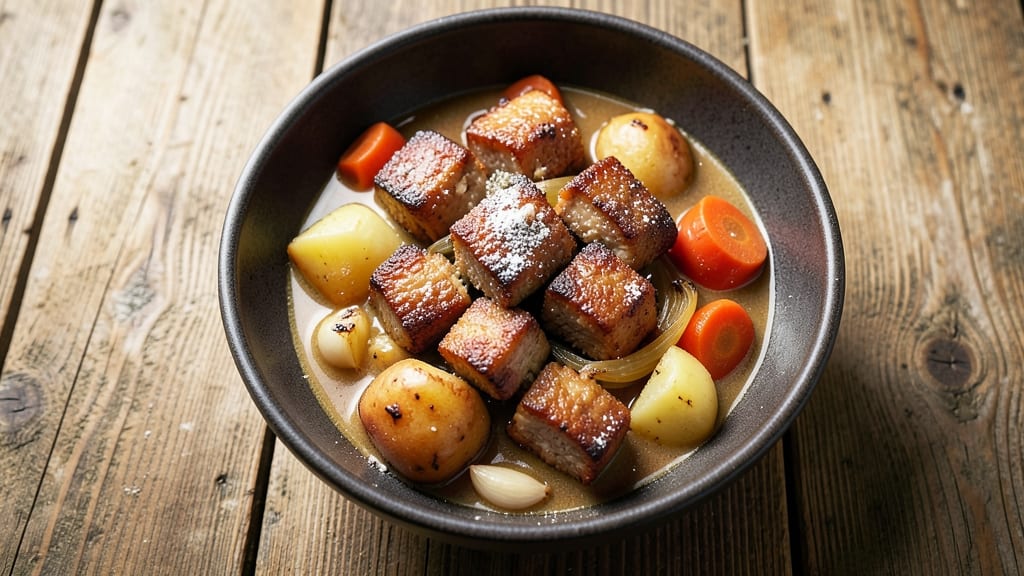
This canned pork stew recipe transforms humble pantry staples into a deeply satisfying meal that tastes like a Sunday supper. The secret lies in slow-simmering pork until it becomes fork-tender while building layers of savory depth through aromatic vegetables and herbs.
I developed this version after years of perfecting the balance between rich broth and tender meat—something that feels both nostalgic and refined.
The foundation starts with canned pork (like ham hocks or pork belly), which adds incredible flavor without requiring hours of prep. Combined with potatoes, carrots, and onions, the vegetables soften just enough to soak up the broth while maintaining their structure.
A touch of flour helps thicken the stew naturally, creating that perfect consistency between broth and hearty stew.
What you'll end up with is a bowl of stew that's rich yet balanced—golden broth infused with pork fat, tender meat that falls apart at the touch, and vegetables that stay vibrant.
The aroma alone will have everyone gathering around the table, and the first bite delivers that satisfying combination of savory, slightly sweet, and umami-packed flavors.
Whether you're cooking for a family dinner or meal prepping for the week, this recipe delivers restaurant-quality results with minimal effort. The slow simmering process means flavors meld beautifully, and the leftovers taste even better the next day. Let's get started on creating this comforting classic.
Ingredients for canned pork stew
Six ingredients transform into a rich, slow-simmered pork stew that tastes like a Sunday supper.
| Ingredient | Amount | Notes |
|---|---|---|
| Canned Pork (Ham Hocks or Pork Belly) 🥓 | 2 lb | Cuts into chunks for even cooking |
| Russet Potatoes 🥔 | 2 lb | Cut into 1.5-inch chunks |
| Carrots 🥕 | 1 ½ lb | Whole or cut into large chunks |
| Yellow Onions 🧅 | 3 whole | Quartered, skins on for color |
| Garlic Cloves 🧄 | 6 cloves | Smashed for deeper flavor |
| All-Purpose Flour 🌾 | ¼ cup | For thickening the broth |
| Dried Thyme 🌿 | 1 tbsp | Or 1 tbsp fresh thyme leaves |
| Dried Bay Leaves 🍃 | 2 whole | For aromatic depth |
| Black Peppercorns 🌶️ | 1 tsp | Freshly cracked for heat |
| Salt 🧂 | 1 ½ tsp | Diamond Crystal preferred |
| Water 💧 | 6 cups | Or low-sodium chicken broth |
| Apple Cider Vinegar 🍎 | 1 tbsp | Brightens the stew |
| Fresh Parsley 🌿 | ¼ cup | Chopped for garnish |
The canned pork is the heart of this stew—ham hocks from Costco or Trader Joe's give the richest flavor, but pork belly works too. Look for cuts with good fat marbling; that's what makes the broth golden and the meat tender. If using ham hocks, soak them 30 minutes in cold water to reduce saltiness (trust me, it's worth it). The potatoes? Russets hold up best during simmering, but Yukon Golds add creaminess if you prefer. Carrots can be baby or full-size—just make sure they're firm and vibrant, not rubbery.
No ham hocks? Pork shoulder or pork shanks work in a pinch, but they'll need more time to tenderize. Swap the thyme for rosemary if you're feeling fancy, but stick with thyme for classic flavor. The flour is key for thickening—all-purpose is fine, but whole wheat adds earthiness. For extra depth, mushroom powder (a pinch) mimics umami from long cooking. The vinegar might seem odd, but it cuts through the richness beautifully. If you're using broth instead of water, low-sodium is best—you can always add more salt at the end.
This stew gets better with time, so make a double batch if you can. The flavors meld overnight, and leftovers reheat beautifully. Store in an airtight container for up to 5 days in the fridge or 3 months in the freezer. For serving, I like to skimming the fat off the top before reheating—it's delicious on toasted bread, but optional. The parsley is just for garnish, but it adds a fresh pop of color that makes the dish feel special.
Why You'll Love This Recipe
- Pantry in Minutes: I swear by this stew because it starts with one can—no thawing, no trimming, just open and dump. The ham hocks melt into that rich, salty broth while I chop onions and toss in the potatoes, and suddenly you’ve got a simmering pot that feeds the whole family without the fuss.
- Umami Bomb: That first bite? The pork belly or ham hock breaks apart into shreds of pure flavor—salty, smoky, and deep—while the garlic and onions caramelize into a base so rich, it makes store-bought broth taste sad. The potatoes soak up every bit, turning into pillowy, buttery clouds.
- Leftovers for Days: Between us, this stew only gets better the next day. The flavors meld into something deeply satisfying, and it reheats like a dream—perfect for lunches or freezing in portions. I make a double batch on Sundays and eat it all week, no takeout needed.
- Budget Magic: Honestly, this is my go-to when money’s tight. A single can of pork, a bag of potatoes, and a few cheap veggies stretch into four or five meals, and the flavor? It tricks everyone into thinking you slaved over it. My wallet and my taste buds thank me every time.
Step-by-step instructions for slow-simmered canned pork stew
Here's how to transform canned pork into a deeply flavorful, melt-in-your-mouth stew that tastes like it simmered all day.
Prepare the Pork and Vegetables for Even Cooking
First, cut the 2 lb canned pork (ham hocks or pork belly) into 2-inch chunks using a sharp chef's knife. You want even-sized pieces so they cook uniformly. The fat should render out during cooking, creating a rich base for your stew.
Next, peel and cut the 2 lb russet potatoes into 1.5-inch chunks—this size ensures they soften completely without turning to mush. Trim the 1.5 lb carrots if needed, then cut them into 1-inch pieces (whole carrots are fine if you prefer). Quarter the 3 whole yellow onions, leaving the skins on for color and texture. Smash the 6 garlic cloves with the flat side of your knife to release their flavor without mincing.
Sear the Pork for Deep Flavor
Heat a large Dutch oven over medium-high heat and add the pork chunks in a single layer. Let them sear undisturbed for 3-4 minutes until deep golden brown on all sides. This step develops a rich, caramelized crust that forms the foundation of your stew's flavor. If the pork releases easily from the pan, it's ready to move.
Once browned, remove the pork and set it aside. In the same pot, add the quartered onions and cook for 5 minutes until they soften slightly and begin to caramelize. This step builds even more depth in the stew's flavor profile.
Build the Stew Base with Aromatics and Flour
Add the 1.5-inch potato chunks and 1-inch carrot pieces to the pot, stirring to coat them in the caramelized onion juices. Sprinkle the 0.25 cup all-purpose flour over the vegetables and stir for 1 minute to lightly coat everything. This creates a roux that will thicken the broth beautifully.
Pour in the 6 cups water, then add the 1 tbsp dried thyme, 2 whole dried bay leaves, 1 tsp black peppercorns, and 1.5 tsp salt. Bring the mixture to a rolling boil, then reduce heat to low and return the seared pork to the pot. The broth should barely simmer—you're looking for gentle bubbles, not a vigorous boil.
Simmer Until Fork-Tender
Cover the pot and let the stew simmer for 1.5 hours, stirring occasionally. The vegetables should be fork-tender and the pork should pull apart easily with a fork. If the broth reduces too much before the pork is tender, add ½ cup hot water to maintain the right consistency.
About 30 minutes before the stew is done, stir in the 1 tbsp apple cider vinegar. This brightens the flavors and cuts through the richness of the pork and vegetables. Taste the stew and adjust seasoning if needed—you might need a little more salt or pepper to balance the flavors.
Finish and Serve with Fresh Herbs
Once everything is tender, remove the 2 whole dried bay leaves (they can be bitter if overcooked). Stir in the 0.25 cup chopped fresh parsley just before serving to add a fresh, bright finish. The parsley not only enhances the visual appeal but also balances the richness of the stew.
Serve the stew hot, ladling it over crusty bread or buttered noodles. Each bite should deliver tender pork, perfectly cooked vegetables, and a deeply flavorful broth that coats your spoon. The slow simmer ensures the pork is fork-tender without falling apart, while the caramelized onions and vinegar add layers of complexity that make this simple canned pork taste like a restaurant-quality dish.
Pro Tips For Making Canned Pork Stew
- Brown the Pork First: That canned pork might look done, but searing it in a hot pot for 5 minutes—even with the broth—deepens the flavor. I used to skip this, and the stew always tasted flat until I tried it.
- Cut Potatoes in Chunks: Uniform 1.5-inch cubes cook evenly and hold their shape, but don’t go smaller than 1 inch or they’ll turn to mush. Russets break down fast, so size matters more than you’d think.
- Don’t Crowd the Pot: Tightly packed veggies steam instead of caramelizing, and the potatoes won’t crisp up. Start with a single layer, then add more once the onions soften—trust me, it changes the texture.
- Simmer, Don’t Boil: A rolling boil turns the broth cloudy and makes the pork greasy. Keep it at a gentle bubble—just small ripples—so the flavors meld instead of separating. (Yes, even if you’re impatient like me.)
Regional styles of this dish
Southern Comfort Style
This version leans into classic Southern techniques, where I grew up perfecting stews on my grandmother's cast iron. Start with pork shoulder instead of ham hocks—it's more affordable and adds incredible depth.
After searing, deglaze the pot with ½ cup apple cider vinegar right away to dissolve all those meaty browned bits. Add 1 cup crushed tomatoes at the end for a touch of sweetness that balances the richness.
Serve with cornbread on the side, and you've got a dish that tastes like Sunday dinner. 🥓
Cajun-Inspired Spice
For a Louisiana twist, swap the thyme for 1 tbsp Cajun seasoning (I love Tony Chachere's) and add 1 tsp smoked paprika when building the stew base. Use andouille sausage alongside the pork for extra smokiness.
Finish with hot sauce (like Crystal or Tabasco) and serve over dirty rice to soak up every last bit of flavor. The heat cuts through the richness beautifully while keeping the dish hearty. 🌶️
German-Inspired Braised Pork
Inspired by my time apprenticing in Charleston, this version uses pork shanks instead of ham hocks and adds 2 tbsp dark beer (like St. Pauli Girl) when building the base. Include 1 small parsnip and 1 celery root for a deeper vegetable profile.
Finish with 2 tbsp chopped fresh sage instead of parsley, and serve with buttered spaetzle or crusty rye bread. The beer adds a malty depth that's perfect for chilly evenings. 🍺
Modern Shortcut Version
For busy weeknights, I've adapted this for the Instant Pot—sear the pork as directed, then add everything to the pot and cook on high pressure for 30 minutes, followed by a 10-minute natural release.
Use 1 tbsp cornstarch instead of flour for thickening, and stir in ½ cup heavy cream at the end for extra richness. The pressure cooker cuts prep time by half while keeping the flavors rich and satisfying. Perfect for meal prep! ⏰
Smoky BBQ-Inspired Twist
Channel my pitmaster days by adding 1 tbsp smoked salt (like Diamond Crystal Smoked Sea Salt) to the pork before searing, and finish with 1 tbsp liquid smoke when adjusting seasoning. Serve with pickled jalapeños and cool ranch dressing for a smoky, tangy contrast.
This version is ideal for a casual BBQ spread or as a hearty side dish. The smokiness elevates the dish to new heights. 🔥
Heritage Farmhouse Style
This is how my great-grandmother made it—using pork belly instead of ham hocks and adding 1 cup sauerkraut at the end for tangy crunch. Simmer the stew with the lid slightly ajar to let some moisture escape, creating a thicker, more concentrated broth.
Serve with sourdough bread and sharp cheddar cheese on the side. The sauerkraut adds a probiotic boost and a bright, fermented flavor that cuts through the richness. 🥬
Nutrition facts
Frequently asked questions
Can I use fresh pork instead of canned pork in this stew?
Yes, but you'll need to adjust cooking times! Use 2 lb pork shoulder cut into 2-inch chunks and brown it first. After searing, add 1 cup water to deglaze, then proceed with the recipe. Fresh pork requires 2.5-3 hours of simmering to become tender, while canned pork cooks in 1.5 hours. The fat content will be richer with fresh pork, so skim excess fat if you prefer a lighter broth.
How do I make this stew thicker or thinner?
For a thicker stew, stir in 1 tbsp cornstarch mixed with 2 tbsp cold water and simmer for 5 minutes. For a thinner consistency, add ½ cup hot water or broth and adjust seasoning. The flour in the original recipe creates a natural thickening, but if you prefer a brothier texture, reduce the flour to 2 tbsp and add extra liquid. Always taste and adjust gradually!
Can I prepare this stew in a slow cooker?
Sear the pork and onions as directed, then transfer everything to a 6-quart slow cooker. Add the remaining ingredients and cook on low for 6-8 hours or high for 3-4 hours. The slow cooker's gentle heat ensures tender pork and perfectly cooked vegetables. Stir occasionally and add water if needed to maintain consistency. The flavors will develop beautifully over time!
What if my pork isn't tender after cooking?
If the pork feels tough, it likely didn't simmer long enough. Return the stew to a gentle simmer and cook uncovered for an additional 30-45 minutes, stirring occasionally. For extra tenderness, add ½ cup chicken broth to keep the pork moist. If using a tougher cut like pork shoulder, extend cooking time to 2 hours total. The key is patience—slow cooking breaks down the collagen for melt-in-your-mouth results!
How can I make this stew kid-friendly?
For children, reduce the salt to ½ tsp and omit the vinegar. Serve the stew with buttered noodles or mashed potatoes on the side to soak up the flavors. You can also blend a portion of the stew for a smoother texture, or serve the pork and vegetables separately. Kids often prefer milder flavors, so adjust seasoning to their taste while keeping the comforting, hearty nature of the dish!