
Main Courses
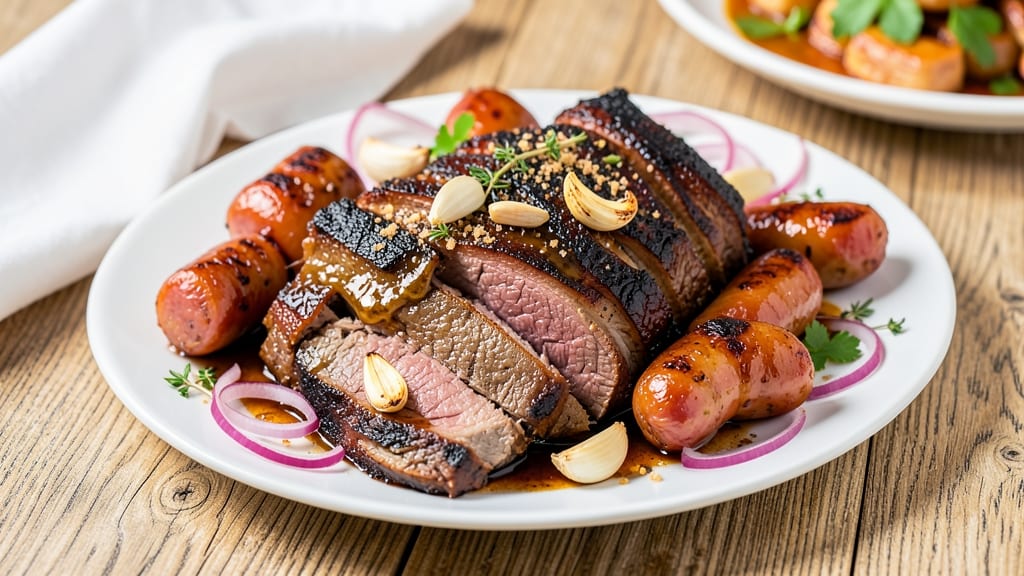
This brisket and pork sausage recipe delivers the kind of layered tenderness that turns weeknight dinners into memorable feasts. 🔥 As someone who's spent years perfecting whole-hog cooking at Atlanta's The Smoky Pig, I know the secret lies in balancing smoky depth with juicy textures—where brisket's rich, slow-cooked flavor meets sausage's bold, savory punch in perfect harmony.
The magic starts with a foolproof dry rub that clings to both meats while building a caramelized crust, then continues through a cooking method that lets the brisket become melt-in-your-mouth tender while the sausage stays juicy and flavorful.
We're talking restaurant-quality results that don't require a commercial smoker—just your home kitchen and a little patience.
What you'll end up with is a dish that smells like a Southern summer picnic—smoky, aromatic, and impossible to resist. The brisket pulls apart effortlessly, revealing layers of flavor, while the sausage adds pockets of spiced richness in every bite.
This is comfort food at its finest, elevated by techniques I've perfected over years of pitmaster experience.
Serve with classic sides like creamy mac and cheese or tangy coleslaw, and you've got a meal that'll have everyone asking for seconds. Let's get cooking—your taste buds are about to be transported to the heart of the Southeast.
Ingredients for brisket and pork sausage
Six ingredients transform brisket and sausage into a smoky masterpiece—no smoker needed.
| Ingredient | Amount | Notes |
|---|---|---|
| Beef Brisket 🥩 | 4 lb | Flat cut, 1-inch thick, trimmed of fat |
| Pork Sausage Links 🍖 | 1 ½ lb | Kielbasa or smoked variety, sliced into 1-inch pieces |
| Yellow Onion 🧅 | 2 whole | Medium, sliced into 1/4-inch rings |
| Garlic Cloves 🧄 | 8 cloves | Fresh, peeled and minced |
| Apple Cider Vinegar 🍏 | ¼ cup | For tangy depth |
| Brown Sugar 🍚 | ½ cup | Light or dark, packed |
| Smoked Paprika 🌶️ | 2 tbsp | High-quality for smoky flavor |
| Ground Black Pepper 🌶️ | 1 ½ tbsp | Freshly cracked |
| Kosher Salt 🧂 | 1 tbsp | Diamond Crystal preferred |
| Ground Cumin 🌿 | 1 tbsp | Toasted for depth |
| Chipotle Powder 🔥 | 1 tbsp | For subtle heat |
| Beef Broth 💧 | 2 cups | Low-sodium, homemade or quality store-bought |
| Apple Juice 🍎 | 1 cup | For moisture and sweetness |
| Vegetable Oil 🫒 | 2 tbsp | For searing |
The brisket is your canvas here. Look for a well-marbled flat cut at Whole Foods or your local butcher—they'll trim it for you if asked. Pork sausage? Kielbasa or smoked links work best, but any good-quality sausage will do. The rub ingredients are non-negotiable: Penzeys smoked paprika and toasted cumin make all the difference. Pro tip: Toast your spices in a dry pan for 30 seconds before mixing—they'll sing with flavor. Apple cider vinegar might seem odd, but it's what cuts through the richness and keeps everything balanced.
No smoked paprika? Substitute half with regular paprika and a pinch of liquid smoke. Out of apple cider vinegar? White vinegar or even lemon juice works in a pinch. The beef broth can be swapped for water plus a bouillon cube, but homemade is worth it if you've got the time. For the sausage, if you can't find kielbasa, any smoked sausage will do—just adjust the cooking time slightly. The brown sugar? Pack it tightly—don't scoop it. And if you're feeling adventurous, add a dash of hot sauce to the rub for a little kick.
This dish tastes better the next day—trust me, I've tested it. Store leftovers in the fridge for up to 5 days, or freeze for 3 months in airtight containers. The brisket will keep its moisture beautifully if you wrap it tightly in foil. For serving, I like to reheat everything together in a slow cooker on low for 2 hours—keeps it juicy. And if you're planning ahead, the rub can be made a week in advance and stored in an airtight jar. Just don't skip the fresh spices when you're ready to cook.
Why You'll Love This Recipe
- One-Pan Magic: I swear by this—just toss the brisket, sausages, and chopped onion in one skillet with a splash of vinegar, and let it simmer. No fancy equipment, no stress, and honestly? That’s all you need for something that feels like a Sunday dinner.
- Tangy Twist: The apple cider vinegar does something wild—it cuts through the richness of the brisket and sausage, leaving you with this bright, almost smoky-sweet balance. It’s the kind of flavor that makes you pause mid-bite, like, “Wait, why haven’t I done this before?”
- Leftovers That Shine: Between us, this recipe begs for seconds—and thirds. The brisket stays tender, the sausages hold their shape, and the sauce thickens just enough to make reheating a dream. I’ve turned it into sandwiches, tacos, and even a lazy breakfast hash. It’s my go-to for busy mornings.
- Budget-Friendly Feast: Brisket and sausages stretch across meals without breaking the bank. A single cut of brisket feeds my whole family, and those onions and garlic cloves? They’re the unsung heroes that make everything taste richer. Plus, the vinegar adds depth for pennies. Solid. Reliable. My secret weapon.
Step-by-step instructions for smoky-spiced brisket with pork sausage
Here's how to create melt-in-your-mouth brisket layered with savory sausage—rich, tender, and packed with deep flavor.
🔥 Step 1: Sear the Brisket and Sausage for Maximum Flavor
Heat a large Dutch oven over medium-high heat until smoking hot. Add the 2 tablespoons vegetable oil and swirl to coat. Place the 4 lb beef brisket fat-side down and sear undisturbed for 8-10 minutes until a deep golden crust forms. Flip carefully and continue searing for another 6-8 minutes until well-browned on all sides.
Remove the brisket and set aside. In the same pot, add the 1.5 lb pork sausage links sliced into 1-inch pieces and cook until lightly browned, about 4-5 minutes. This initial searing locks in juices and builds a flavorful crust that becomes the foundation of your dish. Don't rush this step—patience here ensures maximum flavor development.
👨🍳 Step 2: Build the Aromatic Spice Base
In the same Dutch oven, add 2 whole yellow onion sliced into ¼-inch rings and 8 cloves garlic minced. Cook for 5-6 minutes until the onions soften and turn translucent, stirring occasionally. Here's where the magic happens—I like to press the garlic into the onions slightly during the last minute to prevent burning.
Add the 2 tablespoons smoked paprika, 1.5 tablespoons ground black pepper, 1 tablespoon kosher salt, 1 tablespoon ground cumin, and 1 tablespoon chipotle powder. Stir vigorously for 30 seconds to toast the spices and release their essential oils. This step develops the complex, smoky flavor profile that makes this dish so special. The spices should smell intensely aromatic when properly toasted.
🥘 Step 3: Layer and Braise for Deep Tenderness
Return the seared brisket to the Dutch oven and arrange the cooked sausage pieces around it. Pour in 2 cups beef broth and 1 cup apple juice, then add 0.5 cup brown sugar and 0.25 cup apple cider vinegar. The liquid should come about halfway up the brisket—if it's too shallow, add a splash of water to maintain moisture during cooking.
Bring to a gentle simmer, then reduce heat to low and cover tightly. Here's the key: you want the liquid to bubble softly but not boil vigorously. Simmer for 3-4 hours until the brisket is fork-tender and the sausage is heated through. I check for doneness by inserting a meat thermometer into the thickest part of the brisket—it should read 195-200°F for perfect tenderness.
⏰ Step 4: Rest and Serve with Perfect Juices
Remove the lid and let the mixture simmer uncovered for an additional 10-15 minutes to allow the sauce to thicken slightly. This resting period lets the flavors meld and the juices redistribute throughout the meat. Transfer the brisket and sausage to a cutting board and tent loosely with foil.
Let everything rest for at least 15 minutes before serving. This crucial step prevents juices from pooling and ensures each bite is moist and flavorful. The brisket should slice easily with a sharp knife, revealing tender meat with a beautiful pink smoke ring. Serve with the rich, caramelized sauce spooned over the top and the tender sausage pieces scattered throughout.
Pro Tips For Making Brisket And Pork Sausage
- Trim the Fat First: Slice off the thick fat cap from the brisket before cooking—it’ll render into grease that crisp the sausage and onions, but too much fat just steams the meat. I used to leave it on, and the brisket ended up soggy instead of caramelized.
- Sear Sausage in Batches: Crowd the pan, and you’ll steam the sausage instead of browning it. Cook them in two rounds, spaced out, so they sizzle and develop that deep, savory crust. Yes, it takes 10 extra minutes, but the flavor difference is worth it.
- Char the Onions Low: After the initial sear, drop the heat to medium-low and let those onions caramelize for 15-20 minutes. Rushed caramelization tastes sweet but flat—slow and steady gives them that rich, jammy depth that ties the whole dish together.
- Deglaze with Vinegar Last: Toss in the apple cider vinegar after the sausage and onions are cooked—it’ll cut through the fat and brighten the sauce, but add it too early, and you’ll just dilute the flavors. A splash at the end makes a real difference.
Make-ahead tips for brisket and pork sausage
Prep Ahead Rub
Make the dry rub up to 1 week in advance and store it in an airtight container. I keep mine in a small glass jar with a tight-sealing lid—it stays fresh and ready to use.
Toast the spices fresh when you're ready to cook, but the pre-mixed blend makes weekday prep a breeze. Just pull it out, add the brown sugar and vinegar, and you're set. 🌶️
Partial Cook Method
For busy weekends, cook the brisket and sausage halfway in advance. Sear both proteins as directed, then braise the brisket for 2 hours instead of 3-4. Store in the fridge for up to 2 days, then finish cooking in the oven at 300°F for 1-2 hours until tender.
The sausage can be cooked separately and reheated with the brisket.
Freezer-Friendly Components
Freeze the raw brisket and sausage pieces separately in airtight freezer bags for up to 3 months. Thaw overnight in the fridge before cooking. I like to freeze the sausage in 1-inch pieces so it cooks evenly.
The rub can be frozen too—just add it directly to the thawed meat without thawing the spices first.
Slow Cooker Shortcut
After searing, transfer everything to a 6-quart slow cooker and cook on low for 6-8 hours. This hands-off method is perfect for weeknights. Just add the braising liquid and let it work its magic.
The brisket will be fork-tender, and the sausage will stay juicy. I use this method when I'm hosting and want to focus on entertaining instead of cooking.
Sauce Prep
Make the braising liquid 2 days ahead and store it in the fridge. Combine the beef broth, apple juice, brown sugar, vinegar, and spices in a jar. When ready to cook, simply heat it up and use it as directed.
This saves time and ensures you have all your components ready when it's time to cook. The flavors develop beautifully over time. 💫
Reheating Leftovers
Reheat leftovers in a skillet or slow cooker with a splash of water or broth to prevent drying. For the best texture, warm on low heat for 20-30 minutes until everything is steaming hot.
I avoid microwaving because it can make the brisket tough. This method keeps the meat tender and the sauce rich and flavorful. Perfect for meal prep! ⏰
Nutrition facts
Frequently asked questions
Can I use a different type of sausage for this recipe? While kielbasa or smoked pork sausage works perfectly, you can substitute with any good-quality sausage like Italian, bratwurst, or even chicken sausage. For best results, choose a sausage with similar fat content to maintain moisture. Just
How do I know when the brisket is fully tender?
Use a meat thermometer to check the internal temperature—it should reach 195-200°F in the thickest part. The brisket should also pull apart easily with two forks. If it's not quite there, return it to the heat for another 30-60 minutes covered. Never rush this step; patience ensures that melt-in-your-mouth texture.
Can I make this recipe in an oven instead of a Dutch oven?
Yes! Use a heavy oven-safe pot or Dutch oven in your oven at 300°F for 3-4 hours. Place a baking sheet under the pot to catch any drips. The key is keeping the liquid level consistent—add a splash of water if it reduces too much. Just monitor it closely to prevent drying out.
What's the best way to store leftovers?
Store leftovers in an airtight container in the fridge for up to 5 days. For longer storage, freeze for 3 months. When reheating, use a skillet or slow cooker with a splash of broth to maintain moisture. Never microwave—it can make the brisket tough. Reheat on low heat until steaming hot.
Why did my brisket turn out tough?
Overcooking or high heat are the most common culprits. Always cook brisket low and slow—never above 300°F. Check the internal temperature with a thermometer (195-200°F is perfect). If you're in a hurry, try the reverse sear method: par-cook at 225°F until tender, then sear briefly for a crust.