
Main Courses
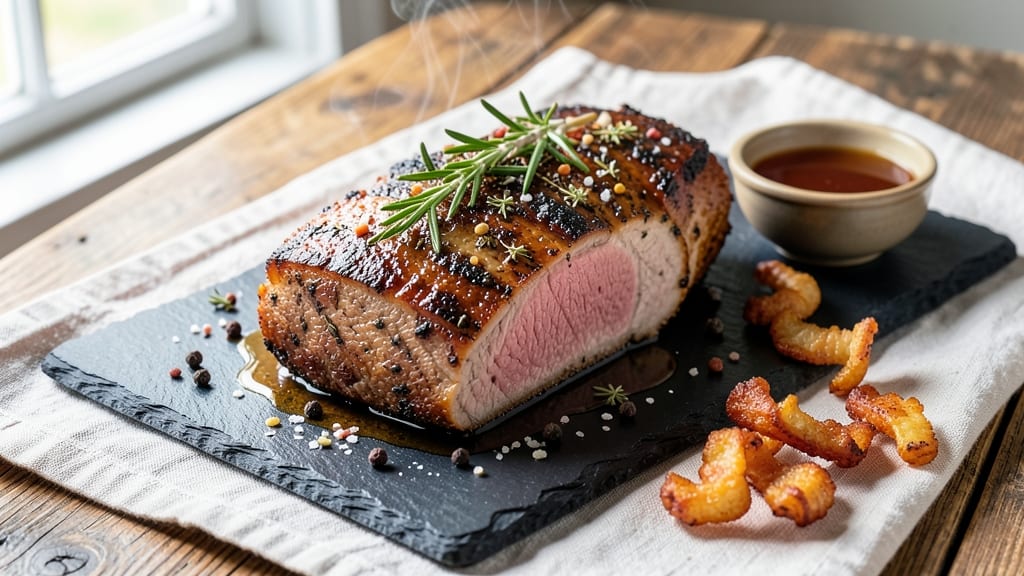
This brined pork loin recipe transforms a simple cut into a showstopper with herb-infused crisp bark and an impossibly juicy core. After years of perfecting the technique—first in Charleston kitchens, then at The Smoky Pig—I’ve cracked the code for restaurant-quality pork without the fuss.
The secret? A 24-hour brine that ensures every bite stays tender while developing that coveted mahogany crust.
What sets this apart is the balance of simplicity and precision: no fancy equipment, just a foolproof brine (water, salt, sugar, and fresh herbs) and a high-heat roast that locks in moisture.
The herbs—rosemary, thyme, and black pepper—infuse the meat as it brines, creating layers of flavor that build with each bite. And the result? Pork so tender it nearly melts in your mouth, with a crisp exterior that holds up to even the most enthusiastic slicing.
By the time you carve into this pork loin, you’ll understand why it’s become my go-to centerpiece for family dinners and holiday tables. The resting time is just as critical as the cooking—letting the juices redistribute ensures that first slice is as impressive as the last.
Serve with a red wine reduction or a herb butter, and you’ve got a main course that feels like a celebration, no matter the occasion.
This method works for roasting, grilling, or pan-searing, so adapt it to your preferred cooking style. The key is patience—the brine does the heavy lifting, while the high heat delivers that perfectly golden crust we all crave.
Trust me, once you try this, you’ll never settle for unbrined pork again.
Ingredients for brined pork loin
Six ingredients transform ordinary pork into a showstopping centerpiece with mahogany crust and melt-in-your-mouth tenderness.
| Ingredient | Amount | Notes |
|---|---|---|
| Pork Loin Roast 🥩 | 4 lb | Center-cut, bone-in preferred |
| Kosher Salt 🧂 | 1 ½ cups | Diamond Crystal preferred |
| Granulated Sugar 🍚 | ½ cup | White or brown sugar |
| Fresh Rosemary 🌿 | ⅓ cup | Stems removed, finely chopped |
| Fresh Thyme 🌿 | ¼ cup | Leaves only, no stems |
| Black Peppercorns 🌶️ | 2 tbsp | Freshly cracked, not ground |
| Garlic Cloves 🧄 | 6 cloves | Smash lightly, no peeling |
| Cold Water 💧 | 4 cups | Filtered preferred |
| Extra-Virgin Olive Oil 🫒 | 2 tbsp | For finishing crust |
| Unsalted Butter 🧈 | ½ cup | Cold, cubed |
| Fresh Parsley 🌿 | ¼ cup | Chopped, for garnish |
The pork loin is non-negotiable here—center-cut, bone-in delivers the best flavor and moisture. Whole Foods or local butchers carry the highest-quality cuts, but even the supermarket's pre-packaged loin works if you trim excess fat. Rosemary and thyme should be fresh from the market—dried herbs just can't match the aromatic punch. For salt, Diamond Crystal dissolves slower, creating a more even brine. If you can't find it, Morton kosher salt is a decent substitute, but you'll need to reduce the amount slightly since it's finer. The garlic? Smash those cloves—it releases more flavor into the brine without turning bitter.
No fresh rosemary? Dried at one-third the amount works in a pinch, though it won't have the same depth. Running out of thyme? Oregano or marjoram can stand in, but reduce to half the quantity. The olive oil is purely for finishing—any good-quality EVOO will do, but avoid the cheap stuff that tastes like soap. For the butter, European-style (like Plugrá) has higher fat content, which gives a better crust. If you're grilling instead of roasting, skip the butter entirely and just use the olive oil. The sugar in the brine isn't for sweetness—it helps create that mahogany crust while keeping the meat tender.
Brine the pork for exactly 24 hours—no less, no more. Use a non-reactive container (glass or food-grade plastic) and keep it refrigerated. The pork will absorb the liquid, so don't be alarmed when it looks like a soggy brick. When ready to cook, pat it dry with paper towels—this step is critical for that crisp bark. Leftovers? This pork reheats beautifully—350°F for 15 minutes wrapped in foil, then crisp again under the broiler. Store cooked pork in the fridge for 3-4 days or freeze for up to 3 months. The crust gets softer when reheated, so always plan to finish it under the broiler if serving again.
Why You'll Love This Recipe
- Two-Ingredient Secret: Honestly, the brining is where the magic happens—just salt and sugar, no fuss. Toss the pork in that mix overnight, and it stays juicy even when I forget to baste it. (Yes, that’s happened.)
- Herb-Crusted Magic: That rosemary and thyme? They stick to the outside like a fragrant hug after roasting. The sugar in the brine caramelizes just enough to give it this subtle, sweet-savory edge—like a fancy restaurant bite at home.
- Leftovers That Shine: I swear by this for sandwiches the next day—thinly sliced, piled high with mustard and pickles. Or chop it for stir-fries later in the week. The flavor only gets better as it sits, not worse like some other roasts.
- Weeknight Hero: Between us, this is my go-to when I’m too tired to fuss. Toss it in the fridge before bed, pop it in the oven at lunch, and dinner’s ready. No chopping, no stress—just a perfectly seasoned, tender roast that feels like a reward.
Step-by-step instructions for brined pork loin with herb-infused crispy bark
This method guarantees a perfectly juicy pork loin with a deep, aromatic crust every time.
Prepare the Herb Brine Mixture
In a large, non-reactive container (I use a food-safe plastic bin), combine the 4 cups cold water, 1.5 cups kosher salt, and 0.5 cup granulated sugar. Stir until completely dissolved—this creates the brine foundation. The salt should fully integrate, leaving no grainy residue at the bottom.
Next, add the 0.33 cup fresh rosemary, 0.25 cup fresh thyme, 6 lightly smashed garlic cloves, and 2 tablespoons freshly cracked black peppercorns. Give it a thorough stir, ensuring the herbs are evenly distributed throughout the liquid. This infusion will penetrate the pork, creating that signature herbaceous depth we're after. Let the mixture sit for 10 minutes to allow the aromatics to steep.
Submerge the Pork Loin in the Brine
Place the 4 lb pork loin roast in the brine mixture, ensuring it's completely submerged. If needed, weigh it down with a plate or small bowl to keep it fully immersed. This step is crucial for even flavor distribution and moisture retention throughout the meat.
Cover the container and refrigerate for 12-24 hours, turning the pork occasionally to ensure all sides absorb the brine evenly. The longer it brines, the more flavorful and tender the result, but 12 hours minimum guarantees excellent penetration. I like to start this process in the morning so it's ready by dinner time.
Prep the Roast for Cooking
After brining, remove the pork from the liquid and pat it dry thoroughly with paper towels. This drying step is non-negotiable—it creates that perfect crisp bark we're aiming for. I like to do this 1-2 hours before cooking to allow any surface moisture to evaporate completely.
Preheat your oven to 325°F. While it heats, prepare a roasting pan by lining it with aluminum foil. Place the dried pork loin on the rack in the pan, fat-side up. This elevated position allows heat to circulate around all sides, promoting even cooking and that coveted crisp exterior.
Roast with Butter and Oil for Crispy Bark
Once the oven reaches temperature, remove the pork from the pan and rub it generously with 2 tablespoons extra-virgin olive oil and 0.5 cup cold cubed unsalted butter. This combination creates a luxurious crust while keeping the meat moist. Return the pork to the roasting pan and place it in the oven.
Roast for 45-60 minutes until the internal temperature reaches 145°F for medium-rare (use a meat thermometer for accuracy). The exterior should develop a deep golden-brown crust with some caramelization. If you notice the crust forming too quickly, tent the pork loosely with foil to prevent over-browning while it continues cooking through.
Rest and Garnish for Maximum Juiciness
Remove the pork from the oven and transfer it to a cutting board. Let it rest for 15-20 minutes before slicing—this crucial resting period allows the juices to redistribute throughout the meat, ensuring each slice remains succulent. I know it's tempting to cut into it immediately, but trust me on this step.
While resting, prepare your serving platter by sprinkling with 0.25 cup chopped fresh parsley. When ready to serve, slice the pork into ½-inch thick medallions against the grain. The result should be a beautifully browned exterior with a pink, juicy interior that practically melts in your mouth. Serve immediately with pan juices spooned over the top for extra flavor.
Pro Tips For Making Brined Pork Loin
- BRINE AT ROOM TEMP: Take that pork loin out of the fridge 2 hours before brining—cold meat absorbs brine unevenly and stays tough. I learned this the hard way when my first batch turned out dry despite perfect seasoning.
- SALT THE BRINE HEAVY: Use ¾ cup kosher salt per gallon of water, not the "lightly salted" version you see online. The sugar (¼ cup per gallon) needs that salt to dissolve properly, and your pork deserves the full flavor punch.
- SEAR IN BATCHES: Crowd that skillet? Your pork will steam instead of sear. Work in 2-3 batches over medium-high heat for 3-4 minutes per side—golden crust happens with patience, not speed.
- REST UNDER FOIL: After roasting, tent that pork with foil and let it sit for 15 minutes. Skipping this step means dry slices, and nobody wants that—especially when you’ve put in all the brining work.
Dietary considerations for this brined pork loin
Gluten-Free Adaptation
This recipe is naturally gluten-free since we're using fresh herbs, salt, sugar, and pork loin. The only potential concern is cross-contamination if you use shared equipment or utensils. I always recommend using a dedicated cutting board and knife for gluten-free prep.
For extra safety, rinse all tools with hot water before and after handling the pork. 🌱
Low-Sodium Options
If you're watching your sodium intake, reduce the kosher salt in the brine to 1 cup instead of 1.5 cups. The sugar still helps create that mahogany crust while keeping the meat tender.
You can also use a low-sodium soy sauce substitute (like Coconut Aminos) in place of half the salt if you want additional umami flavor without extra sodium. 💡
Dairy-Free Modification
Skip the butter entirely and use an extra 1 tablespoon of olive oil when searing the pork. The olive oil will still create a beautiful crust, though it might be slightly less rich.
For additional flavor, add 1 teaspoon of smoked paprika to the brine mixture. This substitution works beautifully and keeps the dish dairy-free while maintaining that crisp exterior. 🌿
Allergen-Friendly Tips
For nut allergies, this recipe is already safe as written. If you're concerned about herb allergies, swap the rosemary and thyme for fresh sage or marjoram.
Both provide similar earthy notes without the risk of common allergens. Always double-check your ingredients—especially store-bought salt blends or pre-mixed spices that might contain hidden allergens. 💪
Keto-Friendly Adjustments
This recipe fits perfectly into a keto diet since pork loin is naturally low-carb. Just ensure your sugar is a keto-friendly sweetener like erythritol or allulose if you're strict about carbohydrates. The sugar in the brine is minimal (0.5 cup) and primarily for texture, not sweetness.
The herbs and spices add zero carbs, making this a perfect protein-focused meal for low-carb diets. ✨
Nutrition facts
Frequently asked questions
Can I use bone-in or bone-out pork loin for this recipe?
Bone-in pork loin is preferred as it stays more moist during cooking, but bone-out works too. If using bone-out, reduce roasting time by 5-10 minutes since it cooks slightly faster. The bone helps regulate temperature naturally, creating that perfect juicy center. For bone-in, aim for 45-60 minutes at 325°F.
What's the best way to store leftover brined pork loin?
Wrap slices tightly in plastic wrap, then place in an airtight container. Store in the fridge for 3-4 days or freeze for up to 3 months. To reheat, warm in a 350°F oven for 15 minutes wrapped in foil, then finish under the broiler for 2-3 minutes to restore crispness. Never microwave—it turns the meat rubbery!
Can I grill this brined pork loin instead of roasting?
After brining and drying, grill over medium-high heat for 10-12 minutes per side, basting occasionally with olive oil. Use a meat thermometer to check for 145°F internal temp. For extra flavor, add wood chips (hickory or apple) to your grill. The bark will be even crispier than roasted!
Why does my pork look dry after cooking?
This usually happens from one of three things: not resting long enough (15-20 minutes is critical), cutting into it too soon, or overcooking. Always use a thermometer—145°F for medium-rare is perfect. The brine does its job, but proper resting lets those juices redistribute. If it's still dry, try adding a splash of pan juices when reheating.
How do I adjust the brine for a smaller/larger pork loin?
Keep the same ratio: 1 cup kosher salt per 1 gallon water plus ¼ cup sugar. For a 2 lb loin, halve the brine ingredients. For 6+ lbs, double everything. The key is maintaining the salt-to-water ratio—this ensures proper moisture retention regardless of size. Always brine 12-24 hours for best results.