
Main Courses
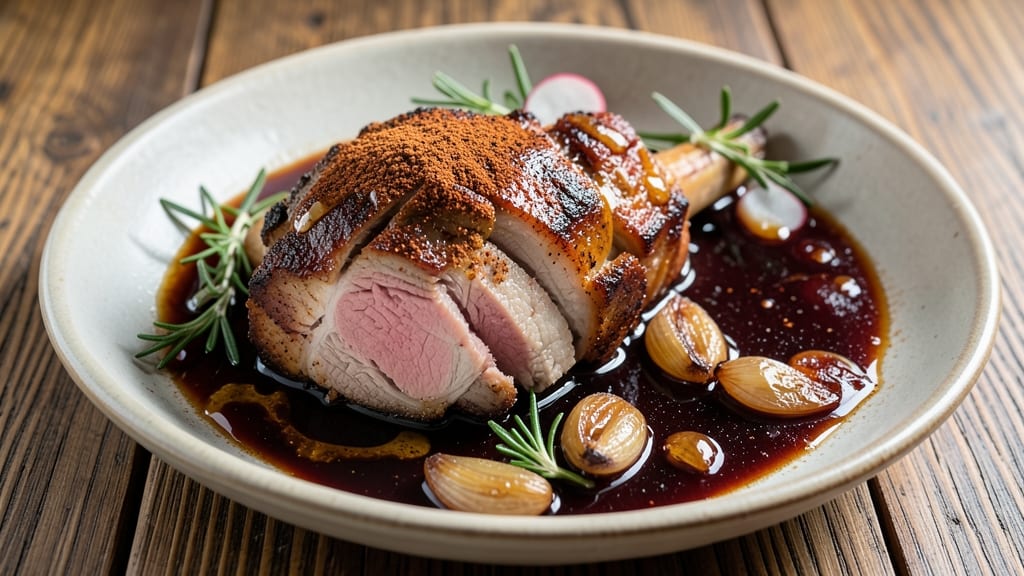
This braised smoked pork shank recipe transforms tough cuts into melt-in-your-mouth perfection through slow-smoking and deep-braising. 🔥 As someone who's smoked 2,000 pounds of pork weekly, I know the secret lies in patience—letting the smoke penetrate while the braising liquid works its magic to tenderize and infuse flavor.
The result? Rich, caramelized edges with succulent meat that practically falls apart at the touch of a fork.
The process begins with a dry rub of smoked paprika, brown sugar, and black pepper, followed by low-and-slow smoking until the exterior develops that signature bark.
Then, the real transformation happens in the Dutch oven, where the shank braises in a blend of apple cider, red wine, and aromatic herbs until the meat is fork-tender and the sauce has thickened into a velvety glaze.
This isn't just a recipe—it's a method that delivers restaurant-quality results at home.
What makes this dish truly special is how the smoky depth from the pit meets the rich complexity of the braising liquid, creating layers of flavor that keep coming. The sauce reduces to a perfect consistency, coating each bite with a balance of sweet, tangy, and savory notes.
Serve it with creamy mashed potatoes or roasted root vegetables to soak up every last drop of that luscious sauce.
This recipe is designed for those who appreciate the art of slow cooking—where time and technique elevate simple ingredients into something extraordinary. Whether you're feeding a crowd or treating yourself to a Sunday supper, the results will have everyone asking for seconds.
Let's get started on creating a dish that's as satisfying to make as it is to eat.
Ingredients for braised smoked pork shank
Fourteen ingredients to create restaurant-quality smoked pork shank with deep, layered flavors.
| Ingredient | Amount | Notes |
|---|---|---|
| Pork Shank 🥩 | 2 lb | Bone-in, 1.5-inch thick slices |
| Smoked Paprika 🌶️ | 2 tbsp | High-quality, smoky flavor |
| Brown Sugar 🍚 | 2 tbsp | Light or dark variety |
| Ground Black Pepper 🌶️ | 1 tbsp | Freshly cracked preferred |
| Apple Cider 🍎 | 1 ½ cups | Unfiltered for depth |
| Red Wine 🍷 | ½ cup | Bold, dry variety |
| Garlic Cloves 🧄 | 4 cloves | Peeled, smashed |
| Fresh Thyme 🌿 | ¼ cup | Leaves only, chopped |
| Fresh Rosemary 🌿 | ¼ cup | Needles only, chopped |
| Tomato Paste 🍅 | 2 tbsp | Smooth, no added salt |
| Olive Oil 🫒 | 1 tbsp | Extra-virgin for richness |
| Beef Broth 🥫 | 1 cup | Low-sodium preferred |
| Salt 🧂 | 1 tsp | Kosher or sea salt |
| Balsamic Vinegar 🍶 | 1 tbsp | Aged for depth |
The pork shank is the foundation—look for cuts with good marbling and visible fat cap for moisture during smoking. Costco or your local butcher often carry them pre-sliced, but if buying whole, ask for 1.5-inch thick slices. Smoked paprika is non-negotiable here; Penzeys or McCormick brands deliver consistent smoky depth. Fresh herbs like thyme and rosemary should be vibrant green with no wilting—Trader Joe's sells them in small bags perfect for this recipe. For the apple cider, unfiltered brands like Woodchuck add natural sweetness and complexity that store-bought versions can't match.
No smoked paprika? Substitute 1 tbsp regular paprika plus 1 tsp liquid smoke—though the flavor won't be identical. Running short on red wine? Substitute beef broth with 1 tbsp balsamic vinegar for tang. Fresh herbs wilt fast? Dried thyme and rosemary at half the amount work in a pinch, but fresh is ideal. The tomato paste can be the squeeze-tube variety from Trader Joe's—no waste, and it keeps for months. For the beef broth, low-sodium is key; Swanson or Pacific Foods organic brands are reliable. If you prefer a sweeter sauce, add an extra 1 tbsp brown sugar during braising.
Store smoked pork shank in the fridge for up to 3 days before smoking—this allows the rub to penetrate deeper. Once smoked, the shank can be refrigerated for 4-5 days or frozen for 3 months. The braising liquid thickens as it cools, so reheat gently on the stove, adding a splash of water if needed. For meal prep, portion the meat and sauce separately—reheat the sauce first, then add the meat to warm through. The sauce freezes beautifully; portion into ice cube trays for easy single-use servings.
Why You'll Love This Recipe
- One-Pot Magic: The pork shank practically braises itself—just sear it, dump in the apple cider and spices, then walk away. Between us, that’s my kind of cooking when I’d rather not stand at the stove for hours.
- Smoky-Sweet Obsession: That smoked paprika and brown sugar combo? It’s like a slow dance of heat and caramel—deep, rich, and just a little bit addictive. The apple cider keeps it bright enough to balance the richness without tasting like a dessert.
- Leftovers That Don’t Suck: Seriously, this tastes better the next day. I make a double batch on Sundays, portion it out, and reheat slices in butter for breakfast sandwiches—no one complains, and my wallet stays happy.
- Budget Feast for Crowds: Pork shank is the ultimate stretch—one cut feeds four, and the braising process makes it tender enough for picky eaters. Honestly, it’s my go-to for potlucks or when I’m feeding a house full of people who’ll still ask for seconds.
Step-by-step instructions for braised smoked pork shank
Transform tough pork shank into melt-in-your-mouth perfection through slow-smoked richness and deep braising.
🔥 Step 1: Smoke the Pork Shank for Deep Flavor
Preheat your smoker to 225°F using a mix of hickory and apple wood. Pat the 2 lb pork shank dry with paper towels—this ensures maximum smoke penetration and crispy edges. Rub the pork generously with 1 tbsp olive oil, then coat evenly with the smoked paprika, brown sugar, and ground black pepper.
Place the shank on the smoker grate, fat-side up, and smoke for 1.5 hours. You'll know it's ready when the exterior develops a deep mahogany color and the internal temperature reaches 160°F. The fat should render slightly, creating a sticky, flavorful crust. Resist the urge to open the smoker—consistent temperature is key to even cooking.
🍳 Step 2: Sear for Color and Depth
While the pork rests for 10 minutes (critical for juiciness), heat a Dutch oven over medium-high heat. Add 1 tbsp olive oil and sear the smoked pork shank on all sides until deeply browned—about 3-4 minutes per side. This step builds flavor through the Maillard reaction, creating a rich foundation for your braise.
Remove the pork and set it aside. In the same Dutch oven, add 4 smashed garlic cloves and cook for 30 seconds until fragrant. Immediately pour in the 0.5 cup red wine, scraping up any browned bits from the bottom. Let the wine reduce by half—about 2-3 minutes—before removing it from heat.
🥘 Step 3: Build the Braising Liquid
Return the Dutch oven to medium heat and add 2 tbsp tomato paste, stirring to coat the bottom. Cook for 1 minute until the paste darkens slightly. Add the 1.5 cups apple cider, 1 cup beef broth, 1 tbsp balsamic vinegar, and 1 tsp salt. Bring to a gentle simmer, then stir in the 0.25 cup chopped fresh thyme and 0.25 cup chopped fresh rosemary.
Return the pork shank to the pot, submerging it completely in the liquid. The liquid should cover the meat by at least 1 inch. If not, add a splash of water. Bring to a full boil, then immediately reduce heat to low. Cover tightly with a lid and let it braise for 2.5-3 hours, until the pork is fork-tender and falls apart easily.
⏰ Step 4: Finish and Rest for Maximum Tenderness
Once the pork is tender, carefully remove it from the Dutch oven and transfer to a plate. Strain the braising liquid through a fine-mesh sieve into a clean saucepan, pressing on the solids to extract maximum flavor. Return the liquid to medium heat and simmer for 5-7 minutes until slightly thickened—it should coat the back of a spoon.
Slice the pork against the grain into ½-inch thick pieces and serve immediately, spooning the reduced braising liquid generously over the top. The meat should be fork-tender with a caramelized exterior, while the sauce delivers layers of smoky, sweet, and tangy complexity. Serve with crusty bread or roasted vegetables to soak up every last drop.
Pro Tips For Making Braised Smoked Pork Shank
- SEAR THE SHANK FIRST: Don’t rush the sear—get that pork shank screaming hot in the pan for 8-10 minutes until it’s deep brown. I used to skip this, and the braise turned out flavorless. High heat builds a crust that locks in juices later when the apple cider and paprika do their magic.
- USE APPLE CIDER VINEGAR: Swap half the apple cider for apple cider vinegar—just ½ cup. The acid cuts through the richness of the pork and cuts down on the braising time by 20-30 minutes. (Yes, even if the recipe doesn’t call for it.)
- DON’T SKIP THE BROWN SUGAR: The brown sugar isn’t just for sweetness—it caramelizes into the braising liquid, deepening the smoky flavor. Sprinkle it on the shank before searing, not after. I learned this the hard way when I added it too late and missed that rich, sticky glaze.
- BRAISE LOW AND SLOW: Cover the pot and simmer at 300°F (150°C) for at least 3 hours—no peeking! I used to check every 30 minutes, and the pork dried out. The slow cook keeps the meat tender and the sauce velvety. If you’re in a hurry, use a pressure cooker (90 minutes on high), but the flavor won’t be as deep.
Wine and beer pairings for this recipe
Red Wine Pairings
For this rich, braised smoked pork shank, I always reach for a bold Cabernet Sauvignon from Napa Valley—its dark fruit and tannins cut through the smoky depth while complementing the apple cider's sweetness.
A Syrah from the Rhône Valley works beautifully too, with its peppery notes harmonizing with the thyme and rosemary in the braise. 🍷
If you prefer something lighter, a Pinot Noir from Oregon offers bright acidity that refreshes your palate between bites. Avoid heavy, oaky wines—they'll overpower the delicate balance of flavors in this dish. Pro tip: Let the wine breathe for 10-15 minutes before serving to open up its aromas.
Beer Pairings
A Belgian Dubbel like Westmalle Trappist is my go-to beer pairing—its caramel and dark fruit notes mirror the braising liquid's sweetness, while the alcohol cuts through the pork's richness. For a lighter option, try a German Dunkel with its malty depth and subtle roasted character. 🍺
Craft beer lovers should consider a smoked porter—the smoky profile enhances the dish's charred exterior. Just avoid overly hoppy IPAs; their bitterness clashes with the sauce's sweet-tangy balance. Serve beer slightly chilled (around 50°F) to let the flavors shine.
Regional Wine Twists
In the Southeast, where I grew up, we often paired this dish with Moscato d'Asti—its effervescence cleanses the palate between rich bites. For a more traditional approach, a Chianti Classico from Tuscany delivers earthy notes that ground the dish's smoky complexity. 🌍
If you're serving this at a BBQ competition (as I have!), judges always appreciate a Zinfandel from California—its jammy fruit and spice bridge the gap between the pork's smokiness and the sauce's acidity. Chill slightly for better balance.
Non-Alcoholic Options
For non-drinkers, a sparkling apple cider (like Woodchuck) mirrors the apple cider in the braise while adding effervescence. A ginger beer with a hint of spice also works—its zesty kick complements the dish's depth. 🍎
Herbal teas like hibiscus iced tea (sweetened lightly) provide a tart contrast that enhances the pork's richness. For a savory option, try a rosemary-infused water—it echoes the herb's notes in the recipe and keeps the meal cohesive.
Nutrition facts
Frequently asked questions about braised smoked pork shank
Can I use bone-in or boneless pork shank for this recipe?
This recipe is specifically designed for bone-in pork shank—the bone adds incredible flavor as it infuses into the braising liquid. If you absolutely must use boneless, look for a thick-cut pork shoulder (like a picnic ham) and adjust the smoking time to 2 hours to ensure proper tenderness. The bone helps break down collagen during braising, which is key for that melt-in-your-mouth texture.
What's the best wood for smoking the pork shank?
For this recipe, I recommend a 50/50 mix of hickory and apple wood. Hickory delivers that classic BBQ smokiness, while apple adds a subtle sweetness that pairs beautifully with the apple cider in the braise. Avoid all fruit woods if you prefer a more traditional smoke profile—just use 100% hickory. Never use pine or cedar, as they can impart bitter flavors.
How do I know when the pork shank is fully tender?
The shank is ready when it reaches an internal temperature of 203°F and a fork slides through it like butter. For extra accuracy, press gently with tongs—if the meat crumbles easily, it's perfect. If you're unsure, continue braising for another 30 minutes. The sauce will thicken as it cools, so don't worry if it seems thin while hot.
Can I make this recipe in a slow cooker instead of a smoker?
Yes! Start by searing the pork shank in a skillet as directed, then transfer it to your slow cooker. Add all the braising ingredients (including the red wine reduction) and cook on low for 8 hours or high for 5 hours. The texture will be slightly different but still incredibly tender. For smoky flavor, add 1 tbsp liquid smoke to the braising liquid or smoke the pork in a stovetop smoker first.
What's the best way to reheat leftovers?
Reheat leftovers gently in the sauce to maintain moisture. Place the pork and sauce in a pot over low heat and warm through until reaching 165°F. For crispy edges, broil for 2-3 minutes after reheating. Store leftovers in an airtight container in the fridge for up to 4 days or freeze for 3 months**. The sauce freezes beautifully—portion it into ice cube trays for easy single servings.