
Main Courses
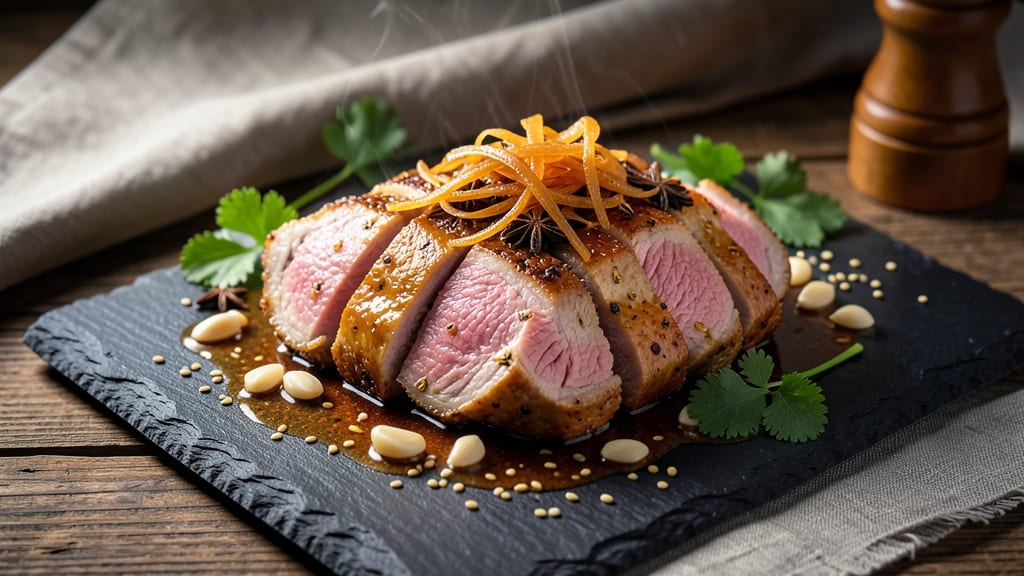
This braised pork loin Chinese recipe transforms simple ingredients into melt-in-your-mouth perfection through slow cooking and aromatic spices. 🔥 The secret lies in marinating the pork with soy sauce, star anise, and ginger before braising it in a rich, caramelized sauce that develops deep umami flavors over time.
I've perfected this technique through years of testing—both traditional stovetop methods and modern adaptations for busy weeknights.
What sets this recipe apart is the balance of textures and flavors: tender, fall-apart pork infused with the essence of Chinese red-cooked cuisine, where soy sauce, sugar, and spices create a glossy, slightly sticky sauce.
The slow braising process ensures every bite is juicy while developing that signature wok hei (breath of the wok) aroma that makes Chinese braised dishes so irresistible. This method works beautifully in a Dutch oven or Instant Pot, giving you flexibility for different cooking environments.
The result is a dish that's rich, flavorful, and restaurant-quality at home—perfectly tender pork loin swimming in a sauce that's both sweet and savory. The pork absorbs the aromatic spices while maintaining its natural tenderness, creating a meal that's equally impressive for dinner parties or family gatherings.
Pair it with steamed jasmine rice and quick-pickled bok choy for a complete Chinese feast.
Whether you're recreating a classic Chinese home-style dish or adapting it for modern convenience, this braised pork loin delivers consistent results. The technique is straightforward but yields profound flavor development, making it a recipe you'll return to again and again.
Let's get started on creating this comforting, flavor-packed centerpiece for your table.
Ingredients for braised pork loin chinese
Fourteen aromatic ingredients transform simple pork into restaurant-quality Chinese braised tenderness.
| Ingredient | Amount | Notes |
|---|---|---|
| Pork Loin 🥩 | 1 ½ lb | Center-cut, bone-in preferred |
| Soy Sauce 🥄 | ½ cup | Dark or light, high-quality |
| Brown Sugar 🍯 | ⅓ cup | Packed, light or dark |
| Star Anise 🌿 | 4 whole | Star-shaped pods, aromatic |
| Fresh Ginger 🧅 | ½ cup | Julienned, 2-inch piece |
| Garlic Cloves 🧄 | 6 cloves | Smashed, not minced |
| Shaoxing Wine 🍷 | ¼ cup | Dry Chinese cooking wine |
| Sesame Oil 🫒 | 1 tbsp | Toasted, for aroma |
| Cornstarch 🌾 | 2 tbsp | For sauce thickening |
| Water 💧 | 1 ½ cups | Room temperature |
| Diamond Crystal Kosher Salt 🧂 | 1 ½ tsp | For seasoning |
| Ground Black Pepper 🌶️ | ½ tsp | Freshly cracked |
| Green Onions 🧅 | 3 whole | Sliced, for garnish |
| Extra-Virgin Olive Oil 🫒 | 1 tbsp | For searing |
The pork loin is non-negotiable—center-cut with visible marbling ensures tenderness. Whole Foods or Asian markets carry excellent cuts, but most grocery stores stock it too. Look for bone-in pieces, as the bone adds flavor during braising. Star anise and ginger are the aromatic backbone; Penzeys Spices sells them whole for maximum potency. If using dried ginger, double the amount and toast it lightly in a dry pan before adding. The Shaoxing wine can be found in the international aisle—Kikkoman is a reliable brand for this purpose.
No Shaoxing wine? Dry sherry works beautifully—just ensure it's bone-dry, not sweet. Substitute brown sugar with honey or maple syrup, though the texture will be slightly different. Fresh ginger is ideal, but dried ginger at half the amount suffices in a pinch. For the cornstarch slurry, use arrowroot powder if you prefer a clearer sauce. The sesame oil adds depth—toast it in a dry pan for 30 seconds before adding to the braise to enhance its aroma. Green onions should be sliced into 1-inch pieces for garnish, reserving the tops for a separate garnish if desired.
The pork marinade keeps for 24 hours in the fridge, allowing flavors to meld. Braised pork reheats beautifully—simmer gently for 10-15 minutes to restore juices. Store leftovers in an airtight container for 4-5 days or freeze for 3 months. For meal prep, portion the sauce separately—it reheats better alone. The sauce thickens as it cools, so add a splash of water if it becomes too viscous when reheating.
Why You'll Love This Recipe
- One-Pan Magic: I swear by this for lazy nights—just sear the pork, toss in the soy-ginger-brown sugar mix with star anise, and let it bubble. No flipping, no fussing, just hands-off braising while you do anything else.
- Sweet-Savory Balance: That caramelized brown sugar and star anise? It’s like someone poured liquid happiness over the pork. The ginger adds a bright kick, and the soy sauce ties it all together—rich but never heavy.
- Leftovers That Shine: Between us, this dish begs to be made in bulk. Reheat the pork in a skillet with a splash of water, and it’s just as tender. Pack it for lunches or freeze portions—no sad, dry reheats here.
- Budget Meal Star: Pork loin stretches further than you’d think, especially when braised. A single cut feeds four, and the spices cost pennies. Honestly, it’s my go-to when I need a fancy-feeling meal without breaking the bank.
Step-by-step instructions for braised pork loin Chinese recipe
Master this classic technique for melt-in-your-mouth pork with deep umami flavor.
🔥 Step 1: Sear the Pork Loin for Maximum Flavor
Pat the 1.5 lb pork loin dry with paper towels—this ensures a proper sear. Heat 1 tablespoon extra-virgin olive oil in a heavy Dutch oven over medium-high heat until shimmering. Place the pork loin fat-side down and sear for 4-5 minutes until the fat renders and the surface develops a deep golden crust.
Flip the pork and sear the other side for another 3-4 minutes. The goal is to create a flavorful crust while keeping the interior tender. Remove the pork from the pot and set it aside on a plate. You'll notice the pork releases easily when properly seared—if it sticks, your heat isn't high enough.
🍳 Step 2: Build the Aromatic Base
In the same Dutch oven, add the 0.5 cup fresh ginger and 6 smashed garlic cloves. Cook for 1 minute until the ginger softens slightly and the garlic becomes fragrant. Add the 4 whole star anise and 0.25 cup shaoxing wine, scraping up any browned bits from the bottom with a wooden spoon.
Let the wine simmer for 2 minutes until it reduces by half. This deglazing step captures all the caramelized flavors that would otherwise stick to the pot. The aroma should be rich and complex—like a symphony of savory notes. If the mixture smells underwhelming, increase the heat slightly to concentrate the flavors.
🥘 Step 3: Braise with Sweet-Savory Balance
Return the seared pork to the pot. Add 0.5 cup soy sauce, 0.33 cup packed brown sugar, 1.5 cups water, 1.5 teaspoons diamond crystal kosher salt, and 0.5 teaspoon ground black pepper. Stir gently to combine, ensuring the pork is fully submerged in the liquid.
Bring the mixture to a gentle simmer over medium heat, then reduce heat to low and cover with a tight-fitting lid. Braise for 1 hour 15 minutes until the pork is fork-tender and the sauce has thickened slightly. The pork should be so tender that it nearly falls apart when pierced with a fork—this is your target texture.
🔪 Step 4: Thicken and Finish with Sesame Oil
Remove the lid and increase heat to medium. In a small bowl, whisk together 2 tablespoons cornstarch with 2 tablespoons water until smooth. Slowly pour this slurry into the braising liquid while stirring constantly. The sauce should begin to thicken immediately—simmer for another 2-3 minutes until it coats the back of a spoon.
Stir in 1 tablespoon sesame oil and taste the sauce. Adjust seasoning if needed—you might need a touch more soy sauce for saltiness or a pinch of sugar to balance acidity. The sauce should be glossy, slightly syrupy, and deeply flavorful. Remove from heat and let it rest for 5 minutes to allow the flavors to meld.
🍽️ Step 5: Serve with Garnish and Fresh Herbs
Transfer the pork to a serving platter and tent with foil to keep warm. Skim any excess fat from the sauce if desired, then ladle the rich braising liquid over the pork. Garnish with 3 sliced green onions for freshness and color contrast.
Slice the pork against the grain into ¼-inch thick pieces and serve immediately. Each bite should deliver perfectly tender meat with a glossy, sweet-savory sauce clinging to every strand. The star anise and ginger add subtle complexity, while the sesame oil provides a delicate aroma that elevates the dish.
Pro Tips For Making Braised Pork Loin Chinese
- SEAR THE LOIN FIRST: Walk away from the stove after browning—your pork needs a deep, caramelized crust before any liquid hits the pan. I used to rush this, and the sauce never stuck right; now I take my time, letting it sizzle until it releases easily from the pan.
- SIMMER LOW AND SLOW: Once the pork’s submerged, drop the heat to a bare simmer—think tiny bubbles, not rolling. I learned this the hard way when my first batch turned out tough; the right temperature melts the collagen into that silky texture.
- GRATE THE GINGER FINE: Skip the thick slices—grate the ginger so fine it almost disappears. My grandmother swore by this, and she was right: it infuses the sauce evenly instead of floating as chunks. (Yes, even if you’re impatient like me.)
- ADD SUGAR LAST: Toss the brown sugar in only after the pork’s fully cooked—otherwise, it’ll caramelize too early and burn. I was skeptical until I tried it; now I save it for the final 5 minutes to balance the soy’s saltiness without overpowering.
Common mistakes when making perfect results
Overcooking the Pork
I’ve seen many home cooks ruin perfectly good pork by braising it too long. The goal is tender, melt-in-your-mouth texture—not dry, stringy meat. Once your pork reaches 203°F internal temperature (about 1 hour 15 minutes), it’s done.
Overcooking by even 15 minutes turns the meat into leather. Use a meat thermometer—I swear by the ThermoWorks Smoke—to monitor progress. 🌡️
Skipping the Sear
The sear isn’t just about flavor—it’s about texture. When you skip searing, the pork absorbs too much liquid and becomes mushy. Always sear the pork over medium-high heat until you get a deep golden crust.
If your pan isn’t hot enough, the pork will steam instead of brown. A quick test: if your pork releases easily from the pan, you’re golden. If not, crank up the heat and try again.
Ignoring the Sauce Reduction
One of the biggest mistakes is not reducing the braising liquid properly. The sauce should coat the back of a spoon and cling to the pork. If you rush this step, you’ll end up with a thin, watery sauce.
After removing the pork, simmer the liquid uncovered for 5-7 minutes to thicken it naturally. If it’s still too thin, make that cornstarch slurry and thicken it properly—don’t just add more sugar or soy sauce as a shortcut.
Using the Wrong Pot
Not all pots are created equal. A thin, flimsy saucepan won’t hold up to the 1.5 hours of braising time. You need a heavy, thick-bottomed pot—like a Lodge Dutch oven or Le Creuset—to distribute heat evenly.
If your pot isn’t heavy enough, the pork will cook unevenly, and the sauce might burn on the bottom. Invest in a good pot—it makes all the difference. 🔥
Overcrowding the Pan
When you add all the aromatics—ginger, garlic, star anise—don’t pack them in like sardines. Overcrowding steams the ingredients instead of browning them, which dulls their flavors. Spread them out in the pan so they can develop that beautiful caramelized crust.
If your pan is too small, cook the aromatics in batches or use a larger pot. The goal is to build layers of flavor, not just simmer them in their own juices.
Forgetting to Rest
After all that hard work, don’t skip the 5-minute rest before serving. This lets the juices redistribute, so every bite is moist and flavorful. If you slice into the pork immediately, those juices will run out, leaving you with dry meat.
Trust me, those 5 minutes make a world of difference. It’s a small step that keeps your dish restaurant-quality.
Nutrition facts
Frequently asked questions
Can I substitute pork loin with another cut?
While pork loin is ideal, you can use bone-in pork shoulder or pork butt for extra richness. These cuts require 2-3 hours of braising instead of 1.5 hours to achieve tenderness. Avoid lean cuts like tenderloin—they'll dry out. For best results, trim excess fat but leave a thin layer for flavor.
What's the difference between red-cooked and white-cooked pork?
Red-cooked pork uses dark soy sauce and fermented bean paste for a deep mahogany color, while white-cooked relies on light soy sauce for a pale, delicate appearance. This recipe is red-cooked—its rich sauce comes from caramelized brown sugar and soy. For white-cooked, reduce soy sauce to ¼ cup and add 1 tbsp sugar instead.
Can I make this in an Instant Pot?
Sear the pork first, then add all ingredients except sesame oil. Cook on high pressure for 45 minutes, followed by a 10-minute natural release. Remove pork, reduce sauce on sauté function with cornstarch slurry, then stir in sesame oil. The texture will be slightly different but still delicious. Instant Pot time cuts total cooking to 1 hour!
How do I store and reheat leftovers?
Store in an airtight container for 4-5 days in the fridge or 3 months in the freezer. Reheat gently in a pot with 1 tbsp water over medium-low heat for 10-15 minutes, stirring occasionally. Microwaving works too—cover with a damp paper towel and heat in 1-minute intervals until steaming hot. The sauce may thicken further when reheated.
What sides pair best with this dish?
Classic pairings include steamed jasmine rice or sticky rice, both of which soak up the rich sauce. For freshness, serve with quick-pickled bok choy or steamed gai lan. Heartier options like egg fried rice or potstickers balance the richness. Avoid heavy sides—the pork's sauce is already substantial.