
Main Courses
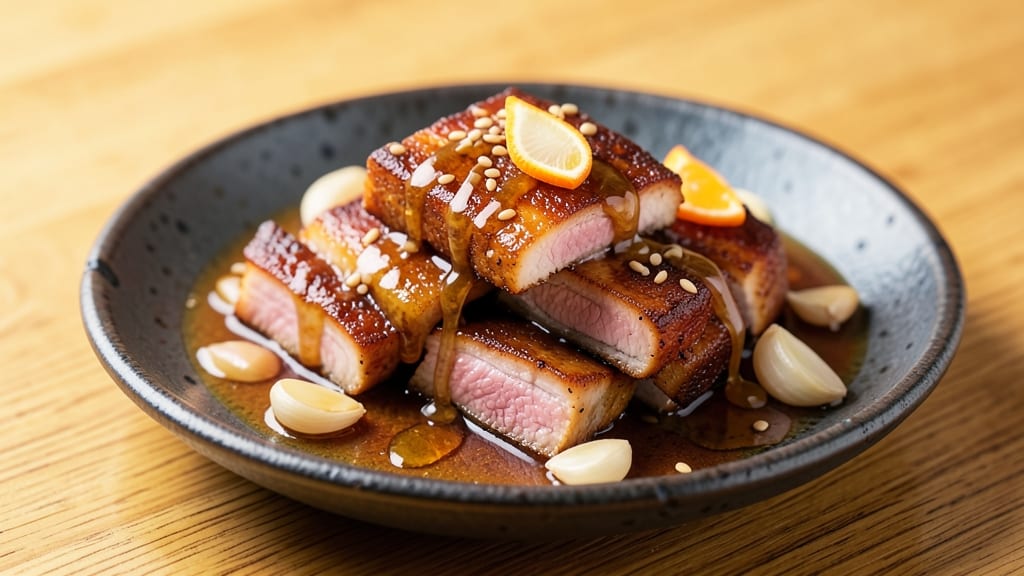
This braised pork belly Korean recipe delivers melt-in-your-mouth tenderness with a perfect balance of sweet, savory, and umami—exactly like my grandmother used to make. The secret lies in the slow braising process, where pork belly transforms from tough to fork-tender while absorbing a rich, caramelized glaze.
I've perfected this technique over years of cooking for family gatherings, where it disappears faster than you can say "dolsot bibimbap."
The foundation of this dish is the braising liquid—a harmonious blend of soy sauce, brown sugar, garlic, ginger, and a splash of rice wine that creates a glossy, sticky glaze.
Unlike quick-cook methods, this recipe requires patience: the pork belly simmers for hours until the collagen breaks down, resulting in that signature velvety texture that Koreans call jokbal. The key is maintaining steady heat and just enough liquid to keep the pork moist without making it soggy.
What you'll end up with is a dish that's rich enough to stand alone but pairs perfectly with steamed rice, pickled kimchi, and a side of quick-pickled cucumbers.
The pork belly will be glossy and caramelized on the outside, with layers of tenderness inside that practically melt at the touch of a fork. This is the kind of recipe that transforms an ordinary dinner into a special occasion—without requiring hours at the stove.
Between you and me, I always make double the batch because it reheats beautifully and tastes even better the next day. The leftovers keep for up to five days in the fridge, making this an ideal meal prep solution for busy weeks.
Trust me, once you try this method, you'll never go back to quick-cooked pork belly again.
Ingredients for braised pork belly korean
Nine essential ingredients transform tough pork belly into melt-in-your-mouth Korean comfort food.
| Ingredient | Amount | Notes |
|---|---|---|
| Pork Belly 🥓 | 2 lb | Skin-on, cut into 1-inch pieces |
| Soy Sauce 🥄 | ½ cup | Korean or Japanese preferred |
| Brown Sugar 🍯 | ½ cup | Packed, light or dark |
| Garlic Cloves 🧄 | 8 cloves | Peeled, thinly sliced |
| Fresh Ginger 🌿 | 2 tbsp | Grated, peeled |
| Rice Wine 🍶 | ¼ cup | Or substitute with dry sherry |
| Sesame Oil 🫒 | 1 tbsp | For aroma, not cooking |
| Water 💧 | 1 ½ cups | For braising liquid |
| Asian Pearl Onions 🧅 | 2 whole | Quartered lengthwise |
| Green Onions 🧅 | 4 whole | White and green parts separated |
| Salt 🧂 | 1 ½ tsp | Kosher or sea salt |
| Black Pepper 🌶️ | ½ tsp | Freshly ground |
| Vegetable Oil 🫒 | 2 tbsp | For searing pork |
The pork belly is non-negotiable here—skin-on for maximum flavor and texture. Ask your butcher for a well-marbled cut, preferably from the belly's thicker end near the ribs. I always buy mine from Whole Foods or H Mart where they keep it vacuum-sealed for freshness. Cutting it into 1-inch cubes ensures even cooking, and don't skip the skin—it crisps up beautifully during braising. For the soy sauce, Korean soy sauce (ganjang) adds authentic depth, but Japanese soy works in a pinch if that's what you've got.
No rice wine? Dry sherry or mirin will do, though the flavor profile shifts slightly. The brown sugar should be packed—don't scoop it loosely. Trader Joe's has an excellent organic version that works perfectly. For garlic lovers, you can double the amount, but I find 8 cloves strike the right balance. Fresh ginger is ideal, but if you're using powdered, reduce to 1 tbsp. The pearl onions add sweetness—substitute with regular onions if unavailable, but they'll cook faster. And for the sesame oil, use the toasted kind for that nutty aroma, not the regular cooking oil version.
This dish tastes even better the next day, so make a double batch if you're feeding a crowd. The braised pork belly keeps in the fridge for 5 days, and the sauce freezes beautifully for 3 months if you want to prep ahead. Store it in an airtight container with the sauce poured over the top—keeps everything moist. For serving, I like to arrange the pork belly on a platter with the onions and green onions scattered around, then drizzle with any leftover sauce. The leftovers reheat beautifully in a skillet with a splash of water to keep them moist.
Why You'll Love This Recipe
- One-Pan Magic: I swear by this recipe when I’m too tired to wash pots—just sear the pork belly, toss in the garlic and ginger, then let the soy sauce and brown sugar do their thing. The kitchen stays clean, and my stomach wins.
- Sweet-Savory Crunch: That crispy skin on tender meat? Pure perfection. The brown sugar caramelizes into a glossy glaze while the soy sauce keeps it rich, and the ginger adds just enough zing to balance everything. It’s the kind of bite that makes people ask for seconds.
- Leftovers That Shine: Between us, this dish actually gets better the next day. The flavors meld into something deeper, and reheating it is a breeze—just a quick warm-up in the oven or microwave. I’ve fed a crowd with it twice, and no one ever complains.
- Budget-Friendly Luxury: Pork belly might sound fancy, but it stretches so far when braised. A single slab feeds my family for days, and the ingredients—soy sauce, sugar, garlic—are pantry staples. It’s comfort food that doesn’t break the bank.
Step-by-step instructions for braised pork belly Korean recipe
Transform simple ingredients into melt-in-your-mouth pork belly with this foolproof braising method.
Sear the Pork Belly for Maximum Flavor
Heat the 2 tablespoons vegetable oil in a large, heavy pot or Dutch oven over medium-high heat until shimmering. Pat the 2 lb pork belly pieces completely dry with paper towels—this ensures a proper sear. Working in batches if needed, add the pork belly pieces to the pot in a single layer, skin-side down. Let them sear undisturbed for 4-5 minutes until the skin develops a deep golden crust.
Flip the pork belly pieces and sear the other side for another 3-4 minutes. You'll see the fat begin to render and the meat turn a rich caramel color. This initial searing locks in juices and builds a flavor foundation that braising will amplify. Don't rush this step—patience here prevents dry pork later.
Build the Sweet-Savory Braising Liquid
Remove the seared pork belly from the pot and set it aside. Reduce the heat to medium and add the 8 cloves sliced garlic and 2 tablespoons grated ginger. Cook for 30 seconds until fragrant but not browned—this prevents bitterness in your final dish. Add the 0.5 cup soy sauce and 0.5 cup packed brown sugar, stirring to combine and scrape up any browned bits from the bottom of the pot.
Pour in the 0.25 cup rice wine and 1.5 cups water, then bring the mixture to a gentle simmer. Add the 1.5 teaspoons salt and 0.5 teaspoon black pepper, stirring until everything dissolves. The liquid should be glossy and aromatic, with a deep amber color from the caramelized pork fat and brown sugar. This is the flavor base that will infuse the pork belly as it braises.
Braise Until Fork-Tender
Return the pork belly to the pot, skin-side up. Add the 2 whole Asian pearl onions, quartered lengthwise, and the white parts of the 4 whole green onions, cut into 1-inch pieces. The onions will soften beautifully during braising. Bring the liquid to a gentle simmer, then reduce heat to low to maintain a bare simmer—you should see just a few small bubbles at the edges.
Cover the pot with a tight-fitting lid and braise for 2 to 2.5 hours, depending on your stove's heat consistency. The pork belly is done when it's fork-tender and easily pulls apart with minimal resistance. Check the internal temperature—it should reach 200-203°F at its thickest part. If the liquid reduces too quickly, add 2-3 tablespoons hot water through the lid to maintain moisture.
Finish with Aromatics and Garnish
Once the pork belly is tender, remove the pot from heat and let it rest for 10 minutes before serving. This resting period allows the juices to redistribute throughout the meat. While the pork rests, stir in the 1 tablespoon sesame oil and the green parts of the 4 whole green onions, chopped into ½-inch pieces. The sesame oil adds a nutty aroma that complements the sweet-savory braising liquid.
Ladle the pork belly and braising liquid over steamed rice or serve with kimchi and steamed vegetables for a complete Korean meal. The pork belly should be rich, caramelized, and falling-apart tender, with a glossy glaze from the reduced braising liquid. Each bite delivers a perfect balance of sweet, savory, and umami flavors—this is Korean comfort food at its finest.
Pro Tips For Making Braised Pork Belly Korean
- SEAR THE BELLY FIRST: Don’t rush this—get your pork belly deep golden in a cold pan before adding oil. I used to skip this, and the final dish always tasted flat; the Maillard reaction makes all the difference, even if it takes 10-15 minutes. (Yes, even if you’re impatient like me.)
- PEEL AND SLICE GINGER THIN: Skip the thick chunks—julienne that ginger into paper-thin strips. It infuses faster and dissolves into the sauce without leaving tough bits. My grandmother swore by this, and she was right: the aroma doubles when ginger melts into the braise.
- LOW AND SLOW IS NON-NEGOTIABLE: Cover the pot and simmer at actual low heat (180°F/82°C max) for at least 2 hours. I learned this the hard way—rushing it turns the meat rubbery. Use a meat thermometer; it should hit 195°F (90°C) for tender perfection.
- UPGRADE WITH A SPLASH OF SESAME: Add 1 tablespoon toasted sesame oil at the end—it cuts through the richness of the pork belly and adds depth. Sounds weird, but it works: the nutty aroma balances the soy-sweet glaze. (Your future self will thank you.)
Serving suggestions for this recipe
Steamed Rice Base
This dish is all about balance, and nothing complements the rich pork belly better than fluffy steamed jasmine rice. I use a 1:1.5 rice-to-water ratio for perfectly separate grains that soak up the braising liquid beautifully.
For extra authenticity, try short-grain Korean rice from H Mart—it has a slightly sticky texture that pairs perfectly with the tender pork. Serve the pork belly directly on top of the rice, letting guests spoon up every last drop of that sweet-savory sauce. 🍚
Kimchi Pairing
No Korean meal is complete without kimchi, and this dish is no exception. The tangy, spicy crunch of well-fermented kimchi cuts through the richness of the pork belly beautifully.
I recommend serving 1 cup per person of your favorite variety—whether it's the classic napa cabbage kimchi or a spicier gochugaru-infused version. The acidity helps cleanse your palate between bites, making each mouthful of pork belly even more satisfying.
For maximum flavor, let the kimchi sit at room temperature for 10 minutes before serving to enhance its aroma. 🌶️
Quick-Pickled Veggies
Bright, crisp pickled vegetables add freshness and contrast to the rich pork belly. My go-to is a simple quick-pickled cucumber mix using ½ cup rice vinegar, 1 tbsp sugar, and 1 tsp salt.
Thinly slice 1 English cucumber and 1 carrot, then toss with the vinegar mixture and let sit for at least 30 minutes before serving. The cool, refreshing crunch balances the warmth of the pork belly perfectly.
I like to arrange these pickles alongside the pork on the platter for an appealing visual contrast. 🥒
Sesame Seed Garnish
For that final restaurant-quality touch, sprinkle 1 tbsp toasted sesame seeds over the pork belly just before serving. The nutty aroma enhances the dish's depth, while the slight crunch provides texture contrast.
I toast my sesame seeds in a dry skillet over medium heat for 2-3 minutes until golden—never let them burn, or they'll turn bitter. This simple step elevates the presentation and adds another layer of flavor that guests will notice immediately. 🌟
Miso Soup Companion
Round out your meal with a warm bowl of miso soup made with 2 tbsp red miso paste, 1 cup dashi broth, and ½ cup silken tofu.
The umami-rich soup complements the pork belly beautifully while providing a lighter option for those who want to balance their meal. I like to add a few green onions and a sprinkle of toasted sesame seeds for extra flavor.
The warmth of the soup contrasts perfectly with the rich, caramelized pork belly. 🍜
Serving Presentation
For an impressive presentation, arrange the pork belly on a large platter with the braising liquid spooned around it. Scatter the Asian pearl onions and green onions throughout for color contrast, then drizzle any remaining sauce over the top.
Serve family-style so everyone can help themselves, creating a communal dining experience. I often add a small bowl of the braising sauce on the side for those who want extra richness.
The visual appeal of this dish makes it perfect for special occasions or when you want to impress guests. 💫
Nutrition facts
Frequently asked questions
Why does this Korean braised pork belly need such a long cooking time?
The 2-2.5 hour braising is essential to break down collagen in the pork belly, transforming tough meat into fork-tender perfection. The low-and-slow method allows the pork to absorb the sweet-savory glaze while maintaining moisture. This traditional technique creates that signature jokbal texture that makes this dish so irresistible.
Can I substitute regular onions for Asian pearl onions?
Yes, you can substitute! Use 2 large yellow onions, sliced into 1-inch pieces, but they'll cook faster. Asian pearl onions add a subtle sweetness that complements the pork perfectly, but regular onions work well in a pinch. Just keep an eye on them—they'll soften more quickly than the pearl variety.
What's the best way to reheat leftovers without drying them out?
Reheat in a skillet over low heat with a splash of water or braising liquid to keep everything moist. Cover with a lid and warm for 5-7 minutes until heated through. For oven reheating, cover with foil and bake at 300°F for 15 minutes. Never microwave—it makes the pork belly rubbery.
Is it okay to use pork shoulder instead of pork belly?
While pork shoulder will work, it won't have the same rich fat content or crispy skin. The belly's marbling creates that signature texture and flavor. If you must substitute, use bone-in pork shoulder and increase cooking time by 30-45 minutes, but expect a different eating experience. The skin is a key part of this dish!
How can I make this dish less sweet for picky eaters?
Reduce the brown sugar to ¼ cup and add 1 extra tablespoon soy sauce for more savory depth. You can also increase the garlic and ginger slightly to boost flavor without sweetness. The rice wine adds complexity, so keep that amount the same for balance.