
Main Courses
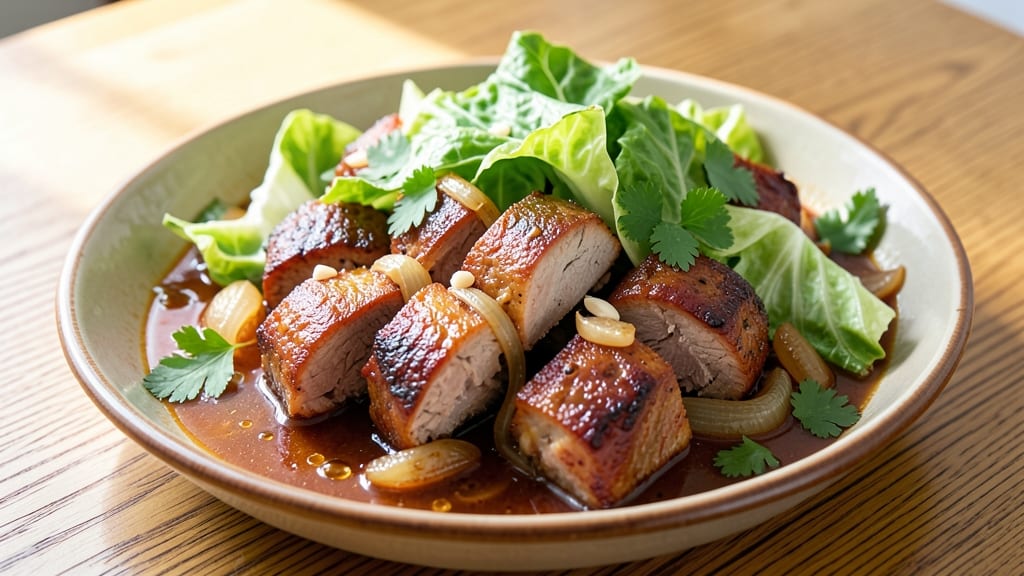
This braised pork and cabbage recipe delivers the kind of deep, caramelized richness that transforms simple ingredients into something extraordinary. The secret lies in slow-cooking the pork until it's tender enough to fall apart, while the cabbage absorbs all that flavorful sauce.
Growing up in Georgia, I learned that pork braises like this are meant to be made on weekends—when you can let it simmer low and slow for hours, letting flavors meld together like a family recipe passed down through generations.
The technique is straightforward but requires patience: sear the pork until golden, then build layers of flavor with onions, garlic, and a splash of vinegar before adding the cabbage.
The key is maintaining a gentle simmer—this isn't a quick weeknight meal, but the kind of dish that gets better as it sits.
I often make this in my cast iron Dutch oven, letting the pork cook until it practically melts in your mouth while the cabbage softens just enough to soak up every bit of that rich, caramelized sauce.
What you'll end up with is a dish that's hearty enough for a family dinner but elegant enough for company. The pork becomes fork-tender, the cabbage infused with smoky, savory notes, and the sauce thickens into a glossy, velvety finish.
Serve it with crusty bread to soak up every last drop or over a bed of rice for a complete meal. This is the kind of recipe that tastes even better the next day, making it perfect for meal prep or leftovers.
For those short on time, I've tested a pressure cooker adaptation that cuts the cooking time by half without sacrificing flavor—just be sure to follow the same searing and deglazing steps first.
Garnish with fresh parsley or a sprinkle of sesame seeds if you're feeling fancy, but honestly, this dish stands on its own. Let's get cooking!
Ingredients for braised pork and cabbage
Weekend cooking essentials that turn simple ingredients into something extraordinary.
| Ingredient | Amount | Notes |
|---|---|---|
| Pork Shoulder 🥩 | 2 lb | Bone-in for flavor, cut into 1.5-inch cubes |
| Yellow Onion 🧅 | 1 whole | Medium size, thinly sliced |
| Garlic Cloves 🧄 | 4 cloves | Peeled, minced |
| Green Cabbage 🥬 | 1 small | Heads, cut into wedges |
| Apple Cider Vinegar 🍏 | ¼ cup | For brightness |
| Tomato Paste 🍅 | 2 tbsp | For depth of flavor |
| Dried Thyme 🌿 | 1 tsp | Or 1 tbsp fresh |
| Bay Leaves 🍃 | 2 whole | Remove before serving |
| Salt 🧂 | 1 ½ tsp | Kosher or sea salt |
| Black Pepper 🌶️ | ½ tsp | Freshly ground |
| Beef Broth 💧 | 2 cups | Low-sodium preferred |
| Olive Oil 🫒 | 2 tbsp | For searing pork |
| Fresh Parsley 🌿 | ¼ cup | Chopped, for garnish |
| Brown Sugar 🍯 | 1 tbsp | For caramelized richness |
The pork shoulder is your secret weapon here—bone-in, cut into even cubes. Look for it at the butcher counter or pre-cut from Costco or Trader Joe's for convenience. Fresh cabbage matters too—green or red, but green holds up better during braising. I usually grab a small head (about 1.5 lbs) from the grocery store's produce section, but pre-shredded bags work in a pinch. The apple cider vinegar adds that tangy brightness that balances the richness—Bragg is my go-to, but any good-quality vinegar works. For the tomato paste, Muir Glen is my favorite, but the squeeze tubes from Trader Joe's are perfect for small batches.
No apple cider vinegar? Red wine vinegar or white vinegar in a pinch, but adjust to taste. Swapping beef broth? Vegetable broth works too, just add a splash of soy sauce for depth. Fresh thyme unavailable? Dried at one-third the amount gets you close. The brown sugar is non-negotiable for that caramelized finish—light or dark, but light dissolves better. For the cabbage, if you've got savoy cabbage, use half green and half savoy for extra texture. And that tomato paste? Don't skip it—it's what gives the sauce that rich, concentrated flavor. If you're using a pressure cooker, reduce the broth by half since it won't evaporate as much.
This dish tastes even better the next day—plan ahead. Store in an airtight container in the fridge for up to 5 days, or freeze portions for 3 months. The sauce thickens as it cools, so add a splash of broth when reheating. I always make double batches because leftovers make the best lunches. The pork gets fork-tender, and the cabbage soaks up all that flavorful sauce. Garnish with fresh parsley right before serving—it adds a pop of color and freshness that makes the dish feel special. Trust me, the extra 10 minutes of prep time is worth every bite.
Why You'll Love This Recipe
- One-Pot Magic: I swear by this recipe when I don’t want to dirty a dozen pans. Toss everything—pork, onions, garlic, cabbage—into one deep skillet, let it simmer, and walk away. The vinegar does most of the work while you’re streaming your favorite show.
- Caramelized Crunch: That crispy pork shoulder? Oh, it’s good—fall-apart tender with a crust so satisfying you’ll want to eat it straight from the pan. The cabbage softens just enough to soak up all that garlicky, vinegar-brined goodness like a sponge.
- Lunchbox Hero: Between us, this is my go-to for meal prep. The flavors only get better after a day in the fridge, and it reheats like a dream. Pack it cold for sandwiches or warm it up for a quick dinner—no one will guess it’s leftovers.
- Budget Winner: Pork shoulder is cheap, cabbage lasts forever, and you’re using pantry staples. Honestly, I make this when I’m pinching pennies, and my family never complains. It’s hearty, filling, and stretches across three meals without breaking the bank.
Step-by-step instructions for braised pork and cabbage
Here's how to create a rich, caramelized braise that transforms tough pork into melt-in-your-mouth perfection.
Sear the Pork Shoulder for Deep Flavor
Heat the 2 tablespoons olive oil in a large Dutch oven over medium-high heat until shimmering. Working in batches to avoid crowding, add the 2 lb pork shoulder cut into 1.5-inch cubes and sear for 3-4 minutes per side until deeply golden brown. This step develops the Maillard reaction, creating that deep, caramelized flavor we're after.
Don't rush this part - you want the pork to develop a crust. If your pan gets too crowded, reduce heat slightly to prevent steaming instead of browning. Once all pork is seared, transfer it to a plate and set aside. We'll be building layers of flavor in that same pot.
Build the Flavor Base with Onions and Aromatics
In the same Dutch oven, add the 1 whole yellow onion sliced into strips and cook for 5-6 minutes until softened and golden. Stir in the 4 cloves minced garlic, 1 tablespoon brown sugar, 2 tablespoons tomato paste, 1 teaspoon dried thyme, 1.5 teaspoons salt, and 0.5 teaspoon black pepper. Cook for another 2 minutes, stirring constantly, until the mixture becomes fragrant and slightly sticky.
This is where all the magic happens. The tomato paste and brown sugar create a rich foundation while the thyme adds earthy depth. I like to press the garlic right into the onions so it infuses all that flavor. Keep the heat at medium to prevent burning - you want everything to cook through evenly.
Deglaze and Simmer the Braise
Pour in the 0.25 cup apple cider vinegar and scrape up all those delicious browned bits from the bottom of the pot. This deglazing step captures all the flavor that would otherwise stick to your pan. Let it bubble away for 1-2 minutes until the vinegar has mostly evaporated.
Add the 2 cups beef broth and bring everything to a gentle simmer. Return the seared pork to the pot, along with the 1 small green cabbage cut into wedges. The cabbage should be submerged in the liquid - if not, add a splash of water. Cover with a tight-fitting lid and reduce heat to low.
Braise Until Tender and Sauce Thickens
Let the braise cook for 2 to 2.5 hours, checking occasionally. You'll know it's ready when the pork is fork-tender and pulls apart easily. The cabbage should be tender but still hold its shape. If the liquid reduces too much before then, add a splash of water or broth to maintain moisture.
I check for doneness by testing a piece of pork - it should feel like butter when pierced with a fork. The sauce should have thickened noticeably, coating the pork and cabbage in a glossy, rich glaze. This is where patience pays off - the longer it cooks, the more flavorful everything becomes.
Finish and Serve with Fresh Herbs
Once the pork is tender, remove the 2 whole bay leaves and discard them. Stir in the 0.25 cup chopped fresh parsley and let everything heat through for another 2-3 minutes. The parsley adds a bright finish that cuts through the richness of the braise.
Serve immediately with the pork and cabbage nestled in that beautiful, caramelized sauce. The pork should be falling apart at the touch, the cabbage tender-crisp, and the sauce rich enough to coat the back of a spoon. This dish tastes even better the next day as the flavors continue to meld!
Pro Tips For Making Braised Pork And Cabbage
- SEAR THE PORK FIRST: I used to skip this step and wondered why my pork always tasted bland. Get that meat browned—deep golden, almost black in spots—before adding any liquid. The Maillard reaction here isn’t just for looks; it builds flavor that vinegar and onions can’t replicate. Use a heavy pot and don’t move it around—let those crusts form.
- SALT THE CABBAGE LIKE POTATOES: Toss the shredded cabbage with a teaspoon of salt and let it sit for 10 minutes before cooking. This draws out moisture, so it softens faster and doesn’t turn to mush. Rinse it afterward, but don’t skip the salting—it’s the thing that matters most when braising greens.
- DON’T BOIL THE VINEGAR: Apple cider vinegar smells amazing, but boiling it too hard turns your braise sour and harsh. Once you add it, keep the heat at a gentle simmer—just enough to see tiny bubbles at the edges. If the liquid’s roaring, you’re killing the flavor. Cover the pot and let it work quietly.
- CUT THE PORK IN ONE MOTION: I was skeptical until I tried it—slice the pork shoulder into even ½-inch thick pieces all at once before searing. Uneven chunks cook at different rates, leaving some rubbery and others falling apart. A sharp knife and a steady hand save you from guessing when it’s done. No, it won’t be perfect, but it’ll be consistent.
Wine and beer pairings for this dish
Red Wine Classics
For this rich, caramelized braise, I reach for Pinot Noir from the Willamette Valley—its earthy notes and subtle fruitiness complement the pork's deep flavors beautifully. The acidity cuts through the sauce's richness while the tannins stand up to the cabbage's heartiness.
If you prefer something bolder, try a Syrah from the Rhône Valley—its dark fruit and peppery finish mirror the braised pork's complexity. 🍷
Pro tip: Let the wine breathe for about 15 minutes before pouring to open up its aromas. I often decant a bottle of Pinot Noir for 30 minutes before serving to enhance its fruitiness and reduce any bitterness.
Crisp Beer Pairings
A Belgian witbier like Hoegaarden is my go-to beer pairing—its citrusy coriander and light effervescence cleanse the palate between bites. The slight sweetness balances the braise's acidity from the apple cider vinegar.
For something more robust, try a German Helles—its malty sweetness and crisp finish work beautifully with the pork's richness. 🍺
If you're serving this at a casual gathering, a pilsner like Stella Artois provides a refreshing contrast without overpowering the dish. I've also had great success with a sour ale—the tartness enhances the caramelized flavors in the sauce.
Regional Wine Twists
In the Southeast, where I grew up, we often paired this dish with Moscato d'Asti—its light sweetness and bubbles make it a perfect match for the pork's richness.
For a more traditional approach, a Chianti Classico from Tuscany brings bright acidity and cherry notes that complement the tomato paste in the sauce. 🌍
If you're in the mood for something local, look for Georgia wines like a Saperavi—its bold tannins and dark fruit pair surprisingly well with the cabbage's earthiness. I've also enjoyed a Carolina Riesling for its crisp acidity and floral notes.
Non-Alcoholic Options
For those skipping alcohol, a sparkling apple cider like Martinelli's adds a festive touch while enhancing the dish's apple cider vinegar notes. The bubbles help cut through the richness, just like wine.
For something more substantial, try a ginger beer—its spicy kick complements the thyme and black pepper in the braise. 🍎
I also love serving this with a cucumber-mint infused water—it's refreshing and highlights the fresh parsley garnish. Add 1 cucumber slice and 4 mint leaves to a pitcher of cold water with 1 tbsp honey for a bright, palate-cleansing sipper.
Nutrition facts
Frequently asked questions
Can I use pork tenderloin instead of pork shoulder for this recipe?
Pork tenderloin is much leaner and cooks faster than pork shoulder, so it won't give you the same tender, fork-shredded texture. For best results, stick with pork shoulder or butt—these cuts have more connective tissue that breaks down beautifully during braising. If you're determined to use tenderloin, cut it into 1-inch cubes and reduce the cooking time to 1 hour instead of 2.5 hours.
What if my cabbage gets too soft or mushy?
This happens when cabbage cooks too long in the liquid. To prevent it, add the cabbage wedges only 30-45 minutes before the pork is done. For extra texture, try using savoy cabbage—its curly leaves hold up better during braising. If your cabbage is already too soft, drain some of the sauce and return it to the pot to thicken slightly before serving.
Can I make this recipe in a slow cooker or Instant Pot?
For a slow cooker, follow the same searing and deglazing steps, then transfer everything to the slow cooker and cook on low for 6-7 hours or high for 3-4 hours. For an Instant Pot, sear the pork, then sauté the aromatics, deglaze, and add all ingredients. Cook on high pressure for 40 minutes, then do a natural release for 15 minutes. The pressure cooker cuts time but keeps all the depth of flavor.
How can I make the sauce thicker or richer?
For a thicker sauce, let the braise reduce uncovered for the last 10-15 minutes of cooking. To add richness, stir in 1 tablespoon cornstarch mixed with 2 tablespoons water at the end and simmer for 2 minutes. Another trick is to add 1/4 cup tomato paste with the broth—it deepens the flavor while thickening the sauce naturally.
What are the best sides to serve with braised pork and cabbage?
This hearty dish pairs perfectly with crusty sourdough bread for soaking up sauce, buttery mashed potatoes for comfort, or steamed jasmine rice to balance the richness. For a lighter option, serve with a fresh green salad dressed with lemon vinaigrette. The acidity cuts through the richness beautifully.