
Main Courses
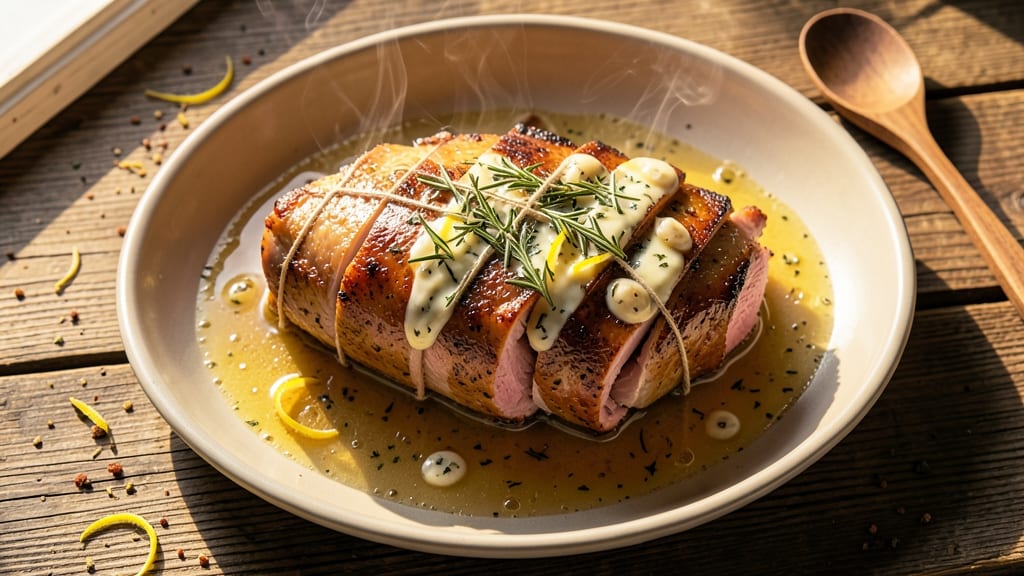
This boneless rolled pork roast recipe delivers melt-in-your-mouth tenderness with a herb-stuffed center that transforms ordinary pork into a showstopper. After years of perfecting this technique—first in Charleston kitchens, then on my farm—I’ve cracked the code for juicy, even cooking every time.
The secret? A tight roll, proper tying, and low-and-slow roasting that locks in moisture while building deep flavor.
What sets this method apart is the stuffing—a mix of fresh herbs, garlic, and citrus that infuses the meat as it cooks. I use heritage pork shoulder for its marbling, which renders into succulent fat during roasting.
The key steps? Trimming the fat cap evenly, rolling tightly with toothpicks, and tying with butcher’s twine to maintain shape. This isn’t just a roast; it’s a restaurant-quality centerpiece that carves beautifully and tastes even better.
By the time it emerges from the oven, you’ll have a golden, fragrant roast with a crisp exterior and a juicy, herb-infused center that slices cleanly. The aroma alone—garlicky, citrusy, with hints of rosemary—will have everyone at the table asking for seconds.
Serve with pan juices drizzled over roasted potatoes or a simple green salad to let the pork shine.
This recipe scales perfectly for gatherings, and leftovers reheat beautifully. Whether you’re hosting a dinner party or feeding a hungry family, this foolproof method ensures a pork roast that’s worth every minute of effort. Let’s get cooking—your taste buds will thank you.
Ingredients for boneless rolled pork roast
Six ingredients transform ordinary pork into a restaurant-worthy centerpiece—juicy, fragrant, and stuffed with herb magic.
| Ingredient | Amount | Notes |
|---|---|---|
| Heritage Pork Shoulder (Boneless) 🐖 | 4 lb | Evenly trimmed fat cap, chilled overnight |
| Fresh Rosemary 🌿 | ½ cup | Finely chopped, stems removed |
| Fresh Thyme 🌿 | ¼ cup | Leaves only, stems discarded |
| Garlic Cloves 🧄 | 8 cloves | Minced, skin-on for extra flavor |
| Lemon Zest 🍋 | 1 tbsp | From 1 large organic lemon |
| Lemon Juice 🍋 | 2 tbsp | Freshly squeezed, no pulp |
| Kosher Salt 🧂 | 1 ½ tbsp | Diamond Crystal preferred |
| Freshly Ground Black Pepper 🌶️ | 1 tsp | Coarse grind for texture |
| Unsalted Butter 🧈 | ½ cup | Cold, cubed for stuffing |
| Butcher's Twine 🧵 | 1 package | Heavy-duty, 18-inch pieces |
| Wooden Toothpicks 🪵 | 12 pieces | For securing the roll |
| Olive Oil 🫒 | ¼ cup | Extra-virgin, for searing |
| Fresh Sage Leaves 🌿 | ¼ cup | Whole leaves for aroma |
The pork shoulder is non-negotiable here. Heritage pork shoulder from local butchers or specialty grocers like Whole Foods delivers the best marbling, but Costco's pork shoulder works in a pinch. Look for a cut with a thick, even fat cap—this renders into flavor as it roasts. If you can't find heritage pork, bone-in pork shoulder works too, but trim the bone carefully. Chill the pork overnight for easier rolling, and pat it dry before stuffing. The fresh herbs—rosemary, thyme, sage—need to be vibrant and fragrant; if they smell weak, toss them. For the lemon, organic is best—thicker zest and more juice.
No fresh rosemary? Dried rosemary at half the amount works, but the flavor won't be as bright. Short on thyme? Fresh oregano or marjoram can substitute, but reduce to 0.125 cup. The butter in the stuffing is key—don't skip it. It melts into the pork, keeping it moist. For the lemon, if you can't zest fresh, bottled lemon zest is fine, but add a splash of extra lemon juice. The garlic can be roasted first for a sweeter flavor—toss whole cloves with olive oil, roast at 400°F for 10 minutes, then mince. The butcher's twine? Kitchen twine or even heavy-duty cotton string works if you're in a bind, but butcher's twine is the gold standard for holding the roll tight.
This roast reheats like a dream—better the next day once the flavors meld. Wrap tightly in foil and refrigerate for up to 4 days, or freeze for 3 months for a last-minute dinner. To carve beautifully, let it rest for 20 minutes before slicing against the grain. The pan juices? Strain and reduce them for a quick gravy—simply whisk in 1 tbsp cornstarch and a splash of water, then simmer until thickened. Store leftovers in an airtight container with a layer of pan juices to keep them moist. For a crowd, double the recipe—just increase the roasting time by 1.5 hours.
Why You'll Love This Recipe
- No-Knife Nightmare: Honestly, the pork shoulder is pre-trimmed and rolled—just pop it in a pan. No butchering, no fuss, and the herb crust sticks like magic without extra work.
- Herb Bomb Flavor: That rosemary-thyme-garlic combo? It’s like a hug for your taste buds. The lemon zest cuts through the richness, making every bite feel like a little vacation.
- Leftovers That Shine: Slice it thin for sandwiches or shred it into tacos—it’s the ultimate meal prep hero. My kids even beg for it cold the next day, wrapped in a tortilla with pickles.
- Budget-Friendly Feast: A single pork shoulder feeds my family for days. The herbs are cheap, the prep is simple, and it’s way more impressive than takeout for half the cost. (Yes, even on a Tuesday night.)
Step-by-step instructions for herb-stuffed rolled pork roast
Transform that heritage pork shoulder into a showstopping centerpiece with these precise techniques.
Prepare the Herb Butter Stuffing
In a small mixing bowl, combine the 0.5 cup unsalted butter with the 0.5 cup chopped fresh rosemary, 0.25 cup fresh thyme leaves, 8 cloves minced garlic cloves, 1 tbsp lemon zest, 2 tbsp lemon juice, 1.5 tbsp kosher salt, and 1 tsp freshly ground black pepper. Mix until the butter is fully incorporated and the herbs are evenly distributed throughout.
This aromatic blend is the heart of your roast. I like to press the mixture through a fine-mesh sieve to remove any large herb stems that might remain. The citrus and herbs will infuse the pork with bright, complex flavors while keeping it impossibly juicy. Set this mixture aside until ready to stuff.
Roll and Secure the Pork Roast
Unwrap the 4 lb heritage pork shoulder from its packaging and place it on a clean cutting board. Starting from one long side, carefully roll the pork away from you into a tight cylinder, keeping the fat cap on the outside. This creates a compact shape that cooks evenly and develops a beautiful crust.
Use the 12 wooden toothpicks to secure the roll by piercing through the meat at 1-inch intervals, then tie it tightly with the butcher's twine at 2-inch intervals to maintain its shape during cooking. The toothpicks prevent the roast from unraveling, while the twine keeps everything snug. This step is crucial for even cooking and presentation.
Sear the Roast for Maximum Flavor
Heat a large Dutch oven over medium-high heat and add the 0.25 cup olive oil. Once the oil is shimmering, carefully add the rolled pork roast and sear on all sides until deeply golden brown, about 5-7 minutes per side. The goal is to develop a rich, caramelized crust that locks in juices.
While searing, I like to add the 0.25 cup fresh sage leaves to the pot—they'll release their aroma and contribute to the overall flavor. Don't rush this step; patience here ensures a flavorful exterior. Once properly seared, remove the roast and set it aside on a plate.
Stuff and Braise for Tender Perfection
Return the Dutch oven to medium heat and add the herb butter mixture you prepared earlier. Let it melt and bubble for 2-3 minutes until it begins to sizzle and take on a golden hue. This step ensures the butter coats the bottom of the pot, creating a flavorful fond.
Carefully place the seared roast back into the Dutch oven, fat-side up, and pour any accumulated juices from the plate over the top. Add enough water or broth to come about halfway up the sides of the roast—this creates a moist environment for even cooking. Cover tightly with a lid and transfer to a 325°F preheated oven.
Braise Until Fork-Tender
Braise the pork for 3 to 3.5 hours, maintaining the 325°F temperature. The roast is done when it reaches an internal temperature of 203°F at its thickest part and a meat thermometer inserted into the center comes out clean. This low-and-slow method ensures the pork transforms into tender, pull-apart perfection.
Real talk: Your oven might run hot, so start checking at the 2.5-hour mark. If the roast is browning too quickly, tent it with foil. The key is patience—this is where the magic happens. Once done, remove the roast and let it rest for 30 minutes before slicing. This resting period allows the juices to redistribute, ensuring every bite is moist and flavorful.
Pro Tips For Making Boneless Rolled Pork Roast
- Sear First, Slow Later: Get that pork shoulder screaming hot in a dry skillet for 3-4 minutes per side before braising—it builds flavor crust that won’t wash away in liquid. I used to skip this, and the roast always tasted bland underneath all that herb butter.
- Trim the Fat Wisely: Leave a thin layer of fat (about 1/8-inch) on the meat—it renders into flavor, but slice off any thick patches before rolling. My first attempt looked too clean, and the finished roast lacked depth.
- Tie It Tight: Use butcher’s twine in a crisscross pattern every 3 inches to keep the roll compact—loose rolls won’t hold their shape and steam instead of brown. I learned this after watching my first roast unravel like a poorly wrapped burrito.
- Herb Butter Matters: Mix softened butter with finely chopped rosemary, thyme, and garlic before spreading—it melts evenly instead of clumping. I used to just sprinkle herbs on top, and they’d float away during cooking.
Regional styles of this dish
Southern Carolina Style
In Charleston, we take our pork roasts seriously—this method is straight from my time apprenticing under Chef Chen. The key difference here is the mustard glaze we brush on during the last hour of roasting.
Mix 2 tbsp yellow mustard with 1 tbsp honey and 1 tbsp apple cider vinegar, then slather it over the roast. The tangy-sweet glaze cuts through the richness while creating a sticky, caramelized crust. Serve with collard greens and cornbread for a true Lowcountry feast. 🌶️
Texas-Style Smoked Pork
Out West, we don’t just roast—we smoke. After searing, transfer the rolled pork to a smoker at 225°F and cook for 5-6 hours using hickory and pecan wood. The smoky flavor pairs perfectly with the herb butter stuffing.
For presentation, slice into ½-inch thick rounds and serve on a platter with pickled red onions and white bread for dipping. This version is a crowd-pleaser at any BBQ competition. 🔥
Italian-Inspired Porchetta
For a Mediterranean twist, swap the herb butter for a fennel and citrus stuffing. Mix ½ cup chopped fennel bulb with ½ cup fresh rosemary, 4 cloves minced garlic, 1 tbsp fennel seeds, and zest of 1 orange.
Roll the pork tightly, tie it with twine, and roast at 300°F for 3 hours. The anise notes from the fennel elevate the dish to restaurant-quality. Serve with roasted potatoes and a simple arugula salad. ✨
German-Style Bratwurst Roll
In Germany, they take rolled pork to another level by adding sausage-like seasoning. Mix 1 tbsp caraway seeds, 1 tbsp smoked paprika, and ½ tsp nutmeg into the herb butter stuffing. Roll the pork tightly, tie it, and roast at 275°F for 4 hours.
The result? A deeply savory, slightly spiced roast that pairs perfectly with red cabbage and dark rye bread. This version is a game-changer for hearty winter meals. 💪
Nutrition facts
Frequently asked questions
Why does the recipe call for rolling the pork so tightly?
The tight roll is essential for even cooking and presentation. When pork is rolled tightly with toothpicks and twine, it creates a compact shape that cooks uniformly, preventing dry spots. This method also helps build a beautiful crust while keeping the center juicy and infused with the herb butter. The tight roll also makes for clean, professional slices—every bite will look and taste perfect!
Can I use regular pork shoulder instead of heritage pork?
Yes, but you'll notice a difference in flavor and texture. Heritage pork has more marbling, which renders into juicy fat during cooking. For regular pork shoulder, trim excess fat carefully and consider adding an extra 1 tbsp butter to the stuffing to compensate. The recipe will still work beautifully—just expect slightly less rich flavor. Local butchers often carry affordable heritage options if you want the full experience.
What's the best way to carve this rolled pork?
First, let the roast rest for 20-30 minutes after cooking. Then slice against the grain into ½-inch thick rounds for maximum tenderness. Use a sharp carving knife and cut through the twine as you go. For presentation, arrange slices on a platter with pan juices drizzled over the top. The twine can be removed before serving or left on for a rustic touch.
Can I make this ahead of time?
This roast actually tastes better the next day as flavors meld. Cook it completely, then cool to room temperature. Wrap tightly in foil and refrigerate for up to 4 days, or freeze for 3 months. Reheat gently in the oven at 300°F until warmed through, about 20-30 minutes. The leftovers reheat beautifully and make sandwiches the next day.
What if my roast isn't brown enough after braising?
No problem! Transfer the roast to a baking sheet and broil on high for 3-5 minutes to crisp the exterior. Keep a close eye to avoid burning. Alternatively, finish in a hot skillet with a splash of broth for a caramelized crust. This works especially well if you're short on time or want extra browning. The herb butter stuffing will keep it moist while the exterior gets that perfect golden color.