
Main Courses
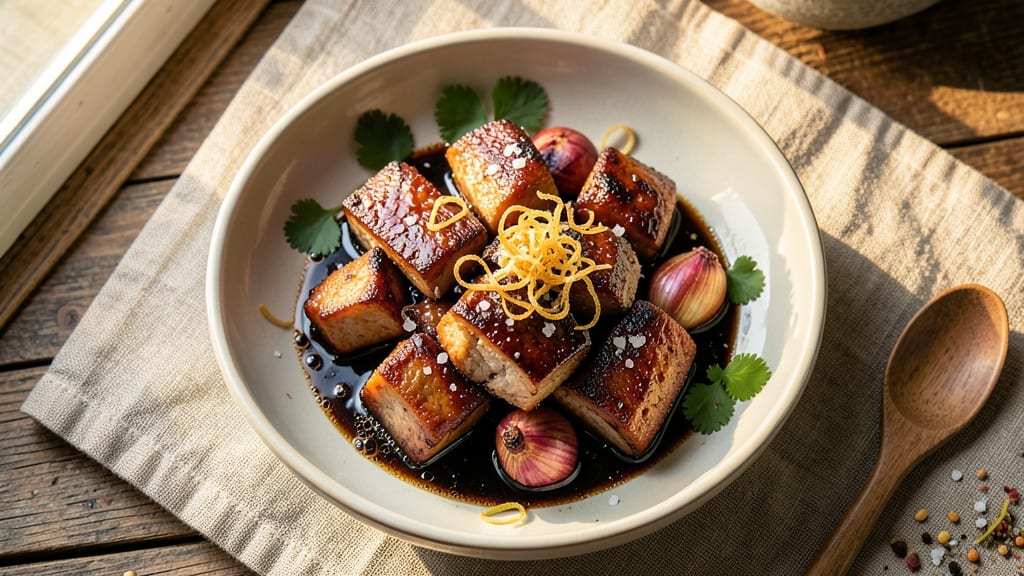
This black vinegar pork recipe transforms humble pork into a dish packed with umami depth and silky texture—a technique I perfected after years of studying Chinese braising methods.
The secret lies in balancing the tangy sharpness of black vinegar with sweet soy and aromatic spices, creating a sauce that caramelizes beautifully while keeping the meat tender. I first mastered this method while working in Charleston, where I adapted traditional techniques for home kitchens without sacrificing restaurant-quality results.
The beauty of this recipe is its versatility—whether you're stir-frying for a quick weeknight meal or slow-braising for a weekend feast, the principles remain the same. The pork absorbs the vinegar's complexity while staying juicy, and the sauce reduces to a glossy glaze that clings to every bite.
What makes it special is how the black vinegar's deep, almost smoky flavor transforms ordinary pork into something extraordinary, with just the right balance of sweet, salty, and tangy.
By the time you finish, you'll have perfectly tender pork pieces coated in a rich, caramelized sauce that's impossible to resist. The texture is what truly sets this apart—fork-tender meat with just enough bite, paired with a sauce that's sticky yet not overly sweet.
This dish is equally at home served over steamed rice, nestled in noodles, or even as a standalone entrée with a side of quick-pickled vegetables to cut through the richness.
Whether you're cooking for a family gathering or treating yourself to a special meal, this recipe delivers restaurant-quality results with minimal effort. The key is patience—letting the flavors meld and the sauce develop properly. Trust me, once you try this version, you'll never go back to basic pork stir-fries again.
Ingredients for black vinegar pork
Here's what transforms simple pork into a restaurant-quality stir-fry with umami depth and silky texture.
| Ingredient | Amount | Notes |
|---|---|---|
| Pork Shoulder 🐖 | 1 ½ lb | Cut into 1-inch cubes, boneless |
| Black Vinegar 🍶 | ½ cup | Authentic Chinese black vinegar |
| Light Soy Sauce 🥫 | ½ cup | Use high-quality brand like Kikkoman |
| Dark Soy Sauce 🥫 | ¼ cup | For deeper color and flavor |
| Brown Sugar 🍬 | ½ cup | Packed firmly for accurate measure |
| Garlic Cloves 🧄 | 6 cloves | Minced finely for aromatic base |
| Fresh Ginger 🌿 | 1 tbsp | Grated finely, peel removed |
| Sesame Oil 🫒 | 1 tbsp | Toasted sesame oil for aroma |
| Green Onions 🧅 | 4 whole | White and green parts separated |
| Cornstarch 🌾 | 1 tbsp | For tenderizing pork coating |
| Vegetable Oil 🫒 | 2 tbsp | High smoke point preferred |
| Red Chili Flakes 🌶️ | ½ tsp | Adjust to taste for heat |
| White Pepper 🌶️ | ¼ tsp | Freshly ground preferred |
| Star Anise 🌟 | 1 whole | Lightly crushed for aroma |
| Bay Leaf 🌿 | 1 whole | For subtle earthy depth |
The pork shoulder is your canvas here—look for well-marbled cuts at Whole Foods or your local butcher shop for that melt-in-your-mouth texture. I always ask for it to be cut into uniform 1-inch cubes before I even leave the counter (most butchers will do this for free). The black vinegar is non-negotiable—Lee Kum Kee or Hai Di Lao brands are my go-tos, and you can find them at any Asian market or well-stocked grocery store. If you're using pre-cut pork, pat it dry thoroughly before marinating—this helps the sauce cling better later. For the soy sauces, grab both light and dark varieties—the dark adds that gorgeous mahogany color that makes this dish look so impressive.
No black vinegar? Balsamic vinegar with 1 tsp molasses gets you close, though it won't have that same smoky depth. Running short on brown sugar? Honey or maple syrup works in a pinch, but reduce the liquid in the recipe by 1 tbsp to account for the moisture difference. The star anise and bay leaf are aromatic powerhouses—if you don't have them, 1 tsp ground cinnamon can mimic some of that warmth. For the green onions, use the white parts in the sauce and reserve the greens for garnish at the end (they add that fresh pop of color). The cornstarch is crucial—it helps tenderize the pork while creating that signature silky texture, so don't skip it.
This dish tastes even better the next day as the flavors meld, so make extra if you can. Store in an airtight container in the fridge for up to 5 days, or freeze portions for 3 months—the sauce actually improves with time. I like to portion mine into individual containers with a scoop of rice, so I can grab it straight from the fridge for a quick lunch. The pork cubes reheat beautifully in a steamer basket over boiling water for about 3 minutes, or you can quickly stir-fry them in a hot pan with a splash of water to revive that caramelized crust.
Why You'll Love This Recipe
- Foolproof Simplicity: I swear by this recipe because it’s that easy—just slice the pork, toss it in a bowl with black vinegar and soy sauces, and let the oven do the work. No fancy techniques, no stress, and no second-guessing the timing.
- Umami Bomb: That tangy-sweet combo of black vinegar and dark soy sauce? It’s like a flavor explosion in your mouth—savory, slightly funky, and just sweet enough to make you reach for seconds. The brown sugar caramelizes into a glossy crust that’s impossible to resist.
- Weeknight Workhorse: This dish is my go-to when I need something hearty but low-fuss. Serve it over rice for a quick dinner, pack it in bento boxes for lunch, or even toss it in a wrap for a fast meal. Honestly, it’s the kind of recipe that saves me every single week.
- Budget-Friendly Staple: Pork shoulder is cheap, and this recipe stretches it into something restaurant-worthy without breaking the bank. Plus, leftovers? They taste just as good reheated the next day—so it’s basically free money for lazy afternoons.
Step-by-step instructions for black vinegar pork stir-fry
Transform tender pork shoulder into a silky, umami-rich stir-fry with this precise method.
Prepare the Pork for Maximum Tenderness
Cut the 1.5 lb pork shoulder into 1-inch cubes, removing any visible fat or connective tissue. In a large bowl, combine the pork with 1 tbsp cornstarch, 0.5 tsp red chili flakes, and 0.25 tsp white pepper. Toss until the pork is evenly coated—this creates a protective barrier that locks in juices and prevents drying during cooking.
Let the seasoned pork marinate for 15 minutes at room temperature while you prepare the aromatics. This brief rest ensures even cooking and better flavor absorption. If you're short on time, even 5 minutes will help, but don't skip this step entirely—it makes a noticeable difference in texture.
Build the Flavor Base with Aromatics and Spices
Heat 2 tbsp vegetable oil in a wok or large skillet over medium-high heat until shimmering. Add the 6 cloves minced garlic and 1 tbsp finely grated ginger, stirring constantly for 30 seconds until fragrant but not browned—this prevents bitterness. Immediately add the lightly crushed star anise and bay leaf, stirring for another 10 seconds to infuse the oil with their subtle flavors.
Here's the thing—don't rush this step. You want the garlic to sizzle gently, releasing its sweet aroma without burning. The spices will mingle with the oil and create a fragrant foundation for the entire dish. If your wok is too hot, reduce the heat slightly and let the aromatics cook slowly.
Cook the Pork Until Tender and Caramelized
Working in batches if needed, add the pork to the wok in a single layer. Cook undisturbed for 2-3 minutes until the edges turn golden brown—this creates a delicious crust. Stir and repeat until all the pork is evenly browned, about 8-10 minutes total. The pork should be 80% cooked at this stage but still slightly firm to the touch.
Resist the urge to overcrowd the pan. If your pork isn't browning properly, cook it in smaller batches. The Maillard reaction that creates that beautiful caramelized crust only happens when the pork makes direct contact with the hot surface. Once browned, transfer the pork to a plate and set aside.
Create the Signature Black Vinegar Sauce
Return the wok to medium heat and add 0.5 cup black vinegar, 0.5 cup light soy sauce, 0.25 cup dark soy sauce, and 0.5 cup packed brown sugar. Bring to a gentle simmer, stirring constantly for 3-4 minutes until the sauce thickens slightly and coats the back of a spoon. You're looking for a glossy, syrupy consistency that will cling beautifully to the pork.
The dark soy sauce will give your dish that rich, deep color while the black vinegar adds a complex, slightly tangy depth. If the sauce reduces too quickly, add 1-2 tablespoons of water to maintain the proper consistency. Taste and adjust seasoning with additional soy sauce or sugar if needed—this is where you can customize the balance of sweet, salty, and tangy flavors.
Finish with Sesame Oil and Fresh Garnishes
Return the pork to the wok and stir to coat evenly in the sauce. Cook for an additional 2-3 minutes until the pork is fully tender and the sauce has thickened into a glossy glaze. Remove from heat and stir in 1 tbsp toasted sesame oil, which adds a nutty aroma and rich finish. The oil should sizzle slightly—this indicates it's hot enough to release its full flavor profile.
Garnish with 4 whole green onions, sliced into 1-inch pieces, separating the white and green parts. The white portions add a subtle sharpness while the green parts contribute freshness. Serve immediately over steamed jasmine rice or noodles, letting the diners experience that perfect balance of tender pork, sweet-savory sauce, and aromatic garnishes in every bite.
Pro Tips For Making Black Vinegar Pork
- Cut Pork Thin: Slice the pork shoulder against the grain into 1/4-inch strips—thinner than you’d think. Thick slices stay chewy; this size guarantees tender, bite-sized pieces that soak up the black vinegar sauce perfectly. (I used to eyeball it and ended up with rubbery chunks.)
- Bloom the Soy Sauces: Heat your wok or pan until smoking hot, then toss in the light and dark soy sauces before adding oil. Let them sizzle for 10 seconds—this caramelizes the glutamates, deepening the umami punch. I learned this the hard way after a bland batch where I just dumped everything in cold.
- Balance Vinegar Heat: Black vinegar’s sour kick can overpower if you’re not careful. For every 2 tablespoons of vinegar, add 1 teaspoon of brown sugar first to the pan, then deglaze. The sugar mellows the acid, letting the pork’s sweetness shine through. (Yes, even if the recipe doesn’t say so.)
- Finish with Oil: Once the pork is cooked and sauce reduced, shut off the heat and toss in 1 tablespoon of neutral oil (like peanut or vegetable). This coats the meat, preventing the black vinegar’s acid from drying it out in the last minutes. My grandmother called it “sealing the flavor”—she was right.
Storing and reheating this recipe
Refrigerator Storage
Store your black vinegar pork in an airtight container with a tight-fitting lid, allowing the sauce to coat the pork evenly. I like using glass Pyrex containers because they maintain freshness longer than plastic and are microwave-safe for quick reheating.
Keep it refrigerated for up to 5 days—the flavors actually deepen as the vinegar and spices meld together. If you notice the sauce has thickened too much, simply add 1-2 tablespoons of water when reheating to restore its glossy consistency. 💫
Freezer Preservation
For longer storage, freeze the pork in single-serving portions using quart-sized freezer bags or airtight containers. Leave ½-inch headspace to prevent expansion cracks, and squeeze out excess air to avoid freezer burn. Label with the date—this dish stays delicious for 3 months in the freezer.
When ready to eat, thaw overnight in the fridge or use the microwave defrost setting for a quicker option. The texture remains tender, though the sauce may separate slightly, which you can easily stir back together when reheating.
Reheating Methods
My preferred method is steaming—place the pork in a heatproof bowl over a pot of simmering water, covered, for 8-10 minutes. This gentle method preserves the sauce's glossy texture and keeps the pork moist.
For stovetop reheating, use medium-low heat in a skillet with 1 tablespoon of water or broth, stirring occasionally for 5-7 minutes until heated through. Avoid high heat, which can make the sauce too thick or the pork dry.
The key is patience—let the residual heat from the pork finish cooking evenly. ✨
Reviving Texture
If your reheated pork seems dry, don't worry—simply add 1 teaspoon of water or black vinegar to the pan and cover for 1-2 minutes to steam the moisture back into the meat. The cornstarch coating helps retain moisture, but sometimes the sauce needs a little help.
For extra richness, drizzle with ½ teaspoon of toasted sesame oil at the end—this adds back that nutty aroma lost during storage. The pork should be fork-tender with a glossy sauce clinging to each piece, just like when you first made it. 🔥
Make-Ahead Tips
This dish is perfect for meal prep! Cook the pork and sauce 2 days in advance, then store in separate containers. When ready to serve, simply reheat the sauce separately and toss with the pork. I often prepare double batches—one for immediate serving and one for freezing.
For extra flavor, add a pinch of white pepper or sesame oil when reheating to brighten the dish. The longer it sits, the more the black vinegar's complex flavors develop, making it taste even better the next day. 💡
Nutrition facts
Frequently asked questions
Can I substitute regular vinegar for black vinegar?
Regular vinegar won't give you the same deep, smoky complexity that black vinegar provides. For a close substitute, mix ½ cup balsamic vinegar with 1 teaspoon molasses to mimic the caramelized depth. However, authentic black vinegar (like Lee Kum Kee) adds a unique umami richness that's hard to replicate. If you're short on time, white vinegar with a pinch of soy sauce can work in a pinch, but the flavor won't be as layered.
What's the best cut of pork for this recipe?
Pork shoulder is my top recommendation because it's well-marbled and stays tender when slow-cooked. For quicker cooking, use pork tenderloin or loin chops—just reduce the cooking time to 5-7 minutes per side. Avoid lean cuts like pork loin without marinating first, as they can dry out. Always ask your butcher for 1-inch cubes for even cooking, and pat them dry before seasoning to help the sauce cling better.
Why did my sauce turn too thick?
This usually happens when the sauce reduces too quickly over high heat. To fix it, simply add 1-2 tablespoons of water or pork broth while reheating and stir until smooth. For prevention, reduce the heat to medium-low when simmering the sauce and stir frequently. The sauce should coat the back of a spoon but still be pourable—if it's like syrup, you've gone too far. The cornstarch helps thicken naturally, but patience is key here.
Can I make this recipe in a slow cooker?
Brown the pork first in a skillet, then transfer it to your slow cooker with all the sauce ingredients. Cook on low for 4-5 hours or high for 2-3 hours until the pork is fork-tender. The slow cooking enhances the vinegar's flavors and makes the meat incredibly tender. Just add a splash of water if the sauce gets too thick during cooking. This method is perfect for busy days or when you want to cook hands-off.
How do I adjust the heat level?
The recipe includes ½ teaspoon red chili flakes, which adds mild heat. For extra spice, add ¼ teaspoon cayenne pepper or 1 sliced fresh chili like jalapeño or serrano. If you prefer no heat, simply omit the chili flakes entirely—the dish will still be delicious with just the savory-sweet balance. The black vinegar already adds a subtle tangy depth, so adjust the heat to your preference without overpowering the other flavors.