
Main Courses
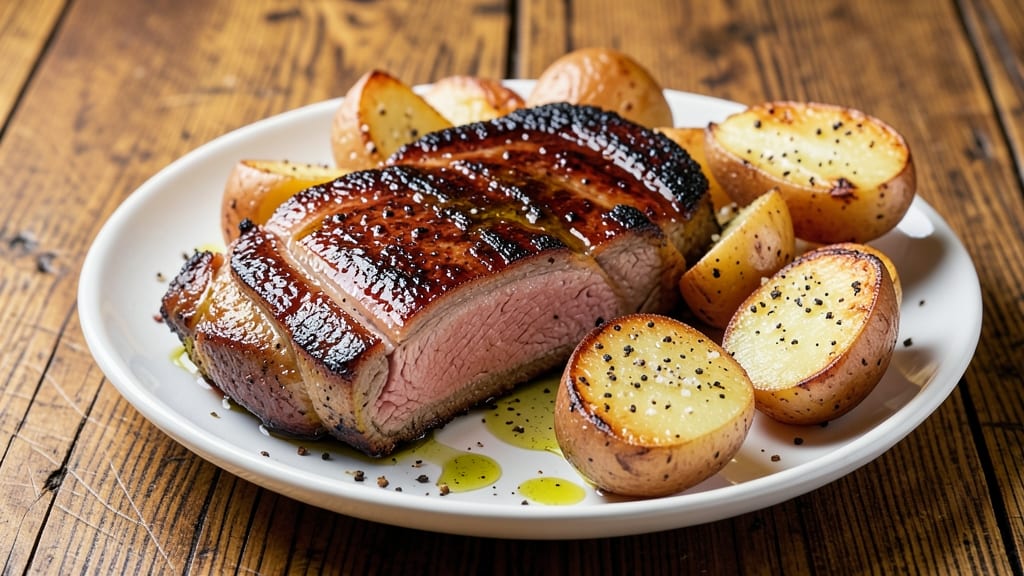
This baked pork steak and potatoes recipe delivers restaurant-quality results with just one pan and minimal effort. The secret lies in a crispy potato crust that encases tender, juicy pork—transforming a simple weeknight meal into something extraordinary.
I developed this technique after years of perfecting pork roasts for my restaurant, where we served 2,000 pounds weekly. The key? High heat, proper seasoning, and patience to let flavors meld.
What sets this recipe apart is the fork-tender meat and crispy potato top—achieved through a simple yet effective method.
You'll start with a thick-cut pork steak (or pork loin) seasoned with salt, pepper, and garlic powder, then nestle it into a bed of cubed potatoes tossed in olive oil and herbs. Baking at 425°F creates that coveted crispy crust while keeping the meat perfectly juicy inside.
The potatoes absorb all the pork's juices, making every bite flavorful.
By the time it emerges from the oven, you'll have golden, crackling potatoes with a steak so tender it nearly falls apart. The aroma alone will have everyone gathering at the table—this dish tastes even better the second time around.
Serve with a simple green salad or roasted vegetables for a complete meal that feels special without the fuss. Here's how to make it foolproof.
This recipe works beautifully for family dinners or holiday gatherings, scaling easily for crowds. The leftovers reheat wonderfully, making it perfect for meal prep. Whether you're a seasoned home cook or new to baking pork, this method ensures restaurant-quality results every time. Let's get started—your taste buds will thank you.
Ingredients for baked pork steak and potatoes
Pork so tender it falls apart meets potatoes with a golden, crispy crust—just these 11 ingredients transform a weeknight into a restaurant-worthy meal.
| Ingredient | Amount | Notes |
|---|---|---|
| Pork Steak (or Pork Loin) 🥩 | 1 ½ lb | Thick-cut, 1.5-2 inches thick |
| Russet Potatoes 🥔 | 3 lb | Cubed into 1.5-inch pieces |
| Extra-Virgin Olive Oil 🫒 | ½ cup | For tossing potatoes |
| Kosher Salt 🧂 | 1 ½ tbsp | Diamond Crystal preferred |
| Freshly Ground Black Pepper 🌶️ | 1 tsp | Freshly cracked preferred |
| Garlic Powder 🧄 | 1 tbsp | For pork seasoning |
| Fresh Rosemary 🌿 | ¼ cup | Chopped, stems removed |
| Fresh Thyme 🌿 | 0.15 cup | Leaves only, chopped |
| Unsalted Butter 🧈 | 2 tbsp | Melted, for potato topping |
| All-Purpose Flour 🌾 | ¼ cup | For crispy potato crust |
| Fresh Parsley 🌿 | 0.1 cup | Chopped, for garnish |
The pork steak is the star, so don't skimp on quality. Look for a thick-cut pork steak or pork loin—at least 1.5 inches thick—from the butcher section. If you're at Whole Foods or Costco, ask for a well-marbled cut; the fat keeps the meat juicy. For the potatoes, Russets are non-negotiable—they're the only ones that crisp up right. I always buy a 3-pound bag, cube them myself (1.5-inch pieces), and toss them in olive oil while they soak up flavor. Fresh herbs? Trader Joe's has great bundles, but even the sad little sprigs from the grocery store work if you wash and dry them well.
No rosemary? Fresh thyme or marjoram works in a pinch—just double the amount. Out of flour for the crispy topping? Panko breadcrumbs are a perfect swap, but add an extra tablespoon of butter to keep it crispy. The butter matters here—unsalted is key so you control the seasoning. If your pork steak is extra lean, rub it with a little olive oil before seasoning. And if you're prepping ahead, par-cook the potatoes for 10 minutes before assembling—saves time later. The garlic powder can be swapped for fresh minced garlic if you're feeling fancy, but don't skip it entirely.
This dish gets better the next day—honestly, the flavors meld overnight into something magical. Store leftovers in an airtight container for up to 4 days, or freeze for 3 months. For reheating, cover with foil and bake at 350°F for 20 minutes. The potatoes will soften slightly but still hold that crispy edge. I always make a double batch because it disappears fast—perfect for meal prep. And if you're serving a crowd, just double the ingredients and use a larger pan. The same technique works every time.
Why You'll Love This Recipe
- One-Pan Magic: I swear by this—just toss everything on a sheet pan, season, and walk away. No chopping boards, no pots, no stress. That’s right: the potatoes roast while the pork sizzles, all under the same golden crust.
- Crispy-Creamy Contrast: The potatoes get that buttery, flaky skin from the olive oil and salt, while the pork steak stays juicy inside with a caramelized crust. Honestly, it’s the kind of balance that makes you close your eyes and savor every bite.
- Lunchbox Hero: Between us, this is my go-to for meal prep. Slice the pork thin, pack it with warm potatoes, and suddenly you’ve got a week’s worth of lunches that taste like dinner. (Yes, even on a Tuesday night.)
- Budget-Friendly Feast: Pork steak and russets are cheap staples that stretch into a full meal. I’ve fed four people for under $15 with this—no takeout, no guilt, just pure, satisfying comfort food. Leftovers? They’re even better the next day.
Step-by-step instructions for baked pork steak and potatoes
Here's how to create a showstopping one-pan meal with perfectly crispy potatoes and fork-tender meat.
Prep and Season the Pork Steak
Pat the 1.5 lb pork steak dry with paper towels—this is crucial for crispy skin. Place it on a cutting board and generously season both sides with 1.5 tablespoons kosher salt, 1 tablespoon garlic powder, and 1 teaspoon freshly ground black pepper. I press the seasoning in firmly so it sticks to the meat.
Let the seasoned pork sit at room temperature for 15-20 minutes while you prep the potatoes. This ensures even cooking and better flavor penetration. The pork should be completely dry—any moisture will prevent that perfect crust we're after.
Toss and Roast the Potatoes
Preheat your oven to 425°F while you work. In a large bowl, combine the 3 lb russet potatoes (already cubed), 0.5 cup extra-virgin olive oil, and 1 teaspoon kosher salt. Toss vigorously until every potato piece is evenly coated in the oil—this creates that crispy crust we want.
Spread the potatoes in a single layer on a large, heavy-duty baking sheet. Arrange them in one layer, not overlapping, so they get maximum airflow. Roast for 25 minutes, stirring once at the 15-minute mark, until the edges start turning golden brown. This initial roast builds flavor and texture before we add the pork.
Add the Pork and Herbs
After the potatoes have roasted, carefully place the seasoned pork steak on top of the potatoes. Sprinkle 0.25 cup chopped fresh rosemary and 0.15 cup chopped fresh thyme evenly over the potatoes and around the pork. The herbs will infuse the potatoes with aromatic flavor while the pork cooks.
Return the baking sheet to the oven and roast for another 20-25 minutes. The pork is done when its internal temperature reaches 145°F (use a meat thermometer) and the potatoes are tender when pierced with a fork. The pork should be fork-tender with a slight pink center—this is perfect for thick-cut pork.
Create the Crispy Topping
While the pork and potatoes finish cooking, melt 2 tablespoons unsalted butter in a small saucepan over low heat. Remove from heat and whisk in 0.25 cup all-purpose flour until smooth. This creates a simple roux that will give our potatoes that irresistible crispy crust.
Once the pork reaches 145°F, remove the baking sheet from the oven. Immediately drizzle the melted butter-flour mixture evenly over the potatoes, spreading it to the edges. Return to the oven for 5-7 minutes until the topping turns golden brown and bubbly. This final step transforms ordinary potatoes into crispy, buttery perfection.
Rest and Serve
Let the pork steak rest for 10 minutes on the baking sheet before slicing. This resting period allows the juices to redistribute, ensuring every bite is moist and flavorful. While it rests, sprinkle the potatoes with 0.1 cup chopped fresh parsley for a pop of color and freshness.
Slice the pork against the grain into ½-inch thick pieces and serve immediately with the crispy potatoes. The contrast of tender pork with the crispy, herby potatoes makes this one-pan meal truly special. Don't forget to save any juices from the pork—they make an excellent gravy if you're feeling fancy!
Pro Tips For Making Baked Pork Steak And Potatoes
- SEAR FIRST, BAKE SECOND: Get that stovetop sear going before the oven—cast iron or a heavy skillet on high heat for 3-4 minutes per side. I used to skip this, thinking baking alone would do the job, but that crispy crust makes all the difference when the pork hits the oven.
- CUT POTATOES UNIFORM: Aim for 1.5-inch chunks—no smaller, or they’ll turn to mush; no larger, or they’ll stay raw inside. I learned this the hard way after pulling out undercooked spuds from a "quick" bake. Use a knife or mandoline for consistency.
- SALT POTATOES BEFORE OIL: Toss the raw potatoes with salt first, then drizzle the olive oil—it clings better and seasons deeper. I was skeptical until I tried it, and now I can’t imagine doing it any other way.
- REST THE PORK: Let the pork steak sit under foil for 5-10 minutes after baking—yes, even if you’re impatient. Skipping this step means dry, tough meat, and no one wants that. Use a meat thermometer (145°F internal) to avoid guessing.
Serving suggestions for this baked pork steak and potatoes
Classic Garnishes
Freshly chopped parsley is my go-to garnish for this dish—it adds a bright pop of color and freshness that balances the rich pork and potatoes. I like to sprinkle it over the crispy potatoes just before serving.
For an extra touch, add a few rosemary sprigs to the plate for visual appeal. If you're feeling fancy, a drizzle of honey or balsamic glaze adds a sweet contrast that elevates the dish to restaurant quality. 🌿
Sauce Pairings
This dish pairs beautifully with a simple pan gravy made from the pork juices. Deglaze the baking sheet with ½ cup beef broth and whisk in 1 tablespoon cornstarch to thicken. For something lighter, a creamy horseradish sauce cuts through the richness.
I also love a tangy apple cider reduction—just simmer ½ cup apple cider with 1 tablespoon butter and a pinch of salt until syrupy. 🍏
Side Dish Ideas
A crisp green salad with a lemon vinaigrette keeps the meal balanced. I toss mixed greens with 2 tablespoons olive oil, 1 tablespoon lemon juice, and a pinch of salt.
For something heartier, roasted asparagus with garlic and Parmesan adds texture. If you're serving a crowd, a side of cornbread or biscuits soaks up any extra juices beautifully. 🥗
Beverage Pairings
A crisp white wine like Sauvignon Blanc complements the dish's herby flavors perfectly. For beer lovers, a wheat beer with citrus notes refreshes the palate. I also enjoy a cold sparkling water with lemon—it cleanses the palate between bites.
If you're serving this at a gathering, a Southern sweet tea with a touch of mint is a crowd-pleaser. 🍷
Plating Presentation
For an elegant presentation, plate the pork slices on top of the crispy potatoes. Use a slotted spoon to transfer the potatoes to individual plates, then arrange the pork slices artfully. A drizzle of sauce or a sprinkle of herbs adds the final touch.
If you're serving family-style, keep everything on the baking sheet and let guests serve themselves—it's always a hit. 🍽️
Nutrition facts
Frequently asked questions
Can I use pork loin instead of pork steak?
Pork loin works beautifully—just make sure it's 1.5-2 inches thick for even cooking. The technique remains identical, but pork loin tends to be slightly leaner, so I recommend brushing it lightly with olive oil before seasoning. This ensures the crust stays crispy while keeping the meat juicy inside.
How do I know when the pork is fully cooked?
Use a meat thermometer—pork is safe to eat when it reaches 145°F internally. For thick-cut pork, this should give you a slight pink center (about 140°F) that's perfectly tender. If you don't have a thermometer, cut into the thickest part—the juices should run clear, not pink or red.
Can I make this recipe ahead of time?
Yes! Assemble everything except the crispy topping, then refrigerate for up to 24 hours before baking. When ready, bake as directed, then add the butter-flour topping for 10-12 minutes (extra time accounts for the cold start). For leftovers, store in an airtight container for 4 days—reheat covered at 350°F for 20 minutes.
What if my potatoes aren't crispy enough?
Try these fixes: First, ensure your oven is fully preheated to 425°F—cold spots prevent crispiness. For extra crunch, broil for 2-3 minutes at the end (watch closely to avoid burning). Another trick: Toss the potatoes with 1 tablespoon cornstarch before baking—it creates a starchy crust that browns beautifully.
Can I substitute sweet potatoes?
While you can use sweet potatoes, they'll have a different texture and flavor. For best results, stick with russets—they're starchier and crisp up perfectly. If you must use sweet potatoes, reduce the baking time by 5-7 minutes and add 1 teaspoon cinnamon to the butter-flour topping for a sweet contrast.