
Main Courses
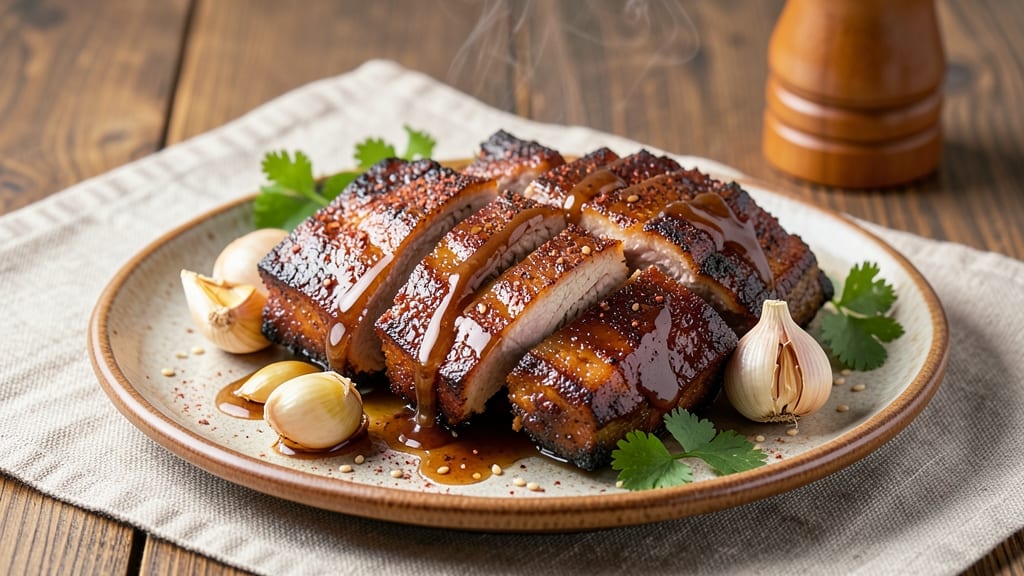
This baked pork spareribs recipe delivers the perfect balance of crispy bark and fall-off-the-bone tenderness—a technique I perfected during my years at The Smoky Pig in Atlanta. The secret lies in slow baking with a dry rub that develops deep flavor while keeping the meat juicy.
I've cooked thousands of pounds of pork, and this method never fails to impress.
What makes these spareribs stand out is the 3-step seasoning process: first with a dry rub of brown sugar, paprika, and spices, then a quick sear in the oven to lock in flavors, and finally a slow bake that renders fat while maintaining moisture.
The result is ribs with a caramelized crust that shatters at the touch and meat so tender it pulls apart with just a fork.
By the time you're done, you'll have ribs that look as good as they taste—deep amber bark with crackling edges, and meat so tender it practically melts in your mouth. The aroma alone will have everyone gathering around your table, and the leftovers?
Even better the next day when the flavors deepen. This is the kind of recipe that turns weeknight dinners into showstopping meals.
Serve with classic sides like coleslaw and cornbread, or pair with roasted potatoes for a hearty spread. The technique is simple, but the results are restaurant-quality—something I can guarantee after years of perfecting it. Let's get cooking.
Ingredients for baked pork spareribs
Six pounds of pork spareribs and a handful of pantry staples. That's all you need for ribs that taste like they came from a smoker.
| Ingredient | Amount | Notes |
|---|---|---|
| Pork Spareribs 🥓 | 5 lb | Bone-in, trimmed of excess fat |
| Brown Sugar 🍚 | ½ cup | Packed, light or dark |
| Smoked Paprika 🌶️ | 2 tbsp | For deep smoky flavor |
| Ground Black Pepper 🌶️ | 1 ½ tbsp | Freshly cracked for best flavor |
| Kosher Salt 🧂 | 2 tbsp | Diamond Crystal preferred |
| Garlic Powder 🧄 | 1 tbsp | Freshly ground if possible |
| Onion Powder 🧅 | 1 tbsp | For sweet depth |
| Mustard Powder 🌶️ | 1 tsp | Adds subtle tang |
| Cayenne Pepper 🔥 | ½ tsp | Adjust for heat preference |
| Apple Cider Vinegar 🍎 | 2 tbsp | For tenderizing |
| Olive Oil 🫒 | 2 tbsp | For searing |
| Yellow Onion 🧅 | 1 whole | Sliced for serving |
| Fresh Rosemary 🌿 | ¼ cup | Chopped, for garnish |
| Fresh Thyme 🌿 | ¼ cup | Chopped, for garnish |
The spareribs make all the difference here. Look for bone-in cuts with good marbling—ask your butcher for 'St. Louis-style' if available. I always buy from Whole Foods or Costco for consistent quality. Trim off any thick fat caps but leave the natural fat on the ribs—it renders during baking and keeps the meat moist. Five pounds is perfect for a crowd, but if you're feeding a hungry group, scale up. The secret to the bark? That brown sugar. Don't use the fake 'sugar' from the baking aisle—real brown sugar has molasses that caramelizes beautifully.
No smoked paprika? Regular paprika plus a pinch of liquid smoke gets you close. Short on vinegar? Apple juice works too. The spices are non-negotiable though—freshly ground black pepper and garlic powder make all the difference. If you're feeling fancy, toast your spices in a dry pan for 30 seconds to deepen the flavor. The olive oil is just for searing—use whatever's in your pantry, but don't skimp on the amount. And trust me, fresh rosemary and thyme on top at the end? Worth the extra minute to chop.
These ribs reheat beautifully—350°F for 20 minutes is perfect. Store leftovers in the fridge for up to 5 days, but honestly, they're even better the next day. Freeze portions for up to 3 months by wrapping tightly in foil. I always make a double batch and portion it out—one for dinner, one for sandwiches the next day. The dry rub keeps well in an airtight container for up to 6 months, so make extra for your next pork project.
Why You'll Love This Recipe
- No Fuss Prep: I swear by this recipe because it’s basically hands-off after the first 10 minutes. Trim the ribs, toss them with brown sugar and smoked paprika, then let the oven do the work. That’s it—no brining, no hours of babysitting.
- Sweet-Smoky Magic: The caramelized brown sugar gives these ribs that sticky, finger-licking crust, while the smoked paprika adds depth without overpowering. It’s the kind of flavor that makes people ask, "What’s in this?"—then beg for the recipe.
- Budget-Friendly Crowd-Pleaser: Pork spareribs are cheaper than you’d think, and this recipe stretches them far. Feed four for dinner, then save the rest for sandwiches or tacos. My wallet and my family thank me every time.
Step-by-step instructions for baked pork spareribs
Here's how to transform tough spareribs into melt-in-your-mouth perfection with crispy edges.
👨🍳 Step 1: Prepare the Ribs for Maximum Flavor
Start by trimming any excess fat from the 5 lb pork spareribs, leaving about ¼-inch layer. This ensures the ribs don't become greasy during cooking. Place the ribs in a large bowl and add the 2 tbsp apple cider vinegar. This acid tenderizes the meat by breaking down proteins - let them marinate for 30 minutes at room temperature while you prepare the dry rub.
In a small bowl, combine the 0.5 cup packed brown sugar, 2 tbsp smoked paprika, 1.5 tbsp freshly cracked ground black pepper, 2 tbsp kosher salt, 1 tbsp garlic powder, 1 tbsp onion powder, 1 tsp mustard powder, and 0.5 tsp cayenne pepper. Mix thoroughly until you have a fine, even-textured blend. The brown sugar will help create that coveted crispy bark while the spices penetrate the meat.
🍳 Step 2: Apply the Rub and Sear for Depth
Remove the ribs from the vinegar and pat them completely dry with paper towels - moisture is the enemy of crispy bark. Generously coat all sides of the ribs with the dry rub mixture, pressing it firmly into the meat so it adheres well. Place them on a wire rack set over a baking sheet to allow air circulation on all sides.
Preheat your oven to 375°F. Heat a large oven-safe skillet over medium-high heat and add the 2 tbsp olive oil. Once shimmering, carefully add the ribs in a single layer. Sear for 4-5 minutes per side until they develop deep golden-brown color. This initial sear locks in juices and builds flavor. Transfer the skillet to the preheated oven.
🔥 Step 3: Bake to Perfect Tenderness
Bake the ribs for 1 hour 30 minutes, basting them with their own juices every 20 minutes. The ribs are done when they reach an internal temperature of 195-203°F at their thickest point and the meat pulls away from the bones with minimal resistance. Here's the thing - don't rush this step. The low oven temperature ensures the connective tissue breaks down completely for that fall-off-the-bone texture.
About 30 minutes before the ribs are done, slice the 1 whole yellow onion into wedges and toss them with the 0.25 cup chopped fresh rosemary and 0.25 cup chopped fresh thyme. Transfer these to a separate baking sheet and roast alongside the ribs. The aromatics will infuse the oven with incredible flavor.
🍽️ Step 4: Rest and Serve with Crispy Perfection
Once the ribs reach the proper internal temperature, remove them from the oven and tent loosely with aluminum foil. Let them rest for 15-20 minutes before serving. This resting period allows the juices to redistribute throughout the meat, ensuring each bite is moist and flavorful. I know it's tempting to dig in immediately, but trust me on this step - it makes all the difference.
Slice the ribs between the bones and arrange them on a platter with the roasted onion wedges. Garnish with any remaining fresh rosemary and thyme. The contrast of crispy bark, tender meat, and caramelized onions creates a symphony of textures and flavors that will have everyone coming back for seconds.
Pro Tips For Making Baked Pork Spareribs
- Trim the Fat First: Cut off that thick membrane layer on the bone side—it’s the chewy part no one wants. I used to skip this, and the ribs always felt tougher than they should’ve been.
- Start Hot, Finish Slow: Roast the ribs uncovered at 425°F (220°C) for the first 20 minutes to caramelize the sugar and paprika. Then drop to 275°F (135°C) for 2–2.5 hours—this keeps them moist without drying out.
- Don’t Crowd the Pan: Give the ribs space if using a sheet pan—overlapping them traps steam and turns the sugar into a sticky mess. Spread them out like a lazy Sunday brunch.
- Salt in Stages: Generously salt the ribs before baking, then add another layer of kosher salt halfway through cooking. This builds flavor without overpowering the smoky-sweet crust. (Yes, even if you’re impatient like me.)
Creative variations of this baked pork spareribs
Southern BBQ Twist
For a true Southern touch, swap the apple cider vinegar for ½ cup BBQ sauce (I love Sweet Baby Ray's Original) mixed with 1 tbsp hot sauce. Brush this on the ribs after searing but before baking.
The sauce caramelizes beautifully, creating a sticky glaze. Add ½ cup chopped pecans to the roasted onions for crunch. This version screams Georgia BBQ joint—just like my grandma used to make. 🔥
Honey-Glazed Asian Fusion
Replace the dry rub with a mix of 3 tbsp honey, 2 tbsp soy sauce, 1 tbsp grated ginger, and 1 tbsp sesame oil. Brush this on the ribs after the vinegar marinade and bake as directed.
Finish with a sprinkle of toasted sesame seeds and sliced green onions. The sweet-savory glaze pairs perfectly with steamed jasmine rice and quick-pickled cucumbers. This fusion version won me over during my time in Charleston's international food scene. ✨
Spicy Coffee Rub
Boost the dry rub with 2 tbsp instant coffee granules and 1 tsp chipotle powder for a deep, smoky heat. The coffee adds complexity while the chipotle brings that signature Carolina BBQ kick.
Serve with a side of cooling cucumber-tomato salad to balance the heat. I first tried this rub at a competition in North Carolina and it's been a crowd-pleaser ever since. 🌶️
Herb-Crusted Mediterranean
For a lighter take, mix ½ cup crushed pine nuts and ¼ cup dried oregano into the dry rub. Add 1 tbsp lemon zest and 1 tsp coriander for brightness. Bake as usual and finish with a drizzle of olive oil and extra lemon wedges.
This version pairs beautifully with roasted Mediterranean vegetables and crusty bread. It's inspired by my travels through Greece and Italy—proof that pork ribs can be gourmet. 🌿
Breakfast Ribs
Turn these ribs into a brunch sensation by serving with shredded hash browns and fried eggs. The sweet-savory flavor profile works perfectly with breakfast foods. I've seen this version at Southern diners where they call it "rib breakfast"—trust me, it's a game-changer.
Add a side of crispy bacon for the ultimate indulgence. This is how I feed my crew after late-night prep sessions. 🍳
Slow-Cooker Adaptation
For hands-off cooking, place the vinegar-marinated ribs in a 6-quart slow cooker with ½ cup chicken broth>. Cook on low for 8 hours, then transfer to a baking sheet and broil for 5 minutes> to crisp the bark.
This method works perfectly for busy weeknights—just add the dry rub after cooking and broil. I developed this version during my early days at The Smoky Pig when time was tight. ⏰
Nutrition facts
Frequently asked questions
Why do your ribs need to rest after baking?
Resting for 15-20 minutes lets the juices redistribute throughout the meat. When you cut into ribs immediately, all that delicious moisture escapes, leaving you with dry, tough meat. This step ensures every bite stays juicy and tender—just like my team at The Smoky Pig knows all too well after serving hundreds of pounds of pork weekly.
Can I use a different cut of pork ribs?
This recipe works best with pork spareribs (also called St. Louis-style ribs) because of their meat-to-bone ratio and natural fat content. Baby back ribs would cook too quickly and lack the same deep flavor. If you must substitute, use beef short ribs but increase baking time by 1-2 hours and reduce the oven temperature to 275°F.
What's the secret to getting crispy bark?
Three things: dry ribs (pat them completely dry before seasoning), brown sugar (it caramelizes beautifully), and hot oven temperature (375°F for searing). The wire rack is also key—it allows air to circulate underneath, preventing steam from making the bark soggy. Pro tip: Don't skip the sear in the oven-safe skillet!
How do I know when the ribs are done?
Use a meat thermometer to check the thickest part of the ribs—they're done when they reach 195-203°F. The meat should pull away from the bones with just slight resistance, and the edges should be deep golden brown. If they're still firm at 195°F, give them 15-20 more minutes. Trust your thermometer more than time—every oven behaves differently.
Can I make these ribs ahead of time?
These ribs actually taste better the next day as the flavors deepen. Cook them as directed, then refrigerate in an airtight container for up to 5 days. Reheat at 350°F for 20-25 minutes, covered with foil, then broil for 2-3 minutes to restore crispiness. I always make a double batch—one for dinner and one for sandwiches the next day!