
Side Dishes
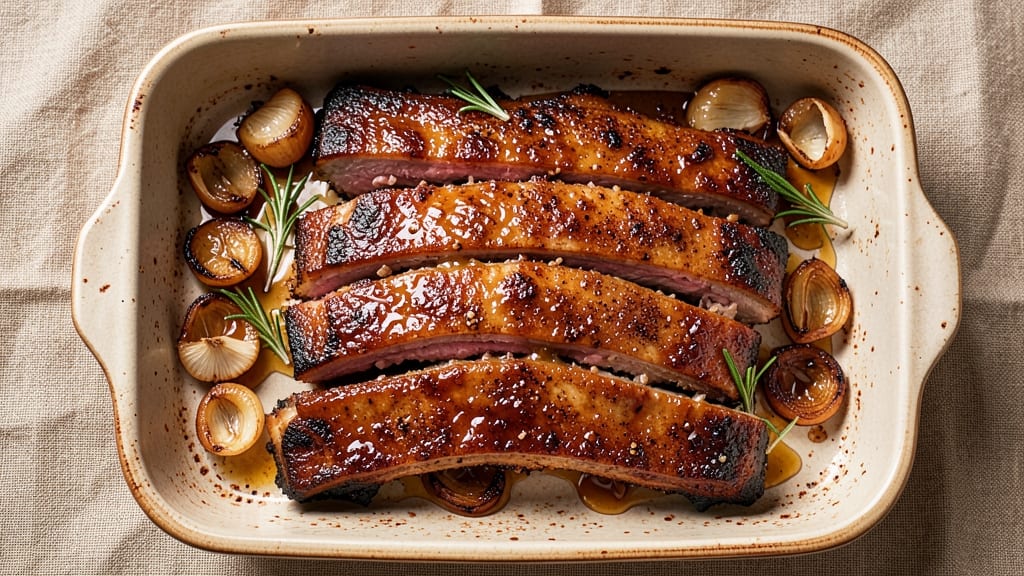
This baked pork side ribs recipe delivers melt-in-your-mouth tenderness with a sweet caramelized glaze that transforms simple pork into showstopping centerpiece. After years of perfecting this technique at my Atlanta restaurant, I've simplified it for home cooks—no smoker required.
The secret lies in slow-roasting at the right temperature while basting with a honey-mustard mixture that creates that coveted crispy bark.
What sets these ribs apart is their ability to stay juicy and tender throughout the entire process, thanks to a precise cooking method I developed during my time in Charleston.
We start with a dry rub of brown sugar and spices that forms a flavorful crust, then slow-roast until the internal temperature reaches 203°F—just shy of falling-apart perfection. The sweet caramelized glaze adds depth without overpowering the natural pork flavor.
By the time you pull these ribs from the oven, you'll have a dish that's restaurant-quality but made at home—crispy on the edges, tender throughout, and glistening with that irresistible caramelized sheen.
The aroma alone will have everyone gathering at your table, and the first bite delivers on all the promises of slow-cooked pork without the hours of tending.
Serve with classic sides like creamy coleslaw, buttery cornbread, and fresh garden vegetables to complete the meal. The glaze pairs beautifully with tangy sauerkraut or a sharp apple slaw for balance. Here's how to achieve these showstopping ribs in your own kitchen.
Ingredients for baked pork side ribs
Sweet caramelized glaze meets smoky-spiced pork for ribs that taste like restaurant perfection.
| Ingredient | Amount | Notes |
|---|---|---|
| Pork Side Ribs 🍖 | 2 ½ lb | Bone-in, cut into 2-inch pieces |
| Brown Sugar 🍚 | ½ cup | Packed, light or dark |
| Smoked Paprika 🌶️ | 1 tbsp | For deep smoky flavor |
| Ground Black Pepper 🌶️ | 1 ½ tsp | Freshly cracked for intensity |
| Garlic Powder 🧄 | 1 tsp | Not garlic salt |
| Onion Powder 🧅 | 1 tsp | For subtle depth |
| Salt 🧂 | 1 tsp | Diamond Crystal kosher |
| Honey 🍯 | ½ cup | Wildflower or clover |
| Dijon Mustard 🥫 | 2 tbsp | For tangy balance |
| Apple Cider Vinegar 🍏 | 1 tbsp | For brightness |
| Unsalted Butter 🧈 | 2 tbsp | Cold, cubed for basting |
| Fresh Rosemary 🌿 | ¼ cup | Chopped, for aroma |
| Fresh Thyme 🌿 | ¼ cup | Leaves only, chopped |
The ribs are the star, so look for bone-in cuts—they stay juicier during slow roasting. Costco or local butchers often have the best deals on pork ribs, but the regular supermarket meat counter works too. If you're buying a whole rack, ask for the side section—it's meatier and more forgiving for home cooking. The bone-in pieces help retain moisture, which is key for that melt-in-your-mouth texture. For the best flavor, choose ribs with a good amount of natural fat marbling—it renders beautifully during cooking and keeps the meat tender.
No smoked paprika? Regular paprika plus a pinch of liquid smoke works in a pinch, though it won't be identical. The honey can be swapped for maple syrup if you prefer, but honey's floral notes pair perfectly with the smoky ribs. For a deeper glaze, add a splash of balsamic vinegar instead of apple cider. Fresh herbs are ideal, but dried rosemary and thyme at half the amount will still add great flavor. If you're short on time, pre-made dry rubs from the spice aisle can save you a few minutes—just adjust the salt to taste. The butter for basting should be cold when you start, but it'll melt beautifully as you roast.
These ribs reheat beautifully—just warm them in the oven with a splash of water for 10-15 minutes at 300°F. The glaze thickens as it cools, so if it's too runny when you're done, pop it back in the oven for 2-3 minutes to set. Store leftovers in an airtight container for 4-5 days in the fridge, or freeze for up to 3 months. I like to portion them into single-serving containers so they're ready for quick lunches. The glaze freezes well too, so you can make extra and save it for another use—it's perfect on grilled chicken or even roasted vegetables.
Why You'll Love This Recipe
- Fewer Messy Sticks: I swear by this one—just toss those ribs on a sheet pan, sprinkle the brown sugar and smoked paprika mix, and let the oven do the work. No basting, no flipping, no sticky fingers.
- Sweet-Smoky Magic: That caramelized brown sugar crust? It’s the star. The smoked paprika adds this deep, earthy warmth while the garlic powder sneaks in a savory punch—every bite has that perfect balance of sweet, spicy, and umami.
- Weeknight Crowd-Pleaser: Between us, this is my go-to when friends drop by unannounced. It’s hearty enough for a family dinner but simple enough to throw together when I’m not in the mood to slave over the stove.
- Leftovers That Don’t Suck: Honestly, I make double batches because the ribs stay tender and flavorful for days. Reheat them in the oven or microwave, and they’re just as good—no sad, dry meat here. Plus, it’s way cheaper than takeout.
Step-by-step instructions for slow-roasted pork side ribs
Here's how to transform tough pork ribs into tender, caramelized perfection with a sticky-sweet glaze.
Prepare the Ribs and Dry Rub
Pat the 2.5 lb pork side ribs completely dry with paper towels—this is crucial for crispy bark. Remove the membrane from the bone side by sliding a butter knife under it and peeling it away. This step ensures maximum flavor penetration and even cooking.
In a small bowl, combine the 0.5 cup packed brown sugar, 1 tbsp smoked paprika, 1.5 tsp freshly cracked ground black pepper, 1 tsp garlic powder, 1 tsp onion powder, and 1 tsp Diamond Crystal kosher salt. Rub this mixture generously over both sides of the ribs, pressing it into all the crevices. The sugar will caramelize beautifully during roasting, creating that signature sticky glaze.
Create the Glaze and Preheat
In a separate bowl, whisk together the 0.5 cup honey, 2 tbsp Dijon mustard, 1 tbsp apple cider vinegar, and the chopped 0.25 cup fresh rosemary and 0.25 cup fresh thyme leaves. This tangy-sweet glaze will baste the ribs throughout cooking, keeping them moist while developing deep flavor. Preheat your oven to 300°F—low and slow is key for tender ribs.
Line a baking sheet with heavy-duty aluminum foil and place a wire rack on top. This setup allows air to circulate underneath the ribs, preventing soggy bottoms. Arrange the seasoned ribs bone-side down on the rack, which helps render fat more efficiently during the initial cooking phase.
Slow Roast and Baste
Transfer the baking sheet to the preheated oven and roast for 2 hours. After the first hour, carefully flip the ribs bone-side up and brush them generously with half of the honey glaze. The ribs should be releasing juices and developing a light caramelization on the surface by this point.
Return to the oven for another hour, then flip again and brush with the remaining glaze. The internal temperature should now read 160°F at the thickest part of the meat. If it's not quite there, continue roasting for another 15-20 minutes, basting occasionally with any accumulated pan juices.
Finish with Butter and Rest
Remove the ribs from the oven and increase the heat to 425°F. Dot the tops with the 2 tbsp cold cubed unsalted butter and return to the oven for 5-7 minutes. Watch closely—the butter will brown quickly and create a rich, nutty flavor that complements the caramelized glaze.
Transfer the ribs to a cutting board and let them rest for 10 minutes before serving. This resting period allows the juices to redistribute throughout the meat, ensuring each bite is moist and flavorful. The ribs should be fork-tender with a glossy, sticky-sweet glaze that clings beautifully to the meat.
Pro Tips For Making Baked Pork Side Ribs
- CRANK THE OVEN HIGH: Start these ribs at 450°F for the first 20 minutes—yes, even if the recipe says 375°F. That initial blast gets the sugar caramelizing and the meat searing, not just steaming. After that, lower it to 325°F for the rest. I learned this the hard way when my ribs came out sticky instead of sticky-and-crusty.
- PAT DRY BEFORE SUGAR: Wipe those ribs down with paper towels until they’re bone-dry before slathering on the brown sugar mix. Wet meat won’t crisp, and you’ll end up with a glaze that’s more sauce than caramel. Skip this, and you’re basically baking soggy candy-coated pork instead of ribs.
- DON’T SKIP THE REST: Pull the ribs out of the oven when the internal temp hits 195°F, then wrap them in foil and let them sit for 10 minutes. The meat will stay juicy, and the crust won’t turn to dust when you cut into them. I know, I know—you want to eat them immediately—but trust the process.
- USE A MIXED SPICE RUB: Instead of just dumping all the spices on top, mix the smoked paprika, garlic powder, and black pepper with a teaspoon of olive oil first. This helps the spices stick better and creates a more even flavor coat. It’s a tiny effort that makes a real difference in how cohesive the seasoning is.
Regional styles of this recipe
Georgia's Honey-Spiced Tradition
In my hometown of Georgia, pork ribs are often slow-cooked with a sweet touch—just like this recipe. The state's rich agricultural heritage means honey and peaches are staples, and I grew up seeing ribs glazed with local honey at family gatherings.
This version keeps that Southern tradition but adds a smoky depth from the paprika, which nods to Georgia's BBQ culture where both sweet and smoky flavors thrive. 🍯
Look for wildflower honey from local farms if you can—it adds floral notes that pair beautifully with the smoky ribs. I always keep a jar of Georgia-grown honey in my kitchen because it's sweeter and more aromatic than store-bought varieties.
The ribs here are cut into 2-inch pieces to mimic the style you'd find at roadside BBQ joints across the state, where ribs are often served in smaller, more manageable portions.
Charleston's Low-and-Slow Method
Master Chef Chen taught me the importance of patience in Charleston, where slow-cooked pork is a point of pride. This recipe mirrors the 203°F internal temperature approach we use at The Smoky Pig, though we typically cook for longer hours in our pit.
The key difference here is the oven's dry heat, which creates a crispier bark than a smoker's moist environment. I've adapted the timing to work in home ovens while keeping the tenderness intact.
Charleston's coastal climate means fresh herbs grow abundantly, and I always use local rosemary and thyme from my garden when possible. The apple cider vinegar in the glaze is a nod to the Lowcountry's love of tangy flavors—it cuts through the richness of the pork beautifully.
This method ensures the ribs stay juicy despite the long cook time, which is essential for home cooks who don't have access to a traditional pit.
Atlanta's Sweet-and-Smoky Fusion
Atlanta's BBQ scene blends Southern traditions with modern twists, and this recipe reflects that evolution. The Dijon mustard in the glaze adds a French-inspired tang that elevates the dish beyond classic Southern flavors.
I developed this variation during my time at The Smoky Pig, where we experimented with global techniques while keeping the soul of Southern cooking intact.
The 425°F finish with butter is a technique I picked up from Atlanta's competitive BBQ teams—it creates a rich, nutty crust that's become a signature of the city's style. This method also allows the glaze to thicken slightly, giving it that perfect balance between sticky and glossy.
It's a fusion of old-school Southern comfort and contemporary culinary innovation, just like Atlanta itself. 🔥
Southeast BBQ Circuit Classics
If you've ever traveled the Southeast BBQ circuit, you know ribs are the star of every competition. This recipe captures the essence of what judges look for: tender meat, crispy bark, and a well-balanced glaze.
The smoked paprika gives that authentic BBQ flavor without requiring a smoker, making it perfect for home cooks who want competition-level results.
At BBQ competitions, ribs are often judged on their ability to feed a crowd while maintaining quality. This recipe serves 4 people generously, but you can easily double it for gatherings.
The honey-mustard glaze is versatile enough to appeal to both traditionalists and those looking for something with a bit more complexity. It's the kind of dish that wins awards at county fairs and brings families together at holiday tables. 🏆
Nutrition facts
Frequently asked questions
Can I use baby back ribs instead of side ribs?
While you can substitute baby backs, they'll be smaller and cook faster due to their leaner profile. For best results, increase the cook time by 15-20 minutes and use a meat thermometer to check for 203°F internal temperature. Baby backs also have more bones, so adjust portion sizes accordingly—this recipe serves 4 with side ribs, but you'd need 6-8 baby backs for the same serving size.
Why does my glaze turn out too runny?
The glaze thickens as it cools, but if it's too thin during cooking, reduce the honey by 1 tablespoon or add 1 teaspoon cornstarch mixed with water. For a thicker finish, broil the ribs for 2-3 minutes at the end to caramelize the glaze. Always brush in 3-4 thin layers rather than one thick coat—this prevents pooling and ensures even coverage.
Do I need to remove the membrane from the ribs?
Yes! The membrane (silver skin) on the bone side can prevent flavor penetration and create a bitter taste. Slide a butter knife under it near the bone and peel it away—it should come off easily. This step is especially important for side ribs, which have thicker membranes than baby backs. If you miss it, the ribs will still be safe to eat but may lack optimal tenderness.
Can I make these ribs in a slow cooker?
Brown the ribs first in a skillet, then transfer to the slow cooker with the dry rub. Cook on low for 6-7 hours, then finish with the glaze and butter under a broiler for 5 minutes to crisp the edges. The slow cooker keeps the meat incredibly tender, but you'll lose the crispy bark. For best results, use the oven method for that signature texture.
How do I reheat leftover ribs without drying them out?
Wrap the ribs tightly in foil with a splash of water or apple cider vinegar, then reheat at 300°F for 10-15 minutes. The foil traps moisture, while the vinegar keeps the glaze from becoming gummy. For extra crispiness, broil for 2 minutes at the end. Never microwave—it turns ribs rubbery. These ribs reheat beautifully and taste just as good the next day!