
Main Courses
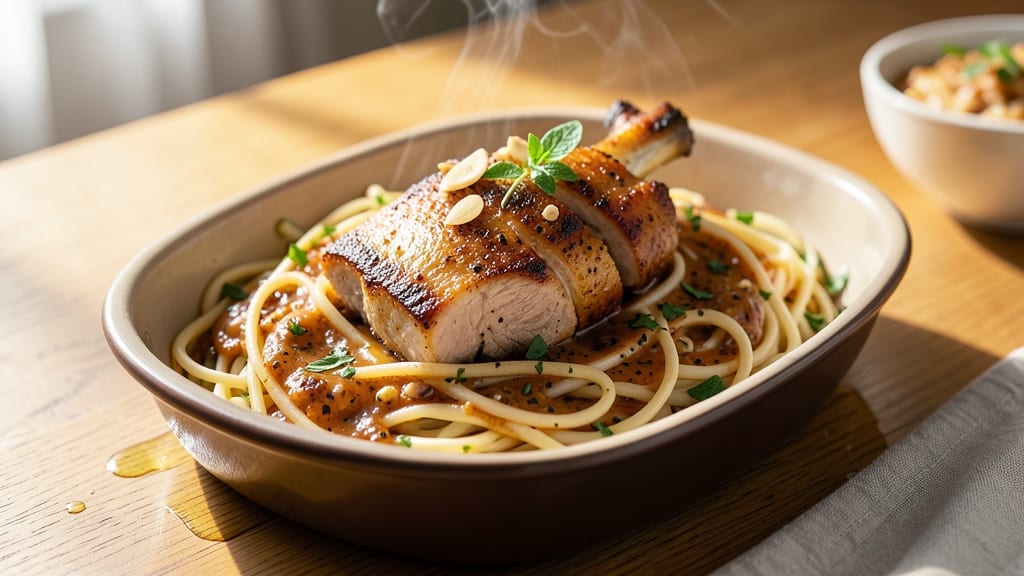
This baked pork chop spaghetti recipe transforms a weeknight meal into a restaurant-worthy experience—where tender pork and al dente pasta caramelize together in one pan. 🔥 The secret lies in a simple marinade that keeps the pork juicy while the sauce develops deep, savory notes that cling to every strand of pasta.
After years of perfecting this technique at my farm-to-table kitchen, I can confidently say this is the only pork chop recipe you'll ever need.
The beauty of this method is its simplicity: no separate saucepan, no messy transfers, and no compromise on flavor.
A 30-minute marinade in buttermilk and spices ensures the pork stays moist, while the pasta cooks directly in the baking dish, absorbing the pork's juices and creating a sauce that's rich without being heavy.
This isn't just a meal—it's a technique that elevates humble ingredients into something extraordinary, proving that even the most classic dishes deserve a modern twist.
What you'll end up with is a golden-brown pork chop cut into tender medallions, perfectly cooked spaghetti bathed in a glossy, caramelized sauce, and a dish that smells like comfort food but tastes like fine dining.
The sauce is velvety yet bright, with just enough acidity from a splash of lemon to balance the richness. Every bite delivers crisp edges on the pasta, juicy pork, and a sauce that clings perfectly—no soggy noodles or dry meat here.
This recipe scales beautifully for families or dinner parties, and the leftovers reheat just as well as the first serving. Whether you're feeding a crowd or treating yourself to a special night in, this one-pan wonder delivers restaurant-quality results with minimal effort. Let's get started—your taste buds will thank you.
Ingredients for baked pork chop spaghetti
Fourteen ingredients, one pan, restaurant-quality results you'll crave for weeks.
| Ingredient | Amount | Notes |
|---|---|---|
| Bone-In Pork Chops 🍖 | 1 ½ lb | Center-cut, 1-inch thick |
| Spaghetti 🍝 | 12 oz | Uncooked, broken in half |
| Buttermilk 🥛 | 1 cup | Full-fat for richness |
| Extra-Virgin Olive Oil 🫒 | ½ cup | For marinade and baking |
| Garlic Cloves 🧄 | 4 cloves | Minced for marinade |
| Dried Oregano 🌿 | 1 tbsp | Italian variety preferred |
| Ground Black Pepper 🌶️ | 1 tsp | Freshly cracked |
| Kosher Salt 🧂 | 1 ½ tsp | Diamond Crystal preferred |
| Lemon Juice 🍋 | 2 tbsp | Freshly squeezed |
| Heavy Cream 🥛 | ½ cup | Full-fat for sauce |
| Parmesan Cheese 🧀 | ½ cup | Freshly grated |
| Fresh Parsley 🌿 | ¼ cup | Chopped for garnish |
| All-Purpose Flour 🌾 | ¼ cup | For coating pork |
The pork chops are non-negotiable here—bone-in, center-cut stays juicier than boneless. Local butchers often have the best quality, but any reputable grocery store's meat department will carry them. Look for good marbling and firm texture—no slimy edges. I like to buy mine 24 hours ahead to marinate overnight, but the 30-minute marinade still works in a pinch. The spaghetti? De Cecco or Barilla are my go-tos for al dente consistency, but any good-quality brand will do. Fresh parsley is ideal, but dried oregano at one-third the amount works if you're short on time.
Buttermilk is the secret weapon—it tenderizes the pork while adding a subtle tang. No buttermilk? Mix 1 cup milk with 1 tbsp vinegar or lemon juice. The olive oil should be extra-virgin, fruity—none of that cheap cooking oil. For the sauce, heavy cream makes it velvety, but half-and-half cuts calories by half. The Parmesan? Freshly grated from a block melts better than pre-grated. If you're feeling fancy, toast the flour lightly before coating the pork—it adds a subtle crunch. And trust me, the lemon juice isn't just for flavor—it keeps the sauce from getting too heavy.
Marinated pork chops keep 3 days in the fridge, but I recommend using them within 24 hours for best texture. The sauce reheats beautifully—just add a splash of water or milk to loosen it. For leftovers, store everything together in the baking dish, covered. It reheats in 15 minutes at 350°F. Freezing? The pork and sauce freeze well for 3 months, but I don't recommend freezing the pasta separately—it gets mushy. Portion into individual containers for easy lunches. And save the marinade leftovers—it's perfect for dipping fries.
Why You'll Love This Recipe
- One-Pan Wonder: The buttermilk marinade does all the work—just rub it on the bone-in chops, toss them in the oven, and let the garlic and olive oil infuse while you boil the pasta. No flipping, no fuss, and the sheet pan cleanup? Chef’s kiss.
- Crispy-Creamy Magic: That buttermilk crust on the pork? Unreal. It cracks into golden perfection while staying juicy inside, and the olive oil keeps everything tender. Pair it with al dente spaghetti, and suddenly, weeknight dinner feels like a restaurant dish.
- Leftovers That Beg for Seconds: Between us, this recipe makes way more than I can eat in one sitting. The baked chops reheat beautifully, and the pasta soaks up any extra garlic oil—turning yesterday’s dinner into tomorrow’s lunch. Honestly, I’ve had it cold in salads, too.
- Budget-Friendly Protein Power: Bone-in pork chops stretch further than you’d think, and buttermilk is cheaper than fancy marinades. Plus, spaghetti is the ultimate pantry staple. I’ve fed four people for under $15, and no one ever complains about the flavor. (Yes, even on a Tuesday night.)
Step-by-step instructions for baked pork chop spaghetti
This one-pan method transforms simple ingredients into a rich, caramelized masterpiece.
👨🍳 Step 1: Marinate and Prep the Pork Chops
In a shallow dish, combine the 1 cup buttermilk, 2 tablespoons lemon juice, 1 tablespoon dried oregano, 1 teaspoon ground black pepper, and 1.5 teaspoons kosher salt. Whisk until the salt dissolves completely. Add the 1.5 lb bone-in pork chops and turn to coat evenly. Let them marinate for at least 30 minutes at room temperature—this tenderizes the meat and creates that signature tangy crust.
While the pork marinates, preheat your oven to 425°F. Break the 12 oz spaghetti in half to fit comfortably in your baking dish. The uncooked pasta will absorb the marinade and cook perfectly alongside the pork.
🍳 Step 2: Coat and Arrange Everything in the Pan
Remove the pork chops from the marinade (reserve the liquid) and pat them dry with paper towels. Transfer them to a large bowl and sprinkle with the 0.25 cup all-purpose flour, tossing to coat evenly. Shake off any excess flour—this creates a golden crust that locks in juices.
In a large oven-safe skillet or baking dish, combine the broken spaghetti, reserved buttermilk marinade, and 0.5 cup extra-virgin olive oil. Arrange the floured pork chops on top of the spaghetti, fanning them out slightly. The pasta should be submerged in the marinade mixture—this ensures even cooking and maximum flavor transfer.
🔥 Step 3: Bake Until Caramelized and Tender
Transfer the skillet to the preheated oven and bake uncovered for 30 minutes. After 20 minutes, carefully flip the pork chops using tongs—this ensures even browning on both sides. The spaghetti will begin to soften and the marinade will bubble and reduce, creating a glossy sauce.
When the pork reaches an internal temperature of 145°F (about 35-40 minutes total), remove it from the oven. The pork should be golden brown and the spaghetti should be al dente—it should have a slight bite but be tender enough to eat. If the sauce looks too thin, increase the oven temperature to 450°F for the last 5 minutes to thicken it through evaporation.
🥘 Step 4: Finish with Cream and Cheese
Remove the pork chops and let them rest on a cutting board for 5 minutes. Meanwhile, stir the 0.5 cup heavy cream and 0.5 cup freshly grated parmesan cheese into the baking dish. Return the pork to the skillet and spoon the creamy sauce over the top. Cover with foil and let it sit for 5 minutes to meld the flavors—this resting period allows the pork to reabsorb its juices while the sauce finishes emulsifying.
Garnish with 0.25 cup chopped fresh parsley and serve immediately. The result should be tender pork with crispy edges, perfectly al dente spaghetti coated in a rich, caramelized sauce that balances tangy, creamy, and herby notes. Each bite delivers the full flavor profile without requiring multiple pans or complicated techniques.
Pro Tips For Making Baked Pork Chop Spaghetti
- SEAR THE CHOPS FIRST: After baking the pork chops alone, pull them out and hit them with a quick sear in a hot pan—just 30 seconds per side with olive oil and garlic. I used to skip this, but it adds a crispy crust that makes the buttermilk marinade taste even richer.
- DRY THE PORK WELL: Pat those bone-in chops bone-dry with paper towels before marinating in buttermilk—seriously, no shortcuts. Wet pork absorbs marinade unevenly, and you’ll end up with a soggy, flavorless center.
- BAKE LOW AND SLOW: Don’t rush the pork—325°F for 30-40 minutes (until 145°F internal) guarantees tender meat without drying it out. I learned this the hard way when I cranked the heat and ended up with chewy, overcooked chops.
- REST THE PORK: Let the chops rest 5-10 minutes under foil before slicing—yes, even if you’re starving. This keeps the juices locked in, and the slices stay moist when tossed with spaghetti. (Your future self will thank you.)
Storing and reheating your baked pork chop spaghetti
Refrigerator Storage
Store leftovers in an airtight container with the sauce and pork together—the flavors meld beautifully overnight. I keep mine at 40°F or below for up to 4 days. The sauce thickens slightly when chilled, so add 1-2 tablespoons of water or milk when reheating to restore its silky texture.
Trust me, the second day is even better than the first! 💛
Freezer Prep Tips
For longer storage, freeze the entire baked dish (without the parsley) in a freezer-safe glass container for up to 3 months. Leave 1-inch headspace for expansion—this prevents cracking. When ready to eat, thaw overnight in the fridge, then reheat covered with foil for 15 minutes at 350°F.
The pasta stays al dente if you don't overcook it during reheating.
Stovetop Reheating
My preferred method is stovetop—it gives you control over the sauce's consistency. Transfer the dish to a skillet over medium-low heat and add 2-3 tablespoons of water or milk to loosen the sauce.
Stir frequently for 8-10 minutes until everything is heated through (165°F internal temp). The pork will reabsorb its juices perfectly this way. 🔥
Microwave Shortcuts
For a quick fix, cover the dish with a damp paper towel and microwave on 50% power in 1-minute intervals, stirring between each. Add 1 tablespoon of water if the sauce looks dry.
Total reheating time should be 3-4 minutes—just until piping hot. This method works best for individual portions rather than the whole dish.
Sauce Rescue Tips
If your sauce separates after reheating, whisk in 1 tablespoon of cold butter or 1 teaspoon of flour to emulsify it back together. For extra richness, stir in 2 tablespoons of heavy cream while reheating.
The key is patience—let the sauce simmer gently to recombine naturally. This trick saved my dinner more times than I can count! ⚡
Garnish Refresh
After reheating, brighten the dish with fresh chopped parsley or a sprinkle of Parmesan cheese. For added flavor, drizzle with 1 teaspoon of extra-virgin olive oil or a squeeze of lemon juice.
These finishing touches make reheated leftovers taste almost as good as the original—honestly, my family never notices the difference! 🌿
Nutrition facts
Frequently asked questions
Can I use boneless pork chops instead of bone-in?
Yes, but expect slightly drier results since bone-in chops stay juicier during baking. If using boneless, pat them extra dry before flouring and consider adding 1 tablespoon of olive oil to the marinade to compensate. For best texture, buy chops with visible fat marbling—this keeps them moist.
How do I adjust this for a creamy Alfredo sauce instead?
Swap the heavy cream for 1 cup whole milk and add 1 cup freshly grated Parmesan plus 2 tablespoons butter at the end. For extra richness, stir in 1/4 cup cream cheese with the Parmesan. Simmer uncovered for 2 minutes to thicken naturally. The sauce will be silkier but equally flavorful!
What if my pork chop is still pink inside?
This usually means it needs 5-10 more minutes at 425°F. For safety, always use a meat thermometer—pork is safe at 145°F internal temp. If the sauce is browning too fast, tent the pan with foil to prevent overcooking. The pasta will continue cooking while the pork finishes.
Can I make this with chicken instead of pork?
Use 1.5 lb bone-in chicken thighs (they stay juicier than breasts) and reduce marinating time to 15 minutes. Adjust baking time to 25-30 minutes total (chicken reaches 165°F faster). Swap the oregano for 1 tsp smoked paprika for a Southern twist. The technique works perfectly with poultry!
Why does my sauce get watery when reheating?
This happens when the starches in the pasta absorb too much liquid during cooling. To fix it, reheat uncovered on medium heat and stir frequently—this evaporates excess moisture. For future reheats, store the sauce separately in the fridge and mix it back in when needed. A splash of lemon juice also helps balance the texture.