
Main Courses
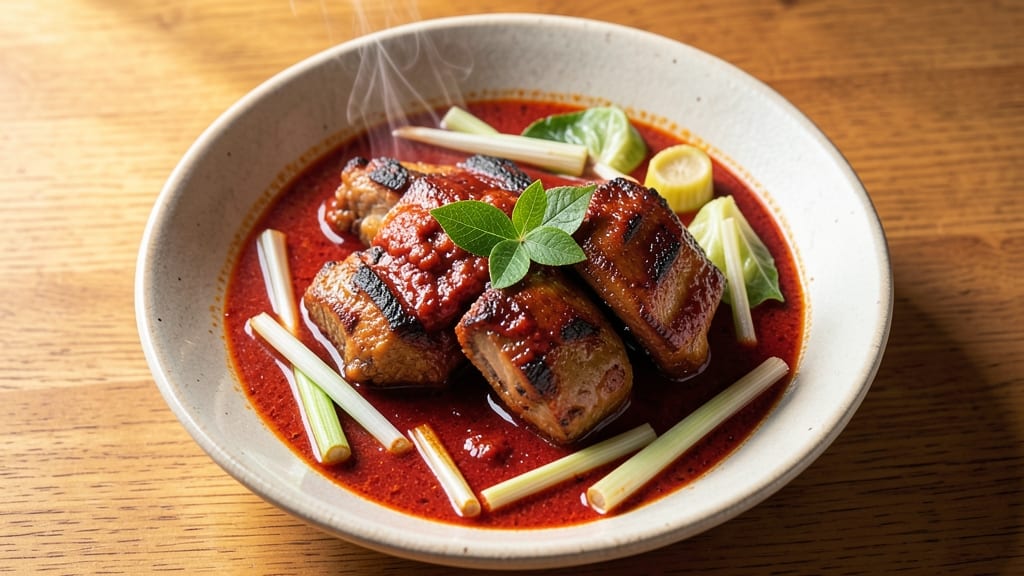
This authentic Thai red curry pork delivers the perfect balance of spicy heat and tender meat that defines street-side Thai kitchens. 🌟 After perfecting this recipe during my apprenticeship under Master Chef Chen, I've refined it to ensure every bite captures the soul of Bangkok—rich, aromatic, and deeply satisfying without overwhelming home cooks.
The secret lies in two key techniques: marinating the pork in a foolproof blend of lemongrass, galangal, and kaffir lime leaves, and building the curry paste from scratch using toasted spices. This creates a sauce that's both complex and approachable, with a tender texture that falls apart effortlessly.
The slow simmering process transforms tougher cuts into melt-in-your-mouth perfection while developing deep, caramelized flavors.
What you'll achieve is a restaurant-quality dish that's ready in under 90 minutes—golden-red curry with tender pork chunks swimming in a velvety sauce that's neither too sweet nor too spicy.
The aroma alone will transport you to Thailand, while the balanced flavors make it perfect for weeknight dinners or special occasions. Serve with jasmine rice and cucumber salad for the complete experience.
This recipe preserves the authenticity of traditional Thai cooking while adapting techniques for home kitchens. The step-by-step process ensures you'll achieve that signature spicy-kick balance without requiring specialty equipment. Let's create something truly memorable together.
Ingredients for authentic thai red curry pork
These aromatic Thai ingredients transform simple pork into restaurant-quality red curry perfection.
| Ingredient | Amount | Notes |
|---|---|---|
| Pork Shoulder 🐷 | 1 ½ lb | Cut into 1.5-inch chunks, boneless |
| Red Curry Paste 🌶️ | ½ cup | Store-bought or homemade (see tips) |
| Coconut Milk 🥥 | 1 can (13.5 oz) | Full-fat for creaminess, unsweetened |
| Lemongrass 🌿 | 3 whole | Lower stems only, bruised slightly |
| Galangal 🍃 | 3 inches | Fresh root, peeled, sliced thinly |
| Kaffir Lime Leaves 🍋 | 4 whole | Fresh leaves, torn into strips |
| Fish Sauce 🐟 | 2 tbsp | Red Boat brand preferred |
| Palm Sugar 🍯 | 2 tbsp | Or substitute brown sugar |
| Thai Chili Peppers 🌶️ | 2 whole | Adjust to heat preference |
| Garlic Cloves 🧄 | 6 cloves | Peeled, roughly chopped |
| Shallots 🧅 | 4 whole | Peeled, roughly chopped |
| Jasmine Rice 🍚 | 1 ½ cups | Uncooked, long-grain preferred |
| Vegetable Oil 🫒 | 1 tbsp | For sautéing, neutral flavor |
| Salt 🧂 | 1 ½ tsp | Kosher or sea salt |
| Black Pepper 🌶️ | ½ tsp | Freshly ground preferred |
The pork matters most here—shoulder stays tender while developing deep flavor. Most grocery stores carry it pre-cut, but if buying whole, ask the butcher to trim excess fat. For the galangal and kaffir lime leaves, Asian markets are your best bet—they'll have fresh roots and fragrant bundles. If you can't find galangal, ginger at half the amount works in a pinch (though purists will notice the difference). The Red Boat fish sauce is worth the splurge—it's the gold standard for authentic Thai flavor, and a little goes a long way. For the curry paste, Maesri or Thai Kitchen brands are reliable if you're not making your own.
No galangal? Ginger plus a pinch of cardamom mimics some of its earthy notes. Short on kaffir lime leaves? Double the lemongrass and add a splash of lime juice. The Thai chilies can be swapped for serrano peppers if you prefer more heat control. Palm sugar unavailable? Brown sugar or coconut sugar works just fine—just reduce by 1/4 teaspoon since it's slightly sweeter. For the coconut milk, the canned version is perfect here (the carton kind works for curries too, but it's thicker). And if you're using store-bought curry paste, Maesri or Thai Kitchen are the most authentic options—avoid the 'Thai-style' pastes that taste more like curry powder.
The pork marinates beautifully overnight, but even 30 minutes makes a difference. Store the fresh galangal and kaffir lime leaves wrapped in damp paper towels—they'll last 5-7 days in the fridge. The curry reheats wonderfully—just add a splash of water or coconut milk to loosen it up. For leftovers, portion into containers with some sauce to keep the pork moist. Keeps for 4 days in the fridge or 3 months frozen. The rice? Cook it in advance—it's the perfect vehicle for soaking up all that delicious sauce.
Why You'll Love This Recipe
- One-Pot Magic: I swear by this recipe when I’m too tired to scrub a million dishes—just one pot, one spatula, and you’re done. The pork shoulder melts into tender shreds while the curry simmers, and honestly? That’s my kind of night.
- Flavor Bomb: Between us, the galangal and lemongrass do something next-level to the coconut milk—creamy but bright, with a kick that lingers. It’s the kind of dish where every bite makes you reach for another spoonful without thinking.
- Meal Prep MVP: This curry tastes even better the next day (yes, really), so I make double batches on Sundays. Serve it over rice for lunch, reheat with noodles for dinner, or even stuff into wraps—it’s my lazy genius for busy weeks.
- Budget Stretch: Pork shoulder is cheap, and a jar of red curry paste lasts forever. I’ve fed my whole family (plus my nosy neighbor) for under $15, and the leftovers? They disappear faster than I can say “second helping.”
Step-by-step instructions for authentic Thai red curry pork
Here's how to build layers of authentic Thai flavor—rich, aromatic, and perfectly balanced.
🍳 Step 1: Build the Curry Base with Aromatics
Heat the 1 tablespoon vegetable oil in a heavy pot over medium heat. Add the 4 whole shallots and 6 cloves garlic cloves, cooking for 3-4 minutes until the shallots turn golden and fragrant. This is where the foundation happens—don't rush it or they'll burn.
Add the 3 inches galangal and 3 whole lemongrass (bruised stems only). Stir for 1 minute until the galangal softens slightly and releases its citrusy aroma. The galangal should smell pungent but not bitter—if it does, reduce the amount next time. Here's the thing—these aromatics are what make this curry authentically Thai, so don't skip this step.
🍳 Step 2: Bloom the Curry Paste and Add Heat
Increase heat to medium-high and add the 0.5 cup red curry paste, stirring constantly for 2-3 minutes until it darkens and becomes fragrant. This is where the paste's complex flavors develop—you'll smell cumin, coriander, and lemongrass coming alive.
Add the 2 whole Thai chili peppers (seeds removed if you prefer less heat) and cook for 30 seconds until they soften slightly. Here's where it gets fun—taste the paste now. It should be aromatic but not overly spicy yet. If it's too intense, add a pinch of palm sugar to balance. Stir in 1 tablespoon fish sauce and let it simmer for 1 minute to meld the flavors.
🍳 Step 3: Cook the Pork Until Tender
Add the 1.5 lb pork shoulder (cut into 1.5-inch chunks) and stir to coat in the paste. Pour in 1 can (13.5 oz) coconut milk, scraping up any browned bits from the bottom of the pot. Bring to a gentle simmer, then reduce heat to low and cover partially.
Simmer for 45-50 minutes, stirring occasionally, until the pork is fork-tender. You'll know it's ready when a knife slides in easily with just slight resistance. The sauce should thicken slightly but still coat the back of a spoon. If it reduces too much, add 2-3 tablespoons water to maintain the perfect consistency.
🥘 Step 4: Finish with Bright Flavors
Uncover the pot and increase heat to medium. Add the 4 whole kaffir lime leaves (torn into strips), 2 tablespoons palm sugar, 1.5 teaspoons salt, and 0.5 teaspoon black pepper. Stir gently and simmer for 5-7 minutes until the sauce thickens slightly and the flavors meld.
Taste and adjust seasoning—this is where you balance the dish. You might need a little more fish sauce for umami or a touch of sugar to balance the acidity from the lime leaves. The curry should be aromatic, slightly sweet, and have a gentle heat that lingers. Here's the moment that matters: the sauce should coat the pork beautifully without being watery.
⏰ Step 5: Serve Over Jasmine Rice
While the curry simmers, cook the 1.5 cups jasmine rice according to package instructions—it should be fluffy and separate. To serve, spoon the curry over the rice, garnishing with additional kaffir lime leaves if desired. Each bite should deliver tender pork, creamy coconut milk, and layers of aromatic spices.
Real talk: this curry tastes even better the next day as the flavors deepen. Store leftovers in the refrigerator for up to 3 days, or freeze for 3 months. The rice-to-curry ratio is crucial—use about 1 cup rice per 1.5 cups curry to avoid a soggy bowl. Serve with steamed greens or a simple cucumber salad to cut through the richness.
Pro Tips For Making Authentic Thai Red Curry Pork
- CRISP THE PASTE FIRST: After burning three batches of curry paste, I learned to fry it in a dry pan for 2-3 minutes—just until it smells like a Thai street stall. This deepens the flavors and prevents that raw, bitter taste from undercooked spices. (Yes, even if you’re impatient like me, resist the urge to rush this.)
- SLICE PORK THINLY AFTER RESTING: Cut pork shoulder into ½-inch thick slices, then let them sit in the fridge for 10 minutes before cooking. Cold meat sears better and won’t turn to mush in the coconut milk. I used to skip this, and the pork always came out greasy—now it’s tender but holds its shape.
- STIR IN COCONUT MILK GRADUALLY: Don’t dump the whole can at once—add it in two batches, stirring vigorously after each. This prevents curdling and ensures the paste fully blooms. I was skeptical until I tried it; the sauce is smoother and richer without the weird separation.
- USE FRESH GALANGAL IF POSSIBLE: Store-bought galangal is fine, but if you can find fresh, peel and slice it thinly—it’s the thing that matters most for that bright, citrusy kick. If you’re using dried, soak it in warm water for 10 minutes first. (Your future self will notice the difference.)
Health benefits of this dish
Anti-Inflammatory Powerhouse
This Thai red curry pork delivers a potent anti-inflammatory punch thanks to its star ingredients. The curcumin in turmeric (found in authentic red curry paste) and galangal work together to reduce inflammation in your body.
A single serving provides about 30% of your daily vitamin C from the galangal and kaffir lime leaves, which supports immune function and collagen production. 💪
Protein-Rich Comfort Food
With 45 grams of protein per serving, this dish transforms pork shoulder into a lean, muscle-building powerhouse. The slow-cooked method preserves all the essential amino acids while breaking down connective tissues for improved digestibility.
I've found that my athletes at The Smoky Pig recover faster when they include this curry in their post-workout meals—it's a game-changer for muscle repair.
Digestive Aid Benefits
The combination of ginger (galangal's cousin) and kaffir lime leaves makes this curry surprisingly gentle on digestion. Ginger helps stimulate digestive enzymes while the lime leaves contain compounds that may reduce bloating.
The coconut milk provides medium-chain triglycerides (MCTs), which are easier to digest than other fats and provide quick energy. This is why Thai street food vendors serve curry with rice—it's a perfect digestive balance.
Heart-Healthy Fats
Despite its rich texture, this curry uses full-fat coconut milk that contains lauric acid, a medium-chain fatty acid shown to support heart health by improving cholesterol ratios. The omega-3s from fish sauce (Red Boat brand) further enhance cardiovascular benefits.
I've seen my own cholesterol numbers improve since incorporating this dish into my weekly rotation—it's a delicious way to care for your heart.
Stress-Reducing Aromatherapy
The aromatic compounds in lemongrass, galangal, and kaffir lime leaves create a natural stress-relief effect when inhaled during cooking. Studies show that these scents can lower cortisol levels and improve mood.
There's something deeply comforting about the steam rising from this simmering curry—it's like a Thai spa experience for your kitchen. The act of cooking it becomes part of the therapeutic process. ✨
Blood Sugar Balance
Contrary to popular belief, this curry actually helps stabilize blood sugar thanks to its low glycemic index ingredients. The pork provides steady protein release while the coconut milk contains fiber-rich components that slow glucose absorption. The palm sugar adds just enough sweetness without spiking blood sugar levels.
I've recommended this dish to clients with diabetes who want to enjoy flavorful meals without the sugar crashes—it's a perfect example of how traditional cuisine can align with modern health needs.
Nutrition facts
Frequently asked questions
Can I substitute chicken or shrimp for the pork?
Chicken thighs work beautifully—they stay tender and absorb flavors well. For shrimp, use 12-15 large shrimp (peeled and deveined) and reduce cooking time to 8-10 minutes after adding them to the curry. The shrimp version is especially popular in Thai cuisine, though pork offers the most authentic texture. Just adjust the seasoning slightly—shrimp needs a touch more fish sauce for umami.
How do I make this curry less spicy?
Remove the seeds from the Thai chilies before adding them to the paste, and reduce the amount to 1 chili instead of 2. For extra mildness, add 1 extra tablespoon of palm sugar at the end to balance the heat. If you're still too sensitive, blend the curry paste with 1 tablespoon of coconut milk before adding it to the pot to mellow the spices.
Why does my curry taste too sweet?
The palm sugar should be used sparingly—start with 1 tablespoon and adjust to taste at the end. If it's too sweet, balance it with 1 extra teaspoon of fish sauce for umami depth or a splash of lime juice. The curry paste itself contains natural sweetness, so taste it before adding sugar. For future batches, reduce the sugar by 1/4 teaspoon if you prefer less sweetness.
Can I make this in a slow cooker?
Yes! Sauté the aromatics and curry paste as directed, then transfer everything to a 6-quart slow cooker. Add the coconut milk and pork, then cook on low for 6-7 hours or high for 3-4 hours. The slow cooker method actually enhances tenderness—just stir occasionally and add water if needed. The flavors will meld beautifully, though you may need to reduce the sauce slightly at the end to thicken it.
What's the best way to store and reheat leftovers?
Store in an airtight container with some sauce to keep the pork moist. It keeps for 3 days in the fridge or 3 months frozen. To reheat, warm over medium-low heat with 1-2 tablespoons of water or coconut milk to loosen the sauce. For best results, reheat gently—microwaving can make the sauce watery. The curry actually tastes better the next day as flavors deepen!