
Main Courses
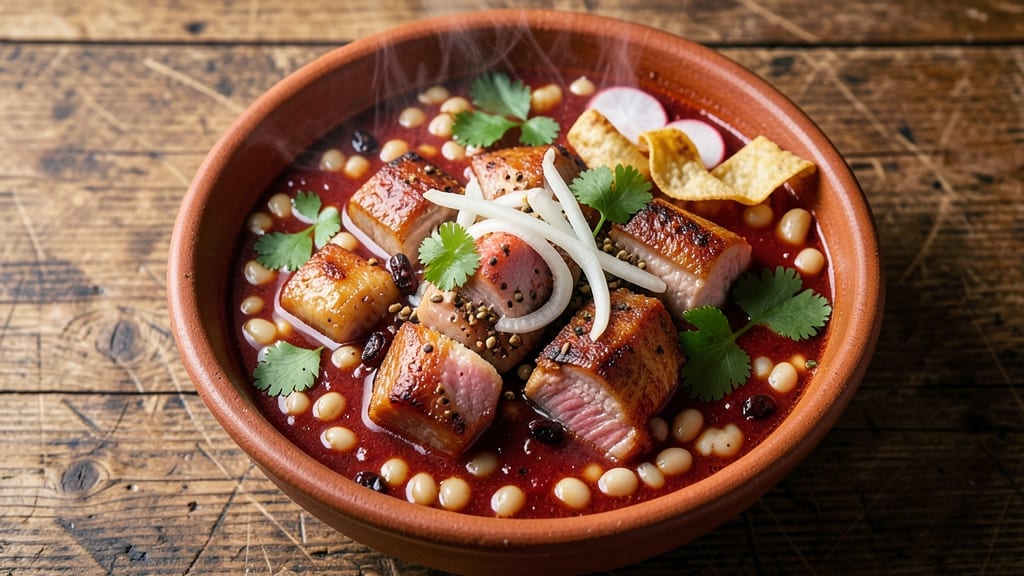
This authentic red pork pozole recipe brings the soul of Mexican home cooking to your table, where smoky chipotle and dried chilies create a rich, spiced broth that tenderizes pork until it melts in your mouth.
Growing up in small-town Georgia, I learned how pork transforms any gathering from ordinary to unforgettable—and this recipe is my tribute to those family feasts, adapted with the precision I developed cooking 2,000 pounds of pork weekly at The Smoky Pig.
The secret lies in the slow-simmered broth, where guajillo and ancho chilies infuse the liquid with deep, earthy heat while chipotle adds that signature smoky punch. We start with a proper pork shoulder, braised until it falls apart, and hominy that soaks up the flavors like a sponge.
Every step—from toasting the spices to balancing the broth—matters, because this isn't just soup; it's a celebration.
What you'll end up with is a steaming bowl of pozole that's rich yet balanced, with tender pork pieces floating in a vibrant red broth, garnished with crisp radishes, fresh cilantro, and a squeeze of lime.
The texture is perfect—creamy hominy, fall-apart pork, and a broth that coats every spoonful with warmth. This is the kind of dish that disappears faster than you can say "¡Buen provecho!"
Serve it with warm tortillas and a cold beer, because pozole deserves to be shared. The leftovers? Even better the next day. Let's get cooking—this recipe delivers on tradition without compromise.
Ingredients for authentic red pork pozole
Six ingredients make the broth, eight bring the celebration to your table.
| Ingredient | Amount | Notes |
|---|---|---|
| Pork Shoulder 🥩 | 3 lb | Bone-in for best flavor |
| Dried Guajillo Chilies 🌶️ | 4 whole | Stems and seeds removed |
| Dried Ancho Chilies 🌶️ | 2 whole | Stems and seeds removed |
| Chipotle Peppers in Adobo 🌶️ | 2 tbsp | Paste from can, plus 1 tbsp sauce |
| White Hominy 🌽 | 2 cans | 15 oz each, drained and rinsed |
| Onions 🧅 | 2 whole | Yellow or white, chopped |
| Garlic Cloves 🧄 | 6 cloves | Peeled and smashed |
| Fresh Cilantro 🌿 | ½ cup | Chopped, for garnish |
| Radishes 🥕 | 1 lb | Thinly sliced, for garnish |
| Limes 🍋 | 4 whole | Juiced, for garnish |
| Salt 🧂 | 2 tsp | Kosher or sea salt |
| Ground Cumin 🌿 | 1 tbsp | Toasted for deeper flavor |
| Black Peppercorns 🌶️ | 1 tsp | Freshly ground |
| Bay Leaves 🍃 | 2 whole | For simmering |
| Cumin Seeds 🌿 | 1 tbsp | Toasted for aroma |
The pork shoulder is non-negotiable here—bone-in gives the broth depth. Costco or local butchers usually have it pre-cut, but if you're buying a whole shoulder, ask for the picnic cut. The dried chilies? Mexican markets or specialty stores carry the best—look for vibrant color, not faded or brittle. Guajillo and ancho should be plump, not shriveled. Toast them lightly in a dry pan before soaking to deepen their flavor. Chipotle in adobo? Any brand works, but avoid the canned kind with thick, chunky paste—it's harder to measure. For hominy, store brands are fine, but La Costeña is the gold standard if you want to splurge.
No guajillo chilies? Ancho alone works at double the amount. Short on ancho? Pasilla or mulato chilies are good swaps, but toast and soak them first. The cumin seeds are worth toasting—30 seconds in a dry pan until fragrant, then grind them. No fresh cilantro? Dried works at half the amount, but it won't have that bright punch. Radishes add crunch, but jicama or cabbage work in a pinch. Limes should be juicy—Mexican limes if available, but regular limes are fine. The broth needs time to develop—don't rush the simmer. Patience here makes all the difference.
Pork keeps 3-4 days in the fridge, but the broth gets better overnight. Hominy can be prepped ahead—just store it in its liquid. Freeze the broth in 1-cup portions for quick pozole nights later. The garnishes? Prep them fresh before serving—radishes, cilantro, and lime juice make the dish sing. Tortillas should be warm, and beer? Any Mexican lager cuts the richness perfectly. Leftovers? Even better the next day—just reheat gently and add a splash of water if it's too thick.
Why You'll Love This Recipe
- One-Pot Magic: I swear by this recipe because it’s actually one-pot—no chopping piles of veggies or juggling multiple pans. The pork shoulder falls apart on its own while the hominy soaks up the smoky chile broth, and honestly? That’s half the battle won.
- Smoky Depth in Minutes: Between the toasted ancho and guajillo chilies (just soak, no fancy tricks) and the chipotle in adobo, this broth hits hard—like a slow-cooked abuela secret, but with zero stress. The pork shoulder? Melts into your bowl, tender enough to cut with a spoon.
- Party or Pantry: Between us, this feeds a crowd or stretches for three lunches with zero guilt. My college roommates and I lived on pozole for a week—it’s the kind of dish that gets better the next day, and freezes like a dream. (Yes, even on a Tuesday night.)
- Budget Stretch King: Pork shoulder is cheap, dried chilies last forever, and hominy? You’ll use half a bag and still have leftovers. I’ve made this for $12 a serving—no joke—and my picky-eater brother never complains about the flavor. That’s the real win.
Step-by-step instructions for authentic red pozole
This homestyle method delivers smoky, tender pork and rich chili broth every time.
Toast the Dried Chilies and Spices
Heat a dry skillet over medium heat and add the cumin seeds. Toast for 1-2 minutes until fragrant and lightly golden, stirring constantly to prevent burning. Remove from heat and transfer to a bowl.
In the same skillet, add the dried guajillo chilies and dried ancho chilies. Toast for 30 seconds per side until they darken slightly and smell deeply aromatic. Be careful not to burn them—just warm them through. Transfer to the bowl with the cumin seeds.
While still warm, pour 2 cups hot water over the toasted chilies and let them soak for 15 minutes. This rehydrates them and makes them easier to blend later. The water will turn a beautiful deep red—this is your base for the smoky broth.
Build the Smoky Chili Base
In a blender, combine the soaked chilies with their soaking liquid, 2 tbsp chipotle peppers in adobo, 1 tbsp adobo sauce, 1 tbsp ground cumin (toasted), 1 tsp black peppercorns, and 2 whole bay leaves. Blend until completely smooth, scraping down the sides as needed.
Pour the blended mixture into a large pot and add 8 cups water. Bring to a boil over high heat, then reduce to medium-high heat and simmer for 10 minutes to develop the flavors. You'll see a rich, deep red broth forming—this is the heart of your pozole.
While the broth simmers, prepare the pork shoulder by trimming off any excess fat, leaving about ¼-inch thickness. Cut the pork into 2-inch chunks and add them to the simmering broth. Return to a boil, then reduce heat to low and cover partially. Let it cook for 2 hours.
Cook the Pork and Hominy Together
After 2 hours, check the pork for tenderness. It should pull apart easily with a fork or a meat thermometer should read 195°F in the thickest part. If it's not tender, let it cook another 30 minutes.
Add the 2 cans white hominy (drained and rinsed) and 2 chopped onions to the pot. Stir gently to combine, then add 6 smashed garlic cloves and 2 tsp salt. Simmer uncovered for another 30 minutes to allow the flavors to meld. The hominy will absorb the rich broth and become tender.
Remove the pork from the broth and let it rest for 10 minutes before shredding it with two forks. Return the shredded pork to the pot and stir to combine. Taste the broth and adjust seasoning if needed—you want it to be deeply flavorful but balanced.
Prepare the Garnishes
While the pozole simmers, prepare the garnishes for serving. Thinly slice the 1 lb radishes and chop the 0.5 cup fresh cilantro. Juice the 4 whole limes and keep them on hand for serving.
To assemble each serving, ladle the pozole into bowls and top with the shredded pork, hominy, radishes, and cilantro. Serve with lime wedges on the side so everyone can squeeze fresh juice over their bowl. The contrast of the cool, crisp radishes and bright lime against the warm, smoky broth is what makes pozole so special.
This dish tastes even better the next day as the flavors deepen, so don't hesitate to make extra. Pozole is a celebration dish—enjoy it with family and friends!
Pro Tips For Making Authentic Red Pork Pozole
- Char the Chilies: Toss your dried guajillo and ancho chilies in a dry skillet over medium-high heat for 30 seconds per side until fragrant and slightly blackened—this removes bitterness and deepens the smoky flavor. I used to skip this, and the broth always tasted flat until I realized how much difference a quick char makes.
- Render the Pork Slow: Start your pork shoulder in a cold pot, then turn the heat to medium-low and let it render fat for at least 45 minutes before adding liquids. This builds rich, golden fond that forms the base of your pozole—rushing it leads to greasy broth instead of silky depth.
- Toast the Hominy: Drain and rinse your white hominy, then spread it on a baking sheet and toast in a 375°F oven for 10-12 minutes until edges turn slightly crisp. This step prevents mushiness and adds a subtle nuttiness that balances the chili heat—yes, it’s an extra step, but it’s worth it.
- Strain the Broth: After simmering the pork and chilies, strain the broth through a fine-mesh sieve lined with cheesecloth to remove all skin and chili debris. I know it’s tempting to skip this, but the difference in texture—smooth instead of gritty—is noticeable, especially when ladling it over hominy.
Essential equipment for authentic red pork pozole
Large Pot Essentials
You'll need a 6-8 quart Dutch oven or heavy stockpot for this recipe—I swear by my Lodge 6.5-quart Dutch oven for its even heat distribution and durability. The pot must have a tight-fitting lid to trap steam during the pork's slow braise.
If you don't have a Dutch oven, a stainless steel stockpot with a lid works too, but monitor the water level more closely. 🔥
Blender for Smooth Broth
A high-quality immersion blender or standard countertop blender is non-negotiable for achieving that ultra-smooth chili base. I use my Ninja BN601 for its power and ease of cleaning.
Avoid cheap blenders—they struggle with fibrous chilies and seeds. If blending by hand, strain the mixture through a fine-mesh sieve to remove any lingering bits.
Meat Thermometer
Invest in a digital instant-read thermometer like the ThermoWorks Smoke to monitor pork doneness accurately. The pork should reach 195°F in the thickest part—any lower and it won't shred properly.
I've ruined more pork than I'll admit by guessing, so trust the thermometer over time estimates. This is especially critical for pozole, where texture matters most.
Tongs for Garnishes
Long-handled kitchen tongs make garnishing pozole effortless. I keep a pair of OXO Good Grips nearby to add radishes, cilantro, and lime wedges without crowding the bowl. For serving, I also use a ladle with a deep well to scoop up the hominy and pork without spilling.
A slotted spoon helps remove bay leaves and other solids before serving.
Cast Iron Skillet
Your cast iron skillet (preferably Lodge) is crucial for toasting the chilies and cumin seeds. Cast iron retains heat beautifully and adds a subtle smoky depth to the spices. Heat it until it's ripping hot before adding the chilies—this ensures they toast evenly without burning.
After toasting, transfer the spices immediately to a bowl to prevent overcooking while they soak.
Optional: Slow Cooker
For a hands-off approach, a 6-quart slow cooker works wonders for the pork braising stage. Set it to Low for 8 hours or High for 5 hours, then proceed with the hominy and garnishes as directed. I use my Hamilton Beach 6-quart for its even heating. Just
Nutrition facts
Frequently asked questions
Can I substitute chicken or beef for the pork?
While traditional pozole uses pork, you can adapt this recipe with chicken thighs or beef chuck roast—just increase cooking time to 3-4 hours for beef or 1.5 hours for chicken. For chicken, use bone-in thighs for deeper flavor, and reduce the broth by 2 cups since poultry releases less liquid. Never use lean cuts like breast—they dry out.
How do I adjust the heat level in the broth?
Remove 1-2 chipotle peppers for mild heat or add 1 extra ancho chili for depth without spice. For extra smokiness, stir in ½ tsp smoked paprika at the end. Pro tip: Toast the chilies longer (45 seconds) for a deeper, less spicy flavor. Always taste the blended mixture before adding to the pot.
Can I make pozole in a slow cooker?
After blending the chili base, combine it with 10 cups water in a 6-quart slow cooker, add the pork, and cook on Low for 8 hours or High for 5 hours. Then stir in hominy and onions, cooking 30 more minutes. The slow cooker keeps the broth tender—just add ½ cup water if it gets too thick.
What's the best way to store leftovers?
Store pozole in an airtight container in the fridge for 4-5 days or freeze for 3 months. Reheat gently on the stove with ½ cup water to restore texture. The flavors actually improve overnight! For freezing, portion into 1-cup servings—just thaw and reheat, then add fresh garnishes before serving.
Why did my hominy get mushy?
Overcooking is the usual culprit—hominy only needs 30 minutes in the broth. If using pre-cooked hominy, skip the extra simmer time. For extra texture, rinse canned hominy under cold water before adding. Pro move: Add hominy 15 minutes before serving to keep it firm and flavorful.