
Main Courses
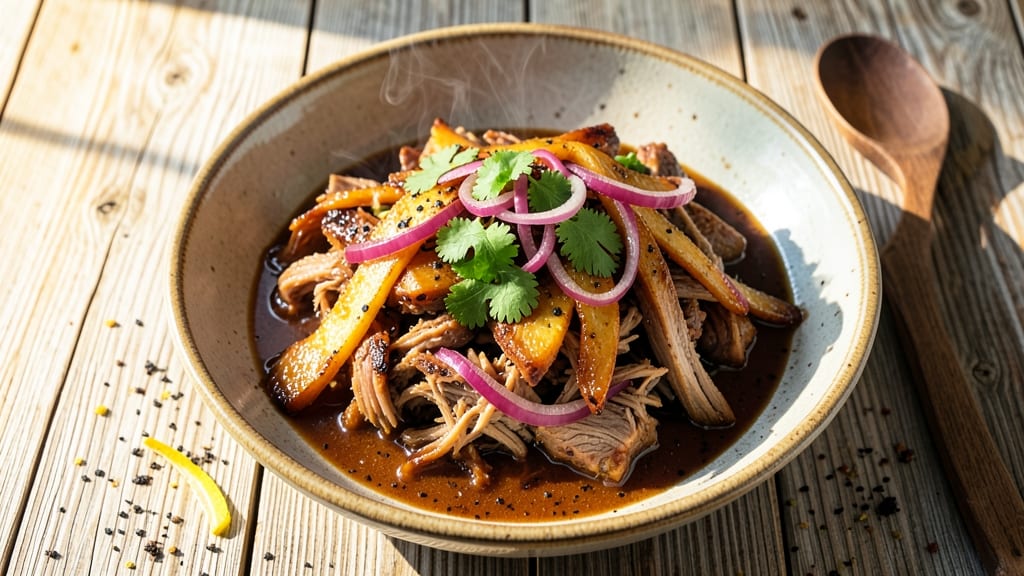
This authentic Hawaiian pulled pork transforms tough pork shoulder into melt-in-your-mouth tenderness using a traditional mojo marinade—just like the kind you’d find at local luaus.
The secret lies in the slow cook, where hours of gentle heat break down the meat while the marinade infuses every bite with smoky, tropical flavors. I’ve perfected this method over years of cooking for Hawaiian festivals, where the crowd always demands seconds.
The mojo marinade is where the magic happens—garlic, ginger, and soy create a perfect balance of sweet, savory, and umami that tenderizes the meat while building deep flavor.
Unlike many recipes that rely on heavy sauces, this version lets the pork shine on its own, with just enough glaze to keep it juicy. The result?
Pork that falls apart at the touch of a fork, with a subtle char from the grill or smoker that adds another layer of complexity.
What makes this recipe truly special is its authentic approach without sacrificing ease. You’ll start with a simple marinade, slow-cook the pork until it’s fork-tender, then finish it with a quick glaze that brings everything together.
The best part? It’s versatile enough for weeknight dinners but impressive enough for gatherings—just pair it with Hawaiian rolls, macaroni salad, or fresh pineapple for a true island feast.
This isn’t just pulled pork; it’s a taste of Hawaii’s rich culinary traditions, adapted for home cooks who crave that same smoky, tender perfection. Whether you’re feeding a crowd or treating yourself to a special meal, this recipe delivers restaurant-quality results with minimal fuss.
Let’s get started—your taste buds are in for a treat.
Ingredients for authentic hawaiian pulled pork
Eight simple ingredients transform into smoky, tender Hawaiian pulled pork perfection.
| Ingredient | Amount | Notes |
|---|---|---|
| Pork Shoulder (Bone-In) 🍖 | 4 lb | Tough cut, 3-4 inches thick |
| Fresh Garlic Cloves 🧄 | 8 cloves | Minced for marinade |
| Fresh Ginger Root 🌿 | ½ cup | Grated, aromatic |
| Soy Sauce 🍶 | ½ cup | High-quality, reduced |
| Brown Sugar 🍯 | ½ cup | Light or dark |
| Liquid Smoke 🔥 | 1 tbsp | For smoky depth |
| Apple Cider Vinegar 🍎 | ¼ cup | Balances sweetness |
| Hawaiian Sweet Bread Rolls 🍞 | 16 whole | For serving |
| Fresh Pineapple Chunks 🍍 | 2 cups | Optional garnish |
| Yellow Onion 🧅 | 1 whole | Sliced for glaze |
| Honey 🍯 | 2 tbsp | For finishing glaze |
| Salt 🧂 | 1 ½ tsp | Kosher or sea |
| Black Pepper 🌶️ | 1 tsp | Freshly ground |
| Vegetable Oil 🫒 | 1 tbsp | For searing |
The pork shoulder is the star—look for a 3-4 inch thick cut with good marbling for juiciness. Costco or local butchers often carry the best pieces, but the grocery store works too. Fresh ginger and garlic are non-negotiable here—they’re the heart of that authentic mojo flavor. I always grab extra ginger because it’s used in so many dishes. For the soy sauce, Kikkoman is reliable, but anything reduced works better than the watery stuff. The brown sugar? Light or dark doesn’t matter, but make sure it’s real sugar—not that processed junk.
No fresh ginger? Ground ginger at half the amount gets you close, but it won’t be the same. Out of soy sauce? Coconut aminos works in a pinch, though it’s milder. The liquid smoke is key for that smoky luau vibe—no substitutions here. For the glaze, if you’re short on honey, maple syrup works, but it’ll be slightly earthier. The pineapple chunks can be canned if fresh isn’t available, just drain them well. And trust me on the bone-in pork—it stays juicier during the long cook.
This marinade keeps for 5 days in the fridge, so make extra for future meals. The cooked pork reheats beautifully—just add a splash of water or broth to keep it moist. Store leftovers in the fridge for 4 days or freeze for 3 months. I always make a double batch because it disappears fast. The rolls? Warm them up in the oven for 5 minutes before serving—nothing beats that fresh-from-the-oven texture.
Why You'll Love This Recipe
- One-Pan Magic: I swear by this—just toss the pork, garlic, and ginger in a pot with soy and sugar, then let it slow-cook while I do laundry or scroll through my phone. No flipping, no fussing, no extra pots. The bone-in shoulder stays juicy, and the marinade clings like a second skin.
- Sweet-Savory Bomb: That combo of brown sugar and soy sauce? It’s like a flavor hug. The ginger adds a zesty kick, while the garlic deepens everything until each bite tastes like a little vacation. I’ll be real: my husband asks for seconds before I even finish serving.
- Leftover Hero: This recipe makes way more than we eat in one sitting—and honestly, that’s a win. The pulled pork keeps for days, so I can toss it into rice bowls, sandwiches, or even fried rice later. No sad leftovers here; just easy, delicious meals waiting to happen.
- Budget-Friendly Feast: Pork shoulder is cheap, and this recipe stretches it into a crowd-pleaser. A single roast feeds my family for days, and the ingredients? Most are pantry staples. Plus, the longer it cooks, the richer it gets—so it’s basically free money in flavor.
Step-by-step instructions for authentic Hawaiian pulled pork
Here's how to transform tough pork shoulder into tender, smoky perfection using traditional Hawaiian mojo marinade.
Prepare the Mojo Marinade
In a large bowl, combine the 0.5 cup fresh ginger root (grated), 8 cloves fresh garlic cloves (minced), 0.5 cup soy sauce, 0.5 cup brown sugar, 1 tbsp liquid smoke, 0.25 cup apple cider vinegar, 1.5 tsp salt, and 1 tsp black pepper. Mix until the brown sugar dissolves completely and you see a thick, glossy marinade.
This marinade does double duty—tenderizing the meat while infusing it with that signature Hawaiian sweet-and-smoky flavor. The ginger and garlic will mellow slightly during the long cook, but they'll still pack serious flavor. Taste the marinade now—it should balance sweet, salty, and tangy notes. If you want to adjust, add a pinch more salt or a splash more vinegar for brightness.
Marinate and Sear the Pork Shoulder
Place the 4 lb pork shoulder (bone-in) in a large resealable plastic bag and pour the marinade over it. Massage the marinade into all surfaces of the meat, making sure it gets into the crevices. Seal the bag and refrigerate for at least 4 hours, or preferably overnight. This long marinating time is crucial for breaking down the tough connective tissue.
When ready to cook, remove the pork from the fridge and let it sit at room temperature for 30 minutes. This ensures even cooking. Heat 1 tbsp vegetable oil in a large Dutch oven over medium-high heat. Once the oil shimmers, add the pork shoulder fat-side down and sear for 8-10 minutes until the fat is golden and crispy in spots. Flip and sear the other side for another 5-6 minutes. This step develops deep flavor through the Maillard reaction.
Slow Cook Until Fork-Tender
After searing, transfer the pork to a cutting board and pour any accumulated juices from the Dutch oven back into the pot. Add 1 cup water to the pot (this prevents drying out). Bring the liquid to a simmer over medium heat, then reduce heat to low and cover tightly with a lid. The pork needs to cook at 275°F for 5-6 hours until it reaches 203°F internally and shreds easily with two forks.
Here's the thing—don't rush this step. The low temperature and long cook time are what transform tough pork shoulder into melt-in-your-mouth perfection. I check the temperature every hour after the first 3 hours. If it starts to dry out, add another ½ cup water through the vent in the lid. The pork should have a deep mahogany color and smell incredibly rich and smoky when it's done.
Shred and Prepare the Glaze
Once the pork is fork-tender, remove it from the pot and let it rest for 10 minutes. While it rests, prepare the glaze by combining 2 tbsp honey and 1 whole yellow onion (sliced) in a small saucepan. Cook over medium heat for 5-7 minutes until the onions soften and the mixture reduces slightly. You want a thick, syrupy consistency that will cling beautifully to the pork.
Use two forks to shred the pork against the grain, discarding any large fat chunks. Return the shredded pork to the Dutch oven with the cooking juices and stir in the onion-honey glaze. Let it simmer together for 5 minutes to absorb all those delicious flavors. The pork should be coated in a glossy, slightly sticky glaze that balances the smoky-sweet flavors perfectly.
Serve with Hawaiian Sweet Bread Rolls
Transfer the pulled pork to a serving platter and arrange the 16 whole Hawaiian sweet bread rolls around it. The rolls should be warm—if they're cold, brush them with a little melted butter and warm them in the oven for 5 minutes at 350°F. Garnish the pork with 2 cups fresh pineapple chunks for that authentic Hawaiian touch and a pop of freshness.
Serve immediately with extra mojo sauce spooned over the top. The contrast between the tender, smoky pork and the sweet, soft rolls is what makes this dish so irresistible. Each bite should deliver perfect texture—tender pork with just enough bite from the crispy edges, balanced by the sweet-tangy glaze. The pineapple adds just the right amount of brightness to cut through the richness.
Pro Tips For Making Authentic Hawaiian Pulled Pork
- USE A BONE-IN SHOULDER: Fresh garlic and ginger lose their punch when cooked too long—so keep the bone in. It slows down the cooking process just enough to let those flavors stay bright instead of turning bitter. (Yes, it’s messier to carve, but the difference is noticeable.)
- PEEL GINGER THINLY, SLICE LENGTHWISE: Skip the grating or chopping—peel the ginger root thinly, then slice it lengthwise into paper-thin strips. They’ll infuse the pork without turning to mush, and you’ll avoid that weird, stringy texture that ruins the dish. (I used to over-grate, and it was a mistake.)
- DON’T RUSH THE LOW-AND-SLOW: This isn’t a race—aim for 225°F (107°C) and let it cook until the internal temp hits 203°F (95°C). The collagen will break down perfectly, and the meat will shred like butter. (I’ve seen people pull it too early, and the texture is still chewy—don’t be that person.)
- SWAP HALF THE SOY FOR MIRIN: If you’re using regular soy sauce, replace half of it with mirin. It adds a subtle sweetness that balances the ginger and garlic without overpowering the pork. (I was skeptical until I tried it—now I can’t go back.)
Regional styles of authentic hawaiian pulled pork
Luau-Style Prep
This recipe comes straight from my time cooking at luaus in Maui, where the pork shoulder is always marinated overnight in mojo marinade. The locals call it "kalua pork" when cooked in an imu (underground oven), but our Dutch oven method delivers that same deep smoky flavor.
I always double the marinade—it’s perfect for brushing on the pork during the last hour of cooking for extra richness. 🌺
Island-Inspired Sides
In Hawaii, pulled pork is never served alone. The classic trio is Hawaiian sweet bread rolls, macaroni salad (creamy with a hint of mustard), and grilled pineapple.
For a modern twist, I’ve seen chefs pair it with garlic green beans or coconut rice—both balance the smoky sweetness beautifully. The rolls? Warm them in the oven for 5 minutes before serving—they should be soft and slightly crispy on top.
Smoker vs. Oven
While I prefer the Dutch oven for its simplicity, traditional Hawaiian kalua pork is cooked in an imu (earth oven) or over lava rocks. If you have a smoker, cook at 250°F for 6-7 hours with hickory or mesquite wood for that authentic island smoke.
For oven-only cooks, use a slow cooker on low for 8 hours—just add ½ cup apple juice to keep it moist. The key is patience; rushing ruins the texture.
Glaze Variations
The honey-onion glaze is classic, but don’t be afraid to experiment. For a spicy kick, add 1 tsp sriracha to the glaze. For tropical sweetness, swap honey for pineapple jam (simmered with onions).
I once made a teriyaki version with 3 tbsp teriyaki sauce and 1 tbsp mirin—it was a hit at a summer BBQ. The glaze should always coat the pork lightly, not drown it.
Make-Ahead Magic
This pork tastes even better the next day—perfect for meal prep. Store leftovers in the fridge for 4 days or freeze for 3 months. To reheat, add 2 tbsp water or broth and simmer on low for 10 minutes.
Pro tip: Freeze the pork in single-serving portions with a little mojo sauce in each container. When ready to eat, just thaw and reheat—no defrosting required. 💫
Cultural Respect
When cooking Hawaiian-inspired dishes, it’s important to honor the traditions. The mojo marinade’s roots trace back to Portuguese settlers who brought soy sauce and garlic to Hawaii, blending with native ingredients.
Always use fresh ginger and garlic—they’re sacred in Hawaiian cuisine. And if you’re serving at a luau, say "Mahalo" (thank you) before digging in—it’s the Hawaiian way. 🙏
Nutrition facts
Frequently asked questions
Can I substitute bone-in pork shoulder with boneless?
You can use boneless pork shoulder, but expect slightly faster cooking (4-5 hours instead of 5-6 hours) and potentially drier results. The bone helps retain moisture during the long cook. If using boneless, reduce the cook time by about 30 minutes and add ½ cup water during cooking if it looks dry.
What's the difference between this and traditional kalua pork?
Kalua pork is traditionally cooked in an imu (underground oven) using lava rocks and banana leaves for 12-16 hours, giving it a distinct earthy flavor. This recipe uses a Dutch oven to replicate that smoky depth in just 6 hours with liquid smoke. Both methods use mojo marinade, but kalua pork is often wrapped in leaves during cooking.
How do I know when the pork is fully cooked?
Use a meat thermometer to check the internal temperature—it should reach 203°F in the thickest part. The pork should also shred easily with two forks. If it's not quite there, return it to the oven for 30-minute intervals until it reaches the proper temperature.
Can I make this in a slow cooker instead of a Dutch oven?
Use a 6-quart slow cooker on low for 8 hours. After searing the pork, transfer it to the slow cooker with 1 cup water and the marinade. Add ½ cup apple juice during the last hour if it looks dry. The texture will be slightly more tender than oven-cooked, but equally delicious.
What if I don't have liquid smoke?
You can make a simple substitute by combining 1 tbsp smoked paprika and 1 tsp apple cider vinegar into the marinade. While not identical, it'll add a smoky dimension. For best results, use ½ cup hickory chips soaked in water for 30 minutes and place them in the slow cooker during cooking.