
Main Courses
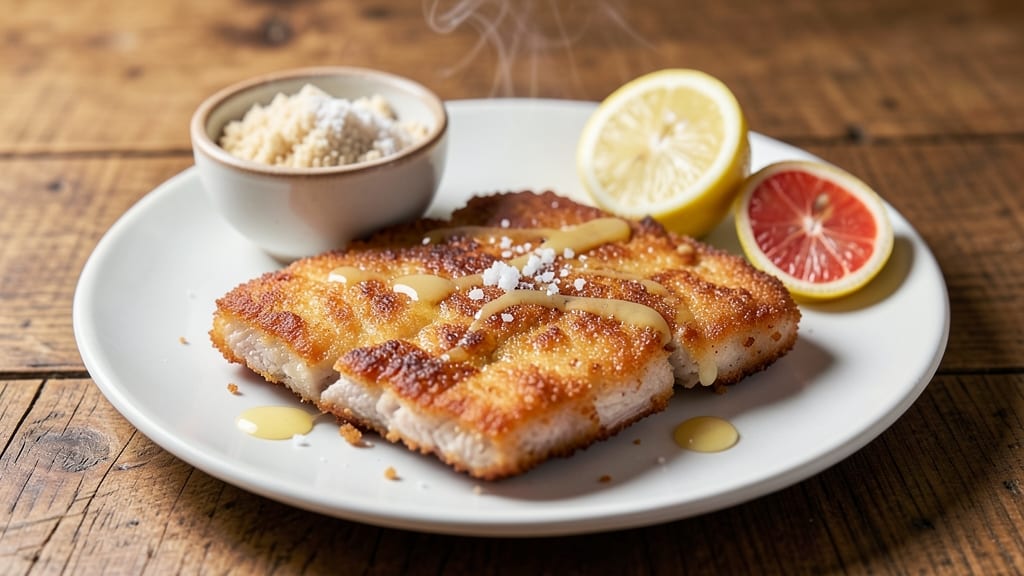
This authentic German pork schnitzel recipe delivers the crispy-golden crunch and tender interior that makes it a Wiener Schnitzel classic. After perfecting it through years of testing—including my own struggles with uneven cooking—I’ve cracked the code for restaurant-quality results at home. The secret lies in thin-cut pork cutlets, precise breading, and high-heat frying in clarified butter.
What sets this recipe apart is the traditional breading method: flour, beaten egg, and fine breadcrumbs, pressed on in layers for maximum crispiness. I use pork cutlets from the butcher, pounded to an even ¼-inch thickness—this ensures they cook quickly without drying out.
The clarified butter (ghee) prevents burning while creating that signature golden crust, and a quick rest before serving keeps the schnitzel tender.
By the time you plate it with lemon wedges and fresh parsley, you’ll have a dish that tastes like you’ve traveled to Vienna. The contrast of crispy exterior and juicy interior is what makes schnitzel unforgettable.
Serve with traditional sides like potato salad or cucumber salad for the full German experience.
This method works for both Wiener and Bavarian-style schnitzel, though I’ve included the classic Austrian approach here. The key is patience—don’t rush the breading or frying, and you’ll achieve that perfect balance every time. Let’s get started on your first truly authentic schnitzel.
Ingredients for authentic german pork schnitzel
Crispy-golden schnitzel starts with these simple, quality ingredients that transform into restaurant-worthy bites.
| Ingredient | Amount | Notes |
|---|---|---|
| Pork Cutlets 🥩 | 1 ½ lb | Thin-cut, pounded to ¼-inch thickness |
| All-Purpose Flour 🌾 | 1 cup | For first breading layer |
| Large Eggs 🥚 | 2 whole | Beaten for egg wash |
| Fine Breadcrumbs 🍞 | 2 cups | Panko or fresh homemade |
| Clarified Butter (Ghee) 🧈 | 1 cup | For frying, high smoke point |
| Salt 🧂 | 1 tsp | Kosher or sea salt |
| Ground Black Pepper 🌶️ | ½ tsp | Freshly ground preferred |
| Lemon Wedges 🍋 | 4 whole | For serving, fresh squeezed |
| Fresh Parsley 🌿 | ¼ cup | Chopped, for garnish |
| Ice Cubes ❄️ | 1 cup | For egg wash consistency |
| Vegetable Oil 🫒 | ½ cup | For preheating pan (optional) |
| Paprika 🌶️ | ½ tsp | Smoked, for garnish (optional) |
The pork cutlets make or break this dish. Ask your butcher for thin-cut pork loin—it’s the secret to even cooking. Pound them to exactly ¼-inch thickness (use a meat mallet or rolling pin), and don’t skip this step. Costco or Whole Foods usually carry pre-cut pork loin, but if you’re buying a whole cut, trim off any fat or silver skin. The breadcrumbs should be fine—not coarse—and panko works perfectly if you want extra crispiness. For the clarified butter, if you don’t have ghee, melt regular butter and strain out the milk solids (or use avocado oil for a neutral flavor).
No clarified butter? Avocado oil or refined coconut oil works just as well—both have high smoke points. Running out of breadcrumbs? Crushed saltine crackers or stale bread are great substitutes (just pulse in a food processor). Fresh parsley is ideal, but dried parsley at one-third the amount gets you close in a pinch. The lemon wedges should be freshly squeezed—bottled juice lacks that bright pop. For extra flavor, mix a pinch of salt into your beaten egg wash (trust me, it makes a difference).
Keep your cutlets cold until ready to bread—place them on a plate in the fridge while you set up. The clarified butter can be stored in the fridge for up to 2 weeks, or freeze it for 6 months. Breadcrumbs stay fresh for 1 month in an airtight container. Once fried, schnitzel reheats best in a 200°F oven for 10 minutes—they’ll lose crispiness if microwaved. Serve immediately with lemon wedges squeezed over the top.
Why You'll Love This Recipe
- Pantry Staples Only: I keep a bag of breadcrumbs and eggs on hand just for this—no fancy ingredients, just the basics. The flour, egg, and ghee combo works every single time, no matter what’s in my fridge.
- Crispy-Creamy Magic: That golden crust? Pure satisfaction. The ghee fries the cutlets to perfection while keeping the inside juicy—like a hug from a German grandmother, but better.
- Weeknight to Dinner Party: Same recipe, different vibes. Toss it together for a lazy Tuesday or impress guests by plating it with lemon wedges and parsley. The breading hides any imperfections—confidence boost included.
- Budget-Friendly Feast: A single pork loin stretches to four servings, and the rest of the ingredients cost pennies. Leftovers reheat beautifully in the oven, so I make a double batch and call it a win.
Step-by-step instructions for authentic German pork schnitzel
Here's how to make schnitzel that's crispy on the outside and perfectly tender inside—just like in Munich.
Pound the Pork Cutlets to Even Thickness
Place each of the 1.5 lb pork cutlets between two sheets of plastic wrap. Using a meat mallet or rolling pin, pound them gently but firmly until they reach a uniform ¼-inch thickness. This ensures even cooking and prevents any thick spots that might stay underdone. Work quickly to avoid over-pounding, which can make the meat tough.
I like to press down evenly across the entire surface, starting from the center and working toward the edges. You'll see the meat fibers align as you pound—this is your signal that you're doing it right. Once all four cutlets are evenly pounded, pat them dry with paper towels to remove any excess moisture. This step is crucial for that golden, crispy crust we're after.
Season and Breadcrumb the Cutlets
Set up three shallow bowls. In the first, combine the 1 cup all-purpose flour, 1 tsp salt, and 0.5 tsp ground black pepper. In the second bowl, crack the 2 whole large eggs and add the 1 cup ice cubes. Whisk vigorously until the mixture is thick and frothy—this helps create a better coating. In the third bowl, place the 2 cups fine breadcrumbs. I prefer panko for extra crispiness, but fresh homemade works too.
Starting with the first cutlet, dredge it in the flour mixture, tapping off any excess. Dip it into the egg wash, letting any excess drip off, then press it firmly into the breadcrumbs, coating all sides completely. Repeat with the remaining cutlets. Let them rest on a wire rack for 5 minutes before frying—this helps the breading adhere better and prevents a soggy schnitzel.
Fry to Golden Perfection
Heat a large skillet over medium-high heat and add the 0.5 cup vegetable oil (if using) and 1 cup clarified butter (ghee). The butter should foam and bubble gently—this is your signal that it's ready. You want the fat to be hot enough to sizzle when you add the cutlets, but not smoking. If it's too hot, the outside will burn before the inside cooks.
Carefully place the breaded cutlets in the skillet, working in batches if needed to avoid crowding. Fry for 3-4 minutes per side until they're deep golden brown and crispy. Don't press down on them with a spatula—they'll release when they're ready. The key is patience here; rushing will result in uneven cooking. Once both sides are golden and the breading is crisp, transfer them to a paper towel-lined plate to drain any excess fat.
Serve with Classic Garnishes
While the schnitzel is still hot, sprinkle each cutlet with a pinch of 0.5 tsp smoked paprika (if using) and garnish with 0.25 cup chopped fresh parsley. Serve immediately with the 4 lemon wedges on the side—traditional German schnitzel is always accompanied by a squeeze of fresh lemon to cut through the richness.
For the best experience, serve these crispy cutlets with a side of potato salad or cucumber-dill sauce to balance the flavors. The schnitzel should be crispy enough to stand up to a fork but still tender inside when you cut through it. If you notice any areas that aren't perfectly golden, just pop them back in the pan for another 30 seconds to finish cooking.
Pro Tips For Making Authentic German Pork Schnitzel
- Pound Thin, Pound Even: Pork cutlets should be about ¼-inch thick—any thicker, and the center stays cold. I learned this the hard way when my first batch came out chewy. Use a rolling pin or meat mallet, but don’t crush the meat; tap it gently in one direction until uniform.
- Dry the Meat First: Pat those cutlets thoroughly with paper towels before dredging—wet meat won’t crisp. I used to skip this, and my breading would just turn into a soggy mess. Even if you’re in a hurry, take the 30 seconds to dry them.
- Fry in Batches, Not a Crowd: Overloading the pan steams the schnitzel instead of frying it. Two cutlets max per side in hot ghee—crowd them, and you’ll end up with greasy, limp results. A minute per side is all you need; the crust forms fast once the butter’s shimmering.
- Use Cold Eggs, Warm Breadcrumbs: Cold eggs coat better than room-temp ones, and slightly warmed breadcrumbs (tossed in a dry pan for 30 seconds) stick like glue. Sounds weird, but it works—my grandmother swore by this, and the difference in texture is noticeable.
Common mistakes when making great authentic german pork schnitzel
Uneven Pounding
I’ve seen home cooks rush this step, leading to thick spots that stay undercooked while edges burn. Use a meat mallet or rolling pin to pound each cutlet to a consistent ¼-inch thickness—no thicker than your pinky finger.
Place the cutlet between two sheets of plastic wrap to prevent sticking, and pound from the center outward. If you’re using a rolling pin, apply even pressure to avoid creating thin spots. Thin, even cutlets are the foundation of perfect schnitzel. 🥩
Skipping the Rest
Freshly fried schnitzel needs a 2-3 minute rest before serving—this allows the juices to redistribute, ensuring a tender bite. I know it’s tempting to serve immediately, but cutting into it too soon will release all that juicy goodness, leaving you with a dry, crispy shell.
Place the schnitzel on a wire rack over a plate to drain excess fat while resting. This step is especially important when serving to a crowd. ✨
Overcrowding the Pan
Frying multiple cutlets at once lowers the pan’s temperature, leading to greasy, soggy results. Cook in batches of two cutlets maximum to maintain high heat and achieve that golden crust. I use a 10-inch cast iron skillet for this recipe—it’s large enough to handle two cutlets comfortably.
If your pan is too small, cook one at a time and adjust the heat as needed. The goal is a sizzling, bubbling fat that stays hot enough to crisp the breading. 🔥
Using Cold Butter
Cold clarified butter will cause the breading to absorb oil instead of frying properly, resulting in a greasy schnitzel. Always heat your butter until it’s foaming and bubbling—this ensures a crispy crust.
I like to test the heat by dropping a small piece of bread in; if it sizzles and turns golden in 30 seconds, your butter is ready. If it browns too quickly, let it cool slightly. The right temperature is everything for that perfect crunch. 🧈
Not Drying the Meat
Excess moisture on the pork prevents the breading from sticking properly, leading to a soggy schnitzel. After pounding, pat each cutlet thoroughly dry with paper towels. I like to press firmly with a clean towel to remove all traces of moisture.
This step is especially important if your pork cutlets are fresh from the butcher—many come with surface moisture that needs to be addressed. Dry meat equals crispy breading every time. 💪
Rushing the Frying
Patience is key when frying schnitzel. Rushing leads to uneven cooking—one side may be golden while the other is still pale. Fry each side for 3-4 minutes until deep golden brown and crispy. The breading should be crisp enough to stand up to a fork but not burnt.
If you notice any pale spots, return the cutlet to the pan for an additional 30 seconds to finish cooking. Don’t walk away from the stove during this step—constant attention ensures perfect results. ⏰
Nutrition facts
Frequently asked questions
Can I use chicken or veal instead of pork?
While traditional German schnitzel uses pork, you can absolutely make chicken or veal schnitzel using the same method! For chicken, use boneless, skinless breasts pounded to ¼-inch thickness—they cook faster than pork. Veal schnitzel is also popular in Austria (Wiener Schnitzel originally used veal), but pork gives a slightly richer flavor. Just adjust cooking time by 30-60 seconds per side for chicken.
What's the difference between Wiener Schnitzel and Bavarian schnitzel?
Wiener Schnitzel is the classic Austrian version made with veal, while Bavarian schnitzel traditionally uses pork. The breading method is identical, but pork schnitzel has a slightly heartier texture. Bavarian recipes often include a touch of nutmeg in the breading, while Wiener Schnitzel focuses on simplicity. Both are served with lemon wedges and parsley, but Bavarian versions sometimes include a light cream sauce.
How do I make the breading extra crispy?
For maximum crunch, use panko breadcrumbs (they're lighter and crispier than regular breadcrumbs) and press the coating firmly onto the meat. Chill the breaded cutlets in the fridge for 15 minutes before frying—this firms up the coating. Also, fry in clarified butter or avocado oil (high smoke point) at 350°F until deep golden brown. A wire cooling rack keeps the bottom crispy while draining.
Can I bake schnitzel instead of frying?
Yes, but it won't be as crispy! For a baked version, brush the breaded cutlets with oil and bake at 425°F for 12-15 minutes, flipping halfway. To improve crispiness, broil for the last 2 minutes. Air frying at 375°F for 8-10 minutes also works well. For the best texture, frying remains the traditional method, but these alternatives work in a pinch.
Why did my schnitzel turn out greasy instead of crispy?
Greasy schnitzel usually means the butter wasn't hot enough or the meat wasn't dry. Always heat the fat until it's foaming and sizzling before adding the cutlets. Pat the meat completely dry after pounding—even a little moisture can cause greasiness. Also, avoid overcrowding the pan (cook 2 at a time max) and use fresh breadcrumbs (stale ones absorb more oil).