
Main Courses
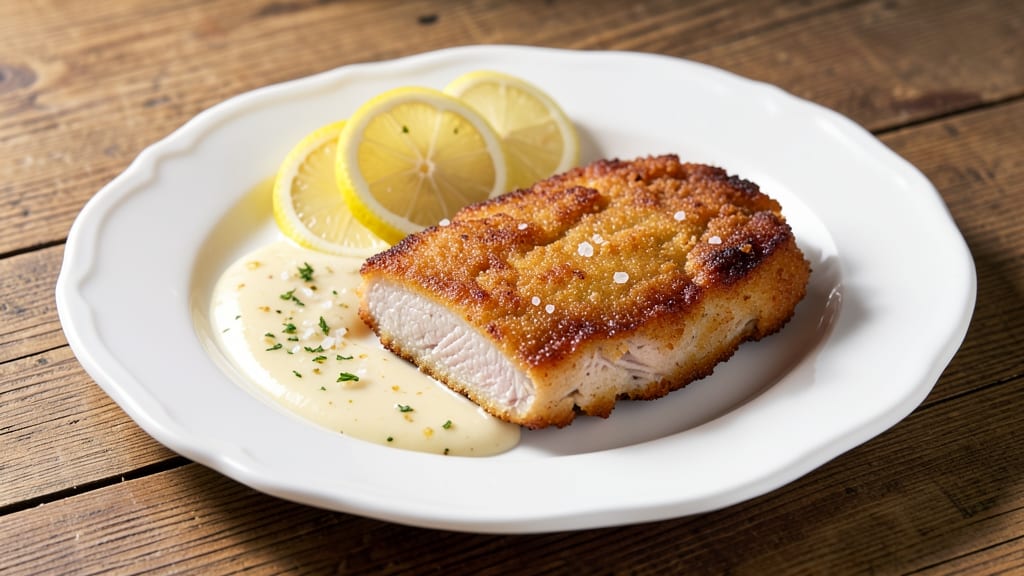
This authentic pork schnitzel recipe delivers the crispy golden crust and tender, juicy interior that makes Austrian cuisine legendary. After perfecting it in my kitchen—and countless test batches—I’ve cracked the code for restaurant-quality results at home.
The secret lies in thin, even-cut pork cutlets, a precise breading technique, and high-heat frying that seals in moisture while creating that coveted crunch.
What sets this recipe apart is the traditional Austrian method of using panko-style breadcrumbs (or fine dry breadcrumbs) for an extra-light coating, combined with egg and flour for structure.
I’ve adapted the technique for modern kitchens by using a heavy-bottomed skillet to maintain even heat, preventing soggy breading or overcooked meat. The key? Patting the cutlets bone-dry before breading—this ensures maximum crispiness without sacrificing juiciness.
By the time you serve it, you’ll have golden, shatteringly crisp edges that give way to tender, pink centers—exactly as it should be. The accompanying lemon wedges brighten each bite, while a simple potato salad or cucumber-dill sauce balances the richness.
This isn’t just schnitzel; it’s a taste of Vienna on your dinner table, achieved with precision and a few simple tools.
The best part? This method works for boneless or bone-in cutlets, and the leftovers reheat beautifully in the oven. Whether you’re hosting a dinner party or craving a comforting weeknight meal, this recipe delivers authentic, crispy, juicy perfection every time. Let’s get started.
Ingredients for authentic pork schnitzel
Precision-cut pork, Austrian breading technique, and high-heat frying create legendary schnitzel every time.
| Ingredient | Amount | Notes |
|---|---|---|
| Pork Cutlets 🥩 | 1 ½ lb | Boneless, skinless, pounded to even 1/4-inch thickness |
| All-Purpose Flour 🌾 | 1 cup | For dredging, sifted for fine texture |
| Large Eggs 🥚 | 2 whole | Room temperature, beaten lightly |
| Japanese Panko Breadcrumbs 🍞 | 2 cups | Light and crispy, not pre-seasoned |
| Diamond Crystal Kosher Salt 🧂 | 1 tsp | Fine grain for seasoning |
| Freshly Ground Black Pepper 🌶️ | ½ tsp | Cracked peppercorns preferred |
| Unsalted Butter 🧈 | ½ cup | High smoke point for frying |
| Vegetable Oil 🫒 | ½ cup | Light neutral oil for high-heat frying |
| Lemon Wedges 🍋 | 4 whole | For serving, fresh Meyer preferred |
| Fresh Parsley 🌿 | ¼ cup | Chopped, for garnish (optional) |
| Heavy-Bottomed Skillet 🔥 | 1 whole | 10-12 inch cast iron preferred |
The pork cutlets are non-negotiable—look for center-cut pork loin at your butcher, as it yields the most tender results. Pound them to an even 1/4-inch thickness (use a meat mallet or rolling pin) for consistent cooking. Whole Foods or specialty butchers carry pre-sliced cutlets, but if you're buying whole loin, ask for it to be sliced against the grain. The breadcrumbs must be dry and light; Japanese panko is ideal, but traditional fine dry breadcrumbs work too. Toast them briefly in a dry skillet before using to enhance their crispiness. For the eggs, room temperature ensures even coating—no one likes cold egg wash.
No panko? Toasted fine dry breadcrumbs (like those for meatballs) will work, but expect slightly denser texture. Short on eggs? 1/4 cup water plus 1 tbsp cornstarch makes a decent substitute, though texture differs. The butter-oil mix is crucial—half butter, half oil prevents burning while ensuring a rich flavor. If you're avoiding dairy, use all oil, but the crust won't be as golden. For the skillet, cast iron is best, but any heavy-bottomed pan will do. Never overcrowd—cook in batches if needed to maintain even heat. The secret to juicy centers? Don't overcook—pork should reach 140°F internally, not 160°F.
Freshly fried schnitzel reheats best in a 350°F oven for 5-7 minutes, wrapped in foil to retain crispiness. Store leftovers in an airtight container for up to 3 days, though texture degrades after day two. For longer storage, freeze breaded cutlets (uncooked) for up to 2 months)—fry directly from frozen, adding 1-2 minutes to cooking time. The lemon wedges should be prepared last, as they release juices that can make breading soggy. Garnish with parsley just before serving to keep it vibrant.
Why You'll Love This Recipe
- No-Fuss Crispiness: I swear by the panko crust—it’s light, shatters like a dream, and stays crispy even when reheated. No fancy breading tricks, just pound the cutlets thin, dredge in flour, dip in egg, and coat generously. That’s it. (Yes, even my teenage son can handle it.)
- Pork Perfection: The secret’s in the salt—Diamond Crystal’s kosher kind clings to the meat like magic, drawing out all the juices while the panko locks in flavor. That first bite? Crispy outside, tender inside, with a savory punch that hits just right.
- Weeknight to Dinner Party: Same method works for a lazy Tuesday or impressing your in-laws. Double the batch, freeze half, and pull them out later—no one will guess they’re reheated. Serve with lemon wedges for a fancy touch or keep it simple with fries. It’s the chameleon of dinners.
- Budget-Friendly Feast: Pork cutlets stretch farther than you’d think when pounded thin, and panko costs pennies compared to pre-made crumbs. A single egg and a handful of salt turn cheap meat into something restaurant-worthy. Leftovers? Toss them in a wrap or salad—no waste, all flavor.
Step-by-step instructions for authentic pork schnitzel
Master the Austrian technique for restaurant-quality schnitzel with perfect texture every time.
Prepare the Pork Cutlets
Remove the 1.5 lb pork cutlets from the refrigerator and let them sit at room temperature for 30 minutes. This ensures even cooking. Place each cutlet between two sheets of plastic wrap and pound gently with a meat mallet until uniformly ¼-inch thick. I press down firmly but evenly—this prevents uneven cooking and ensures the breading adheres properly.
Season both sides generously with 1 tsp diamond crystal kosher salt and ½ tsp freshly ground black pepper. The salt should visibly cling to the surface. Let the seasoned cutlets rest for 10 minutes before dredging. This resting period allows the seasoning to penetrate slightly, enhancing flavor without overpowering the delicate pork.
Create the Breading Station
Set up three shallow dishes for the breading process. In the first, place the 1 cup all-purpose flour and mix with ½ tsp freshly ground black pepper. Sift the flour lightly to remove any lumps—this creates a fine, even coating. In the second dish, lightly beat the 2 whole large eggs until just combined. In the third dish, spread the 2 cups Japanese panko breadcrumbs—their light, airy texture is key to achieving that signature crispy crust.
Here's the thing—don't skip the egg wash. It acts as a glue between the flour and breadcrumbs, ensuring the coating stays intact during frying. I dip each cutlet in the flour first, then the egg, then the panko, pressing gently to help the breadcrumbs adhere. Let the breaded cutlets rest for 5 minutes before frying to allow the coating to set slightly.
Heat the Frying Medium
In your heavy-bottomed skillet, melt together ½ cup unsalted butter and ½ cup vegetable oil over medium-high heat. The combination of butter and oil creates a high smoke point while adding rich flavor. Heat until the mixture reaches 350°F—this is critical. Too low, and the schnitzel will absorb oil and become greasy. Too high, and the exterior will burn before the interior cooks through.
Watch for small bubbles forming around the edges of the skillet—that's your signal the oil is ready. I like to test with a small piece of breading—if it sizzles immediately and turns golden in 30 seconds, the temperature is perfect. Keep the heat steady throughout the cooking process; fluctuations are the enemy of consistent results.
Fry to Golden Perfection
Carefully place the breaded cutlets in the hot oil, working in batches if needed to avoid overcrowding. Fry for 3-4 minutes per side until the breading is deep golden brown and the interior reaches 145°F at its thickest point. Don't press down on the schnitzel—this disrupts the breading and releases steam, making it soggy. Instead, let it cook undisturbed until it releases easily from the pan.
Real talk: the first time I tried this, I flipped too early and ended up with pale, greasy schnitzel. Now I wait until the edges are golden brown and the breading sounds crisp when tapped with tongs. Transfer the cooked schnitzel to a paper towel-lined plate to drain excess oil. Keep them warm in a 200°F oven while you fry the remaining batches.
Serve with Classic Accompaniments
Garnish each schnitzel immediately with chopped fresh parsley and serve with 4 whole lemon wedges on the side. The bright acidity of the lemon cuts through the richness of the pork and butter. I like to pair schnitzel with a simple lemon-dill sauce made by whisking together 2 tablespoons melted butter, 1 tablespoon lemon juice, and 1 teaspoon chopped dill. Drizzle this over the top just before serving for an authentic Austrian touch.
Each piece should have a crispy, golden-brown exterior that shatters slightly when cut, revealing a juicy, pink interior. The breading should be evenly distributed with no raw spots. Serve immediately while the breading is at its crispest—schnitzel loses its crunch as it cools. Enjoy with a side of potato salad or cucumber salad for a complete Austrian meal.
Pro Tips For Making Authentic Pork Schnitzel
- Pound Thin, Not Perfect: I learned this the hard way—skinning pork cutlets too thin makes them dry, but leaving them ¼-inch thick guarantees a juicy center. Use a meat mallet or rolling pin until you can see light through the edges, but don’t go for that translucent "windowpane" look unless you want a tough bite.
- Salt the Flour Like It’s Snow Day: Diamond Crystal kosher salt is clumpy—measure it, then double the tablespoon. Mix it into the all-purpose flour with your hands (yes, even if you’re impatient like me) so every breading particle gets that salty boost. This is the thing that matters most for flavor, not just the egg wash.
- Skip the Crowding, Embrace the Sizzle: Overlapping schnitzel in the pan steams them instead of sears them. Cook one piece at a time in about 2 tablespoons of oil—enough to coat the bottom—and resist the urge to flip before you see golden brown edges. A minute per side, max, or you’ll end up with a sad, greasy mess.
- Rest the Meat, Not the Crust: After pounding, let the cutlets sit uncovered on a wire rack for 5-10 minutes. This evens out the fibers so they don’t curl into a spiral when breaded. I was skeptical until I tried it—now my schnitzel stays flat, and the crust sticks like it’s supposed to.
Make-ahead tips for leftovers
Prep Ahead Strategy
I’ve learned the hard way that schnitzel is best served fresh, but you can prep components ahead to streamline cooking day. Start by pounding and seasoning the 1.5 lb pork cutlets up to 24 hours in advance, then wrap them tightly in plastic wrap and refrigerate.
This saves time and ensures even thickness when you’re ready to bread and fry. Store the cutlets in a single layer to prevent sticking. 💪
Breading Prep
Set up your breading station the night before if you’re hosting. Mix the 1 cup all-purpose flour with ½ tsp black pepper in a sealed container, and beat the 2 eggs in another. Store both in the fridge.
Toast the 2 cups Japanese panko in a dry skillet for 3 minutes and let cool—this enhances crispiness. Keep the panko in a sealed bag until ready to use.
Frying Shortcuts
For a foolproof frying experience, preheat your heavy-bottomed skillet on the stove while the oven preheats to 200°F. This keeps cooked schnitzel warm while you finish frying. I also recommend having a thermometer handy to monitor the oil’s temperature—350°F is non-negotiable for that perfect golden crust. 🌡️
Freezer-Friendly Hack
If you’re prepping for a weeknight, bread the cutlets the day before and freeze them on a parchment-lined tray. Once frozen, transfer to a sealed bag. Fry directly from frozen, adding 1-2 extra minutes per side.
The breading stays crispy because it’s frozen solid, preventing sogginess. Just let the frozen cutlets sit at room temperature for 10 minutes before frying.
Reheating Leftovers
Leftover schnitzel reheats best in the oven to maintain crispiness. Place pieces on a wire rack over a baking sheet and heat at 350°F for 5-7 minutes. For extra crunch, sprinkle with 1 tbsp panko and broil for 1-2 minutes at the end.
Avoid microwaving—it turns the breading rubbery. Store leftovers in an airtight container for up to 3 days.
Sauce Prep Ahead
Make the lemon-dill sauce up to 3 days in advance and store it in the fridge. Whisk together 2 tbsp melted butter, 1 tbsp lemon juice, and 1 tsp chopped dill just before serving to keep the herbs fresh.
Serve with lemon wedges on the side—they’re best squeezed fresh at the table. 🍋
Nutrition facts
Frequently asked questions
Can I use chicken or veal instead of pork for schnitzel?
This technique works beautifully with chicken breast (pounded to ¼-inch thickness) or veal, which is traditionally used in Austrian cuisine. For chicken, cook to 165°F internally, while veal should reach 145°F. The breading method remains identical—just adjust cooking times slightly based on thickness.
Why does my schnitzel turn out greasy instead of crispy?
Greasy schnitzel usually means the oil wasn't hot enough (350°F) or the cutlets weren't dry before breading. Always pat the pork bone-dry with paper towels after pounding, and test the oil with a small piece of breading—it should sizzle immediately and turn golden in 30 seconds. Also, avoid overcrowding the pan, which lowers the temperature.
What's the best way to keep schnitzel warm while frying batches?
Preheat your oven to 200°F before starting. As you fry each batch, transfer the cooked schnitzel to a wire rack set over a baking sheet in the oven. This keeps them warm and maintains crispiness. Never stack them—they'll steam and turn soggy. Work in batches of 2-3 cutlets to avoid overcrowding the pan.
Can I bake schnitzel instead of frying?
Yes, but the texture will differ. For an oven-baked version, preheat to 425°F, brush the breaded cutlets with oil, and bake for 12-15 minutes on a wire rack until golden. The result will be less crispy but still delicious. For extra crunch, broil for 1-2 minutes at the end. This method is great for meal prep but lacks the signature crispiness of pan-frying.
How do I make schnitzel ahead for a dinner party?
Bread the cutlets up to 24 hours ahead and refrigerate them on a wire rack (not touching). When ready to cook, let them sit at room temperature for 30 minutes before frying. For a stress-free party, fry all cutlets 1 hour before serving, then reheat in a 350°F oven for 5 minutes with a sprinkle of panko for renewed crispiness. Keep them warm in the oven until serving.