
Soups & Stews
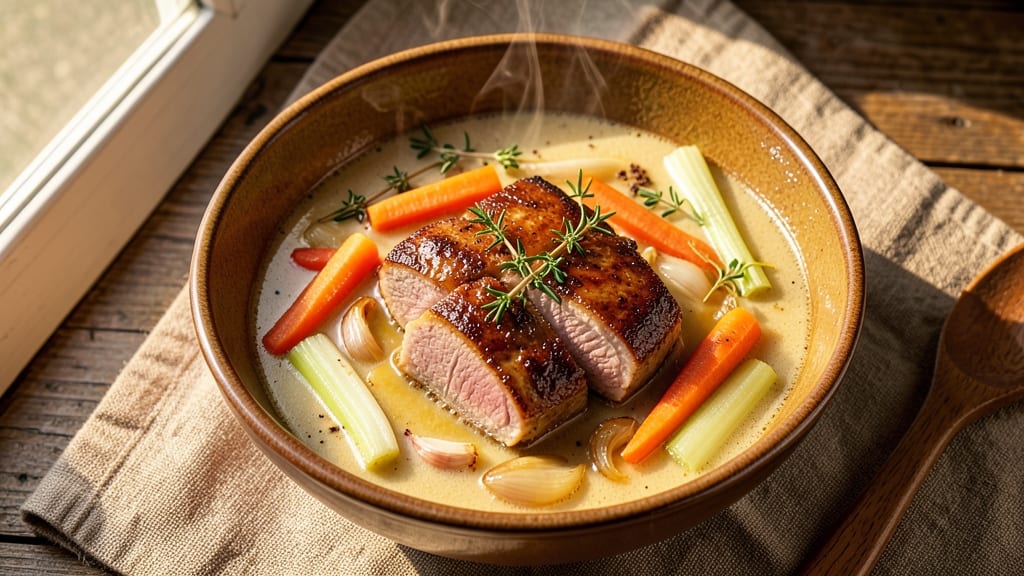
This pork tenderloin soup recipe transforms simple ingredients into a deeply comforting bowl of silky meat and aromatic herb-infused broth—perfect for chilly evenings. The secret lies in slow-cooked pork that practically melts off the bone, creating tender shreds that soak up every layer of savory flavor.
What sets this apart is the balance: rich yet light, hearty without feeling heavy, and packed with herbs that elevate humble ingredients into something extraordinary.
The process begins with a foolproof technique for tenderizing the pork—no special equipment required. We’ll build the broth from scratch, using aromatic vegetables and herbs to create depth, then let the meat simmer until it’s so tender it falls apart at the touch.
The result? A soup that’s restaurant-quality but designed for your home kitchen, with minimal prep and maximum flavor.
By the end, you’ll have a steaming bowl of soup where each spoonful delivers melt-in-your-mouth pork, velvety broth, and a harmonious blend of herbs that make every bite satisfying. The beauty of this recipe is its versatility—serve it as a standalone meal or pair it with crusty bread for dipping.
This is the kind of soup that tastes even better the next day, making it ideal for meal prep.
Ready to master this professional yet approachable technique? Let’s dive into the steps that turn a simple pork tenderloin into the star of a soul-warming soup. The process is straightforward, but the results are anything but ordinary—this is comfort food at its finest.
Ingredients for pork tenderloin soup
Six aromatic vegetables, tender pork, and herbs that transform simple ingredients into restaurant-quality soup.
| Ingredient | Amount | Notes |
|---|---|---|
| Pork Tenderloin 🥩 | 1 ½ lb | Center-cut for tenderness |
| Yellow Onion 🧅 | 1 whole | Chopped into half-moons |
| Carrots 🥕 | 4 medium | Peeled and cut into chunks |
| Celery Stalks 🌿 | 3 whole | Trimmed and chopped |
| Garlic Cloves 🧄 | 4 cloves | Minced for aromatic depth |
| Fresh Thyme 🌿 | ½ oz | Leaves only, finely chopped |
| Fresh Rosemary 🌿 | ½ oz | Needles finely chopped |
| Fresh Parsley 🌿 | ¼ cup | Chopped for fresh finish |
| Chicken Broth 💧 | 6 cups | Low-sodium preferred |
| Dry White Wine 🍷 | ½ cup | Sauvignon Blanc recommended |
| Olive Oil 🫒 | 2 tbsp | Extra-virgin for richness |
| Salt 🧂 | 1 ½ tsp | Diamond Crystal preferred |
| Black Peppercorns 🌶️ | ½ tsp | Freshly cracked |
| Fresh Bay Leaves 🍃 | 2 whole | Removed before serving |
| Crusty Bread 🍞 | 1 loaf | For serving |
The pork tenderloin is the star—look for center-cut pieces with even thickness for consistent tenderness. Costco or Whole Foods often carry high-quality cuts, but any well-marbled tenderloin works. Trim any visible silver skin before cooking, as it can make the meat tough. Fresh herbs elevate this dish dramatically, so shop the produce section early—thyme and rosemary should smell vibrant, not dried out. For the broth, low-sodium chicken broth prevents over-salting, though you can adjust seasoning later. The white wine adds brightness, so Sauvignon Blanc or Pinot Grigio work best—whatever’s open in your fridge will do in a pinch.
No fresh thyme? Dried thyme at one-third the amount works, but fresh is ideal for that bright herbal note. Substitute celery seed for a similar earthy depth if needed. The carrots can be swapped for turnips or parsnips for a different texture. If you’re avoiding wine, extra chicken broth with a splash of apple cider vinegar mimics the acidity. The bay leaves are non-negotiable—they infuse subtle, complex flavors that disappear once removed. For extra richness, add 1 tablespoon of unsalted butter at the end, though it’s not traditional. Always taste the broth before adding the pork—seasoning builds as it cooks.
This soup tastes even better the next day as flavors meld. Store in an airtight container for up to 4 days in the fridge, or freeze for 3 months in portioned containers. The crusty bread pairs perfectly—baguettes or sourdough work best. For meal prep, double the broth and freeze it separately, then reheat with fresh herbs and pork. The pork shreds beautifully when cooled, making it ideal for lunches. If you have leftovers, press the shredded pork to remove excess liquid before storing for a firmer texture.
Why You'll Love This Recipe
- Foolproof Prep: I swear by this recipe because it’s that simple—slice the pork, chop the veggies (no fancy techniques), and let the pot do the work. Honestly, even if I’m distracted, this soup still comes out solid.
- Savory Depth: The garlic and carrots caramelize just enough to give it a rich, almost braised quality, while the pork stays tender and juicy. It’s the kind of flavor that makes you want to eat it straight from the pot.
- Weeknight Hero: This is my go-to when I need something hearty but don’t want to slave over it. Double the batch, and you’ve got lunch for tomorrow—no stress, just good food.
- Budget Win: Pork tenderloin is lean and affordable, and the veggies stretch the broth beautifully. I’ll be real: it’s one of those recipes where you end up with leftovers, but no one complains.
Step-by-step instructions for herb-infused pork tenderloin soup
Transforming center-cut pork tenderloin into silky shreds requires precision timing and aromatic layering.
Sear the Pork Tenderloin for Depth of Flavor
Pat the 1.5 lb pork tenderloin completely dry with paper towels—this ensures a proper sear. Heat 2 tablespoons olive oil in a large Dutch oven over medium-high heat until shimmering. Add the pork and sear on all sides for 3-4 minutes per side until deep golden brown forms. The pork should release easily from the pan when ready to flip.
Remove the pork and set aside. The seared crust locks in juices while building a rich, caramelized foundation for the broth. Here's the thing—don't overcrowd the pan or the oil temperature will drop, resulting in steamed pork instead of seared.
Build the Aromatic Base with Vegetables and Herbs
In the same Dutch oven, add 1 whole yellow onion (chopped into half-moons), 4 medium carrots (cut into chunks), and 3 whole celery stalks (trimmed and chopped). Cook for 5-6 minutes until the vegetables begin to soften and release their natural sugars. Stir occasionally to prevent browning.
Add 4 cloves garlic (minced), 0.5 oz fresh thyme leaves, and 0.5 oz fresh rosemary needles, stirring for 30 seconds until fragrant. The garlic should sizzle gently—if it burns, you've lost that delicate sweetness we're after. This aromatic trifecta forms the flavor backbone of the soup.
Deglaze and Simmer the Broth
Pour in 0.5 cup dry white wine and scrape up all the browned bits from the bottom of the pan using a wooden spoon. This deglazing step captures all the concentrated pork flavor that would otherwise go down the drain. Let the wine reduce by half (1-2 minutes) before adding 6 cups chicken broth, 1.5 teaspoons salt, and 0.5 teaspoon freshly cracked black peppercorns. Stir to combine.
Return the pork to the pot, add 2 whole fresh bay leaves, and bring to a gentle simmer. Cover partially and cook for 45-50 minutes until the pork is fork-tender and shreds easily. The broth should be infused with deep, herbal notes—this is where the magic happens. If the broth reduces too quickly, add a splash of water to maintain consistency.
Shred the Pork and Finish the Soup
Remove the pork tenderloin and shred it using two forks, discarding the bay leaves. Return the shredded pork to the pot and simmer for an additional 5 minutes to absorb the flavors. Stir in 0.25 cup chopped fresh parsley just before serving—this adds a bright, fresh finish that cuts through the richness.
Taste and adjust seasoning if needed. The soup should be well-seasoned but balanced, with the herbal notes complementing the pork's natural sweetness. Serve immediately with 1 loaf crusty bread for dipping, ensuring each bite delivers both hearty meat and aromatic broth.
Pro Tips For Making Pork Tenderloin Soup
- SEAR THE PORK FIRST: Skip the direct-simmer approach—pat the tenderloin dry, then hit it with a hot pan for 2-3 minutes per side until golden. That crust locks in flavor and keeps the meat from turning mushy later. (Yes, even if you’re impatient like me.)
- CHOP VEGETABLES UNIFORM: Carrots and celery in uneven chunks? They’ll cook at different speeds, leaving some rubbery. Aim for ¼-inch slices—small enough to soften quickly but big enough to stay intact. Onions should be diced to ⅛-inch; garlic, minced fine so it dissolves.
- DON’T BOIL THE SOUP: Pork tenderloin gets tough if it simmers too hard. Once the liquid reaches a gentle bubble, turn the heat to low and let it hum along. If it’s rolling like a pot of pasta water, you’re overdoing it—cover and wait.
- ADD ACID AT THE END: Toss in a splash of vinegar, lemon juice, or even a pinch of citric acid in the last 5 minutes. It brightens the broth and cuts through the richness of the pork without making the meat dry out. (I was skeptical until I tried it.)
Storing and reheating this dish
Refrigerator Storage
Let your soup cool to room temperature within 2 hours before storing. Transfer to an airtight container—I love using glass Pyrex with snap-on lids—and refrigerate for up to 4 days.
The flavors actually deepen overnight as the herbs meld into the broth. Store the crusty bread separately in a bread bag or sealed container to prevent sogginess. 💫
Freezer-Friendly Tips
This soup freezes beautifully for up to 3 months if portioned correctly. Use quart-sized freezer bags or glass containers—leave 1-inch headspace for expansion. I recommend freezing the soup without the bread, adding it fresh when reheating.
For extra insurance, place a piece of parchment paper over the surface before sealing to prevent ice crystals. 🧊
Stovetop Reheating
My preferred method is stovetop reheating—it preserves texture better than microwaving. Transfer soup to a pot and heat over medium-low heat for 10-12 minutes, stirring occasionally. If the soup looks thick, add ¼ cup water or broth to restore consistency.
Taste and adjust seasoning—reheated pork often needs a pinch of salt. The parsley should be added fresh after reheating for maximum brightness. 🔥
Microwave Shortcuts
For quick lunches, microwave individual portions in a microwave-safe bowl on 70% power for 2-3 minutes, stirring halfway. Cover loosely with a damp paper towel to prevent drying.
If the soup separates, stir vigorously—adding a splash of warm water helps restore the velvety texture. I avoid microwaving the bread, opting for toasted slices instead. ✨
Leftovers Reinvention
Transform leftover pork shreds into pork potstickers or soup dumplings—just mix with a little cornstarch and pan-fry. The broth can become tomorrow's pasta sauce by simmering with pappardelle or fresh spinach.
For a quick fix, top reheated soup with crumbled feta and a drizzle of hot honey** for a gourmet upgrade. 💡
Nutrition facts
Frequently asked questions
Why does this recipe use white wine in the broth?
The 0.5 cup dry white wine adds brightness and depth to the broth by balancing the richness of the pork. It also helps deglaze the pan, capturing all those flavorful browned bits that would otherwise disappear. For a non-alcoholic version, substitute with extra chicken broth and a splash of apple cider vinegar.
Can I use pork shoulder instead of tenderloin?
Pork shoulder works differently—it's more flavorful but requires longer cooking. For this recipe, tenderloin is ideal because it stays tender and shreds easily. If you must use shoulder, cut the cooking time to 1.5 hours and shred carefully, but expect a slightly meatier texture.
How do I know when the pork is fully cooked?
The pork is done when it reaches an internal temperature of 145°F and shreds easily with two forks. For best results, use a meat thermometer inserted into the thickest part. If it's still slightly firm, let it rest 5 minutes before shredding—the residual heat will finish cooking it.
What if my broth tastes too bland?
Add a pinch of salt or a splash of soy sauce for umami depth. For extra richness, stir in 1 tablespoon butter or a spoonful of heavy cream at the end. The key is balancing flavors—taste as you go!
Can I make this soup in a slow cooker?
Yes! Sear the pork first, then transfer everything to the slow cooker and cook on low for 6-7 hours or high for 3-4 hours. The slow cooking enhances tenderness, but check the pork's internal temperature to ensure it's fully done. The broth may need thinning with water or broth if too thick.