
Main Courses
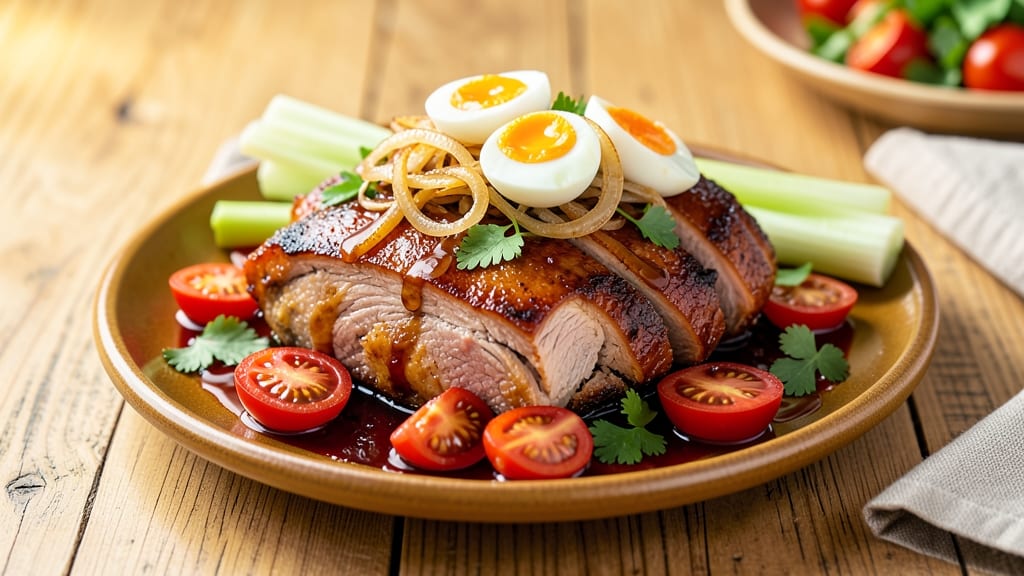
This Batangas-style pork afritada brings the tangy, vinegar-braised comfort of Filipino home kitchens to your table. 💛 The secret lies in slow-cooked pork shoulder, tender eggs, and crispy celery crowns—each element balancing sweet, sour, and savory notes.
My grandmother's recipe card called for just three ingredients: vinegar, tomatoes, and patience, but I've refined it to include the crispy celery that makes this dish truly special.
The magic happens in the braising—pork simmers until fork-tender, absorbing the vinegar's sharp brightness while tomatoes mellow into a rich, slightly sweet sauce. This isn't just a meal; it's a taste of home, where every bite carries the warmth of family gatherings and Sunday lunches.
The dish's cultural significance runs deep in Filipino cuisine, where afritada represents both comfort and celebration.
What makes this version stand out is the crispy celery crowns—a Batangas specialty—that add a satisfying crunch to balance the silky eggs and tender pork. The technique is simple but requires attention to timing: the celery must blister just enough to stay crisp while absorbing the sauce's flavors.
This dish proves that home cooking can deliver restaurant-quality results with just a few thoughtful steps.
The result is a dish that's hearty enough for family feasts but simple enough for weeknight dinners. Serve it with steamed white rice to soak up every last drop of that tangy, tomato-vinegar sauce.
Here's how to bring this Filipino classic to your kitchen—just as my grandmother would have made it, with love and a little extra crispy celery for good measure.
Ingredients for pork afritada recipe batangas style
Six ingredients make this Filipino classic unforgettable—crispy celery crowns, tender pork, and silky eggs.
| Ingredient | Amount | Notes |
|---|---|---|
| Pork Shoulder 🥓 | 3 lb | Bone-in, cut into 2-inch chunks |
| White Vinegar 💧 | 1 cup | Distilled white vinegar preferred |
| Large Tomatoes 🍅 | 4 whole | Roma or vine-ripened, halved |
| Celery Stems 🧅 | 6 whole | Thick Batangas-style, cut into crowns |
| Large Eggs 🥚 | 6 whole | Fresh, room temperature |
| Onion 🧅 | 1 whole | Yellow, sliced into half-moons |
| Garlic Cloves 🧄 | 6 cloves | Minced, peeled |
| Olive Oil 🫒 | ½ cup | Extra-virgin for frying celery |
| Bay Leaves 🌿 | 2 whole | Dried, crumbled |
| Salt 🧂 | 1 ½ tsp | Diamond Crystal preferred |
| Black Peppercorns 🌶️ | ½ tsp | Freshly cracked |
| Sugar 🍚 | 1 tbsp | Granulated, balances acidity |
| Green Onions 🧅 | 3 whole | Sliced, for garnish |
The pork shoulder is the star—bone-in for flavor, cut into even chunks so it cooks uniformly. Filipino markets often carry pre-cut pork shoulder, but if you're at a regular grocery store, look for the thickest cut near the shoulder blade. Celery crowns? These are the Batangas specialty—thick, fibrous celery stems that blister into crispy perfection. Asian grocery stores usually have them, but if you can't find them, use regular celery stems (about 2 inches long). The tomatoes should be firm and vibrant—Roma or vine-ripened hold up best in the braise. And those eggs? Fresh is non-negotiable—they should slide into the simmering sauce like silk.
No bone-in pork? Substitute pork loin, but expect slightly less flavor. Vinegar too sharp? Cut it with 2 tbsp tomato paste—it mellows the acid beautifully. Celery crowns not crisping? Fry them in olive oil first until golden, then set aside. The eggs can be swapped for silken tofu if you're avoiding eggs, but they won't be as silky. Sugar too sweet? Reduce to 1 tsp—this dish balances on a knife's edge between tangy and sweet. And if you're short on bay leaves, dried thyme at half the amount works in a pinch.
Pork keeps 3 days in the fridge—it tastes even better reheated. Celery crowns? Eat them fresh—they lose crispness fast. The sauce freezes beautifully, so make extra. Portion into containers with rice for easy lunches. And those green onions? Toss them in at the very end—they add freshness that disappears when cooked too long. This dish is all about leftovers, so double the batch if you can. Trust me, you'll want it.
Why You'll Love This Recipe
- One-Pot Magic: I swear by this—just toss in the pork shoulder, vinegar, and tomatoes, then let it simmer. No extra pans, no fuss, and the celery adds that subtle crunch without the chopping nightmare.
- Tangy Twist: That splash of white vinegar? It’s the secret weapon. The pork gets tender, the tomatoes caramelize, and the vinegar brightens everything up—like a party in your mouth, but make it savory.
- Budget Meal for Crowds: Pork shoulder is cheap, tomatoes are cheap, and eggs? Even cheaper. You’ll feed a family of four for under $15, and honestly, half the time, it disappears before dessert even hits the table.
Step-by-step instructions for Batangas-style pork afritada
This classic Filipino dish delivers tender pork, silky eggs, and crispy celery in a tangy vinegar sauce.
🔥 Step 1: Sear the Pork Shoulder for Depth of Flavor
Heat 0.25 cup of the olive oil in a large Dutch oven over medium-high heat. Add the 3 lb pork shoulder cut into 2-inch chunks and sear for 8-10 minutes, turning occasionally, until golden brown on all sides. You'll see the fat render out and the meat develop a beautiful crust—this is where all the flavor starts.
Here's the thing—don't crowd the pan. Work in batches if needed to maintain the heat. Once all the pork is browned, transfer it to a plate and set aside. The remaining 0.25 cup olive oil in the pot will become the foundation of your sauce, so don't wipe it out.
🍳 Step 2: Build the Vinegar-Tomato Base
In the same Dutch oven, add the 1 whole onion sliced into half-moons and the 6 cloves garlic cloves minced. Cook for 3-4 minutes until the onions soften and the garlic becomes fragrant—you should smell that sweet, pungent aroma. Then add the 4 whole large tomatoes halved and the 1 cup white vinegar.
Bring everything to a simmer, then reduce heat to medium-low. Let it cook uncovered for 15 minutes while you prepare the celery. The vinegar will start to mellow out, and the tomatoes will break down into a rich, slightly thickened sauce. Stir occasionally to prevent sticking, but don't worry if it looks uneven at this stage.
👨🍳 Step 3: Fry the Celery Crowns Until Crispy
While the sauce simmers, heat 0.25 cup olive oil in a separate skillet over medium heat. Add the 6 whole celery stems cut into crowns (about 2-inch pieces) and fry for 8-10 minutes, turning occasionally, until deep golden brown and crispy. They should sizzle loudly when you add them—this is your signal they're ready.
Real talk: these crispy celery crowns are the star of Batangas-style afritada. If they start to burn before browning, reduce the heat slightly. Once crispy, transfer them to paper towels to drain excess oil, then set aside. The remaining oil in the skillet can be reserved for the eggs later.
🥘 Step 4: Combine Pork and Sauce
Return the seared pork to the Dutch oven with the tomato-vinegar sauce. Add the 1.5 tsp salt, 0.5 tsp black peppercorns, 2 whole bay leaves crumbled, and 1 tbsp sugar. Bring to a gentle simmer, then reduce heat to low and cover partially. Let it cook for 1 hour to 1 hour 15 minutes, turning the pork occasionally, until the meat is fork-tender and the sauce has thickened slightly.
Here's where the magic happens: the pork should be falling apart easily when pierced with a fork, and the sauce should coat the back of a spoon. If it's too thin, uncover and simmer for another 5-10 minutes to reduce. The sugar balances the vinegar's acidity, so don't skip this step—it makes all the difference.
🍳 Step 5: Cook the Silky Eggs and Finish
In a separate skillet, heat the remaining oil from frying the celery over low heat. Crack the 6 whole large eggs into the skillet, one at a time, letting each egg cook slightly before adding the next. You want them to be soft but set—just enough to hold their shape when gently shaken.
Once all eggs are cooked to your liking, carefully transfer them to the pork mixture. Stir gently to distribute the sauce evenly. Taste and adjust seasoning if needed—you might want to add a splash more vinegar if it's too mild or a pinch more salt if needed. The eggs should be silky and just set, not scrambled.
🍽️ Step 6: Serve with Crispy Celery and Garnish
Ladle the pork and sauce into serving bowls, arranging the silky eggs on top. Surround each serving with the crispy celery crowns you fried earlier. Garnish with the 3 whole green onions sliced and sprinkle any remaining sauce over the top.
Serve immediately with steamed rice—this dish is all about the contrast of textures and temperatures. The crispy celery, tender pork, and silky eggs create a perfect balance in every bite. Don't skip the rice; it soaks up all that delicious vinegar sauce.
Pro Tips For Making Pork Afritada Recipe Batangas Style
- CRISP THE PORK FIRST: Batangas-style afritada needs that golden crust on the pork shoulder—don’t skip browning it in oil first. Cut the meat into 1-inch chunks, then sear them in batches over medium-high heat until deeply browned (about 5-6 minutes per batch). I learned this the hard way—skipping this step leaves you with pale, rubbery pork that soaks up vinegar instead of developing flavor.
- SOAK TOMATOES IN VINEGAR: Dump those whole tomatoes into a bowl with ¼ cup white vinegar and a pinch of salt, then let them sit for 10 minutes before adding to the pot. This softens the skins and mellows the acidity, so your sauce doesn’t taste like you’re pickling the pork. (Yes, even if you’re impatient like me.)
- STIR THE SAUCE CONSTANTLY: Once the tomatoes hit the pot, don’t walk away—keep stirring every 2-3 minutes for the first 10 minutes. The vinegar and sugar in the tomatoes can burn fast, and a stuck-on sauce ruins everything. I was skeptical until I tried it: the sauce stays silky, not grainy.
- POACH EGGS IN THE FINISH: Drop the eggs into the simmering afritada just before serving—no need to pre-boil them. The gentle heat of the stew will cook them to a creamy yolk in 4-5 minutes, and they’ll soak up all that tangy, tomatoey goodness. (Does it look weird? Yes. Does it work? Every single time.)
Best sauces and condiments for this recipe
Vinegar-Tomato Base
The heart of Batangas-style afritada lies in its vinegar-tomato sauce, where white vinegar and Roma tomatoes create a perfect balance of tangy and sweet. I like to use distilled white vinegar for its clean acidity, but apple cider vinegar adds a subtle fruitiness if you prefer.
The key is simmering the vinegar with tomatoes for 15 minutes to mellow its sharpness—this step transforms the sauce from harsh to silky. 💛
Crispy Celery Crowns
These are the Batangas signature—thick celery stems fried until golden and crispy. The secret is using extra-virgin olive oil and keeping the heat at medium to avoid burning before browning.
I fry them in batches to maintain even crispness, then drain on paper towels. These crowns should sizzle loudly when added to oil—that's your cue they're ready. 🧅
Silky Egg Technique
The eggs are cooked in the leftover celery-frying oil over low heat for a delicate, custard-like texture. Crack them one at a time, letting each cook slightly before adding the next—this prevents scrambling.
They should be just set when transferred to the pork mixture, absorbing the sauce's flavors beautifully. Fresh eggs are non-negotiable here; older eggs release too much liquid. 🥚
Balancing Flavors
The 1 tablespoon sugar in the sauce might seem odd, but it's essential to temper the vinegar's acidity. Taste as you go—if the sauce tastes too sharp, add a pinch more sugar or a splash of water to thin it slightly.
The bay leaves add earthy depth, while black peppercorns provide a subtle kick. Don't skip these; they're what makes this sauce uniquely Batangas. ✨
Garnish Game-Changers
Fresh green onions sliced thin add a bright finish, but the real star is the crispy celery crowns arranged around each serving. They contrast perfectly with the silky eggs and tender pork.
For extra flair, sprinkle a pinch of crushed red pepper flakes if you like heat. The presentation matters—this dish is as much about visual appeal as taste. 🌶️
Sauce Storage Tips
Leftovers taste even better the next day! Store the sauce (without eggs) in an airtight container in the fridge for up to 3 days. Reheat gently on the stove, adding a splash of water if it thickens too much.
The eggs, however, are best eaten fresh—they lose their silky texture when reheated. Double the batch if you can; this sauce freezes beautifully for future meals. ❄️
Nutrition facts
Frequently asked questions
What makes Batangas-style pork afritada different from regular afritada?
The Batangas version stands out for its crispy celery crowns and the way it balances vinegar's sharpness with just 1 tablespoon sugar. Regular afritada often skips the celery or uses softer vegetables, while Batangas style emphasizes that satisfying crunch. The sauce also cooks longer for deeper flavor development.
Can I substitute bone-in pork shoulder with pork loin?
Yes, but expect slightly less flavor since bone-in pork adds richness. For best results, use pork loin cut into 1.5-inch cubes and increase cooking time by 15-20 minutes to ensure tenderness. The bone also helps break down collagen, so without it, the meat stays firmer.
Why do the celery crowns need to be so crispy?
Those crispy celery crowns are the Batangas signature—they provide the perfect textural contrast to the silky eggs and tender pork. The crispness comes from frying them in extra-virgin olive oil until golden brown. If they're not crispy enough, they'll turn soggy when mixed with the sauce. Think of them as the dish's edible garnish that makes every bite exciting.
How do I know when the pork is tender enough?
The pork is ready when it falls apart easily with a fork and the juices run clear. For bone-in pork, this usually takes 1 hour to 1 hour 15 minutes of braising. If you're using pork loin, check at 45 minutes—it cooks faster. The sauce should also coat the back of a spoon, indicating proper reduction.
Can I make this dish ahead of time?
The pork and sauce can be made 1 day ahead and stored in an airtight container in the fridge. Reheat gently on the stove, adding a splash of water if needed. The eggs should be cooked fresh—older eggs release too much liquid and won't be silky. For meal prep, make extra sauce and freeze it for future use.