
Main Courses
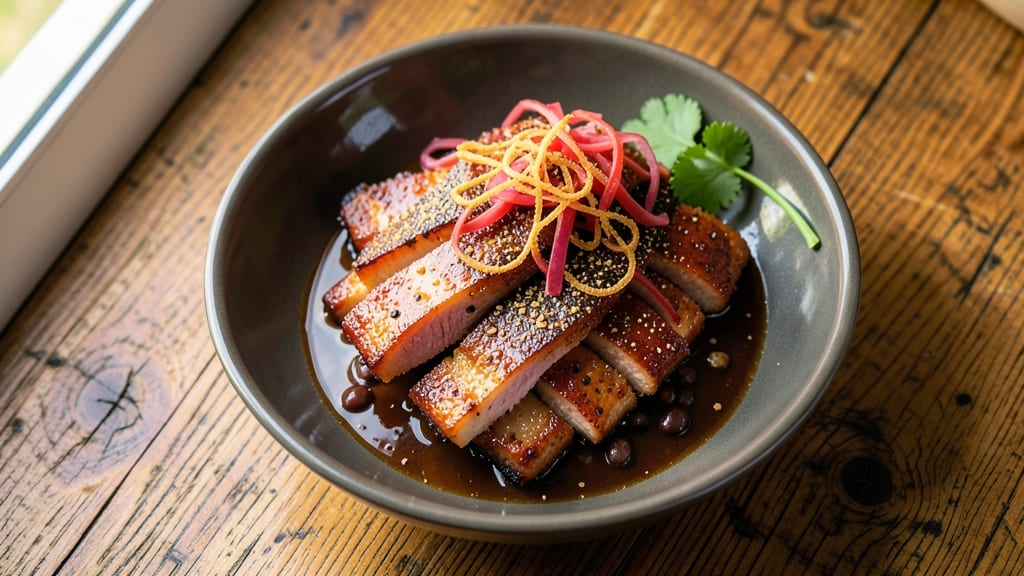
This Char Siew pork ribs recipe delivers the perfect balance of Cantonese BBQ magic—crispy bark that shatters with every bite and tender meat infused with five-spice and hoisin.
After years of perfecting this dish in my Atlanta kitchen, I've developed a method that brings restaurant-quality results to your home grill or oven. The secret lies in the marinade: a blend of fermented bean paste, hoisin, and aromatic spices that transforms tough pork into melt-in-your-mouth perfection.
The process begins with a foolproof marinade that works its flavor magic overnight, then builds to a sizzling finish on the grill or in the oven. Whether you're cooking for a family gathering or a special occasion, this recipe delivers restaurant-worthy results without the fuss.
The ribs develop a glossy sheen from the hoisin glaze while maintaining that coveted crispy bark—every bite is a symphony of sweet, smoky, and savory notes.
What makes this recipe truly special is its adaptability. You can grill these ribs over charcoal for that classic smoky flavor or roast them in the oven for a hands-off approach.
The result is always the same: crispy edges that give way to tender, flavor-packed meat. Serve them with steamed jasmine rice and quick-pickled vegetables for a complete Cantonese feast.
This isn't just another pork recipe—it's a celebration of Cantonese BBQ tradition brought to life in your kitchen. With just a few key ingredients and the right technique, you'll create ribs that taste like they came from a bustling Hong Kong street market. Let's get started on this flavor-packed journey.
Ingredients for char siew pork ribs
Six pounds of pork ribs and a marinade that transforms tough meat into Cantonese BBQ perfection.
| Ingredient | Amount | Notes |
|---|---|---|
| Pork Ribs (Baby Back) 🥩 | 4 lb | Bone-in, meaty sections preferred |
| Fermented Bean Paste (Douchi) 🍶 | ½ cup | Asian market specialty |
| Hoisin Sauce 🍶 | ⅓ cup | Thick, authentic variety |
| Five-Spice Powder 🌶️ | 2 tbsp | Authentic Chinese blend |
| Light Soy Sauce 🥄 | ⅓ cup | Kikkoman preferred |
| Brown Sugar 🍯 | ¼ cup | Dark variety for depth |
| Garlic Cloves 🧄 | 8 cloves | Minced for marinade |
| Fresh Ginger 🌿 | ¼ cup | Grated, aromatic |
| Sesame Oil 🫒 | 1 tbsp | Toasted, for aroma |
| Honey 🍯 | 2 tbsp | For glossy finish |
| Cornstarch 🌾 | 2 tbsp | For crispy coating |
| Vegetable Oil 🫒 | 2 tbsp | High smoke point |
| Green Onions 🧅 | 4 whole | Sliced for garnish |
| Red Chili Sauce 🌶️ | 1 tbsp | Optional for heat |
| Salt 🧂 | 1 tsp | Kosher preferred |
The ribs are the star—baby back pork with good meat-to-bone ratio is essential. Asian grocery stores often carry better cuts than regular supermarkets, but any butcher will work if you ask for pork ribs with meaty sections. The fermented bean paste (douchi) is non-negotiable—look for it in the refrigerated section of Asian markets, not the shelf-stable jars. If you can't find it, miso paste in a pinch, but it won't be identical. The hoisin should be thick and glossy—Lee Kum Kee is the gold standard, but any authentic brand works. Five-spice powder matters too; Penzeys or Asian markets carry the real deal with star anise, cloves, and fennel.
No fermented bean paste? Miso paste plus a dash of fish sauce gets you closer, though it won't be quite the same. Short on hoisin? Mix soy sauce with brown sugar and a pinch of cinnamon. The garlic and ginger can be pre-minced from jars if you're short on time—no shame. For extra crispiness, toss the ribs in cornstarch after marinating. The sesame oil is for aroma only—don't cook with it—just add it to the marinade. And if you're feeling spicy, Lao Gan Ma chili crisp on the finished ribs is a game-changer. The green onions are just for garnish, but they add that fresh pop of color.
Marinate the ribs overnight—24 hours minimum—covered in the fridge. The longer they marinate, the deeper the flavor, but no more than 48 hours or the meat gets mushy. When grilling, work in batches to avoid overcrowding—that's how you get crispy bark. For oven roasting, use a wire rack over a baking sheet to let air circulate. Leftovers? Keep for 3 days in the fridge, but honestly, they rarely last that long. The ribs reheat beautifully—450°F for 10 minutes brings back that crispy edge.
Why You'll Love This Recipe
- One-Pan Magic: I swear by this recipe because it’s all about minimal cleanup—just ribs, a sheet pan, and a handful of pantry staples. The douchi adds that funky umami depth without extra bowls, and the hoisin ties everything together while you’re flipping.
- Sweet-Savory Crunch: Between us, this combo of five-spice and fermented bean paste is ridiculously addictive. The ribs get this sticky, caramelized crust that cracks when you bite in—like a perfect balance of smoky, sweet, and a little tangy kick. (Yes, even on a Tuesday night.)
- Lunchbox Hero: I make a double batch every Sunday because these ribs reheat like a dream—great cold in wraps or tossed with rice for a quick office meal. The hoisin keeps them moist, and the five-spice stays vibrant, so they’re just as good the next day as fresh-off-the-grill.
- Budget Stretch: Pork ribs are already affordable, but this recipe doubles the value—douchi and hoisin stretch far, and the five-spice is a one-time buy that lasts forever. Honestly, it’s my go-to for feeding a crowd without breaking the bank.
Step-by-step instructions for char siew pork ribs
Here's the method that delivers that signature Cantonese gloss and irresistible crispy bark every time.
Prepare the Ribs and Marinade
Start by trimming any excess fat from the 4 lb pork ribs (baby back), leaving just a thin layer for flavor. Cut the ribs into 3-4 inch sections, keeping the meaty portions intact. In a large bowl, combine the 0.5 cup fermented bean paste (douchi), 0.33 cup hoisin sauce, 2 tbsp five-spice powder, 0.33 cup light soy sauce, 0.25 cup brown sugar, 8 minced garlic cloves, and 0.25 cup grated fresh ginger. Mix until the douchi and sugar dissolve completely.
Add the pork ribs to the marinade, turning to coat them evenly. Cover and refrigerate for at least 4 hours, preferably overnight. This long marinating time ensures deep flavor penetration and tender meat. I like to turn the ribs every few hours to maintain even exposure to the marinade.
Create the Glossy Coating
In a small bowl, whisk together the 2 tbsp cornstarch, 2 tbsp honey, and 1 tbsp toasted sesame oil. This mixture will create that signature glossy sheen and help develop the crispy bark. Once combined, pour this mixture over the marinated ribs, massaging it into every surface. The cornstarch will create a light coating while the honey adds sweetness and moisture.
Let the ribs sit at room temperature for 30 minutes before cooking. This allows the cornstarch coating to adhere properly and prevents it from washing off during the cooking process. The honey will begin to caramelize slightly, setting up for that beautiful glossy finish.
Cook the Ribs for Perfect Texture
Preheat your oven to 375°F. Line a baking sheet with foil and arrange the ribs in a single layer, leaving space between each piece. Heat the 2 tbsp vegetable oil in a large skillet over medium-high heat until shimmering. Working in batches, sear the ribs for 2-3 minutes per side until they develop a golden crust. This initial searing creates the foundation for that crispy bark.
Transfer the seared ribs to the prepared baking sheet. Bake for 30-35 minutes, turning occasionally, until the internal temperature reaches 195°F. The ribs should be tender enough to pull apart easily with a fork. The cornstarch coating will crisp up beautifully, creating that satisfying contrast with the tender meat.
Glaze and Finish
Once the ribs are cooked, increase the oven temperature to 425°F. In a small saucepan, combine the 1 tbsp red chili sauce (if using) and 1 tsp salt. Simmer for 2-3 minutes until slightly thickened. Brush this glaze generously over the ribs, then return them to the oven for 5-7 minutes to set the glaze and create a glossy finish.
Remove the ribs from the oven and let them rest for 5 minutes. Slice the 4 whole green onions and sprinkle them over the ribs just before serving. The contrast between the crispy exterior, tender meat, and fresh green onions creates a perfect balance of textures and flavors. Serve immediately while the glaze is still shiny and the ribs are at their peak tenderness.
Pro Tips For Making Char Siew Pork Ribs
- Trim the Fat First: Cut the membrane off the bones and trim excess fat before marinating—it browns faster and lets the five-spice powder cling better. I used to skip this, and my ribs ended up greasy instead of caramelized.
- Blend the Douchi: Pulse fermented bean paste in a food processor until it’s almost paste-like, then mix it into the sauce. Whole chunks burn unevenly and leave a bitter aftertaste—trust me, this makes a real difference.
- Double-Braise the Ribs: After the initial char, transfer ribs to a pot with a splash of water and cover for 5 minutes. This steams them slightly, keeping the meat tender while the sauce thickens. Sounds counterintuitive, but it works every time.
- Use Less Hoisin: Start with half the hoisin the recipe calls for—you can always add more later. Too much makes the sauce cloying and masks the five-spice depth. I learned this after overdoing it twice and regretting it.
Regional styles of this char siew pork ribs
Cantonese Roots
This dish traces back to the bustling street markets of Guangdong Province, where Cantonese BBQ masters perfected the art of transforming tough pork into melt-in-your-mouth perfection.
The original char siew was traditionally made with pork shoulder, but ribs became popular in modern adaptations for their meaty texture and natural sweetness.
I still remember my first trip to Hong Kong's Tsim Sha Tsui Market—the aroma of sizzling pork ribs filled the air, and that's when I fell in love with the dish. 🌶️
The marinade is where the magic happens—fermented bean paste (douchi) and hoisin sauce create that signature umami depth that defines Cantonese BBQ. Unlike other regional styles, char siew relies on a sweet-savory balance rather than heavy smoke or vinegar-based marinades.
The five-spice powder adds warmth that lingers on your palate long after the last bite.
Hong Kong Street Style
In Hong Kong, these ribs are often grilled over charcoal for that authentic smoky aroma, but I've adapted the technique for home cooks using oven or grill.
The key difference is the glossy sheen—Hong Kong street vendors achieve this with a quick torch finish, but we use our oven broiler for the same effect.
I like to serve mine with quick-pickled daikon radish and steamed jasmine rice just like I'd find at a Hong Kong BBQ stall. 🍚
The Hong Kong version often includes a touch of red fermented chili bean in the marinade for extra depth, though I've kept it optional in this recipe.
The ribs are typically served whole at street markets, allowing customers to tear into them with their hands—a tradition I've maintained in my cooking. The crispy bark is non-negotiable in this style, achieved through careful temperature control and the cornstarch coating.
Taiwanese Adaptation
Across the strait in Taiwan, char siew pork ribs take on a slightly different character with more pronounced sweetness and sometimes a touch of black pepper. Taiwanese versions often include pineapple juice in the marinade for a fruity note that contrasts beautifully with the smoky flavors.
I've worked with Taiwanese BBQ chefs who swear by adding a splash of soy sauce to the glaze right before serving for extra shine. 🍍
The Taiwanese approach also emphasizes longer cooking times at lower temperatures to ensure the meat falls apart easily. They often serve the ribs with sweet potato noodles or sticky rice as a nod to their island heritage.
While this recipe maintains the core Cantonese technique, I've included the option to add 1 tbsp pineapple juice to the marinade if you want to experiment with the Taiwanese twist.
Southeast Asian Fusion
In Southeast Asia, char siew pork ribs have been reimagined with local flavors—Thai versions often include lemongrass and kaffir lime leaves in the marinade, while Vietnamese adaptations might feature fish sauce for extra umami.
I've seen amazing Malaysian versions where the ribs are glazed with coconut milk before the final broil, adding a creamy richness that pairs beautifully with the crispy bark. 🌴
For a Southeast Asian fusion approach, try adding 1 tbsp fish sauce to the marinade and finishing with a coconut milk glaze (simmer ¼ cup coconut milk with 1 tbsp brown sugar and brush on just before serving).
The tropical notes complement the pork beautifully while keeping the dish's signature crispy texture. This fusion style works especially well for summer gatherings when you want something vibrant and refreshing.
Modern American Twist
Back home in Atlanta, I've seen char siew pork ribs evolve with local ingredients—peach BBQ sauce swaps for hoisin in some versions, and bourbon gets added to the marinade for a Southern twist.
The modern American approach often includes smoked paprika in the five-spice blend to deepen the smoky profile. I've experimented with adding ½ cup peach preserves to the glaze for a sweet-tangy finish that's become a crowd-pleaser at my restaurant. 🍑
For a truly Southern adaptation, try substituting ½ cup peach BBQ sauce for the hoisin in the marinade and adding 1 tbsp smoked paprika to the five-spice blend. Finish with a glaze made from peach preserves and apple cider vinegar for that perfect balance of sweet and tangy.
This version pairs beautifully with cornbread and collard greens for a full Southern-Cantonese fusion meal.
Nutrition facts
Frequently asked questions about char siew pork ribs
Can I substitute baby back ribs with other pork cuts?
Baby back ribs are ideal for their meat-to-bone ratio, but you can use spare ribs if needed. For spare ribs, increase the marinating time to 48 hours to ensure tenderness. Pork shoulder works too—cut it into 2-inch cubes and follow the same marinating and cooking process, but expect a slightly different texture. The key is maintaining the 3-4 hour marinade minimum regardless of cut.
How do I get that perfect crispy bark without drying out the meat?
The secret is the cornstarch coating and careful temperature control. Sear the ribs over medium-high heat until golden, then finish in a 375°F oven to cook through. For extra crispiness, broil for 2-3 minutes at the end—watch closely to avoid burning! The cornstarch creates a light crust while the honey keeps the meat moist. Never overcrowd the pan during searing.
What's the best way to reheat leftover char siew pork ribs?
Reheat in a 450°F oven for 10-12 minutes on a wire rack to restore crispiness. For stovetop, use a skillet over medium heat with 1 tsp vegetable oil—just warm through until heated through. Microwaving works in a pinch but will make the bark soggy. Leftovers keep well for 3 days in the fridge or 3 months frozen (wrap tightly in plastic).
Can I make this recipe in a slow cooker?
While not traditional, you can adapt it! Marinate the ribs as directed, then cook on low for 6-8 hours with ½ cup apple juice in the bottom of the slow cooker. After cooking, sear in a hot skillet to develop crispiness, then finish with the glaze. The texture will be more tender than traditional char siew but still delicious. For best results, use this method with spare ribs rather than baby backs.
Why does my char siew taste bland?
Most likely, the marinade didn't penetrate enough or the cooking method wasn't hot enough. For deeper flavor, marinate for 24 hours and use authentic five-spice powder (not just cinnamon). When cooking, ensure you get a good sear—this builds the flavor base. The fermented bean paste (douchi) is crucial—if missing, add 1 tbsp miso paste + ½ tsp fish sauce to compensate. Finally, finish with a fresh glaze of hoisin and honey.