
Main Courses
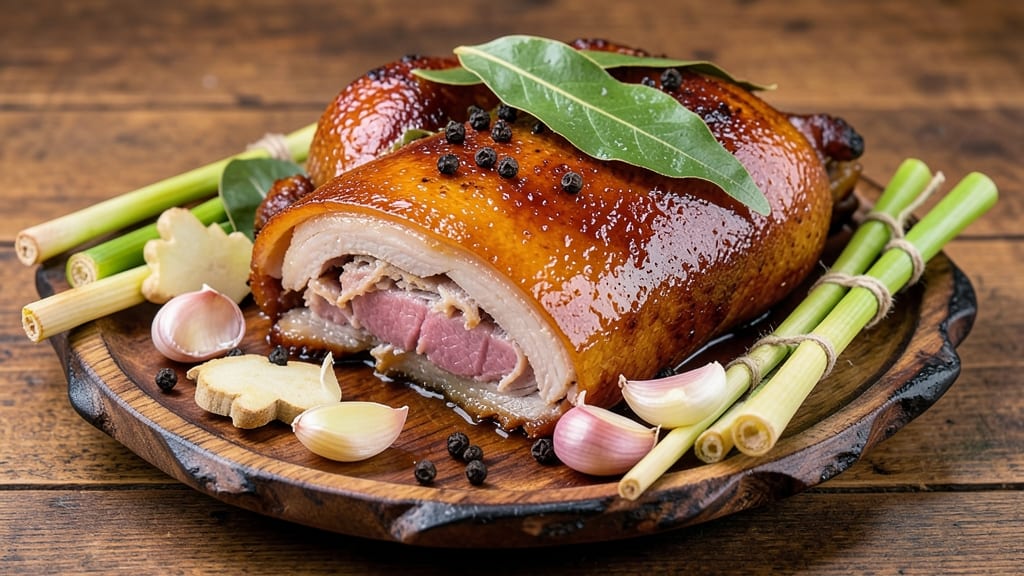
This Cebu lechon pork belly recipe transforms a simple cut into a showstopping centerpiece with crispy skin and juicy meat—just like the legendary roasts from Cebu, Philippines. 🔥 Growing up in Georgia, I learned that pork deserves this kind of celebration, and this method delivers restaurant-quality results at home.
The secret lies in layering aromatics inside the belly while roasting it low and slow, then basting until golden perfection. What sets this recipe apart is the balance of technique and tradition.
You'll stuff the belly with lemongrass, garlic, and spices that infuse every bite with flavor, then roast it slowly to render fat while maintaining moisture. The final basting creates that signature crispy crackling skin that's impossible to resist.
This isn't just pork—it's a feast that brings the energy of Filipino celebrations to your table. By the time you carve into this masterpiece, you'll have tender, melt-in-your-mouth pork that's been kissed by smoky aromatics and sealed with that irresistible crust.
The juices will flow freely, and each slice will reveal layers of flavor that make it worth every minute of effort. This is pork belly elevated to its finest form. Serve with steamed jasmine rice and a tangy calamansi drink to complete the experience.
The leftovers reheat beautifully too—just a reminder of why this recipe becomes a family favorite. Let's get started on your Cebu lechon journey!
Ingredients for cebu lechon pork belly
Six aromatics, one pork belly, and a slow roast make this feast-worthy centerpiece.
| Ingredient | Amount | Notes |
|---|---|---|
| Pork Belly (skin-on) 🥓 | 4 lb | Thick-cut, bone-in preferred |
| Fresh Lemongrass 🌿 | 1 whole | White part only, chopped |
| Garlic Cloves 🧄 | 12 cloves | Smashed, not minced |
| Fresh Ginger 🌿 | ½ cup | Julienned, about 2 oz |
| Bay Leaves 🍃 | 4 whole | Dried, standard size |
| Black Peppercorns 🌶️ | 1 tbsp | Whole, lightly crushed |
| Ground White Pepper 🌶️ | 1 tsp | For subtle flavor |
| Salt 🧂 | 2 tbsp | Kosher or sea salt |
| Olive Oil 🫒 | ½ cup | Extra-virgin for basting |
| Brown Sugar 🍚 | ¼ cup | Lightly packed |
| Whole Cloves 🌶️ | 8 pieces | For aromatic depth |
| Cinnamon Sticks 🌿 | 2 pieces | About 2 inches each |
| Jasmine Rice 🍚 | 3 cups | Uncooked, for serving |
| Calamansi Juice 🍋 | ½ cup | Or lime juice substitute |
The pork belly is the star—look for thick-cut, bone-in pieces at Whole Foods or your local butcher. Thinner cuts won't render enough fat for that signature crispy skin. I always ask for the belly to be scored lightly on the fat cap (about 1/4-inch deep) before buying—most butchers will do this for free. If you can't find lemongrass, substitute 1 tbsp lemongrass paste (check the Asian aisle), but fresh is ideal. The ginger should be vibrant—no wrinkly or moldy roots. For the spices, Penzeys Spices has the best whole spices, but the bulk bins at Trader Joe's work too.
No lemongrass? Double the ginger and add 1 tbsp lime zest for brightness. Running short on cloves or cinnamon? Allspice berries at half the amount add warmth without overpowering. The brown sugar is key for caramelization—lightly packed means no shaking the cup. If you can't find calamansi juice (the Filipino lime), lime juice plus 1 tsp sugar mimics the tang. For the rice, jasmine is traditional, but basmati or even long-grain white works in a pinch. The olive oil should be fruity—none of that cheap canola oil for basting.
Pork belly keeps best in the fridge for 3 days before roasting—wrap tightly in plastic wrap. The aromatics (lemongrass, ginger, etc.) can be prepped a day ahead and stored in a sealed container. Roasted pork reheats beautifully—350°F for 15-20 minutes wrapped in foil. For leftovers, slice thinly and serve over rice. The crispy skin loses its crunch when reheated, but the meat stays juicy. Portion into containers with rice for easy lunches—3 months frozen if wrapped airtight.
Why You'll Love This Recipe
- One-Pot Magic: The pork belly roasts right on the same tray where you prep the garlic, ginger, and lemongrass—no extra pans, no extra stress. I swear by this: toss everything in, set the oven, and walk away. That crispy skin? It’s all thanks to the bay leaves and ginger working their magic while you’re busy.
- Crispy-Creamy Obsession: The moment you cut into that golden crust and hit that melt-in-your-mouth fat? Chef’s kiss. The lemongrass and garlic infuse the pork so deeply it’s like every bite carries a little burst of flavor. Between us, my kids now ask for this over pizza—don’t tell them I’m bragging.
- Party or Pantry: This recipe doesn’t care if it’s a Sunday feast or a lazy Tuesday. Leftovers? They’re even better cold, sliced thin for sandwiches or reheated for breakfast. Honestly, I’ve served it at potlucks, packed it for lunch, and even fed a houseful of guests—no one ever complains.
- Budget Stretch: Pork belly feeds a crowd without breaking the bank, especially when you use the scraps for soup or fried rice later. I’ll be real: the first time I made this, I bought extra just to have it on hand. Now it’s my go-to for stretching meals without sacrificing flavor.
Step-by-step instructions for Cebu lechon pork belly
Here's how to transform a simple pork belly into Cebu's legendary crispy-skinned, melt-in-your-mouth masterpiece.
🔥 Step 1: Prep and Score the Pork Belly for Maximum Crisp
Start by scoring the pork belly skin in a diamond pattern using a sharp knife. Make cuts about ½-inch apart—this creates channels for the marinade to penetrate and helps render fat while keeping the skin crispy. Pat the skin completely dry with paper towels; any moisture will prevent proper browning.
In a large bowl, combine the 0.5 cup olive oil, 0.25 cup brown sugar, 2 tbsp salt, 1 tbsp black peppercorns, 1 tsp ground white pepper, 8 pieces whole cloves, and 2 pieces cinnamon sticks. Rub this mixture all over the pork belly, pressing firmly into the cuts and skin. Let it marinate uncovered in the fridge for 24 hours—this ensures deep flavor penetration and tender meat.
👨🍳 Step 2: Build the Aromatic Marinade and Stuff the Belly
In a food processor, pulse the 1 whole fresh lemongrass (white part only), 12 cloves garlic cloves, and 0.5 cup fresh ginger until finely chopped but not pasty. Transfer this mixture to a bowl and stir in the 0.5 cup calamansi juice and 4 whole bay leaves.
Carefully stuff the pork belly cavity with this marinade mixture, then tie the belly closed with kitchen twine every 2-3 inches to maintain shape during cooking. Place the stuffed belly on a rack set over a baking sheet—this allows air circulation for even browning. Let it sit at room temperature for 1 hour before roasting.
🔥 Step 3: Roast Low and Slow for Juicy Perfection
Preheat your oven to 325°F. Roast the pork belly on the rack for 3 hours, basting with pan juices every 45 minutes. The internal temperature should reach 195-200°F—this is where the collagen breaks down and the meat becomes fork-tender. You'll notice the skin starts to blister and the fat renders out in waves.
Here's the thing—don't rush this step. The slow cook is what transforms tough pork belly into melt-in-your-mouth goodness. If the skin browns too quickly, tent it loosely with foil to prevent burning while maintaining moisture.
🔥 Step 4: Crisp the Skin Under the Broiler
Once the pork belly reaches 195-200°F internally, increase oven temperature to 425°F and place the rack on the middle position. Broil for 10-15 minutes, turning occasionally, until the skin is deep golden brown and crackling. Watch it closely—this is where you get that legendary Cebu lechon crisp!
For extra insurance, I like to finish with a quick sear in a hot skillet. Place the belly skin-side down in a cold skillet over medium heat for 2-3 minutes until it's perfectly crispy all over. This step creates that satisfying crunch that makes lechon unforgettable.
⏰ Step 5: Rest and Serve with Jasmine Rice
Transfer the pork belly to a cutting board and let it rest for 15 minutes before carving. This resting period allows the juices to redistribute, ensuring every slice is moist and flavorful. While it rests, cook the 3 cups jasmine rice according to package instructions—it should be perfectly fluffy to complement the rich pork.
Slice the pork belly against the grain into ½-inch thick slices. Each piece should have a crispy, caramelized exterior and a pink, juicy center that practically melts in your mouth. Serve with the jasmine rice and enjoy immediately—the crispy skin won't last long once everyone sees it!
Pro Tips For Making Cebu Lechon Pork Belly
- CRACK THE SKIN FIRST: Score the pork belly skin in a crosshatch pattern with a sharp knife before cooking—this lets fat render out evenly and prevents a greasy mess. I used to skip this, and my lechon would either turn into a soggy brick or a flaming disaster.
- SIMMER LEMONGRASS LOW: Tie the lemongrass stalks tightly with twine and blanch them for 2 minutes in boiling water first—this softens the tough fibers so they infuse flavor instead of staying stubborn. Sounds weird, but it works: your broth will taste like a Cebu street vendor’s, not a sad tea bag.
- DON’T RUSH THE REST: After roasting, tent the pork belly with foil and let it sit at least 15 minutes before slicing—this lets the juices redistribute. I learned this the hard way when my first attempt yielded a dry, sad slab that crumbled like overcooked rice.
- UPGRADE WITH BAY LEAF TWIST: Wrap each bay leaf around a garlic clove and skewer them onto the lemongrass bundle—this keeps the garlic from burning and maximizes surface area for flavor. I was skeptical until I tried it: the aroma alone makes the dish taste like it’s been simmering all day.
Perfect pairings for these flavors
Filipino Rice Pairings
Jasmine rice is the classic companion to Cebu lechon, and for good reason—its delicate floral aroma and slightly sticky texture soak up the pork's rich juices beautifully.
I always cook 3 cups uncooked jasmine rice with 1.5 cups water and a pinch of salt, steaming until each grain is separate but still tender. For extra flavor, add 1 tbsp toasted garlic and ½ tsp ground white pepper to the cooking water. 🍚
Tangy Calamansi Drink
A refreshing calamansi drink cuts through the richness of the pork perfectly. Mix ½ cup calamansi juice (or lime juice) with 2 cups cold water, 2 tbsp sugar, and ½ tsp ground white pepper.
Serve over ice with a slice of fresh fruit. This drink's bright acidity cleanses your palate between bites of crispy pork. For a festive touch, garnish with lemongrass sprigs and cinnamon sticks.
Garlic Sautéed Greens
For a vegetable side that balances the meal, try garlic sautéed greens. Heat 2 tbsp olive oil in a pan over medium heat, add 4 minced garlic cloves, and sauté until fragrant. Toss in 4 cups baby spinach or kale and cook until just wilted.
Finish with 1 tbsp soy sauce and a squeeze of calamansi juice. This adds a fresh, savory contrast to the rich pork. 🌿
Spicy Atchara Slaw
For a crunchy, tangy side, make atchara slaw—a Filipino carrot and papaya salad. Shred 2 cups carrots and 1 cup papaya, then toss with 2 tbsp vinegar, 1 tbsp sugar, ½ tsp black peppercorns, and 1 minced garlic clove.
Let it sit for 15 minutes before serving. The sweet-spicy balance pairs wonderfully with the pork's savory depth.
Coconut Milk Steamed Fish
If you want to round out the meal with another protein, try coconut milk steamed fish.
Place 1 lb white fish fillets in a baking dish, pour 1 can coconut milk over them, and add 1 tbsp lemongrass paste, 1 tsp salt, and ½ tsp white pepper. Steam at 350°F for 15 minutes. The creamy coconut complements the crispy pork beautifully. 🍽️
Nutrition facts
Frequently asked questions
Can I use pork shoulder instead of pork belly for this recipe?
Pork shoulder won't give you the same crispy skin or rich flavor profile as pork belly, but you can adapt it! For best results, use a thick-cut pork shoulder roast (about 4 lbs) and score the fat cap deeply. The meat will be more tender but less fatty. Reduce the marinating time to 12 hours and roast at 300°F for 4-5 hours until the internal temp hits 195°F. Skip the final broil—shoulder benefits from a lower finish temp.
Why does the recipe call for a 24-hour marinade?
The long marinade is key for two reasons: it tenderizes the tough pork belly collagen and lets the aromatic spices penetrate deeply. The brown sugar and olive oil create a flavorful crust while the acidity from calamansi juice helps break down proteins. Don't skip it—this is what transforms ordinary pork into restaurant-quality lechon!
What if my oven runs hot and the skin burns before the meat is done?
This happens often with home ovens! First, reduce your oven temp to 275°F and roast for 4 hours instead. Tent the belly loosely with foil after 2 hours to prevent burning while maintaining moisture. For extra insurance, place a baking sheet on the lower rack to catch drippings. The final broil should only be 5-8 minutes at most.
Can I make this recipe in a smoker instead of an oven?
For a smoky twist, use hickory or applewood chips and maintain 250°F for 5-6 hours until the internal temp reaches 195°F. Skip the marinade's brown sugar (it'll caramelize differently) and add 1 tbsp smoked paprika to the rub. Finish by wrapping the belly in butcher paper and broiling for 5 minutes to crisp the skin.
How do I store leftovers without losing the crispy skin?
Store the pork belly in its rendered fat (this preserves moisture) and refrigerate for up to 3 days. To reheat, wrap the slices in foil and bake at 300°F for 10-12 minutes. The skin won't be as crispy, but the meat stays juicy. For longer storage, freeze portions in airtight containers for 3 months—thaw overnight in the fridge before reheating.