
Main Courses
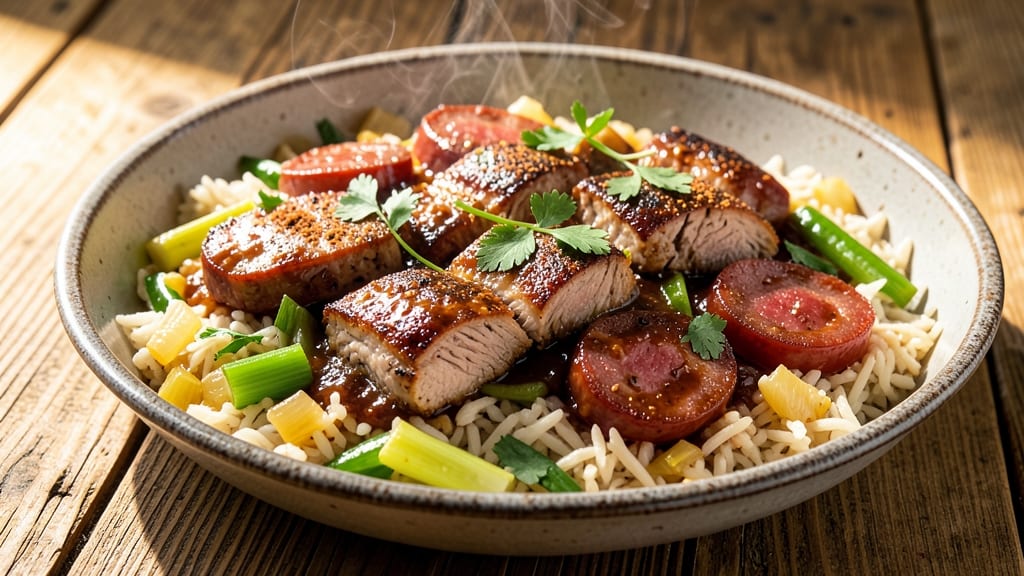
This Cajun pork and sausage jambalaya recipe brings the soul-warming flavors of Louisiana to your kitchen with just one pot. 🔥 Growing up in Georgia, I learned that jambalaya isn't just a dish—it's a celebration of smoky spices, tender meats, and the sacred trinity of onion, bell pepper, and celery that forms its heart.
The secret lies in slow simmering, where pork shoulder and andouille sausage melt into rich, flavorful strands while long-grain rice soaks up every drop of the spiced broth.
What makes this jambalaya truly authentic is the balance of heat and depth—just enough cayenne to make your lips tingle, but with dark roux and smoked paprika to ground the spice in warmth.
I've perfected this technique over years of cooking at The Smoky Pig, where we process 2,000 pounds of pork weekly, and it delivers restaurant-quality results in your own kitchen.
The key steps are browning the meats properly and letting the rice cook undisturbed so it absorbs the rich, smoky sauce without turning mushy.
By the time you serve this dish, your home will smell like a Louisiana bayou at dusk, and every forkful will deliver tender pork, spicy sausage, and perfectly seasoned rice in perfect harmony. The smoky aroma alone will have everyone at the table asking for seconds.
Serve with warm cornbread to soak up the last delicious bites of sauce—this is comfort food at its finest, made even better by the fact that it's all cooked in one pot.
Whether you're feeding a crowd for a Sunday supper or treating yourself to a taste of the South, this jambalaya delivers on tradition without sacrificing ease. The technique is straightforward, but the flavors are anything but—rich, spicy, and deeply satisfying. Let's get cooking!
Ingredients for cajun pork and sausage jambalaya
Smoky, spicy, and packed with Louisiana soul—just grab these ingredients and let the flavors meld.
| Ingredient | Amount | Notes |
|---|---|---|
| Pork Shoulder 🥩 | 2 ½ lb | Bone-in for flavor, cut into 1-inch cubes |
| Andouille Sausage 🌭 | 1 lb | Smoked variety, sliced into half-moons |
| Long-Grain White Rice 🍚 | 2 cups | Uncooked, like Carolina or Mahatma |
| Yellow Onion 🧅 | 1 ½ cups | Diced small, forms sacred trinity |
| Green Bell Pepper 🌶️ | 1 cup | Diced small, fresh or frozen |
| Celery Stalks 🥬 | 3 whole | Diced small, completes the trinity |
| Garlic Cloves 🧄 | 4 cloves | Minced finely, aromatic base |
| Vegetable Oil 🫒 | ½ cup | For dark roux, smoke point matters |
| All-Purpose Flour 🌾 | ½ cup | For roux, white or wheat |
| Chicken Broth 💧 | 3 cups | Low-sodium preferred, homemade best |
| Tomato Paste 🍅 | 2 tbsp | Squeeze tube works, no waste |
| Cayenne Pepper 🌶️ | 1 tsp | Adjust for heat preference |
| Smoked Paprika 🌶️ | 1 tbsp | For authentic smoky depth |
| Dried Thyme 🌿 | 1 tsp | Or 1 tbsp fresh, stems removed |
| Bay Leaves 🌿 | 2 whole | Remove before serving |
| Salt 🧂 | 1 ½ tsp | Kosher or sea salt, taste as you go |
| Black Pepper 🌶️ | ½ tsp | Freshly ground for best flavor |
The meats are where the magic happens. Pork shoulder gives you that melt-in-your-mouth tenderness—bone-in for extra flavor, but boneless works if you're in a hurry. For the sausage, Andouille is non-negotiable (the smoked kind, not the sweet). Most grocery stores carry it in the meat section near the hot dogs, but Whole Foods or H-E-B have the best selection. Look for good marbling in the pork—it's what makes it juicy. If you're buying a whole shoulder, ask the butcher to cut it into 1-inch cubes for you. Trust me, it's worth the extra minute.
No smoked paprika? Regular paprika plus a pinch of liquid smoke gets you close. Fresh bell peppers and onions are ideal, but frozen work in a pinch—just drain them well. The tomato paste can be that squeeze tube from Trader Joe's (no waste, lasts forever), or the little cans if you prefer. For the roux, don't rush it—it needs to be a deep, chocolatey brown. If it burns, start over. The rice? Carolina or Mahatma grains stay separate and soak up the sauce best. Andouille links? Slice them into half-moons before cooking so they brown properly.
This reheats like a dream—honestly tastes better the next day once everything melds together. Keeps in the fridge for 4-5 days, freezes for 3 months if you portion it into containers. I always make a double batch because it disappears fast. The cornbread? That's your job—store-bought is fine, but homemade with jalapeños takes it to the next level. And if you've got leftover rice? Toss it with a fried egg and hot sauce for jambalaya breakfast the next morning.
Why You'll Love This Recipe
- One-Pot Magic: I swear by this recipe because it’s one pan—no messy rice burners, no extra bowls. Just toss everything in, let it simmer, and the rice absorbs all that smoky sausage and pork flavor right where it cooks. My cast iron gets a workout, but my dishwasher? Not so much.
- Smoky-Spiced Obsession: That combo of andouille sausage and pork shoulder? It’s like a flavor explosion in your mouth. The Cajun seasoning sticks to the meat, then melts into the rice with every bite—crispy edges on the sausage, tender pork that falls apart, and just enough bell pepper to keep it bright. Honestly, I’ve made jambalaya before, but this one’s the only one I’ll fight someone over.
- Meal Prep MVP: This dish begs to be made in bulk. I double the recipe on Sundays and freeze half—reheats like a dream in the microwave or oven. Plus, it’s the kind of thing that tastes even better the next day (yes, even on a Tuesday night) when the flavors have a chance to meld. My college-aged kids now associate it with “easy dinner” nights.
- Budget-Friendly Feast: Pork shoulder and andouille stretch far—this recipe feeds six for under $20, and leftovers turn into lunches or a quick stir-fry the next day. I’ll be real: the rice is cheap, the veggies are cheap, and the meat? You get way more than you’d think. It’s my go-to for when I need to feed a crowd without breaking the bank.
Step-by-step instructions for Cajun pork and sausage jambalaya
Here's how to make this smoky, spice-packed one-pot wonder that tastes like a Cajun feast.
🔥 Step 1: Build the Dark Roux Foundation
Heat the 0.5 cup vegetable oil in a large, heavy pot over medium heat. Add the 0.5 cup all-purpose flour and stir constantly with a wooden spoon. Watch closely—you want this to cook for 15-20 minutes until it turns a deep, chocolate-brown color. This is your flavor base, so don't rush it.
Here's the thing—this dark roux is what gives jambalaya its rich, smoky depth. You'll know it's ready when it smells nutty and looks like melted chocolate. If it starts to smoke too much, reduce the heat slightly. Once it reaches the perfect color, immediately add the 1.5 cups yellow onion, 1 cup green bell pepper, and 3 whole celery stalks (all diced small). Stir for 2 minutes until the vegetables soften slightly.
🍳 Step 2: Sear the Protein for Maximum Flavor
Push the vegetables to the sides of the pot and add the 2.5 lb pork shoulder (cut into 1-inch cubes) and 1 lb andouille sausage (sliced into half-moons). Cook over medium-high heat for 8-10 minutes, stirring occasionally, until the pork is well-browned and the sausage is golden. This searing step develops deep, meaty flavors that infuse the entire dish.
Don't overcrowd the pan—work in batches if needed. You want those pork cubes to develop a nice crust. Once everything is browned, stir everything together, including the vegetables, and cook for another 2 minutes to distribute all those beautiful browned bits throughout the roux.
🍳 Step 3: Develop the Spice Base
Add the 4 cloves minced garlic, 2 tbsp tomato paste, 1 tbsp smoked paprika, 1 tsp dried thyme, 1 tsp cayenne pepper, 1.5 tsp salt, and 0.5 tsp black pepper. Stir everything together and cook for 1-2 minutes until the garlic is fragrant and the spices are toasted slightly. This is where all the Cajun magic happens.
Here's a pro tip: If you like your jambalaya extra spicy, add a pinch more cayenne now. The flavors will meld beautifully with the other spices. Once everything is well combined, pour in the 3 cups chicken broth and bring to a gentle boil, scraping up any browned bits from the bottom of the pot.
🥘 Step 4: Cook the Rice to Perfection
Add the 2 cups long-grain white rice and the 2 whole bay leaves, then stir gently to distribute the rice evenly. Reduce the heat to low and let it simmer uncovered for 25-30 minutes. You want the rice to absorb all the liquid and develop a nice crust at the bottom of the pot—that's what gives jambalaya its signature texture.
I know it seems like a long time, but patience is key here. Don't peek or stir too often—this can make the rice mushy. Instead, check the rice after 20 minutes and see if it's still slightly firm in the center. If it is, cover the pot with a tight-fitting lid and let it steam for the remaining time. The rice should be tender but still have a slight bite to it.
⏰ Step 5: Rest and Serve with Confidence
Once the rice is cooked through and all the liquid has been absorbed (about 25-30 minutes total), remove the pot from heat and let it rest for 5 minutes. This resting period allows the flavors to meld together and the rice to finish absorbing any remaining juices. Remove and discard the bay leaves before serving.
Serve immediately with hot sauce on the side if you like a little extra kick. This jambalaya tastes even better the next day as the flavors continue to develop, but it's so good fresh out of the pot that you might not be able to wait. The perfect balance of smoky sausage, tender pork, and spiced rice makes this one-pot wonder a true Cajun classic.
Pro Tips For Making Cajun Pork And Sausage Jambalaya
- CRISP THE PORK FIRST: I used to think browning pork shoulder was optional—until I realized it’s the thing that makes jambalaya taste like it’s been simmering for hours. Slice the pork into 1-inch chunks, then sear them in batches over medium-high heat until deeply browned on all sides. The Maillard reaction here isn’t just for looks; it builds flavor that no amount of Cajun seasoning can replicate later.
- DICE THE ONIONS SMALL: After burning through three batches of jambalaya with barely-there onion flavor, I finally got it: tiny dice, not rough chunks. Cut the yellow onion into 1/8-inch pieces—small enough to disappear into the rice but big enough to hold their shape. This ensures they soften evenly without turning to mush, adding sweetness without gummy texture.
- SWEAT THE PEPPER FIRST: Skip the urge to toss the green bell pepper in with the onions right away. Instead, chop it into 1/4-inch strips, then cook it alone in the same pot for 3-4 minutes until just tender. This prevents it from turning into a sad, watery mess later—especially important when you’re adding liquid-heavy ingredients like tomatoes and broth.
- USE TWO RICES: Here’s the move that saves jambalaya from being gluey: cook 80% of the rice in the broth with the pork and sausage, then stir in the remaining 20% raw rice during the last 5 minutes. The extra starch from the partially cooked rice thickens the sauce without turning the whole dish into a bowl of porridge. (Yes, it sounds counterintuitive, but it works.)
Wine and beer pairings for this dish
Rosé Wine Pairings
For this jambalaya, I reach for a dry, crisp Provence rosé like Whispering Angel or a Tavel rosé from the Rhône Valley. The bright acidity and subtle red fruit notes cut through the smoky richness while complementing the cayenne's heat.
Serve it slightly chilled (50-55°F) to highlight its refreshing qualities. 🍷
Red Wine Options
A medium-bodied Zinfandel from California or a Côtes du Rhône red blends beautifully with the dish's spice profile. Look for wines with 12-14% ABV and notes of blackberry and vanilla to match the smoked paprika and dark roux.
I always keep a bottle of Guigal Côtes du Rhône on hand for these occasions.
Craft Beer Matches
For beer lovers, a Belgian-style witbier with its citrusy coriander notes provides a refreshing contrast to the smoky flavors. Try Hoegaarden or Stella Artois—the effervescence cleanses your palate between bites. Alternatively, a honey brown ale like Allagash Honey Brown complements the jambalaya's sweet-spicy balance.
Non-Alcoholic Choices
Don't overlook sparkling water with a splash of grapefruit juice for a refreshing non-alcoholic pairing. The tartness enhances the jambalaya's spice without overpowering it. I also love serving peach iced tea—the sweetness balances the heat perfectly and adds a Southern touch.
Local Louisiana Options
If you're serving this in Louisiana or the Southeast, ask your local grocer for Cajun Fire or Abita Amber beer—both are regional favorites that pair beautifully with the dish's bold flavors. The malt sweetness in Abita Amber works particularly well with the smoky sausage and dark roux.
Serving Temperature Tips
Let your wine or beer reach the ideal serving temperature before pouring. Red wines should be 60-65°F, while beers are best between 45-50°F. I always chill my rosé for 30 minutes before serving to bring out its crispness.
For beers, I use a CoorsTek beer stone in my fridge for consistent cooling.
Nutrition facts
Frequently asked questions
Can I substitute regular paprika for smoked paprika?
Yes, but you'll lose that authentic smoky depth. For every 1 tbsp smoked paprika called for, use 1 tbsp regular paprika plus ¼ tsp liquid smoke. The liquid smoke adds back the smoky flavor, though it won't be identical. If you're short on time, this works in a pinch.
How do I prevent the jambalaya from being too spicy?
Start by reducing the cayenne pepper to ½ tsp instead of 1 tsp. For milder heat, omit it entirely and rely on smoked paprika for flavor. If you've already added spices, serve with extra rice to dilute the heat or offer cooling sides like avocado slices or buttermilk biscuits.
What's the best way to reheat jambalaya?
Reheat gently on the stove over low heat with 1-2 tbsp broth or water to prevent drying. Stir occasionally and cover with a lid. Microwave reheating works too, but add 30 seconds of rest time after heating to redistribute juices. The flavors actually improve overnight!
Can I make jambalaya in a slow cooker?
Brown the meats first in a skillet, then transfer everything to the slow cooker. Cook on low for 6-7 hours or high for 3-4 hours. Add ½ cup broth if needed to reach the right consistency. The slow cooker method develops even deeper flavors!
What's the secret to perfectly cooked rice?
The key is patience and minimal stirring. Let the rice cook undisturbed on low heat for 25-30 minutes** after adding the liquid. The crust at the bottom (called "the toaste") is what gives jambalaya its signature texture. If the rice is still firm after 20 minutes, cover and steam for the remaining time.