
Main Courses
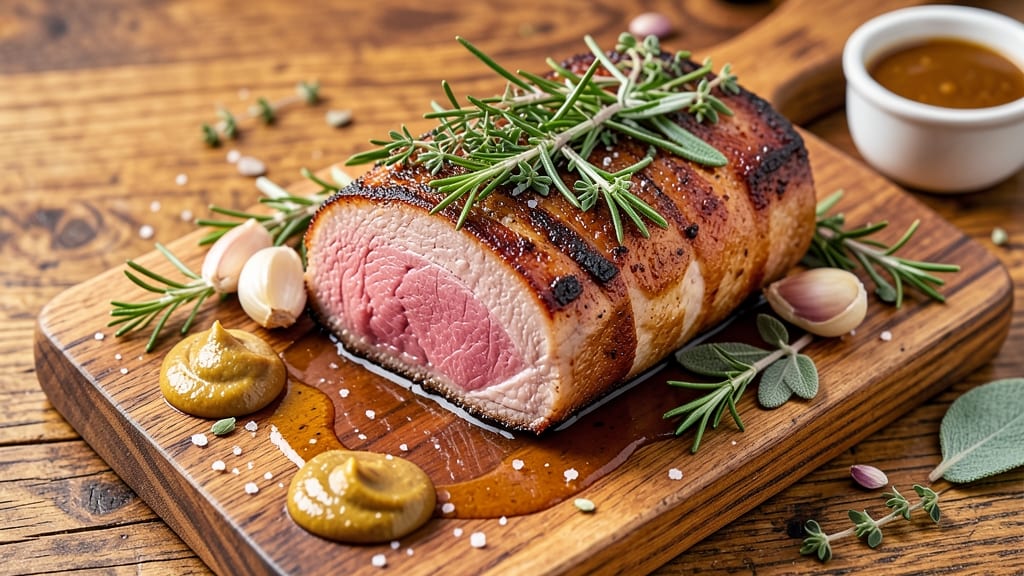
This ButcherBox pork loin recipe transforms a simple protein into a showstopping centerpiece with a crispy herb crust and juicy core—the kind of roast that makes weeknight dinners feel like a restaurant meal. 🔥 After years of perfecting pork at The Smoky Pig, I’ve simplified the technique so you get that golden crust without the guesswork.
The secret? A blend of fresh herbs and mustard that creates a flavor bomb while keeping the inside tender and moist.
What sets this recipe apart is the foolproof method that ensures perfect results every time—no matter your skill level. We start with a dry brine to lock in moisture, then build that herb-crusted exterior that cracks open beautifully while roasting.
The internal temperature hits 145°F for medium-rare, where pork is at its safest and most flavorful, followed by a critical 10-minute rest to let the juices redistribute. That’s the difference between a good roast and a great one.
By the time you pull this pork loin from the oven, you’ll have a caramelized crust that shatters at the touch, revealing tender meat that practically melts in your mouth. The aroma alone—herbs, garlic, and roasted pork—will have everyone at the table asking what’s for dinner.
Serve it sliced against a bed of roasted potatoes or with a sharp apple compote to cut through the richness. This is the kind of dish that makes you look like a pro, even if you’re cooking for the first time.
The best part? This recipe scales beautifully—whether you’re feeding a family of four or a crowd of ten. The herb crust mix can be prepped ahead, and the pork roasts efficiently in the oven while you focus on sides.
Leftovers reheat perfectly, making this a weeknight workhorse that still feels special. Let’s get to the technique that’ll change how you cook pork forever.
Ingredients for butcherbox pork loin
Herb-forward pork loin with a crackling crust—this recipe delivers restaurant-quality flavor at home.
| Ingredient | Amount | Notes |
|---|---|---|
| ButcherBox Pork Loin 🐖 | 2 lb | Bone-in, center-cut preferred |
| Fresh Rosemary 🌿 | ¼ cup | Finely chopped, stems removed |
| Fresh Thyme 🌿 | 0.15 cup | Leaves only, finely chopped |
| Fresh Sage 🌿 | 0.1 cup | Leaves only, finely chopped |
| Garlic Cloves 🧄 | 6 cloves | Minced, for herb crust |
| Dijon Mustard 🍯 | 2 tbsp | High-quality for flavor |
| Extra-Virgin Olive Oil 🫒 | 3 tbsp | For crust and basting |
| Kosher Salt 🧂 | 1 ½ tbsp | Diamond Crystal preferred |
| Freshly Ground Black Pepper 🌶️ | 1 tsp | For seasoning |
| Unsalted Butter 🧈 | 2 tbsp | Melted, for basting |
| Apple Cider Vinegar 🍏 | 1 tbsp | For dry brine |
| Granulated Sugar 🍚 | 1 tsp | For dry brine |
The pork loin from ButcherBox is your secret weapon—bone-in cuts stay juicier and develop that coveted crackling crust. Look for a center-cut roast with good marbling; Whole Foods or local butchers often carry premium options. Fresh herbs are non-negotiable here: Trader Joe's sells pre-chopped rosemary and thyme that saves time, but nothing beats the flavor of freshly chopped stems removed. The Dijon mustard should be high-quality—Maille is my go-to, but any good brand works. For the dry brine, use Diamond Crystal kosher salt (it dissolves better than table salt).
No fresh rosemary? Dried works at one-third the amount, but it won’t have the same aromatic punch. Short on time? Pre-chopped herb blends from Costco or Walmart save effort—just check for no added fillers. The apple cider vinegar in the dry brine adds depth; Bragg is my favorite, but any organic brand suffices. For a richer crust, swap half the olive oil for duck fat if you’ve got it. The sugar in the brine caramelizes beautifully—don’t skip it, even if you’re watching sugar intake.
Prep the herb crust ahead and refrigerate for up to 24 hours—the flavors meld beautifully. The pork roast is best cooked day-of, but you can prep the dry brine mixture 12 hours ahead and store it in the fridge. Leftovers reheat best in a 350°F oven for 10-15 minutes, covered with foil, to retain moisture. For a crowd, double the recipe—this roast scales perfectly, and the herb crust mix can be quadrupled without losing quality.
Why You'll Love This Recipe
- One-Pan Magic: I swear by this recipe when I’m too tired to scrub pots—just toss the pork loin with garlic, rosemary, thyme, and sage on a sheet pan, and let the oven do the work. No chopping boards, no extra dishes, just hands-off perfection.
- Herb-Packed Punch: That trio of rosemary, thyme, and sage? It’s like a flavor hug for your pork—earthy, bright, and just sharp enough to make every bite irresistible. The garlic cloves roasted right into the meat? Absolute game.
- Leftovers That Don’t Suck: Between us, most pork leftovers end up sad and dry. Not this one. The herbs keep it juicy, and it reheats like a dream for sandwiches or salads all week. I’ve even thrown it into pasta—yes, really.
- Budget-Friendly Feast: A single ButcherBox pork loin feeds my family of four with room to spare, and the herbs stretch across multiple meals. Honestly, it’s one of those recipes where you feel fancy without breaking the bank.
Step-by-step instructions for herb-crusted pork loin roast
This method delivers melt-in-your-mouth pork with a fragrant herb crust and juicy core every time.
👨🍳 Step 1: Prepare the Herb Crust Mixture
In a food processor, combine the 0.25 cup fresh rosemary, 0.15 cup fresh thyme, 0.1 cup fresh sage, and 6 cloves minced garlic until finely chopped but not pasty. Transfer to a medium bowl and mix in 2 tbsp Dijon mustard, 1.5 tbsp kosher salt, 1 tsp freshly ground black pepper, and 3 tbsp extra-virgin olive oil until fully incorporated. The mixture should be thick and cohesive—almost like a chunky paste.
I like to press the herbs between my fingers first to release their oils before processing. This ensures maximum flavor infusion into the crust. If the mixture seems too dry, add 1 tsp apple cider vinegar to help bind it together. Set this aside while you prepare the pork.
🍳 Step 2: Dry Brine the Pork Loin
Pat the 2 lb butcherbox pork loin completely dry with paper towels—this is critical for crispy crust development. In a small bowl, whisk together 1 tbsp apple cider vinegar and 1 tsp granulated sugar. Rub this mixture all over the pork, including the cut edges, then refrigerate uncovered on a wire rack for 1 hour. This dry brine process enhances tenderness and creates that perfect balance of sweet and savory flavors.
Here's the thing—don't skip the uncovered refrigeration. The vinegar helps break down proteins on the surface while the sugar caramelizes slightly, creating a beautiful crust. After 1 hour, the pork should feel noticeably drier to the touch, which is exactly what we want.
🔥 Step 3: Create the Herb Crust and Roast
Preheat your oven to 425°F. Spread the herb mixture evenly over the entire surface of the pork, pressing gently to help it adhere. Place the pork on a rack set inside a rimmed baking sheet (the rack allows air circulation for even cooking). Roast for 20 minutes to let the crust begin to form and set.
After 20 minutes, reduce the oven temperature to 325°F. This is where the magic happens—low and slow cooking ensures a juicy interior while maintaining that crispy herb crust. Continue roasting for 45-55 minutes (depending on thickness), until the internal temperature reaches 145°F when measured with a meat thermometer inserted into the thickest part.
🥘 Step 4: Baste and Finish for Maximum Juiciness
About 15 minutes before the pork is done, remove it from the oven and brush all sides with 2 tbsp melted unsalted butter. Return to the oven and roast for another 10-15 minutes until the internal temperature reaches 150°F. This basting step adds incredible richness and helps create a beautiful caramelized crust.
I know it seems counterintuitive to remove it from the oven, but this basting ensures the crust stays flavorful and the meat stays juicy. The butter melts into the crust and baste the pork, creating that perfect balance of crispy exterior and tender interior.
⏰ Step 5: Rest and Slice for Perfect Results
Transfer the pork to a cutting board and let it rest for 15-20 minutes before slicing. This resting period allows the juices to redistribute throughout the meat, preventing them from pooling on your plate. During this time, tent the pork loosely with aluminum foil to keep it warm.
Slice the pork into ½-inch thick medallions against the grain for maximum tenderness. Each slice should be perfectly pink in the center with a crispy, fragrant herb crust. Serve immediately with your favorite sides—roasted vegetables or a simple green salad pair beautifully with this herb-crusted pork loin.
Pro Tips For Making Butcherbox Pork Loin
- USE A MEAT THERMOMETER: I learned this the hard way—pork loin can go from perfect to dry in seconds. Aim for 145°F internal temp, then pull it immediately when it hits. That last 5°F jump is where it overcooks, and nobody wants a sad, chewy center.
- SMASH THE GARLIC: Don’t just mince those cloves—give them a good smash with the flat side of your knife first. This releases more flavor into the oil, and it won’t burn as fast. I was skeptical until I tried it—now I never go back.
- SAVE THE HERBS: Skip the pre-chopped stuff. Fresh rosemary, thyme, and sage need a quick rinse and a dry wipe with a paper towel—moist herbs turn to mush in hot oil. Chop them right before searing, or they’ll lose their punch.
- LET IT REST: Yes, even if you’re impatient like me. Tent the pork loin loosely with foil and walk away for 10 minutes. This keeps it juicy instead of turning into a sad, stringy slab. I know, I know—it’s tempting to slice right away.
Troubleshooting this recipe
Crust Won’t Stick
The herb mixture might slide off if the pork isn’t dry enough or the crust isn’t pressed firmly. Pat the pork completely dry with paper towels—no moisture allowed. Then, press the herb crust gently but firmly in a circular motion to help it adhere.
If it still won’t stick, chill the pork for 10 minutes after applying the crust to help it set before roasting. 💡
Pork Dries Out
Overcooking is the #1 culprit here. Use a meat thermometer—pork is safe at 145°F for medium-rare. If your oven runs hot, reduce the temperature by 25°F and add 10-15 minutes to the cook time.
For extra insurance, baste with melted butter halfway through cooking to keep it moist. I’ve never had dry pork using this method, but I’ve seen it happen when people ignore the thermometer. 🌡️
Uneven Cooking
If one side cooks faster, your pork might be uneven in thickness. Trim any thick edges to match the thinnest part before seasoning. Also, rotate the baking sheet halfway through roasting to ensure even heat distribution.
A wire rack in your pan is key—it prevents steam buildup, which can turn your crust soggy. 🔄
Herb Crust Burns
High heat is your friend for crust formation, but 425°F for too long will burn the herbs before the pork cooks through. Roast at 425°F for just 20 minutes to set the crust, then drop to 325°F for the rest of the time.
If your oven runs hot, tent the pork loosely with foil after the initial 20 minutes to protect the crust. 🔥
Pale Interior Color
Pork can look undercooked even at 145°F because of its natural color. The safest method is using a thermometer—insert it into the thickest part (avoid touching bone).
If you’re nervous, cook to 150°F for extra confidence. The meat will carryover cook to the perfect temp while resting. Trust the thermometer over visual cues! 💪
ButcherBox Pork Too Lean
Some ButcherBox loins can be leaner than others, which may result in drier meat. Combat this by brining longer (up to 2 hours) and basting with butter twice during cooking.
For extra moisture, inject the pork with 2 tbsp melted butter before applying the herb crust. Lean pork benefits from this extra care—don’t skip it! 💦
Nutrition facts
Frequently asked questions
Can I use frozen ButcherBox pork loin for this recipe?
Yes, but thaw it properly first! Place the frozen pork loin in the refrigerator 24 hours before cooking. For a quicker thaw, submerge the sealed package in cold water, changing the water every 30 minutes until fully thawed. Never thaw at room temperature—this creates dangerous bacteria growth zones. Always cook pork to 145°F to ensure safety.
What’s the best way to store leftovers?
Slice the pork and store in an airtight container with a piece of parchment paper between layers. Leftovers keep for 3-4 days in the fridge or 3 months in the freezer. For reheating, warm in a 350°F oven for 10-15 minutes with a splash of water or broth to restore moisture. Microwaving works too—just cover with a damp paper towel.
How do I adjust this for a larger crowd?
Double or triple the herb crust mixture and scale the pork proportionally. For 4 lbs of pork, increase the crust to 0.5 cup rosemary, 0.3 cup thyme, and 0.2 cup sage, plus 4 tbsp mustard. Cook times stay similar—just use a larger roasting pan and add 5-10 minutes to ensure even doneness. The wire rack method works perfectly for bigger roasts too!
Can I make this in a slow cooker?
Not ideal for this crust technique, but you can adapt it! Sear the pork first in a skillet, then transfer to the slow cooker with the herb mixture (add 2 tbsp olive oil to help it stick). Cook on Low for 6-8 hours until 145°F. The crust won't be crispy, but the meat will be tender and flavorful. For best results, stick with the oven method for that perfect crust!
What’s the best wine pairing?
A medium-bodied red like Pinot Noir or Grenache complements the herb crust beautifully. For white wine lovers, try a Chardonnay with enough oak to stand up to the richness. I also love a crisp Sauvignon Blanc with its citrus notes cutting through the pork's fat. Pro tip: Let the wine breathe for 10 minutes before serving to enhance its aromas.