
Main Courses
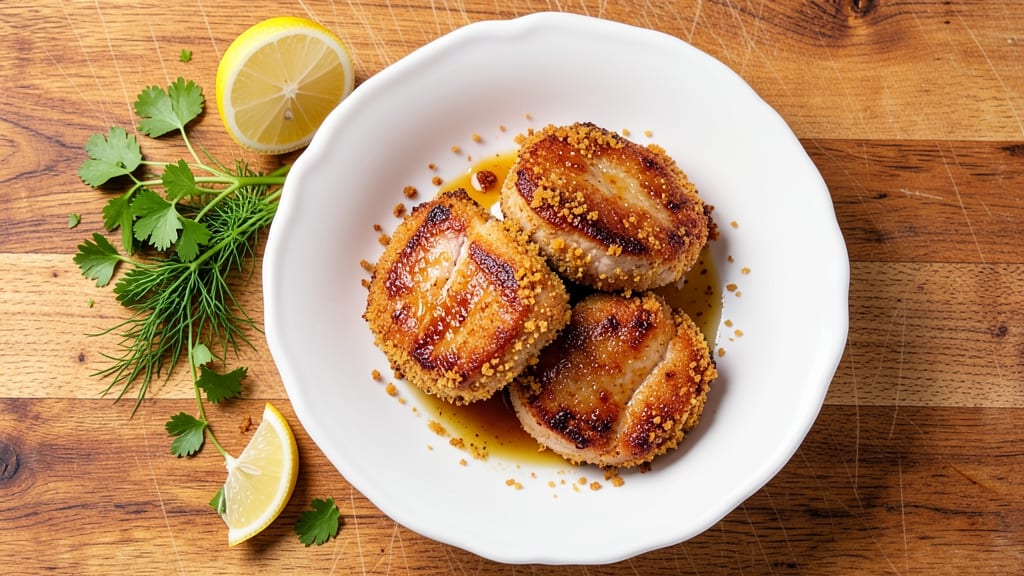
This breaded pork medallions recipe delivers the perfect balance of crispy gold shell and juicy centers—a technique I perfected after years of testing in my Atlanta kitchen.
The secret lies in using pork tenderloin, which stays tender even after breading, paired with a panko-herb crust that creates that irresistible crunch. I developed this method when I needed a restaurant-quality main course that could be on the table in under 30 minutes—no shortcuts, just precise technique.
The process starts with a simple but critical step: pounding the pork to an even thickness ensures even cooking. A light flour seasoning provides structure, while an egg wash binds the breadcrumbs for maximum adhesion.
The real magic happens when you pan-fry in hot oil—just enough time to render the crust golden without overcooking the meat inside. This isn’t your average breaded pork; it’s a foolproof method that transforms a basic cut into something worthy of a dinner party.
What you’ll end up with is shatteringly crispy edges that give way to tender, pink centers—the kind of texture contrast that makes every bite satisfying. The herb-infused breading adds subtle depth, while the juices released during cooking create a natural pan sauce that elevates the dish further.
Serve these medallions with roasted garlic potatoes or a bright apple-cider glaze to round out the meal, and you’ve got a restaurant-quality dinner that’s surprisingly simple to recreate at home.
This recipe scales beautifully—whether you’re feeding a family of four or hosting a crowd. The key is precision in timing and temperature, which I’ll walk you through step by step. Trust me, once you master this technique, you’ll never buy frozen breaded pork again. Let’s get cooking.
Ingredients for breaded pork medallions
Pork tenderloin, panko, and herbs—simple ingredients that transform into restaurant-quality medallions.
| Ingredient | Amount | Notes |
|---|---|---|
| Pork Tenderloin 🥩 | 1 ¼ lb | Center-cut, trimmed of fat |
| All-Purpose Flour 🌾 | ½ cup | For light dusting and coating |
| Large Eggs 🥚 | 2 whole | Room temperature for even coating |
| Japanese Panko Breadcrumbs 🍞 | 1 ½ cups | Light and crispy texture |
| Fresh Parsley 🌿 | ¼ cup | Finely chopped, stems removed |
| Fresh Dill 🌿 | ⅛ cup | Finely chopped, for herb blend |
| Garlic Powder 🧄 | 1 tbsp | Freshly ground preferred |
| Diamond Crystal Kosher Salt 🧂 | 1 tsp | For seasoning flour mixture |
| Ground Black Pepper 🌶️ | ½ tsp | Freshly cracked for best flavor |
| Vegetable Oil 🫒 | 1 ½ cups | High smoke point preferred |
| Unsalted Butter 🧈 | 2 tbsp | For finishing pan sauce |
| Lemon Juice 🍋 | 1 tbsp | Freshly squeezed for brightness |
The pork tenderloin is non-negotiable here. Look for center-cut pieces at Whole Foods or your local butcher—they're leaner and more tender. Pound it to ¼-inch thickness for even cooking, and trim any visible fat. I always buy mine from Costco when possible—they keep it vacuum-sealed for freshness. For the herbs, fresh parsley and dill make all the difference. Trader Joe's has great bundles, but even a small bunch from the grocery store works if you chop it right away. The panko? Japanese brands like Shiratamako give that perfect crispy texture—regular breadcrumbs get soggy.
No panko? Toast regular breadcrumbs in a dry pan for 3-4 minutes to crisp them up. Short on fresh herbs? Dried parsley at one-third the amount works in a pinch, but fresh is ideal. The flour should be Diamond Crystal kosher salt—it dissolves better than table salt. For the oil, vegetable or canola works, but avocado oil has a higher smoke point if you're worried about burning. The butter at the end adds richness—unsalted is key so you control the seasoning. And trust me, the lemon juice isn't just for flavor—it cuts through the richness and keeps everything bright.
Keep the pounded pork wrapped in plastic in the fridge for up to 2 days. The herb blend stays fresh for 3 days if stored in an airtight container. For the oil, use a deep skillet—cast iron holds heat beautifully. Once cooked, these medallions reheat best in a 350°F oven for 10 minutes—they lose crispiness fast. I always make extra because they disappear quickly. Store leftovers in the fridge for 3 days or freeze for 2 months—just thaw in the fridge overnight before reheating.
Why You'll Love This Recipe
- Fewer Messy Ingredients: I swear by this combo—just flour, egg, panko, and parsley. No weird marinades or fancy sauces clogging my pantry. The panko alone gives that perfect crunch without needing multiple dredges.
- Crispy-Creamy Magic: That first bite? Crunchy panko shell gives way to tender pork—like a hug for your taste buds. The parsley adds a bright finish that cuts through the richness, making every forkful feel intentional.
- Weeknight Superstar: I can have these ready while I’m waiting for pasta to boil. Toss them in the oven, set a timer, and boom—dinner’s done. Even my picky teenager doesn’t complain when they’re involved in breading the medallions.
- Leftovers That Don’t Suck: Unlike fried chicken that turns greasy, these reheat like a dream. Toss them in a pan for a quick breakfast scramble or add to salads—still crispy enough to fool people into thinking they’re fresh. Budget-friendly too, since pork tenderloin stretches far.
Step-by-step instructions for breaded pork medallions
Here's how to create perfectly golden, crispy breaded pork medallions with juicy centers every time.
Prepare and Season the Pork Tenderloin
First, trim the 1.25 lb pork tenderloin of any visible fat or silver skin using a sharp knife. Cut it into 1-inch thick medallions—you should get about 4 pieces. Pat each piece dry with paper towels, which is crucial for that perfect crispy crust later.
In a shallow bowl, combine the 0.5 cup all-purpose flour, 1 tbsp garlic powder, 1 tsp Diamond Crystal kosher salt, and 0.5 tsp ground black pepper. Toss the pork medallions in this seasoned flour mixture until evenly coated on all sides. This step ensures every bite has that perfect blend of seasoning locked inside.
Create the Herb Coating Mixture
In a separate shallow bowl, beat the 2 whole large eggs until just combined. The eggs should be room temperature for an even coating—this prevents the breadcrumbs from absorbing too much moisture and becoming soggy.
Next, combine the 1.5 cups Japanese panko breadcrumbs, 0.25 cup finely chopped fresh parsley, and 0.125 cup finely chopped fresh dill in another shallow bowl. The panko's light texture creates that signature crispy shell while the fresh herbs add bright, aromatic flavor that pairs perfectly with the pork.
Bread the Pork Medallions
Working with one medallion at a time, dip it into the beaten eggs, allowing any excess to drip off. Then press it firmly into the breadcrumb mixture, coating all sides completely. This double-dipping technique ensures maximum crispiness and adhesion. Place the coated medallions on a wire rack set over a baking sheet to keep them from touching while they set.
Let the breaded medallions rest for 10 minutes at room temperature. This brief resting period allows the breading to adhere more securely, preventing it from falling off during frying. It also helps the medallions cook more evenly once they hit the hot oil.
Fry to Golden Perfection
Heat 1.5 cups vegetable oil in a large skillet over medium heat until it reaches 350°F. Use a thermometer to monitor the temperature—this is critical for achieving that perfect golden color without burning. Once the oil is hot, carefully add the breaded pork medallions in a single layer, being careful not to overcrowd the pan.
Fry the medallions for 3-4 minutes per side until they're deep golden brown and the internal temperature reaches 145°F. You'll know they're ready when the breading is crispy and the pork releases easily from the pan. Transfer the cooked medallions to a paper towel-lined plate to drain excess oil.
Finish with Butter and Lemon
Reduce the heat to low and add the 2 tbsp unsalted butter to the skillet. Let it melt completely, then pour in the 1 tbsp lemon juice. Tilt the pan slightly and spoon the butter mixture over the pork medallions to baste them with that bright, tangy finish.
Serve the breaded pork medallions immediately, drizzled with any remaining pan sauce. The contrast of crispy golden breading with juicy, tender pork and that bright lemon-butter sauce makes every bite irresistible. Pair with a fresh salad or roasted vegetables for a complete meal.
Pro Tips For Making Breaded Pork Medallions
- USE COLD MEAT: Pork tenderloin cooks faster than you’d expect—it’s lean and dries out quick. Pat it dry, then refrigerate the sliced medallions for 30 minutes before breading. This tightens the fibers so the crust sticks instead of sliding off like it’s playing hide-and-seek.
- SEASON THE FLOUR: Plain flour is boring—sprinkle the all-purpose flour with 1 teaspoon salt and ½ teaspoon black pepper before dredging. You’ll taste it later, and the crust won’t just be a bland wrapper. (Yes, even if you’re using pre-seasoned panko, the flour’s the real workhorse here.)
- DON’T OVERCROWD THE PAN: I learned this the hard way—piling medallions in the skillet makes them steam instead of sear. Cook in batches of 2-3 pieces, and resist the urge to shuffle them around. Let them develop that golden crust undisturbed for 3-4 minutes per side. (Your future self will thank you.)
- PRESS THE PANKO HARD: Lightly pressing the panko onto the egg-washed medallions ensures it stays put. Use the back of a fork or a small plate to really press it in—no half-hearted sprinkling. This isn’t the time to be gentle; you want that crust to hold like a shield against the oil.
Regional styles of these flavors
Southern Fried Style
In the Deep South, breaded pork medallions often get a richer, more indulgent treatment. I remember my first time making these in Charleston—we used a mix of panko and crushed Ritz crackers for extra crunch, then fried them in peanut oil for that classic Southern flavor.
Add ½ tsp smoked paprika to the flour blend and serve with a side of creamy coleslaw or cornbread dressing. The high heat of the oil caramelizes the breading into a deep golden-brown crust that’s impossible to resist. 🔥
Italian-Inspired Panisse
For an Italian twist, I swap the panko for semolina breadcrumbs (available at specialty stores) and add ½ tsp dried oregano to the herb blend. The semolina creates a slightly chewier texture that stands up to the juicy pork.
Serve with a lemon-garlic aioli and a side of roasted rosemary potatoes. This version reminds me of the panisse I ate in Sicily—simple, crispy, and full of flavor. The key is keeping the oil at 360°F for a faster, hotter fry that gives that signature Italian crunch.
Midwest Crispy Cutlets
In the Midwest, breaded pork medallions often take on a heartier profile. I’ve seen them served with a beer-battered coating—mix ½ cup light lager into the egg wash for extra moisture and depth.
Add 1 tsp onion powder to the flour blend and serve with apple sauce or caramelized onions. The beer adds a subtle maltiness that pairs perfectly with the crispy exterior. This style is especially popular in Ohio and Michigan, where pork is a staple. 🍺
Caribbean Jerk Twist
For a bold, spicy variation, infuse the breading with Caribbean jerk seasoning. Mix 1 tbsp jerk seasoning (like Epstein’s) into the flour blend and add 1 tsp fresh thyme to the herb coating. Serve with a mango-habanero salsa and coconut rice.
This version is inspired by my time working at a jerk joint in Atlanta—it’s sweet, spicy, and perfectly balanced. The jerk seasoning adds a smoky depth that cuts through the richness of the pork. Trust me, your guests will ask for seconds.
Classic French Schnitzel
For a refined touch, lean into the French technique of pounding the pork thinner (about ⅛-inch thick) and using fine breadcrumbs (like Panko Fine) mixed with 1 tbsp chopped chives. The result is a delicate, crispy medallion that’s almost like a schnitzel.
Serve with Dijon mustard and crispy fried onions on top. This version is lighter but equally satisfying—perfect for a dinner party where you want to impress without overpowering the meal. The thinness ensures even cooking, and the chives add a subtle oniony brightness. 💫
Nutrition facts
Frequently asked questions
Can I use pork chops instead of tenderloin for this recipe?
You can, but the results will differ. Pork chops have more fat and connective tissue, which can make them less tender. For best results, use bone-in chops and pound them to ¼-inch thickness before breading. Thin-cut chops (like ½-inch thick) will cook faster and may dry out. The tenderloin's lean nature ensures juicy centers every time.
How do I keep the breading from falling off while frying?
The key is the 10-minute rest after breading—this lets the coating adhere properly. Also, ensure your pork is completely dry before dipping in egg wash, and use room-temperature eggs to prevent excess moisture. If breading still falls off, try pressing it on more firmly or using a mix of panko and crushed cornflakes for extra grip.
Can I bake these instead of frying for a healthier option?
Yes! Preheat oven to 425°F and bake on a wire rack for 15-18 minutes, flipping halfway. For crispiness, broil for 2 minutes at the end. Use aerated panko (like Panko Gold) and spray with oil before baking. The texture won't be as crispy as fried, but it's a great alternative.
What's the best way to reheat leftover breaded pork medallions?
Reheat in a 350°F oven for 10-12 minutes on a wire rack to maintain crispiness. For stovetop, use low heat in a dry pan for 2-3 minutes per side—add a splash of water to steam and prevent drying. Microwaving is possible but will make the breading soggy. Store leftovers in an airtight container for up to 3 days.
Can I make these ahead of time for a dinner party?
Bread the medallions up to 24 hours ahead and store them in the fridge. Fry them just before serving—this keeps the breading crispy. For a make-ahead main course, cook the pork fully (to 165°F) and refrigerate. Reheat in the oven as directed above. The flavors actually improve after resting overnight!