
Main Courses
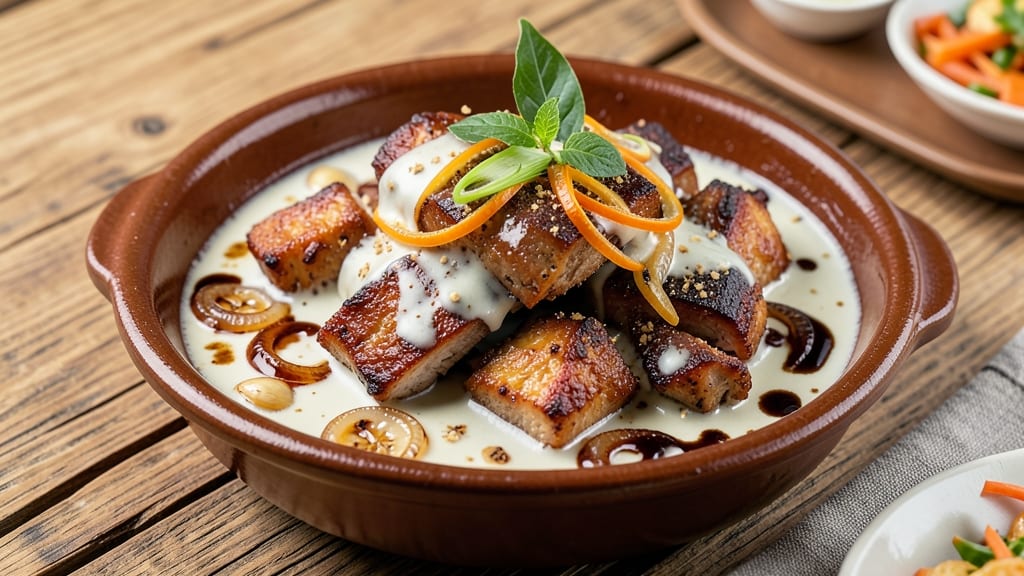
This Filipino-style braised pork recipe transforms tough cuts into melt-in-your-mouth tenderness through a rich blend of soy sauce, coconut milk, and aromatic spices. The secret lies in slow cooking until the meat practically falls apart, creating a sauce so flavorful it deserves its own bowl.
I first discovered this technique during a visit to my cousin's kitchen in Manila, where every bite of afritada was a celebration of Filipino home cooking.
The magic happens in layers: soy sauce builds depth, coconut milk adds creaminess, and annatto seeds lend that signature golden hue. Unlike other braised dishes, this method incorporates calamansi for a tangy brightness that cuts through the richness.
The result is a dish that's hearty enough for a family dinner yet simple enough to prepare on a weeknight, with just 15 minutes of prep and 2 hours of hands-off cooking.
By the time you serve it, you'll have perfectly tender pork swimming in a glossy sauce that clings to every bite. The aroma alone—warm spices mingling with coconut and caramelized soy—will have everyone gathered at the table.
Serve it over steamed rice to soak up every last drop, or pair with atchara for a tangy contrast that balances the dish's richness.
This recipe preserves the soul of Filipino comfort food while adapting to home kitchens. The technique is foolproof, the flavors are unmistakably authentic, and the results will have you reaching for the recipe again and again. Let's bring a taste of the Philippines to your dinner table.
Ingredients for braised pork recipe filipino style
Pork shoulder, coconut milk, and soy sauce create this rich Filipino braise.
| Ingredient | Amount | Notes |
|---|---|---|
| Pork Shoulder 🥩 | 2 lb | Cut into 2-inch chunks |
| Soy Sauce 🍶 | ½ cup | High-quality, dark soy preferred |
| Coconut Milk 🥥 | 1 can | Full-fat, 13.5 oz can |
| Calamansi Juice 🍋 | ¼ cup | Or substitute lime juice |
| Garlic Cloves 🧄 | 8 cloves | Minced, aromatic |
| Onion 🧅 | 1 whole | Yellow or red, sliced |
| Annatto Seeds 🌶️ | 1 tsp | For golden color, optional |
| Bay Leaves 🍃 | 2 whole | Dried, for aroma |
| Black Peppercorns 🌶️ | 1 tsp | Crushed, fresh preferred |
| Sugar 🍚 | 1 tbsp | Brown sugar enhances caramelization |
| Olive Oil 🫒 | 2 tbsp | For searing pork |
| Salt 🧂 | 1 tsp | Kosher or sea salt |
| Water 💧 | 1 cup | For balancing sauce |
| Green Onions 🧅 | ¼ cup | Chopped, for garnish |
The pork shoulder is key here—look for well-marbled cuts at your local butcher or Costco for the best value. If you can't find calamansi (that's the tangy citrus star), lime juice works in a pinch. Annatto seeds give it that signature golden hue, but skip them if you're in a hurry—the dish still tastes amazing. I always grab full-fat coconut milk (the canned kind) because it adds serious richness to the sauce. For the garlic, peel and mince it fresh—jarred minced garlic just doesn't cut it here.
No calamansi? Lime or even lemon juice will give you that bright tang. Running low on annatto? A pinch of turmeric works in a bind, though it won't be the same color. The bay leaves are non-negotiable for that authentic aroma, but if you're out, dried thyme at half the amount gets you close. For the sugar, brown sugar caramelizes better than white, but white works fine. The pork chunks should be 2 inches max—any bigger and they won't cook through properly. If you're serving a crowd, double the recipe but use a Dutch oven or heavy pot to avoid overflow.
This sauce gets better the next day—make extra and store it in the fridge for up to 5 days. For freezing, portion it into containers with some sauce and pork. It keeps for 3 months and reheats beautifully. The pork will be fork-tender, so handle it gently when serving. Garnish with those chopped green onions right before eating—they add a fresh pop of color that makes the dish look restaurant-worthy. Leftovers make amazing sandwiches or rice bowls the next day.
Why You'll Love This Recipe
- One-Pot Magic: I swear by this recipe when I’m too tired to scrub three pots—just brown the pork, toss in the garlic and soy, then let the coconut milk and calamansi work their magic. The sauce thickens right in the pan, so cleanup is basically nonexistent.
- Tangy-Creamy Bliss: That bright calamansi cut through the richness of the pork and coconut milk like a citrusy hug. The garlic? Oh, it caramelizes into sweet little bites that make every forkful feel like a reward.
- Leftovers Rule: Between us, this dish tastes better the next day—like the flavors had time to marry properly. I make a double batch on Sundays, and by Wednesday, it’s still the star of my lunchbox or a quick reheated dinner.
- Budget Hero: Pork shoulder is the most forgiving cut, and a single piece stretches across meals without breaking the bank. Plus, the ingredients? All pantry staples except maybe calamansi, which you can swap for lime if you’re in a pinch.
Step-by-step instructions for Filipino-style braised pork
This braised pork delivers deep umami from soy sauce and creamy richness from coconut milk—just like your favorite Filipino comfort dish.
Sear the Pork Shoulder for Maximum Flavor
Heat the 2 tablespoons olive oil in a large, heavy pot over medium-high heat until shimmering. Add the 2 lb pork shoulder cut into 2-inch chunks, working in batches if needed to avoid crowding. Let each piece sear undisturbed for 3-4 minutes until deeply golden brown on all sides—this builds that irresistible crust we're after.
I press down gently on the fillet during the first minute to prevent curling, which ensures even contact with the pan. Once all pieces are browned, transfer them to a plate and set aside. You'll notice the pot has developed a beautiful caramelized fond at the bottom—don't scrape it out yet. This is where all the flavor lives.
Build the Aromatic Base
In the same pot, add the 1 whole onion sliced into half-moons and 8 cloves garlic cloves minced. Cook for 3-4 minutes until the onions soften and turn translucent, then deepen slightly in color. At this point, add the 1 teaspoon crushed black peppercorns and 1 teaspoon salt, stirring to combine.
Here's where the magic happens: pour in the 0.5 cup soy sauce and let it bubble away for 2 minutes, allowing the alcohol to evaporate. This step develops the deep, savory foundation of our braise. If you're using the 1 teaspoon annatto seeds, crush them lightly between your palms and sprinkle them in now—they'll infuse the dish with that signature golden hue.
Deglaze and Simmer the Braise
Carefully pour in the 1 cup water and scrape up all those flavorful browned bits from the bottom of the pot. Add the 1 tablespoon sugar and 0.25 cup calamansi juice (or lime juice), then bring everything to a gentle simmer. Return the seared pork to the pot, along with the 2 whole bay leaves. The liquid should come about halfway up the pork pieces.
Now for the long cook: cover the pot and reduce heat to low. Let it simmer gently for 1 hour, stirring occasionally to prevent sticking. You'll know it's ready when the pork is fork-tender and the sauce has thickened into a glossy, rich consistency. If the liquid reduces too quickly, add 1-2 tablespoons water at a time to maintain the proper balance.
Finish with Coconut Milk and Rest
After the initial simmer, stir in the 1 can coconut milk and 0.25 cup chopped green onions. Increase heat to medium-low and let it cook uncovered for another 15-20 minutes, stirring occasionally. The coconut milk will create a luxurious, velvety texture that perfectly balances the soy's saltiness. You're looking for a sauce that coats the back of a spoon—this ensures every bite is moist and flavorful.
Once the sauce reaches your desired consistency, remove the pot from heat and let it rest for 10 minutes. This resting period allows the flavors to meld completely and the pork to absorb all that delicious sauce. Skim off any excess fat that rises to the surface before serving—it'll make your dish look even more appealing.
Serve with Confidence
Discard the bay leaves and adjust seasoning if needed—sometimes the calamansi juice needs a touch more salt, or the pork might benefit from an extra splash of soy sauce. Serve the braised pork over steamed rice, garnished with additional chopped green onions for freshness. The pork should be fork-tender with a beautifully caramelized exterior, and the sauce should be rich, creamy, and packed with layers of flavor.
This dish tastes even better the next day as the flavors continue to develop, so it's perfect for meal prep. Store leftovers in the refrigerator for up to 4 days or freeze for 3 months. The sauce will thicken further when reheated—just add a splash of water or coconut milk to loosen it if needed.
Pro Tips For Making Braised Pork Recipe Filipino Style
- CRANK THE HEAT FIRST: Sear the pork shoulder in a screaming-hot pan for 3-4 minutes per side before adding anything else. I learned this the hard way—skipping the proper sear means your braise will taste like stewed meat, not caramelized pork. Use enough oil (about 2 tablespoons) so it sizzles like crazy, not simmers.
- SALT THE PORK BEFORE SEARING: Generously salt the pork shoulder at least an hour before cooking—more salt than you think, especially if using unsalted soy sauce. My grandmother swore by this, and she was right: the salt penetrates deeper, and the meat stays juicier even after hours of braising. No need to rinse it off afterward.
- DON’T RUSH THE COCONUT MILK: Simmer the coconut milk low and slow—think 20-30 minutes—until it thickens slightly and the edges of the pan start to darken. I was skeptical until I tried it: rushing this step makes the sauce watery and bland. A splash of calamansi juice at the end brightens it up, but the milk’s flavor builds over time.
- SKIP THE BOILING POINT: Once the pork is in the braising liquid, keep it at a gentle simmer—not a rolling boil—so the meat doesn’t toughen. After burning three batches, I finally figured out that a low, steady heat (around 300°F/150°C in the oven) keeps everything tender. Cover it tight and let it work its magic.
Regional styles of this recipe
Visayan-Style Afritada
This version from the Visayas region swaps tomatoes for a richer, sweeter sauce. Start with the same braising method but add 1 cup tomato sauce (like Muzarella) and 2 tbsp brown sugar after the initial simmer.
The sugar caramelizes beautifully with the soy sauce, creating a glossy, slightly sweet glaze. Visayan cooks often finish with 1 tbsp vinegar (white or cane) to brighten the flavors—trust me, it’s a game-changer. 🌶️
Tagalog Mechado
The Tagalog version, mechado, is all about tomatoes and potatoes. After the initial braise, add 2 cups diced tomatoes and 2 medium potatoes cut into chunks. Let everything simmer together for 30-40 minutes until the potatoes are tender and the sauce thickens into a rustic, chunky consistency.
This dish is traditionally served with a side of garlic rice—just cook rice with minced garlic and a splash of coconut milk for extra flavor.
Bicolano-Style Pork Adobo
In the Bicol region, they take braised pork to another level with adobo. After the initial sear, add 1 cup coconut milk right away (not just at the end) and 1 tbsp vinegar (or more to taste). The vinegar tenderizes the pork while adding tang.
Bicolano cooks often finish with 1 tbsp grated coconut (fresh or frozen) for texture. Serve this version with bagoong (fermented shrimp paste) on the side—it’s a must-try for the bold, salty kick.
Ilocano-Style Pork in Guhit
Ilocanos love their guhit, a braised pork dish with a unique twist. After the initial braise, stir in 1 cup coconut cream (the thick part from the top of a can of coconut milk) and 1 tbsp fish sauce for depth.
The coconut cream makes the sauce velvety, while the fish sauce adds umami. Ilocanos often serve this with pinakbet, a vegetable stir-fry with eggplant, okra, and bitter melon. The bitterness cuts through the richness perfectly.
Modern Filipino Fusion
Want to put a modern twist on this classic? Try adding 1 tbsp gochujang (Korean chili paste) for heat and depth, or swap the coconut milk for ½ cup heavy cream for a creamy, Western-inspired version.
Garnish with crispy fried shallots for crunch. This fusion keeps the soul of Filipino flavors while adding a contemporary touch. Perfect for impressing guests who love bold, unexpected flavors. 💫
Nutrition facts
Frequently asked questions
What's the best cut of pork for this Filipino braise?
Pork shoulder is ideal because its fat content keeps the meat moist during long cooking. Look for well-marbled cuts at your butcher or Costco. If you can't find shoulder, pork butt or even pork ribs work well—just cut them into 2-inch chunks for even cooking.
Can I substitute calamansi juice?
Calamansi is hard to find outside the Philippines, but lime or lemon juice works perfectly. Use the same amount (¼ cup) and add a pinch of salt to balance the acidity. For extra authenticity, mix lime juice with a splash of vinegar.
Why does my sauce turn out too thin?
This usually happens when the coconut milk wasn't added early enough or the heat was too high. Simmer uncovered for 15-20 minutes after adding coconut milk to thicken naturally. If needed, mix 1 tablespoon cornstarch with water and stir in at the end.
How do I make this dish spicier?
Add 1-2 teaspoons of chili flakes or ½ teaspoon ground black pepper during the initial sear. For heat lovers, stir in 1 tablespoon gochujang (Korean chili paste) after the coconut milk. Finish with sliced chili peppers for garnish.
Can I cook this in an Instant Pot?
Yes! Sear the pork first, then add all ingredients except coconut milk. Pressure cook for 45 minutes on high, then stir in coconut milk and cook for 10 more minutes on sauté mode. The texture will be slightly different but still delicious.